


No products added!
For years, the default formula for an AI toy has been straightforward: put a large language model inside a cute shell, connect it to Wi-Fi, and ship it. The user asks a question. The toy answers. A child says something. The toy tells a story. The adult is bored. The toy chats for a few minutes. It is a functional transaction — input, output, end of interaction. It works. It is also, increasingly, not enough.
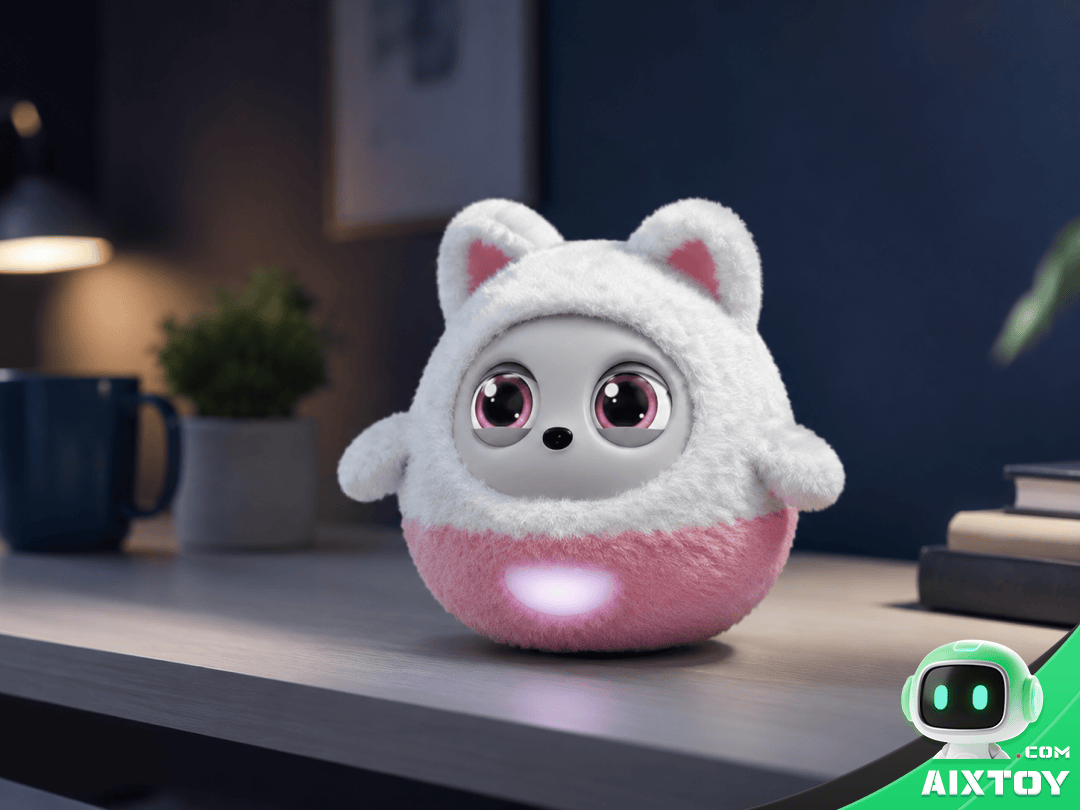
Pophie, a desktop AI companion from Singapore-based InsBotics that launched on Kickstarter in May 2026, represents a different ambition. It is not trying to add one more voice-enabled gadget to the shelf. It is trying to shift the fundamental value proposition of an AI toy from “it can answer you” to “it can be present with you.” The distinction is not semantic. It is the difference between a device you use and a device you keep around.
What Pophie Actually Is
InsBotics calls Pophie an “AI Lifeform” — ambitious branding, but the product underneath is a desktop companion robot with expressive eyes, a soft-touch exterior, and compact motorized movement. It uses vision to see its environment and the people in it. It uses spatial audio to identify who is speaking and turn toward them. It recognizes natural hand gestures. It responds to touch. It builds long-term memory of interactions, preferences, and routines. And when the camera is not needed — when the eyes close — the camera physically deactivates, with a visible indicator so the user always knows the device’s privacy state.
The Kickstarter campaign has already exceeded $350,000 from approximately 795 backers against an initial goal of $15,000. These numbers do not guarantee a successful mass-market product — crowdfunding enthusiasm often outpaces long-term user retention — but they confirm that early adopters are ready to pay for the idea of AI presence, not just AI capability.
From Answering Questions to Participating in Life
The reason most AI hardware fails is not that the AI is insufficiently intelligent. It is that the user cannot answer a simpler question: why do I need another device? The phone already chats. The smart speaker already plays content. The tablet already handles learning apps. An AI toy that simply adds another voice interface to a household that already has three is not solving a problem — it is creating clutter.
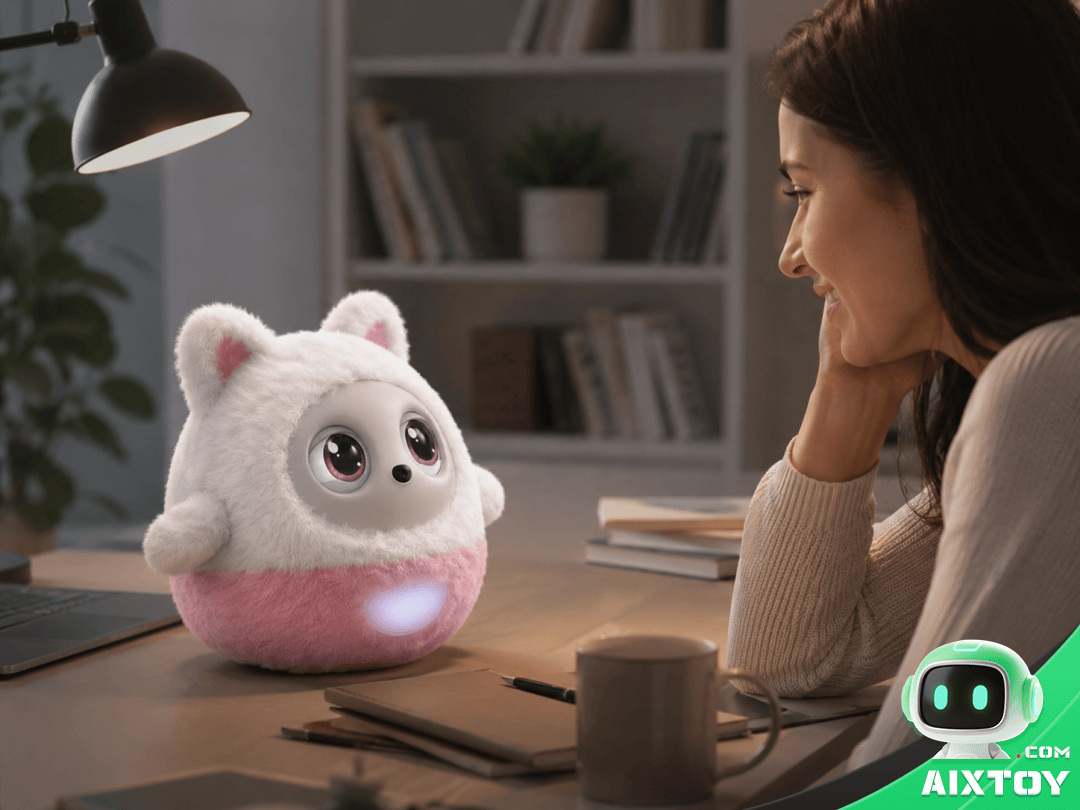
Pophie’s response to this is presence. It does not wait passively for a wake word. It observes the room, notices when someone enters, turns toward the speaker, and can initiate interaction based on context rather than command. Founder Tang Qi’s framing captures the shift: most AI can answer you. Pophie can notice you.
This reframing points toward a deeper change in how AI companionship products are designed. The previous generation of smart toys was a feature bundle: stories, weather, Q&A, early education. The new generation is a relationship object. It needs to be named, placed, touched, observed. It needs to develop a sense of character over time. And it needs to do this through embodied behavior — a nod, a turn, a sustained gaze — that a language model alone cannot deliver. Companionship is not built by a model generating the right sentence. It is built by the cumulative effect of small physical gestures that signal attention, awareness, and intentionality.
This is the same design philosophy we have examined across the AI companion landscape — from LOVOT’s refusal to speak at all to OlloBot’s bet on offline-first trust building. The products that earn a permanent place in someone’s space are not the ones with the most expansive feature sets. They are the ones that pass the presence test: does this object feel like it belongs here, or like it is visiting?
Not Just a Children’s Toy
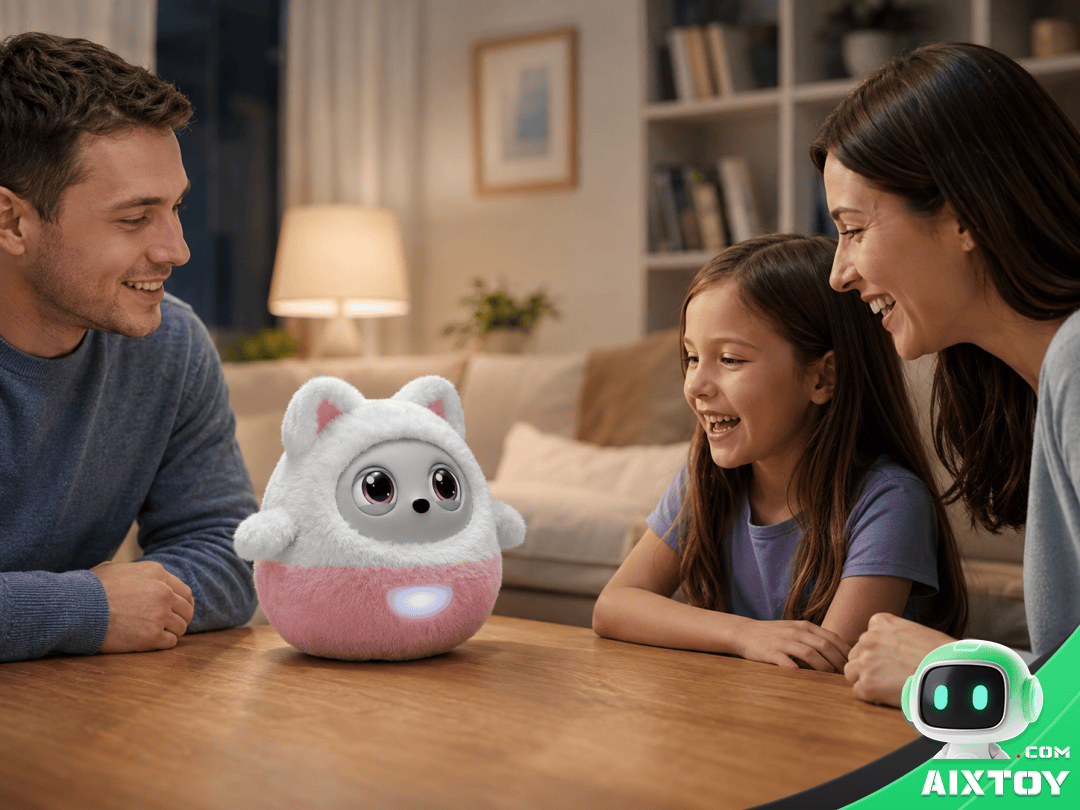
Pophie’s official FAQ lists its target audience broadly: families, children, partners, solo-living adults, and elderly users. This is not a children’s education robot that happens to have AI. It is an AI companion that happens to be small enough for a desk.
This positioning matters enormously for the trajectory of the AI toy market. If AI toys remain trapped in the “children’s educational robot” category, the competitive dynamics narrow quickly: price wars, curriculum licensing, parental anxiety marketing, and a race to align with school standards. But when the same hardware can live on an office desk, a bedside table, a kitchen counter, or a solo apartment shelf — when it enters the spaces where adults already spend their time — the product category expands into emotional wellness, ambient companionship, remote connection, and lifestyle expression. The buyer is not a parent looking for educational outcomes. The buyer is an adult looking for something that makes a room feel less empty.
At AIXTOY, we see this expansion happening in real time. The line between programmable desktop robots and emotional companions is blurring. A device that starts as a coding project can become a presence. A companion that starts as a desk decoration can become a daily ritual. The hardware platform matters less than whether the user, after the first week, still wants it there.
Privacy and Boundaries: The Price of Presence
The more lifelike an AI companion becomes, the more it needs to earn trust through transparent boundaries. Pophie’s design acknowledges this explicitly: the camera deactivates when the eyes close, audio and video are processed in real time and discarded rather than stored, and users maintain control over cloud data. These are not premium features. They are becoming table stakes for any AI hardware that enters bedrooms, family spaces, and personal desks.
Recent reporting from WIRED has systematically catalogued the risks in the AI toy space — content safety, privacy vulnerabilities, developmental concerns around over-anthropomorphization, and emerging regulatory scrutiny at both state and federal levels in the United States. The implication for product teams is clear: companion AI cannot treat safety as a compliance checklist added before launch. It needs to be a design principle visible in the hardware itself — cameras that physically close, microphones with visible mute states, privacy indicators that a child or a non-technical adult can understand without reading a manual.
The stronger the sense of presence a device creates, the more important it becomes for the user to feel in control of when that presence is active. Trust in an AI companion is built as much by its willingness to be turned off as by its ability to be turned on.
What Pophie Signals for the Industry
Pophie is not yet a proven success. Crowdfunding momentum does not equal manufacturing capability. Early adopter curiosity does not equal long-term daily use. For any AI companion hardware, the real test begins after delivery: power-on frequency, interaction depth, content freshness, after-sales trust, and whether the user still chooses to keep it in view a month later.
But Pophie does provide a clear signal about where the industry is heading, and it is worth articulating:
First, the body matters as much as the brain. Models make toys talk. Bodies determine whether they stay. Eye design, material texture, movement quality, sound profile, and physical scale all contribute to whether a device feels like an acceptable roommate or an intrusive piece of electronics. The industrial design of AI companions is not aesthetic decoration — it is the primary interface for trust.
Second, AI toys need to earn the right to occupy space. A desk, a bedside table, a bookshelf, a kitchen counter — these are contested surfaces in people’s lives. A product that cannot naturally integrate into one of them will not achieve long-term retention, regardless of how impressive its demo video looks.
Third, AI companions are becoming character-driven products, not feature-driven products. Pophie’s use of the term “Lifeform” is not just marketing. It is an investment in character equity — the same logic that drives the success of IP-based toys and collectibles like the AI-enabled figures emerging from CES 2026. Future AI toy companies may need to be simultaneously hardware teams, content studios, character designers, and community operators.
Fourth, the channel map is shifting. These products do not fit neatly into traditional children’s toy retail. They will increasingly appear in designer toy stores, lifestyle boutiques, stationery and gift shops, Kickstarter, TikTok content ecosystems, offline experience spaces, and — potentially — channels adjacent to pet care, senior living, and office wellness. The audience for AI companionship is broader than the toy aisle.
The Real Question
For the AI toy industry, the most important question is no longer “how powerful is the model?” It is “can this object earn a permanent place in someone’s actual life?”
Models can be upgraded. Features can be added. But whether a user, after the novelty fades, still wants to see this thing every morning on their desk — that is determined by product decisions that happen far outside the training pipeline. It lives in the industrial design, the privacy defaults, the character tone, the update cadence, and the thousand small signals that accumulate into either trust or exhaustion.
Pophie’s bet is that presence beats performance. If the bet pays off, it will not be because the AI got smarter. It will be because users, over weeks and months, quietly decided that the small robot on their desk had earned its spot. Not by answering more questions. By being there.
Explore the evolving world of AI companions at AIXTOY Shop — where the future of presence is being built, one robot at a time.
Tags:PophieInsBoticsDesktop RobotAI CompanionKickstarterAIXTOYEmotional AIAI LifeformAI Robot ToyPrivacy AI