



No products added!
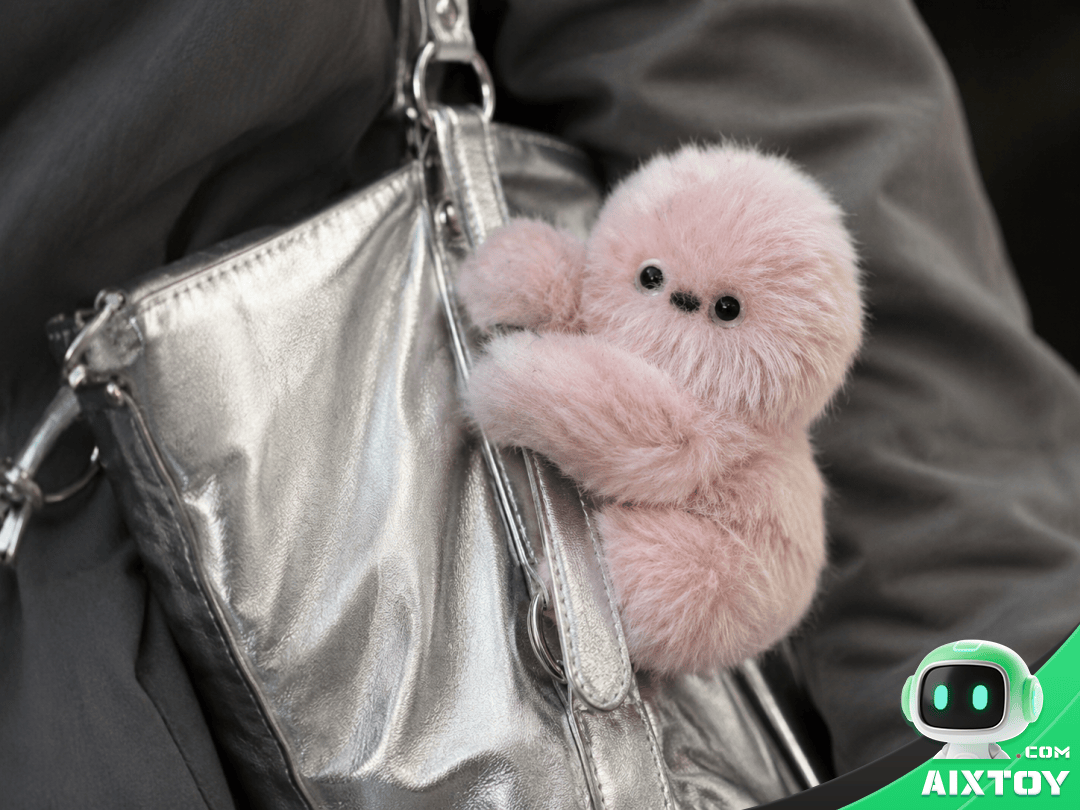
On a Tokyo street, a small fuzzy creature hangs from a bag strap. It does not talk. It does not answer questions. It does not tell you the weather. But when someone approaches, it slowly turns its head and glances at them. If they get too close too fast, it shyly looks away — exactly like a nervous little animal hiding behind its owner. This is Mirumi, the latest creation from Japanese robotics studio Yukai Engineering. And it might be the most important reminder yet that emotional value in toys does not require a language model, an internet connection, or even a single spoken word.
One Motion, Endlessly Readable
Mirumi’s entire product logic can be described in a single verb: turn. It hangs. When the bag moves, it looks around like a small animal surveying its environment. When someone approaches, it turns toward them and peers. When touched or startled, it shrinks back in a gesture that reads instantly as shyness. That is the full feature set. No chatbot. No voice assistant. No educational curriculum. No productivity promise. Just a head that turns, pauses, peeks, and retreats — and somehow, in the right context, that is more than enough.
The genius of Mirumi is not technical complexity. Under the plush exterior, it has a touch sensor, a microphone that responds to ambient sound, and a library of over 10,000 motion sequences that are randomly combined so its reactions feel organic rather than looped. These are not cutting-edge AI components. They are deliberately simple — and deliberately hidden. What the user sees is not a sensor array and a motion algorithm. What the user sees is a small creature that seems curious about the world and a little bit shy about being noticed. The technology disappears into the behavior. The behavior triggers projection. And projection is the foundation of every meaningful toy relationship ever built.
No Internet, No Problem
One of Mirumi’s most counterintuitive design choices is its deliberate lack of connectivity. The Verge confirmed that Mirumi has no AI and no internet connection, running entirely on traditional software and mechanical motion. There is no account to register. No voice data to upload. No parental dashboard to configure. No cloud dependency to worry about. And no risk of the device becoming e-waste when a server eventually shuts down. Charge it, clip it to a bag, and it begins watching the world. This makes it feel less like a device and more like a toy — an object you own completely, with no strings attached to a remote infrastructure.
In an era where the default instinct for any smart product is to connect it to the cloud and route every interaction through a model endpoint, Mirumi’s design philosophy is quietly radical: not every emotional experience needs a server. Not every interaction needs to be processed, stored, and analyzed. Sometimes the most convincing sense of life comes from a motor and a few well-chosen movements that happen entirely inside the object in your hand.

Not a Children’s Toy. A Moving Bag Accessory.
Mirumi’s target audience tells a story of its own. The product is positioned not as a children’s toy but as a fashion and lifestyle accessory, with strong interest from women aged 20 to 40. The age rating is 14+. The packaging design reportedly draws from jewelry and accessory presentation rather than traditional toy boxing. This is not a product destined for the toy aisle. It is headed for the bag strap, the commute, the coffee queue, the social moment where someone notices the small creature on your shoulder and smiles.
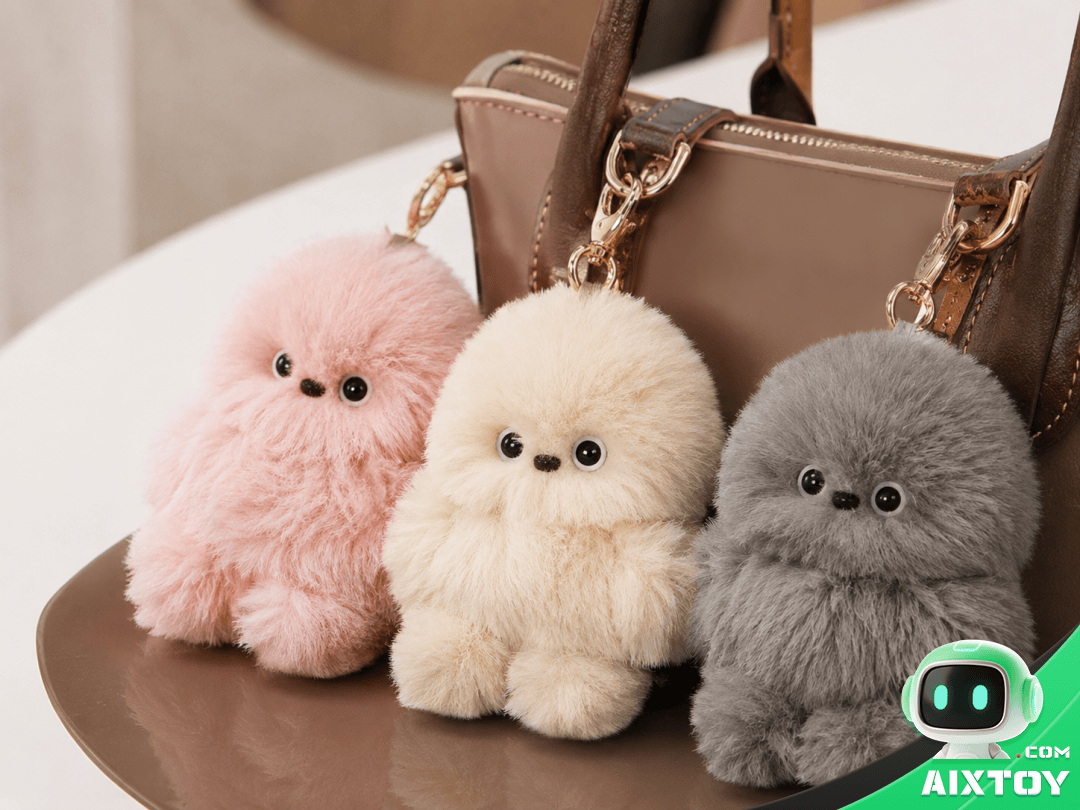
This positioning connects Mirumi to a larger cultural shift. The explosion of bag charms, plush accessories, and wearable collectibles — Labubu, Jellycat, Squishmallows clipped to handbags — is not really about toys. It is about emotional signaling through portable objects. Mirumi takes the static charm and adds one small thing: movement. A head turn. A glance. A shy retreat. That single addition turns an accessory into a presence. And a presence, even a tiny one, changes the calculus of whether an object is worth carrying around all day.
The Numbers and What They Signal
Mirumi’s Kickstarter campaign attracted 2,053 backers and raised approximately 79 million yen. Early bird pricing sat around 18,360 yen with the standard crowdfunding tier at roughly 21,803 yen. The projected retail price is approximately $150. This is not an impulse-buy price point for a keychain. It is a considered purchase in the range of a premium fashion accessory — which is exactly the category Mirumi is trying to create.
The campaign numbers suggest genuine demand for a category that barely exists yet: the moving emotional accessory. A plush that blinks. A charm that shivers. An IP figure that turns toward sounds. A small robot that reacts to social proximity. These products sit at the intersection of fashion, robotics, toy design, and emotional companionship — and the intersection is almost entirely unoccupied.
The Lesson: Stop Chasing Conversation. Start Chasing Reaction.
Mirumi’s most important contribution to the AI toy industry is the question it refuses to answer. It does not try to be smart. It does not try to be useful. It does not try to be a tool. It tries — and succeeds — at being readable. A head turn that says curiosity. A retreat that says shyness. A pause that says awareness. These are not complex emotional states. They are simple, universal signals that any human can interpret without training. And that is precisely the point.
The toy industry has been chasing conversational AI as though talking were the only path to emotional connection. Mirumi — along with our previous explorations of LOVOT’s silent companionship and Pophie’s presence-first desktop approach — suggests a different thesis: the most emotionally convincing toys are not the ones that say the most. They are the ones whose smallest gestures trigger the largest projections. A shy glance can carry more emotional weight than a hundred generated sentences. The industry is slowly learning this. Mirumi already knows it.
At AIXTOY, we track the products that understand this distinction — the ones where technology serves the emotional experience rather than dominating it. From AI plush companions to the full AIXTOY collection, the future belongs to products that know when to speak and — more importantly — when to just look at you and say nothing at all.
Tags:MirumiYukai EngineeringEmotional AIAIXTOYKickstarterAI CompanionAI Plush ToysAI Robot ToyFashion AccessoryJapanese Robot