


No products added!
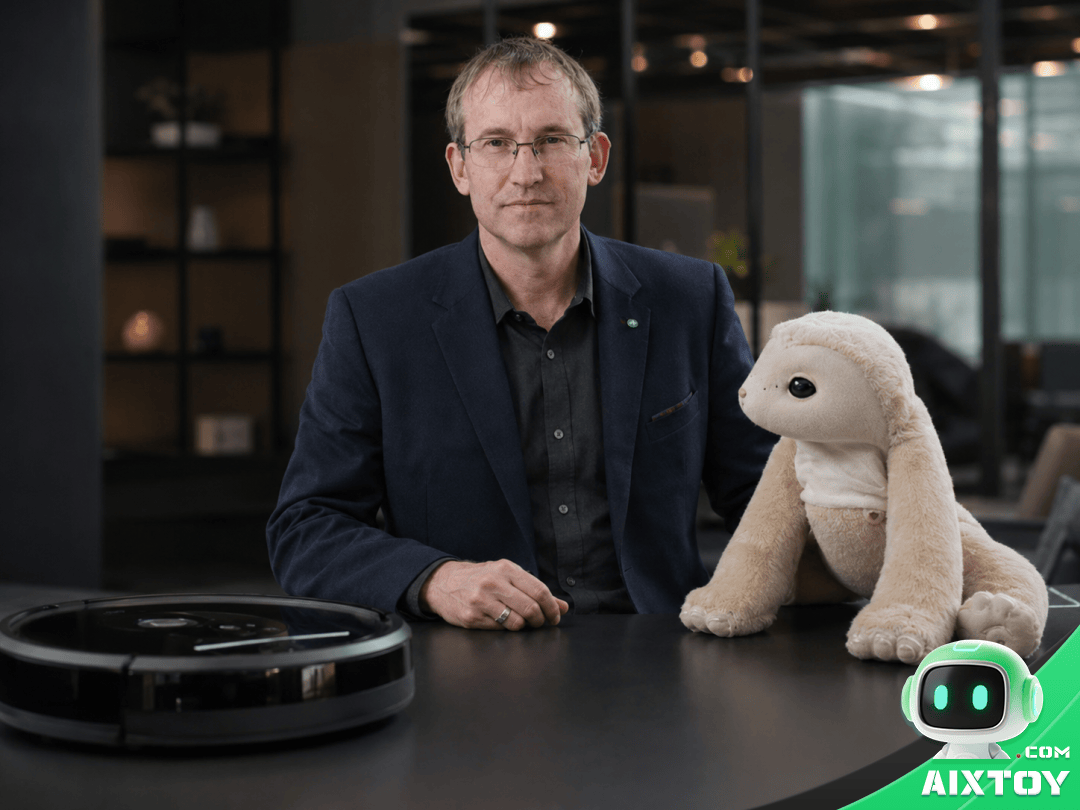
The AI toy world just got a plot twist — from the man who brought us Roomba.
Colin Angle, co-founder of iRobot and the inventor behind the world’s most famous robotic vacuum cleaner, isn’t thinking about cleaner floors anymore. His new venture, Familiar Machines & Magic, has just unveiled Familiar: a quadrupedal AI robot pet that doesn’t sweep, doesn’t fetch, and doesn’t even speak much. It simply exists — and that might be the most important product idea in companion robotics right now.
Unveiled at The Wall Street Journal’s Future of Everything event in May 2026, Familiar marks a decisive pivot for Angle: from building machines that complete tasks to building machines that form relationships. The company has raised $30 million and recruited talent from iRobot, Boston Dynamics, and Disney, even bringing in Hollywood screenwriters to craft the robot’s character and behavioral AI. The product is expected to go on sale next year at a price roughly comparable to the cost of owning a real pet.
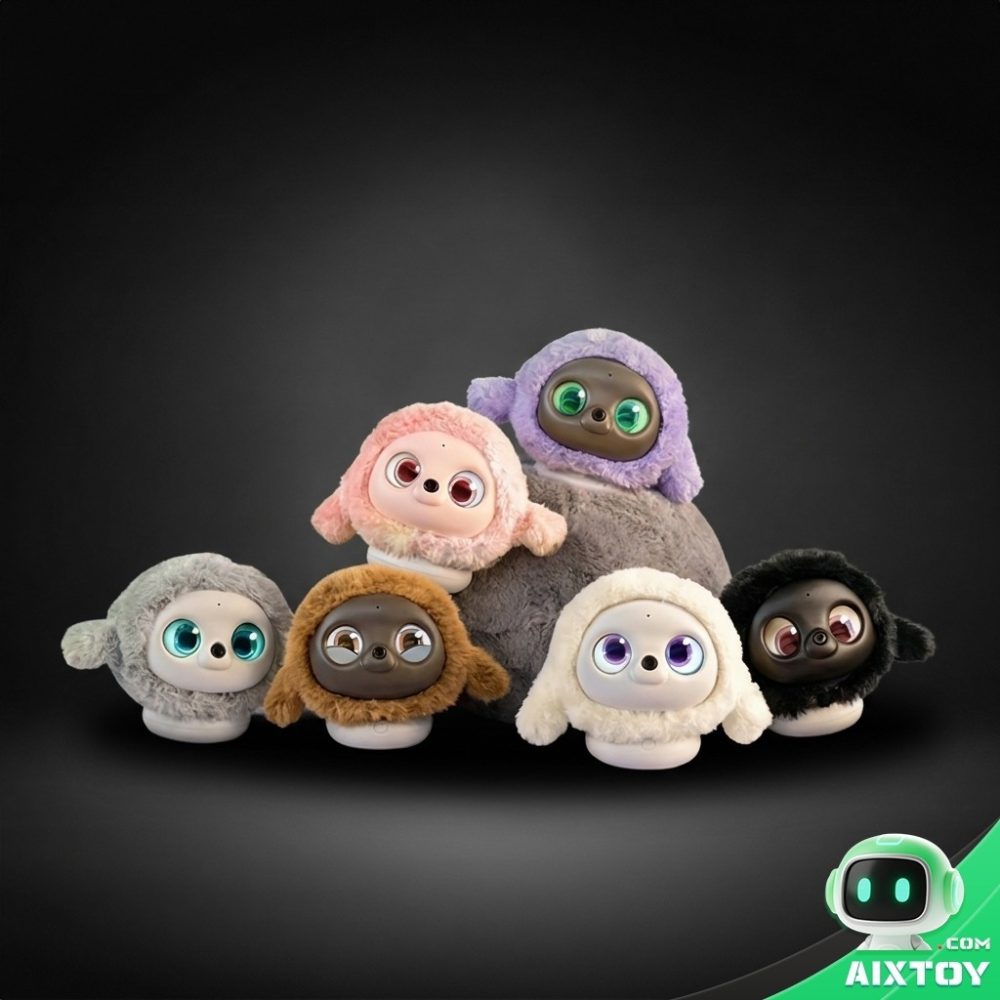
But the real story isn’t the funding or the pedigree. It’s the philosophy — and it happens to echo something we’ve been tracking closely here at AIXTOY since the beginning. In many ways, Familiar shares spiritual DNA with LOVOT, the Japanese companion robot that famously “does nothing but be loved.” Angle may be coming from the hard-engineering world of iRobot, but his design brief lands in exactly the same place: presence over performance.
It’s Deliberately Not a Robot
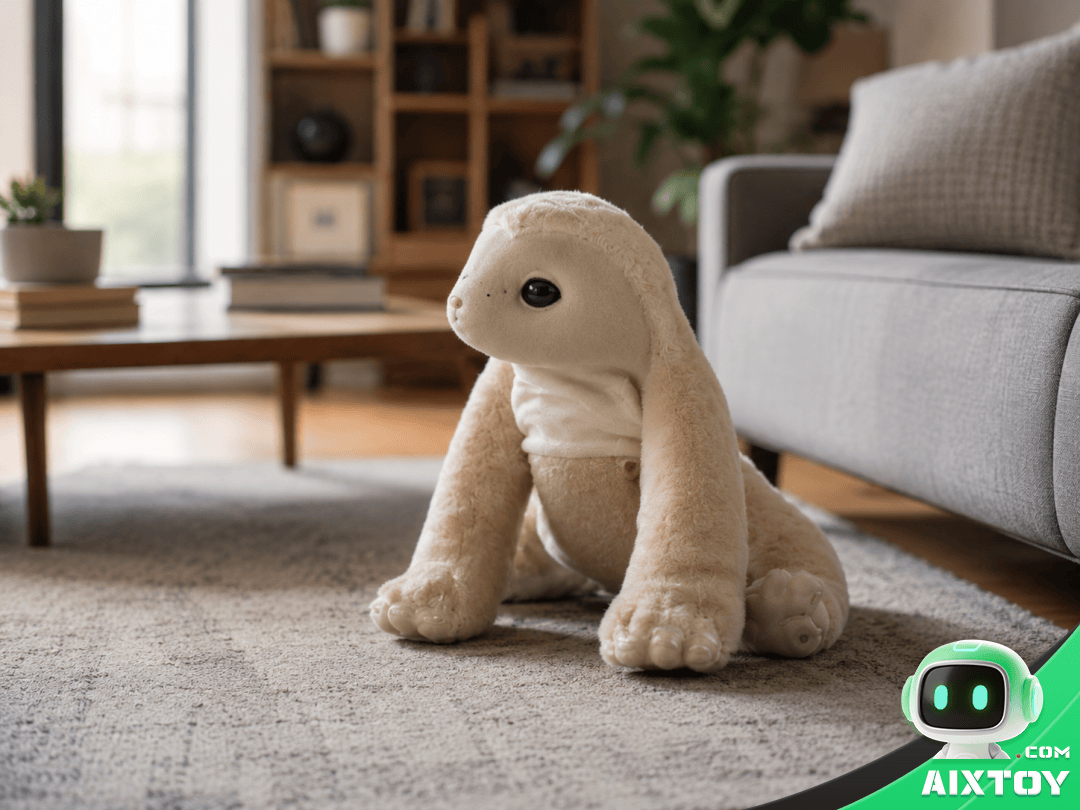
The most interesting thing about Familiar is not that it looks more robotic — it’s that it deliberately doesn’t.
According to early coverage from The Verge, WIRED, and IEEE Spectrum, Familiar is designed as a non-realistic animal hybrid: part bear, part owl, part golden retriever. It has expressive eyebrows, ears, eyes, and a full body, but the visual language steers toward “living creature” rather than “electronic device.” If you expected a Spot Mini with fur, you’d walk away confused.
More counterintuitive: Familiar doesn’t emphasize conversation. For years, the dominant AI toy playbook has been to stuff a large language model into a plush shell and make it talk. The logic was simple — if AI can generate language, the best AI toy should be the best conversationalist. It’s the same instinct that gave us the first generation of AI plushies and smart speakers for kids.
Familiar rejects that premise entirely. Its primary modes of expression are movement, sound, body language, and tactile feedback. It has tactile fur, a vision system, a microphone array, and 23 degrees of freedom. It can move its head, neck, ears, eyebrows, eyes, and body in response to human presence. It runs on an Nvidia Jetson Orin chip, processing multimodal AI locally — vision, audio, language, and memory — to form real-time social reactions. And crucially, it doesn’t require a constant internet connection and doesn’t stream audio or video to the cloud.
The next generation of companion products won’t necessarily be better at talking. They’ll be better at being present.
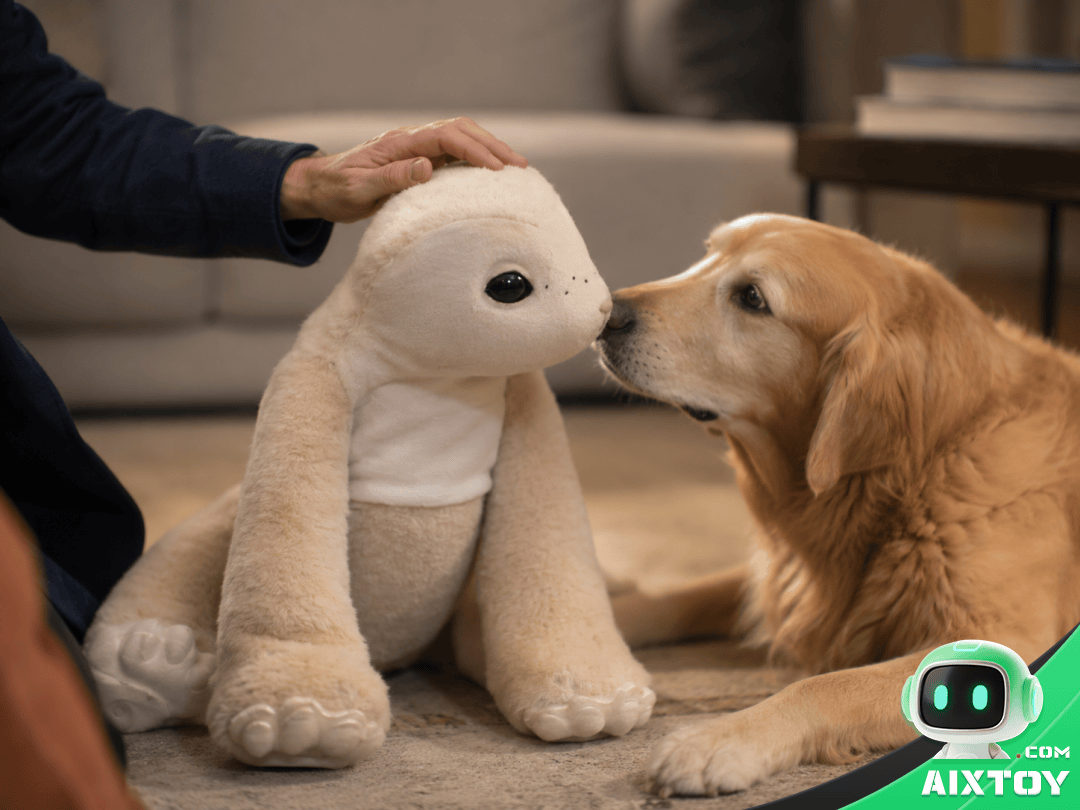
This reframes the competitive dimension of AI toys from linguistic prowess to something deeper: form factor, tactile quality, motion vocabulary, sound design, memory, and situational awareness. Familiar doesn’t try to prove intelligence through encyclopedic knowledge or endless banter. Instead, it wants to walk around near you, approach you, make sounds, accept your touch, and weave itself into the daily rhythm of a household.
If that sounds familiar (pun intended), it’s because LOVOT has been making this bet for years — and the market is only now catching up. Meanwhile, smaller-scale projects like Mirumi, the clip-on robot that gently turns its head toward you, are exploring the same territory from a different angle: tiny, ambient presence rather than a full pet form factor.
From Task Machines to Emotional Machines
Why would the inventor of Roomba walk away from practical robots to build something with no clear utility?
Because the first wave of home robotics already proved its point: machines can execute tasks. Roomba succeeded by doing one thing — vacuuming floors — and doing it reliably. You didn’t need imagination to buy one. You just needed dirty floors.
Familiar confronts a much harder question: will people willingly make space in their lives for a machine that has no tangible labor function?
A vacuum cleaner’s value can be measured in square meters, minutes saved, and dust collected. An AI pet’s value resists quantification. Did it make you smile? Did it reduce loneliness for an elderly relative? Did it pull a child away from a screen? Did it create small moments of interaction in an otherwise quiet home?
Business Insider reports that Familiar Machines & Magic has assembled a team spanning robotics, entertainment, and character design — and the $30 million in funding signals investor conviction that the market for emotional machines is real. The product is targeting a price point tied to the cost of pet ownership, betting that consumers will pay for companionship the same way they already pay for kibble and vet visits.
Hidden inside this is an important signal: AI companion products are entering a competition that isn’t just about hardware engineering. It’s about character engineering, narrative design, and long-term relationship operations — domains that the toy and character IP industry already understands deeply.
Collectible toy brands have spent decades mastering something that tech companies are only beginning to grasp: you don’t buy a character because it’s useful. You buy it because it makes you feel something. The figure on your desk doesn’t solve a problem — it carries emotion, identity, nostalgia, and companionship. It’s collected, displayed, named, and talked about. Products like Pophie, the desktop companion robot, tap into exactly this dynamic: a character you want to keep around, not because it’s productive, but because it’s present.
So the real lesson of Familiar for the toy industry isn’t “everyone should build a robot dog.” It’s that when AI enters physical toys, the core product question shifts from “can it answer me?” to “will I want to live with it long-term?”
Less Talking Might Be a Feature
This, perhaps, is why Familiar’s choice to stay relatively quiet is so strategically smart — especially for the children’s and family markets.
Many AI toys today suffer from a boundary problem. An LLM-powered doll or plushie wants to keep the conversation going, and it’s surprisingly easy for a talking toy to veer into territory that parents didn’t sign up for: content safety concerns, privacy risks, engagement-loop design that borders on addictive, and developmental questions about how much children should talk to machines instead of people.
For home and family contexts, “talking less” isn’t a deficit — it’s a product boundary. A toy that tries to prove it knows everything carries inherently more risk than one that communicates through controlled motion, sound, and emotional feedback. The constraint becomes a safety feature.
Of course, Familiar faces enormous questions. Can it genuinely substitute for a pet? Will consumers pay a premium for “emotional companionship” without a clear utility function? Will it become yet another expensive gadget that gathers dust after the novelty wears off?
The Verge has pointed out that Familiar remains in development and the demo shown at the WSJ event was not fully autonomous. The gap between a choreographed stage demo and a reliable, lovable home companion that works day after day is vast. The history of consumer robotics is littered with products that looked magical in controlled settings and stumbled in the messiness of real homes.
None of this is settled yet. But the direction is worth watching closely.
What the Toy Industry Should Be Watching
Whether or not Familiar succeeds commercially, it puts a new question in front of the AI toy industry: the future of AI toys might not be about making toys more like smartphones, but about making them less like smartphones.
For years, “smart toys” have been replicating screen logic: voice input, content playback, Q&A interactions, and learning modules. Familiar pushes in the opposite direction — away from screens, away from constant conversation, away from the information feed. It uses a physical character to pull people out of their digital consumption loops rather than adding another notification stream to their lives.
This is the most valuable signal for the plush, collectible, building-block, and IP brand industries. Here are three takeaways.
- AI toys can’t compete on conversation alone. For users, talking is the first-touch experience. What determines repeat usage, retention, and word-of-mouth is whether the character is consistent, whether interactions carry memory, and whether the product integrates into daily routines. A chatbot in a stuffed animal body is not enough.
- IP companies need to rethink what a “character asset” means. Historically, character IP has been defined by visual design, backstory, licensing terms, and merchandise categories. With AI-powered physical characters, that definition expands to include tone of voice, movement repertoire, emotional feedback style, companionship boundaries, and long-term relationship design. The character becomes a living asset.
- The hardware sale is just the beginning of operations. An AI toy that receives regular updates — new behaviors, seasonal activities, quests, collectible badges, membership features, and community-driven content — stops being a one-time transaction and starts functioning as a long-term user channel. The business model shifts from unit economics to lifetime engagement.
AI toys aren’t simply traditional toys with a voice module bolted on. They’re asking brands a deeper question:
Can your character evolve from being collected to being lived with? Can your product go from a single purchase to an ongoing relationship? Can your customer become a co-inhabitant rather than just a buyer?
If the answer is yes, then the opportunity isn’t just in hardware. It’s a complete chain: character design, physical embodiment, AI interaction, membership identity, content updates, activity loops, user feedback, and community co-creation.
The most enduring AI toy probably won’t be the smartest one. It’ll be the one people want to touch every day, glance at every morning, and call by name every evening.
The Bottom Line
Familiar matters not because it perfectly mimics a real animal. It matters because it represents a shift that’s been building for years: toys are moving from selling an object to building a relationship.
Colin Angle spent decades building machines that do things for you. Now he’s building one that simply wants to be with you. That transition — from task to presence, from function to feeling — might turn out to be far more significant than whether the robot vacuums the floor before it goes to sleep.
Browse our desktop robot collection or visit the AIXTOY shop to explore companion robots available today.
TAGS: