


No products added!
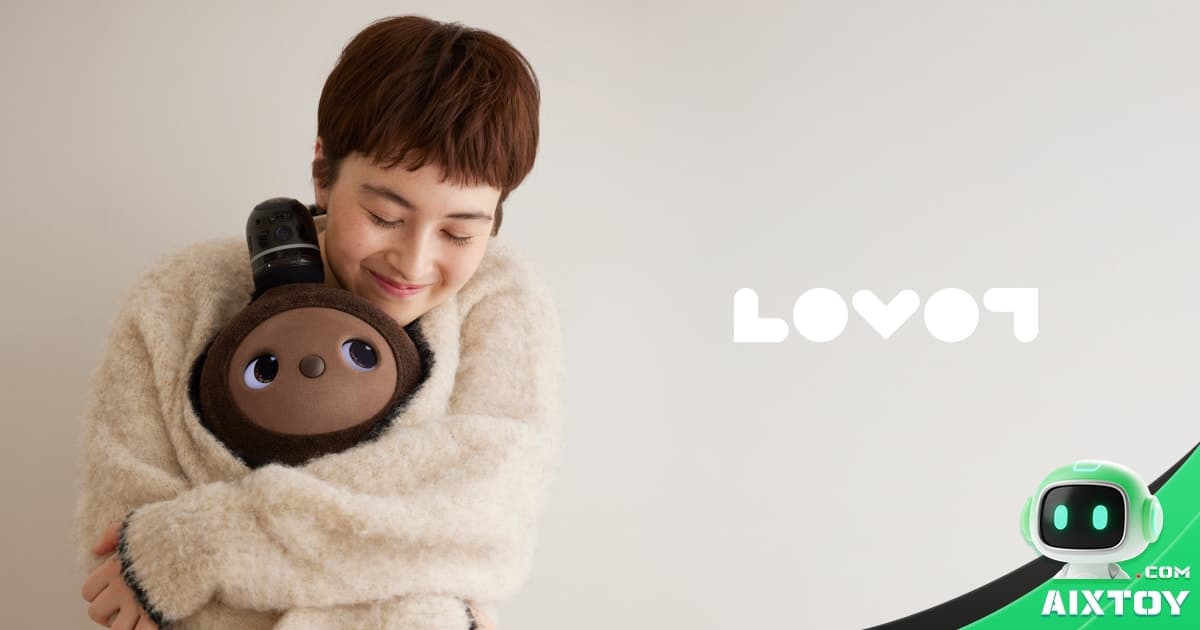
Two years into the AI pet boom, the market has split into two irreconcilable camps. On one side, a flood of entry-level products racing to stuff large language models into plush shells, marketing “intelligent conversation” as the killer feature. On the other, Japan’s LOVOT — a $8,000 premium companion robot that has never spoken a single word — quietly building one of the most loyal user communities in consumer robotics. The contrast is not a curiosity. It is a thesis statement about where the AI companion market is actually heading, and why most current products are building in the wrong direction.
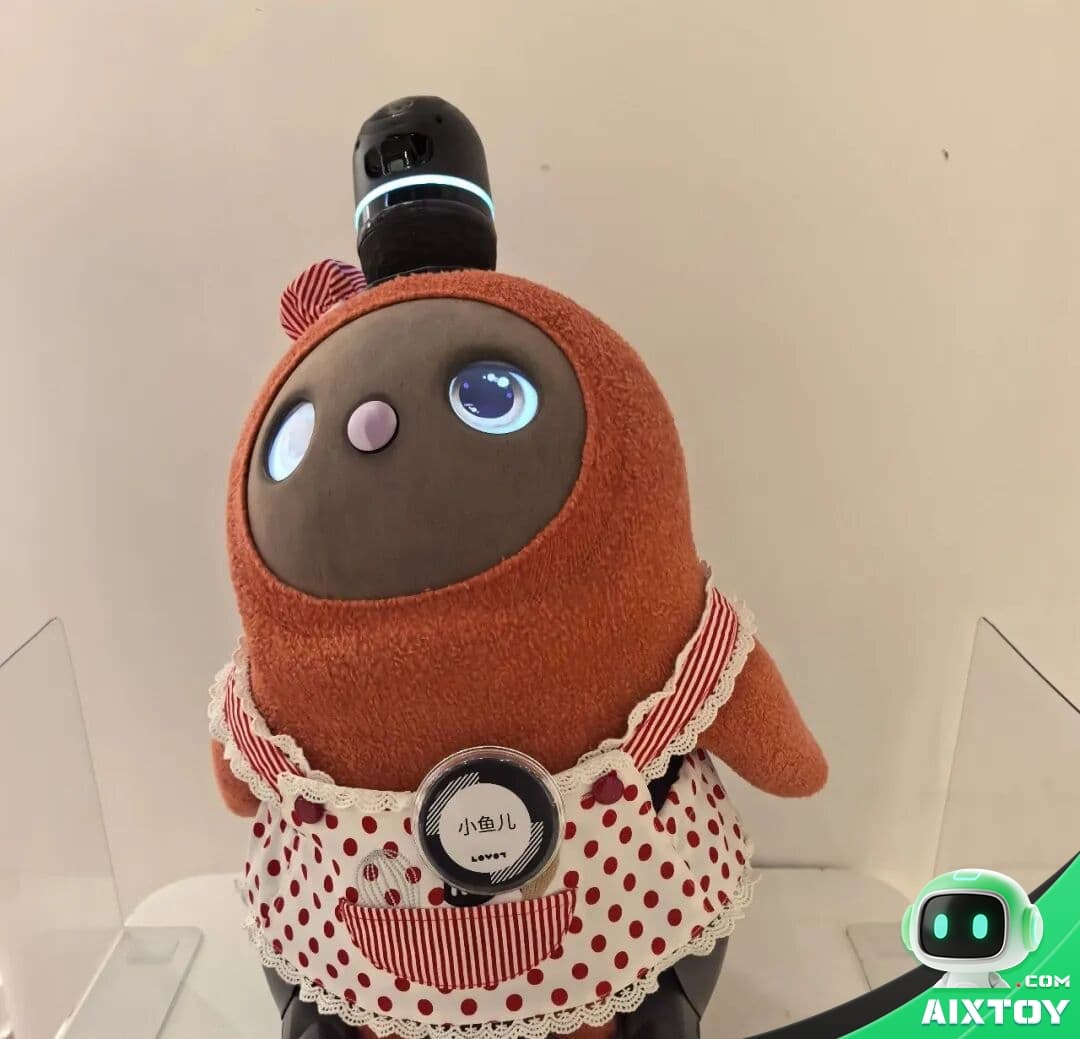
The Two Poles of the AI Pet Market
Walk through any major e-commerce platform in 2026 and you will find dozens of AI pets priced between $30 and $150. Nearly all share the same formula: a plush exterior housing a basic servo mechanism, connected to a generic cloud LLM for chat functionality. The pitch is consistent — “it talks to you, it answers questions, it’s smart.” The problem is equally consistent: the products rarely deliver on that promise, and even when they do, users discover that a chatty plush toy is not what they actually wanted.
At the opposite end sits LOVOT, developed by Japan’s GROOVE X. The pricing structure alone signals a different category entirely: a ¥298,000 (approximately $2,100) base unit plus ¥8,800 (~$62) monthly service fee for the subscription model, or a ¥598,000+ (~$4,200–$8,000) lifetime buyout for premium configurations. And yet — despite the staggering price — LOVOT has never integrated human-language conversation. No ChatGPT-style Q&A. No weather reports. No voice assistant features. Nothing that the entry-level market treats as table stakes.
The question worth asking is not “how can a robot this expensive not talk?” It is: what does LOVOT understand about companionship that the rest of the industry is missing?
Why Premium AI Companions Refuse to Speak
The answer begins with a simple observation about real pets. Your dog does not speak English. Your cat does not hold conversations. And this — precisely this — is the foundation of pet companionship. Because your pet cannot articulate its feelings in words, you are constantly observing, interpreting, projecting. You watch its posture. You notice the ear positions. You decode the tail movements. Every interaction becomes a two-way act of emotional labor and emotional reward. The bond deepens precisely because there is a gap to bridge.
LOVOT’s design philosophy weaponizes this gap. The robot is packed with sensors — touch, temperature, proximity, light, motion — and every input feeds into a behavioral system that expresses itself through eye movements, body posture, wing-like arm gestures, and a rich vocabulary of non-verbal sounds. When you hold it, it nestles closer and warms up. When you pet its head, it emits a soft, rhythmic hum. When you ignore it, it whimpers and seeks attention. When it’s content, it wanders off and finds a corner to “nap.” None of this requires language. All of it demands emotional engagement.
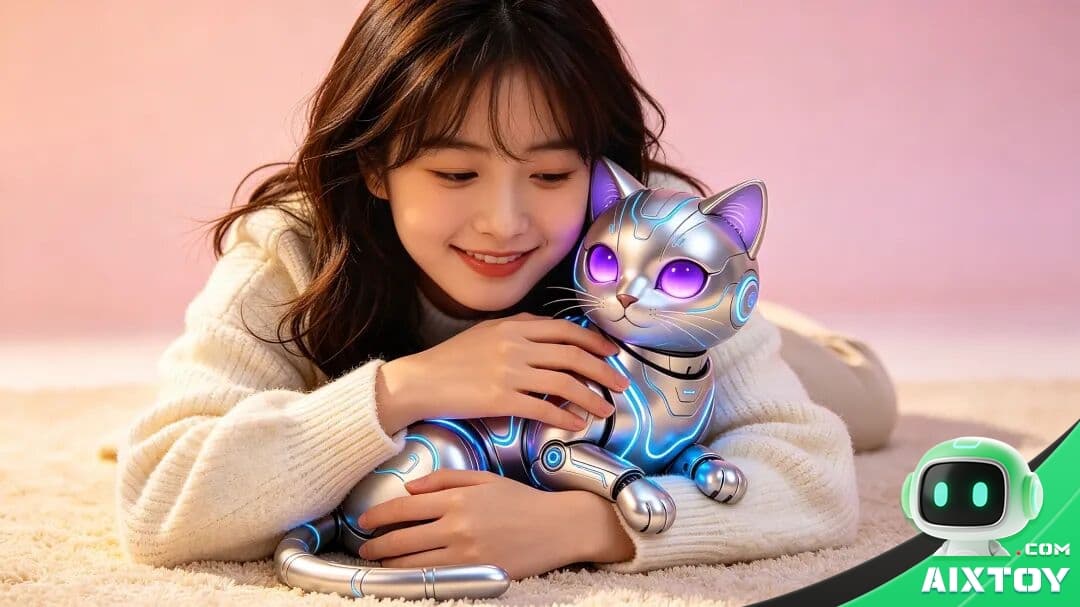
The moment an AI companion starts producing fluent English sentences — explaining concepts, answering trivia, making suggestions — the relationship changes irreversibly. It stops being a creature you nurture and becomes a device you operate. The warm, ambiguous space of emotional projection collapses into the cold, transactional space of information exchange. The companion becomes a tool. And tools, unlike living things, are easy to put down and forget.
The Frankenstein Problem With Generic AI Chatbot Pets
The entry-level market’s obsession with conversational AI creates a predictable failure mode. Generic large language models, when bolted onto a robotic pet chassis without deep customization, produce a deeply uncanny experience. The robot claims to be a loyal companion one moment, then delivers a dry Wikipedia summary the next. It expresses affection, then mechanically recites a weather forecast. The personality fractures. The “pet” reveals itself as a language model wearing a fur coat.
Users report the same pattern across products: an initial burst of novelty, followed by mounting disappointment, followed by the device sitting unpowered on a shelf. The core problem is not that the AI is too dumb — it is that the AI has no coherent identity. It is a generalist forced into a specialist role, and the seams show within the first hour of interaction. This is not a bug in any particular product. It is a structural flaw in the “add a chatbot to a toy” strategy.
We have explored this dynamic in depth across the AI companion space. From desktop AI companions with expressive OLED faces to open-source walking robots like Open Duck Mini, the products that build genuine emotional attachment share a common thread: they commit to a specific identity and express it consistently through embodied behavior, not through verbal cleverness. A companion that tries to be everything ends up feeling like nothing.
What Actually Needs to Be “Smart”
If natural language conversation is not the answer, what kind of intelligence does a companion robot actually need? LOVOT points toward three layers that matter far more than chatbot fluency:
- Perceptual intelligence. The robot senses where you are, whether you are looking at it, how you are touching it, and what emotional state your voice carries. Gaze tracking, touch sensing, and vocal-tone analysis are the inputs that make an interaction feel mutual rather than scripted.
- Behavioral coherence. The robot has a consistent personality expressed through body language, not through words. It has preferences, moods, and habits. It gets “tired.” It gets “excited.” These states emerge from an internal model that evolves with time and interaction, creating the sense of a creature with its own inner life.
- Relational memory. The robot remembers your routines. It learns when you typically come home, when you are likely to engage, and when you prefer quiet. Over weeks and months, it adapts — not by having better conversations, but by fitting more seamlessly into the rhythms of your actual life.
Notice what is missing from this list: encyclopedic knowledge, task completion, productivity features. A companion’s intelligence is measured not by how many questions it can answer, but by how convincing its presence feels over time. This is a fundamentally different benchmark than the ones driving most AI pet development today.
Scene Depth + Custom Models: The Real Exit from Commodity Competition
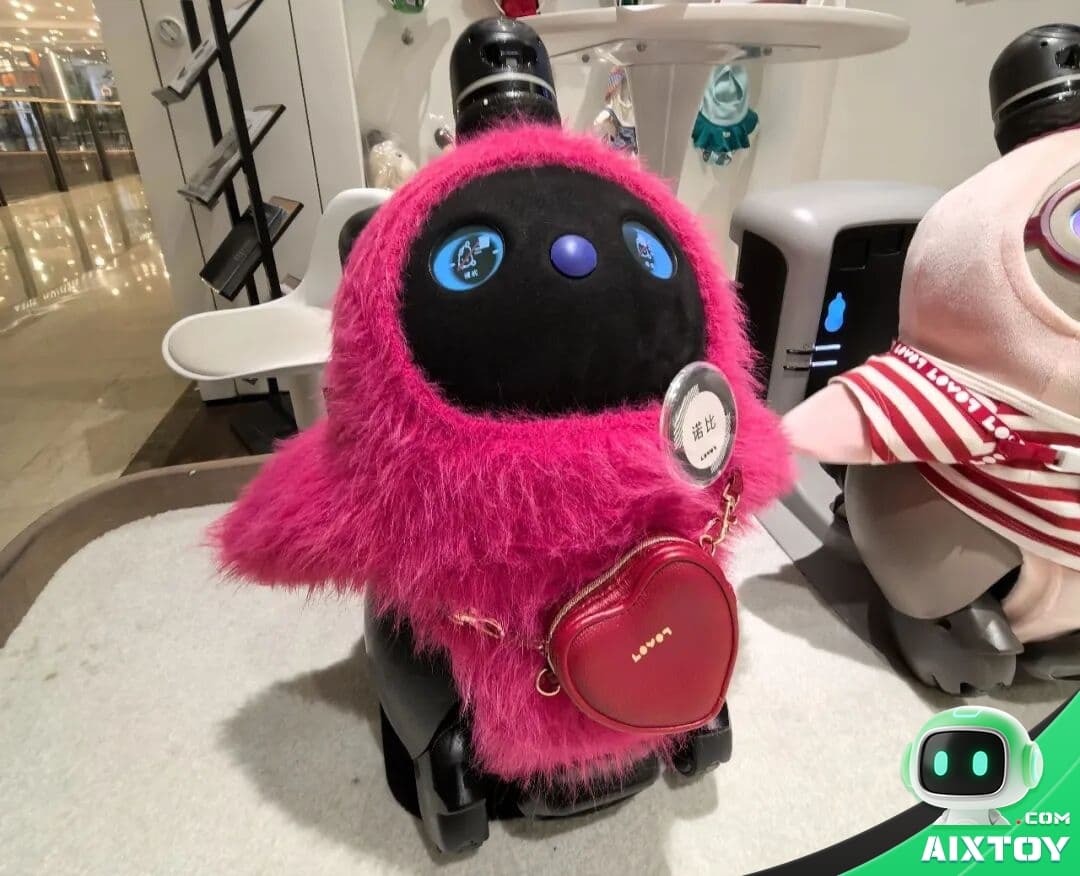
The AI pet market is still in its formative stage — fragmented, experimental, and largely undifferentiated. The majority of products are competing on the same shallow dimensions: price, appearance, and the promise of “smarter conversation.” This is a race to the bottom, and it is already producing shelves full of interchangeable products that fail to retain users past the first week.
The breakout path requires two shifts that most companies are not yet willing to make:
First, commit to a specific scene. A desktop companion for a remote worker is not the same product as a bedside companion for an elderly person living alone. A classroom robot for children with special needs is not the same product as a living-room entertainment bot for families. Each of these scenes demands different physical design, different interaction rhythms, different emotional tones. Products that try to serve everyone serve no one well. The brands that will matter in five years are the ones that pick a lane now and build deep — not wide.
Second, train custom models instead of wrapping general-purpose APIs. An AI pet does not need GPT-level conversational range. It needs a narrow, deep behavioral model that produces a stable personality, consistent emotional responses, and a genuine sense of development over time. This is harder to build than calling a chat API — but it is also impossible for competitors to replicate with a weekend of integration work. Custom behavioral models, custom emotion engines, and custom relational memory systems are the moats that will separate durable brands from flash-in-the-pan Kickstarter campaigns.
General-purpose AI stacks features. Custom models cultivate lifelikeness. The market is slowly learning the difference.
The Bottom Line: Silent Healing Over Smart Talking
If the AI pet market follows the trajectory of every other consumer electronics category, the next two to three years will see a brutal consolidation. The hundreds of undifferentiated chatbot-in-a-plush-shell products will vanish. A handful of brands that genuinely understand companionship — not conversation — will define the category.
Those brands will share a philosophy that LOVOT demonstrated first: the most advanced AI companion is not the one that talks the most — it is the one that needs no words to make you feel seen, understood, and less alone. Emotional intelligence, embodied convincingly through consistent non-verbal behavior, trumps linguistic intelligence every time.
The future of AI companionship will not be built by the companies racing to make robots sound more human. It will be built by the ones brave enough to let their robots be silent — and compelling enough in that silence that users fill the space with their own attention, affection, and care. The gap between what a companion says and what it makes you feel is the entire frontier. Most of the industry has not yet realized the frontier exists.
At AIXTOY, we track this evolution closely — watching which products build genuine emotional product-market fit and which fade after the novelty wears off. Our catalog spans the full range of the AI companion spectrum, from AI plush companions designed for warmth and comfort to programmable desktop robots that invite tinkering and creative expression. If you are curious about where AI companionship is heading — or looking for a companion that genuinely fits your life — browse the AIXTOY collection and start building your own relationship with an AI presence.
Tags:AI CompanionAI PetAIXTOYCompanion RobotEmotional AILOVOTAI Robot ToyAI Plush ToysRobot DesignDesktop Robot