


No products added!
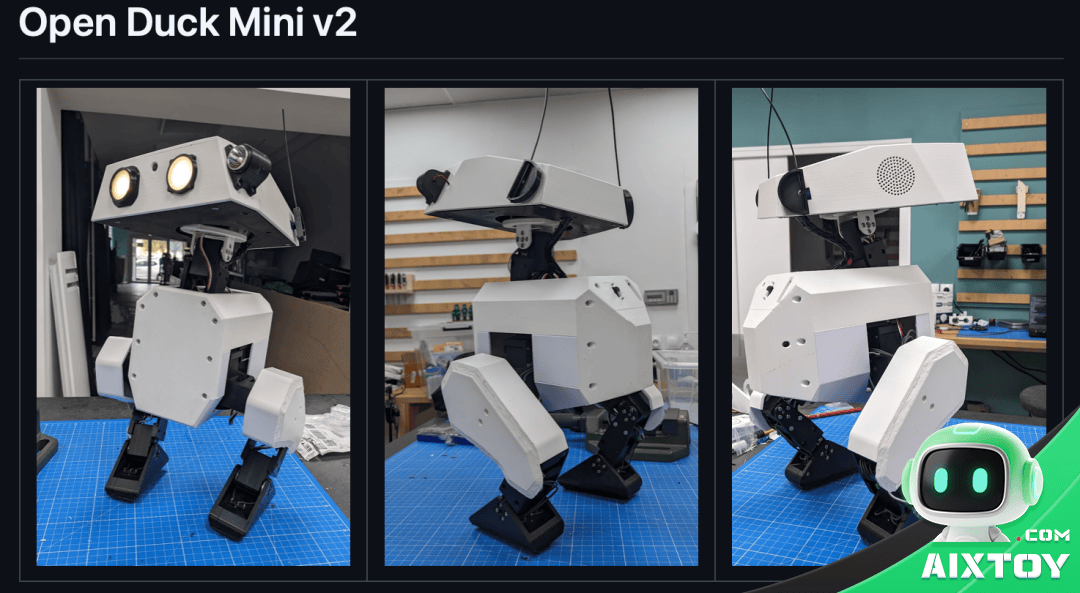
A small robot stands on a table. Its head tilts slightly, internal wiring peeks through, a control board sits on its chest, and its shell carries the distinct layer lines of 3D printing. This isn’t a retail companion robot. It isn’t a polished concept prototype from a tech giant’s keynote, either. It comes from GitHub. Its name is Open Duck Mini.
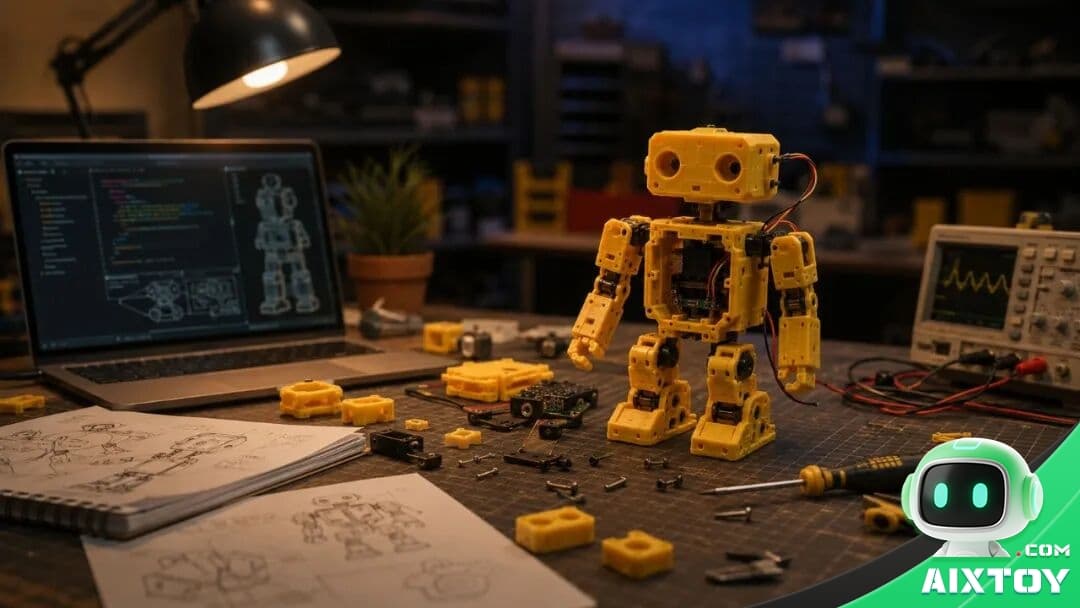
Over the past few days, this little bot has been circulating through Chinese AI communities. The buzz isn’t just about how cute it looks — it’s about where it landed. AI models are shrinking, increasingly running on local edge devices. At the same time, robot hardware is being cracked open piece by piece by the open-source community. When an AI that once lived entirely inside a chat window gets the chance to inhabit a walking body, this becomes more than “just another cute robot video.”
Open Duck Mini is an open-source project created by GitHub user apirrone. The README is refreshingly direct: they’re building a mini version of the Disney BDX Droid. When fully extended, the robot stands about 42 cm tall, with a target bill of materials under $400 USD. As of May 22, 2026, the repository has nearly 3,000 stars and over 360 forks, licensed under Apache-2.0.
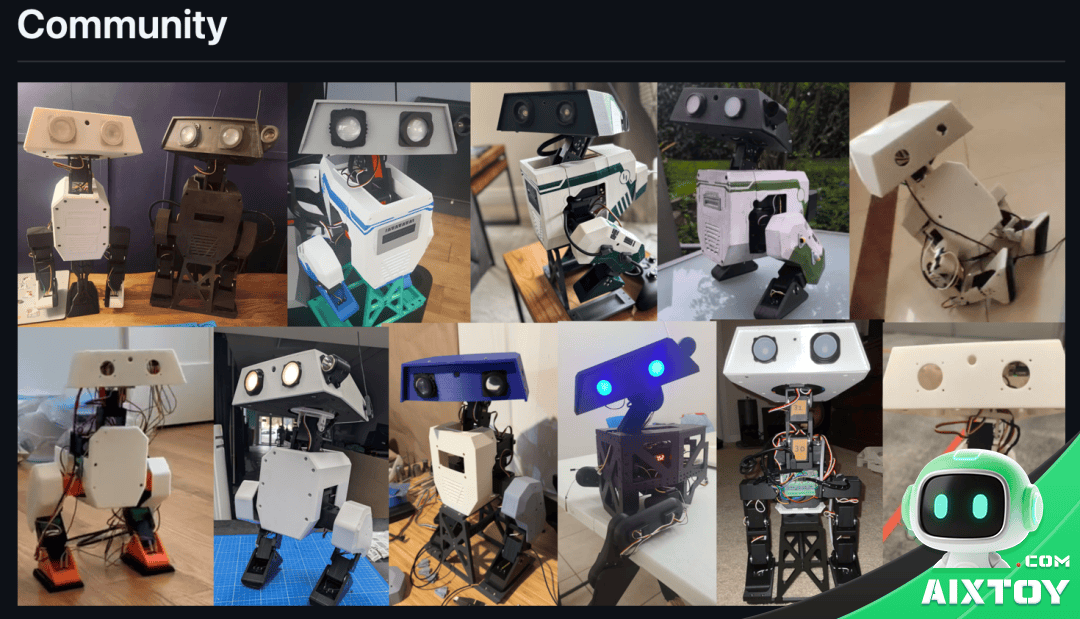
Open the repo and you won’t find a “download, install, run” package. What you will find is a knowledge hub: CAD files, 3D printing resources, parts lists, assembly documentation, runtime code, and movement training strategies — all gathered in one place, waiting for people to explore, modify, and build. The quality that makes it least like a consumer product is exactly what makes it most compelling. You’re not ordering a finished unit off a shelf. You’re assembling it — shell, servos, Raspberry Pi, control board, code, and movement policies — piece by piece.
This runs on an entirely different logic from typical robot toys. Most consumer robots are closed systems: buy one, download the official app, connect to Wi-Fi, follow the manual. You don’t know how it moves, and you can barely change its behavior. Open Duck Mini flips the script. The shell is 3D-printable. The parts list is inspectable. Assembly is documented. The runtime code is separately open-sourced. Movement policies can be trained and replaced.
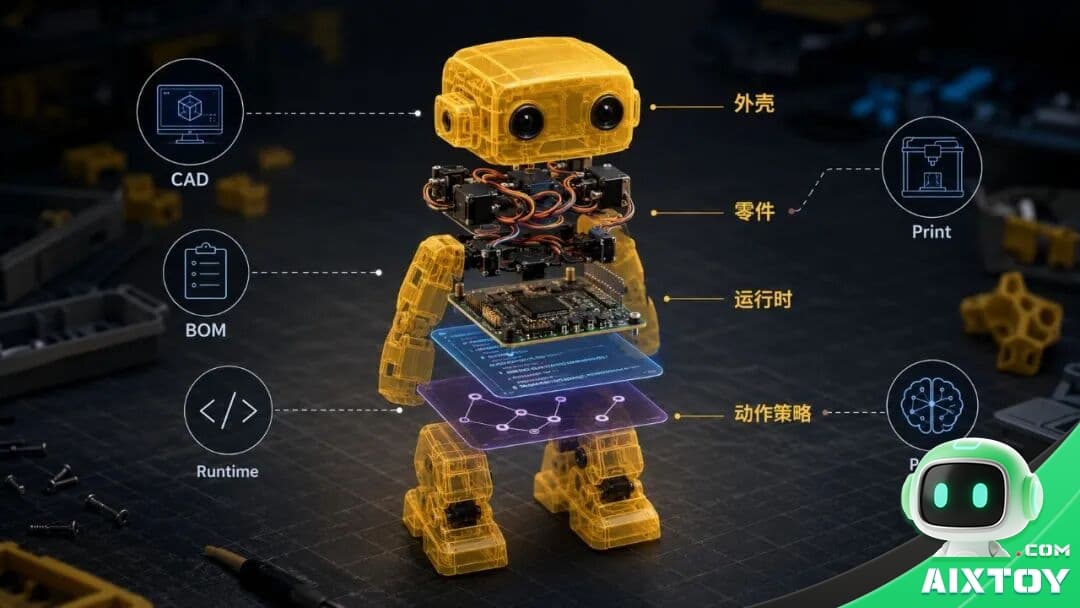
Now, the README also says something honest: this is still a working repo with quite a few undocumented scripts. That line matters. It signals that the project’s appeal and its barrier to entry exist side by side. You can modify it, learn from it, tinker with it — but it’s genuinely not for zero-experience users hoping to buy a plug-and-play companion. The draw here isn’t saving money over a toy. It’s getting to see how a robot actually moves, laid open in front of you.
And speaking of movement — Open Duck Mini’s approach to walking deserves its own moment.
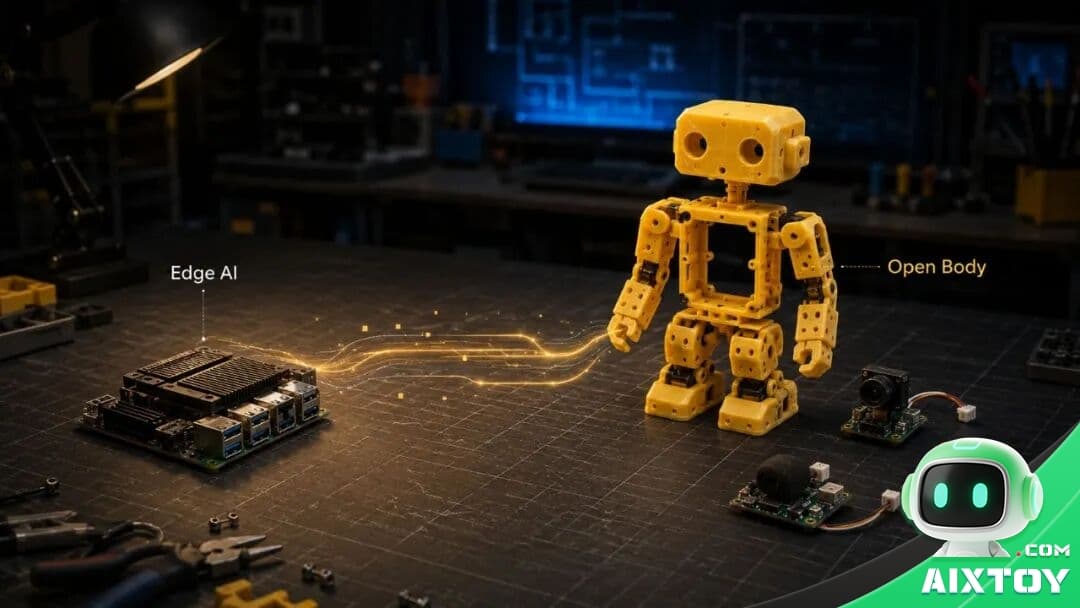
This robot doesn’t rely on remote-controlled pose sequences. README updates describe the project’s sim2real approach: train walking policies in simulation first, then transfer them to physical hardware. The repo provides a pre-trained walking policy that runs through an ONNX model. The team is also transitioning to Mujoco Playground for simulation training. On the hardware side, the Runtime repository handles deployment — with setup instructions for Raspberry Pi Zero 2W, IMU testing, motor control board configuration, motor tests, and more.
To be clear: this doesn’t mean it can autonomously handle complex tasks right now. A fairer description: it’s attempting to take a walking policy trained in simulation and land it on a physical robot that you printed and assembled yourself. Even just that, in the open-source hardware space, is already genuinely interesting.
Where Gemma 4 Fits In
Some recent coverage bundles Open Duck Mini with Gemma 4, suggesting the robot has vision capabilities and can hold conversations. Let’s unpack this carefully.
The Open Duck Mini repo focuses on open-source robot hardware, movement, runtime, and training resources. Gemma 4 is Google’s open model family, released in April 2026. Google’s official documentation notes that Gemma 4 supports multimodal input, vision, audio, function calling, and agentic workflows. The edge models — E2B and E4B — can run offline on phones, Raspberry Pi, and NVIDIA Jetson Orin Nano.
Put these two together and the picture sharpens. When a model can see, hear, and understand instructions on an edge device, the robot isn’t just executing fixed motions anymore — it has the potential to handle perception and decision-making locally. But the Open Duck Mini repo is not yet a finished product with full Gemma 4 vision-and-conversation integration. Third-party demos are worth treating as directional signals; the factual backbone still lives in the GitHub README.
What Gemma 4 adds to the story isn’t “a smarter chat window.” It adds a more grounded question: when edge models become small enough and capable enough, where should they live? Not just inside phones and laptops — maybe also inside an open-source walking body.
A Reality Check
If you’re already searching for a shopping link — pause. Assembling Open Duck Mini involves 3D printing, servo installation, IMU wiring, motor control board setup, Raspberry Pi configuration, I2C communication, SSH debugging, Python environments, motor tests, and offset calibration. This is not a weekend craft project for beginners.
The README also notes that some expression features remain unfinished: LED eyes, cameras, speakers, and microphones are still in development. The Runtime documentation includes several engineering-oriented warnings that underscore the point — this is not a zero-skill consumer toy.
So the audience is clear. For: robotics and open-source hardware enthusiasts, people with 3D printing and electronics assembly experience, developers exploring reinforcement learning, sim2real, or on-device AI deployment. Not for: those wanting a plug-and-play companion robot for the living room, those unwilling to debug hardware, those expecting an out-of-the-box experience.
Why This Matters Even If You Never Build One
So why should anyone who probably won’t build one pay attention? Because the shift it represents is larger than the project itself.
AI no longer lives exclusively inside browsers and phone apps. Open-source models are now running on edge devices. Open-source hardware is making robot “bodies” replicable. Robots may not first achieve mass adoption through expensive, finished products from major corporations. They might instead emerge from maker communities, school labs, and small teams.
This path isn’t unfamiliar. Most people never compiled Linux themselves — but Linux reshaped the server and device ecosystem. Most people never trained their own models — but open-source models are reshaping how local AI works. Most people won’t build their own robots — but when body designs, movement policies, and runtime code are all open-source, the barrier to entry drops for education, research, and hobbyist communities.
The most important thing about open-source robotics isn’t turning everyone into a mechanical engineer. It’s taking the questions — what is a robot, how does it move, how is it trained, how does it connect to AI — out of corporate labs and onto more people’s workbenches.
Open Duck Mini is still rough around the edges. It’s still fiddly. It’s still not something most people can directly replicate. But it paints a concrete picture: if AI is going to step out of the screen, the first step may not land in a shopping mall. It may land as a pile of open-source files, a bill of materials, a set of 3D printed parts, a Raspberry Pi, and a community of people willing to get their hands dirty.
AI’s first step out of the chat window might not be into a department store. It might be into a garage, a school lab, or a maker’s workbench.
Resources
- Open Duck Mini on GitHub: github.com/apirrone/Open_Duck_Mini
- Gemma 4 Official: blog.google/innovation-and-ai/technology/developers-tools/gemma-4
Tags:3D PrintingAIXTOYEdge AIGemma 4Open Duck MiniOpen SourceRaspberry PiRoboticsSim2RealSTEM Education