


No products added!
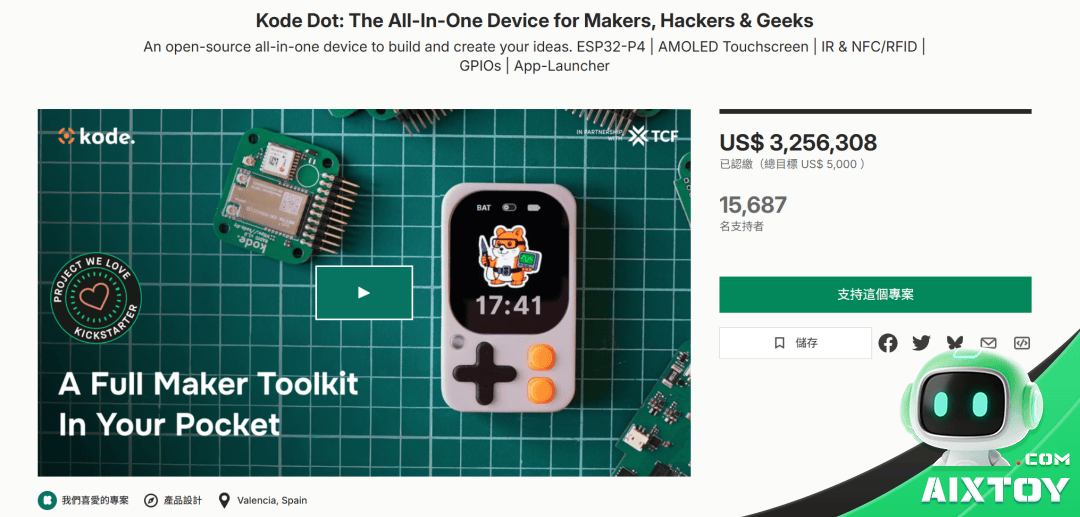
It looked like a crowdfunding project with no chance whatsoever. A credit-card-sized ESP32 development board with a laughably modest $5,000 funding goal. In an era where AI glasses and smart projectors routinely clear a million dollars in their first hour on Kickstarter, this number was so small it barely registered as a blip on the radar. The message it telegraphed was unintentionally honest: “We are not sure anyone wants this.”
Forty-nine days later, when the campaign closed on December 23, 2025, the numbers had become surreal. $1.75 million raised in the main Kickstarter phase. An additional wave of post-campaign pledges pushed the total to $3.2 million. 15,687 backers. From $5,000 to $3.2 million. A 550x multiplier that rewrote every assumption about what a “small hardware project” can achieve.
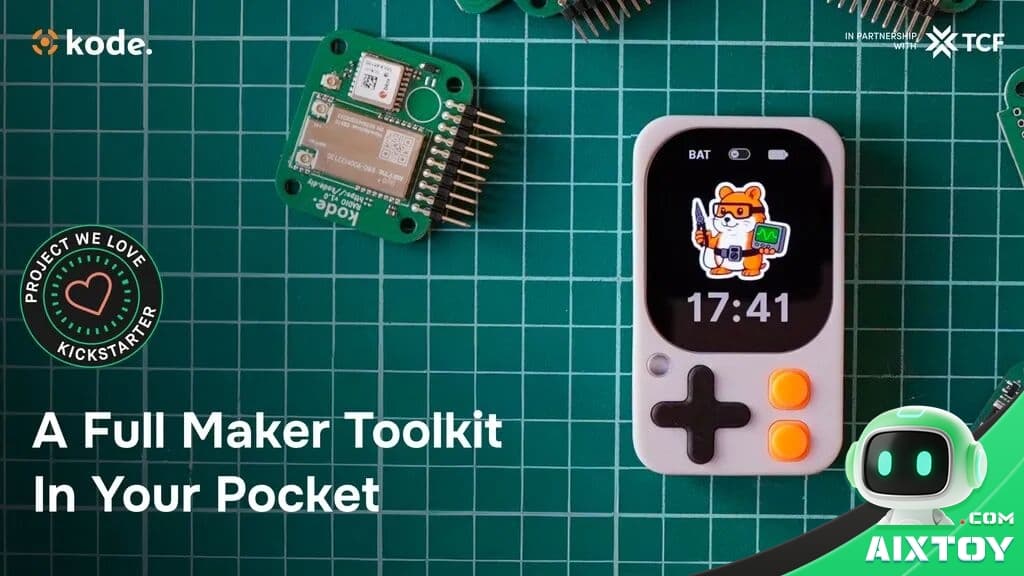
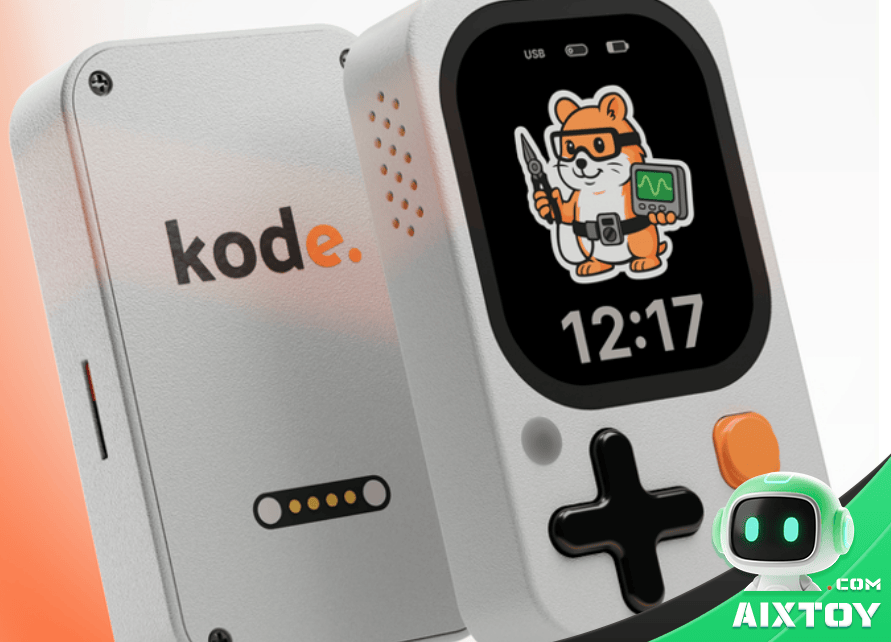
The product was Kode Dot, a 73×43×15mm pocket computer built around the ESP32-S3 microcontroller. And its story contains lessons that every hardware startup — especially those in AI, IoT, and robotics — should study carefully. Not because of the money raised. Because of how it was raised.
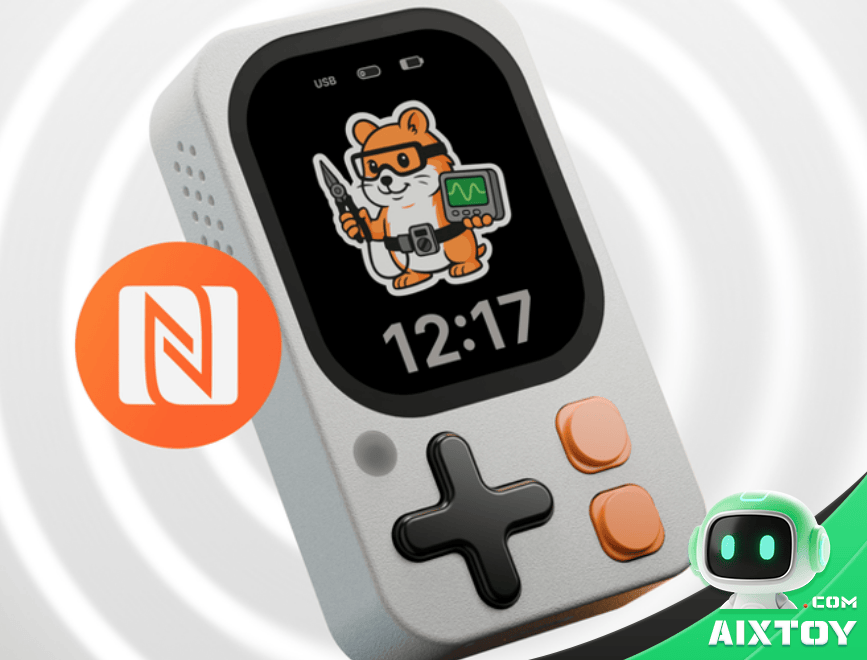
What Exactly Is Kode Dot?
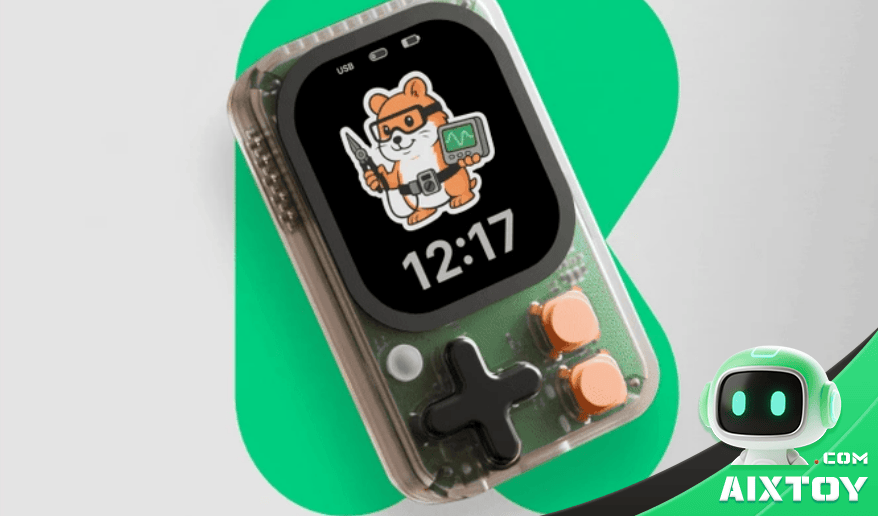
If you had clicked on the Kode Dot Kickstarter page on November 4, 2025, you would have seen what looked like an ambitious-but-unremarkable maker project. A tiny box — 73 millimeters wide, 43 tall, 15 thick. An ESP32-S3 dual-core processor running at 240MHz. A 2.13-inch AMOLED touchscreen. A 500mAh battery. Some sensors. A magnetic charging dock.
On paper, another ESP32 gadget in a market drowning in ESP32 gadgets.
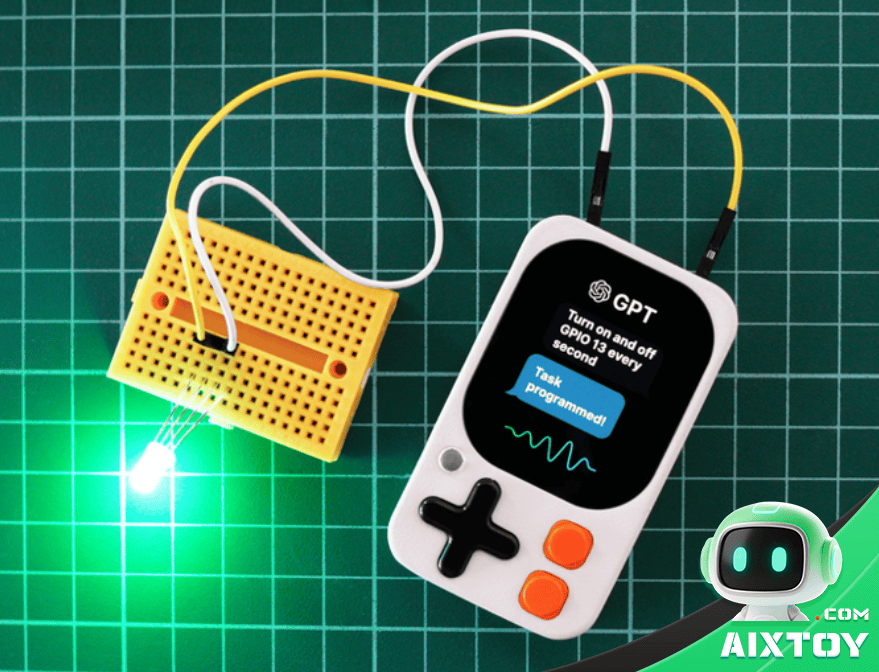
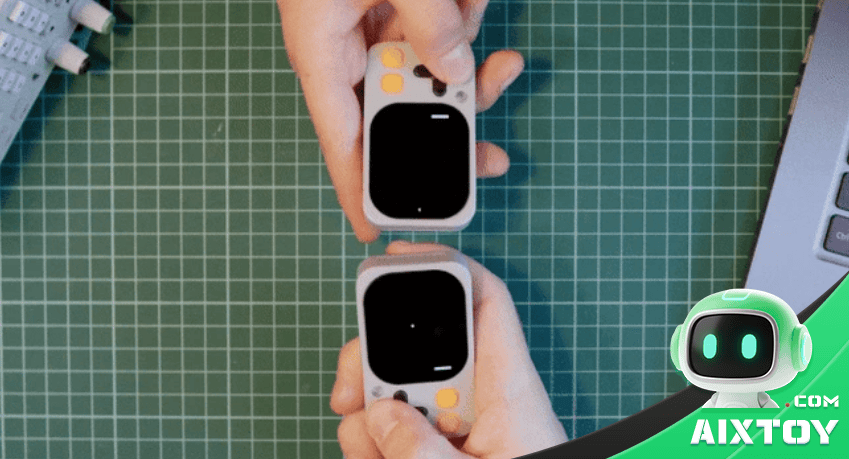
But look closer at what Kode Dot integrated into that credit-card footprint: a 9-axis IMU (accelerometer, gyroscope, and magnetometer), NFC/RFID reader, MEMS microphone, built-in speaker, addressable RGB LEDs, Wi-Fi, Bluetooth 5 LE — and the magnetic charging dock that turned module connections from “find your soldering iron” into “snap and go.” Every peripheral a maker typically spends hours wiring, debugging, and enclosing was already there, tested, and working.
This integration was the first insight. Traditional maker boards — Arduino, Raspberry Pi Pico, bare ESP32-DevKit — are half-finished products by design. You buy the brain. You source the sensors. You solder the connections. You design the enclosure. For experienced engineers, this is a weekend project. For everyone else, it is a barrier. Kode Dot eliminated the barrier without eliminating the openness. It was a finished product that remained fully hackable.
Why 15,687 Makers — Real Makers — Opened Their Wallets
Kode Dot did not succeed because of a viral marketing campaign. It did not have celebrity endorsements. It did not blast out press releases to every tech blog. The campaign page itself was not a glossy production — it looked like documentation written by engineers, for engineers.
That was the point. The 15,000+ backers were not casual gadget shoppers clicking “Back” on a whim. They were the kind of people who debate I2C bus timing on Reddit at 2 AM, who write their own embedded firmware because the default one is “too bloated,” who can look at a spec sheet and know within 30 seconds whether a project is legitimate or vaporware. These are the hardest people in the world to impress — and the easiest to lose with a single bad design decision.
Kode Dot won them over with three deliberate strategic moves that most hardware startups either do not understand or are too afraid to execute.
Move 1: Ship with Humility, Then Listen Aggressively
The original campaign placed NFC and RFID functionality behind a stretch goal — essentially telling the community, “We will add this if enough people fund it.” The community response was immediate and intense: NFC was not a nice-to-have for this audience. It was a core requirement for the access control, inventory tracking, and IoT automation projects that makers were already planning in their heads.
Within days, the Kode Dot team responded with complete transparency. They published a detailed breakdown of the bill of materials, explained the manufacturing cost implications of adding NFC to every unit, showed the revised PCB layout that would accommodate the change, and then restructured the campaign to make NFC a base feature. No corporate PR spin. No deflection. Just “here is what it costs, here is why we did not include it initially, here is why we changed our mind, here is the updated design.”
The response was not just approval — it was a massive surge of trust. Backers who had been on the fence committed. Existing backers increased their pledges. The transparency itself became the most effective marketing the campaign ever had.
Move 2: Let Users Define the Product Roadmap
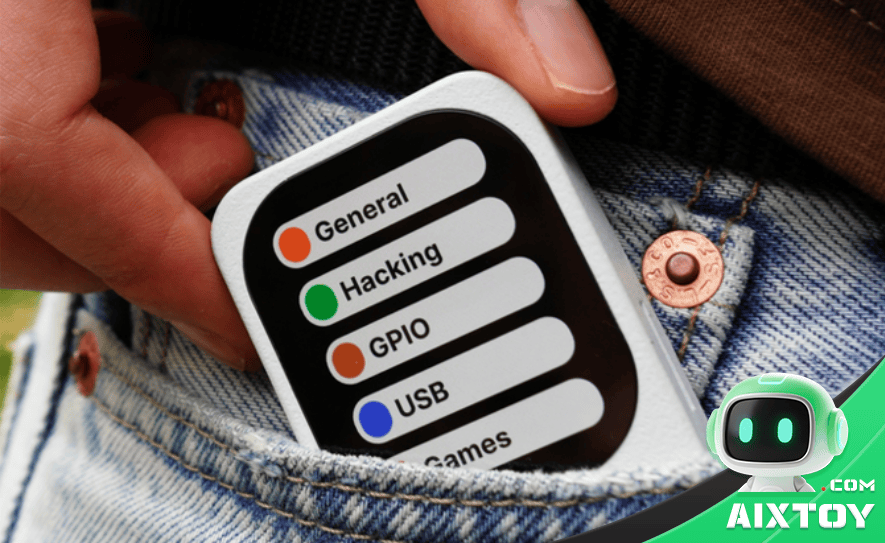
Kode Dot did not just ask for feedback in the comments section. It built formal infrastructure for community-driven product development during a live campaign. Backers could propose features. The community could vote on them. The team would respond with technical feasibility assessments, cost estimates, and timeline implications. Successful proposals were integrated into the campaign page itself — which went through three major revisions based on community input while the campaign was still running.
This is what business consultants call “reverse customization” — letting the market define the product before you build it. But Kode Dot took it further than any consultant playbook would recommend: they let users see the messy process. The rejected proposals. The cost trade-offs. The timeline risks. The result was that backers felt like insiders, not customers. And insiders evangelize in a way that customers never do.
Move 3: Open Source as a Moat, Not an Ideology
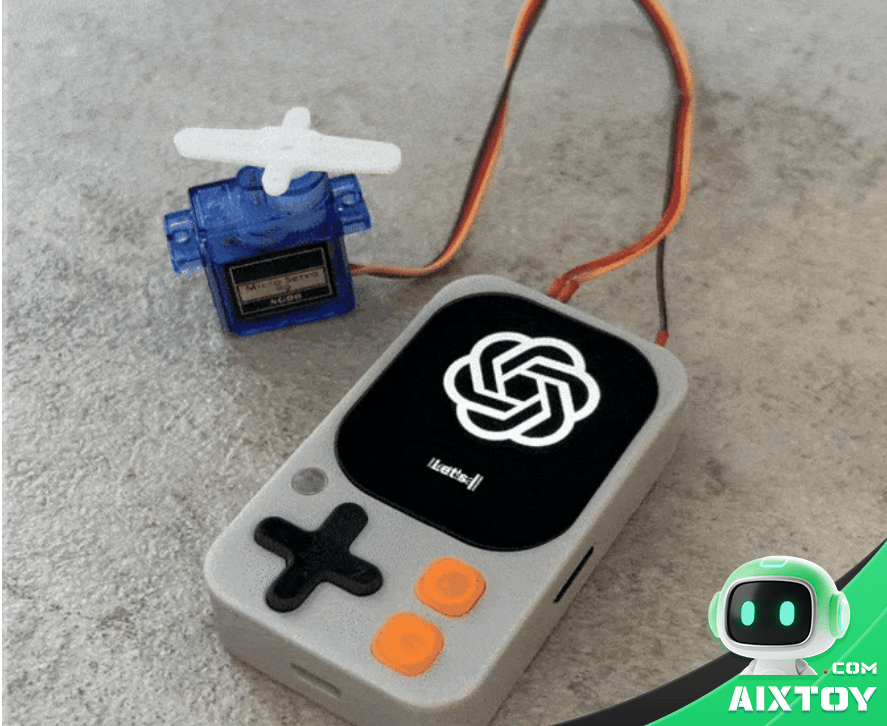
kodeOS — the operating system that powers Kode Dot — was open-sourced from day zero. This was not a philosophical commitment to the open-source movement (though the team clearly believes in it). It was a cold, calculated business decision.
By the time the campaign ended, the open-source community had already built third-party applications, drivers, and integrations that no startup engineering team — no matter how well-funded — could have produced alone in the same timeframe. The product was not just hardware and an OS. It was an app store that grew while the campaign was still live. Users were not buying a device. They were buying into an evolving ecosystem. The hardware was the entry point. The open-source community was the retention engine. And no competitor can easily replicate a community.
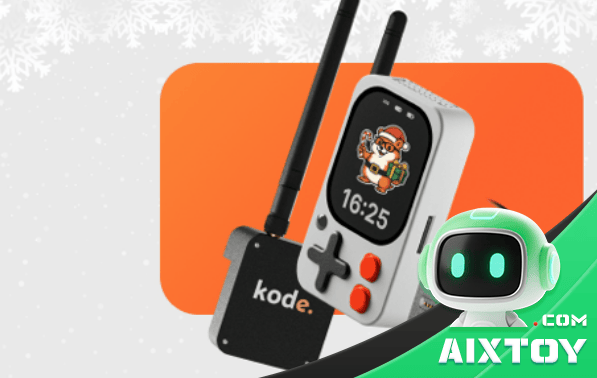
Kode Dot Specifications
- Processor: ESP32-S3 dual-core Xtensa LX7 @ 240MHz, 16MB Flash, 8MB PSRAM
- Display: 2.13-inch AMOLED capacitive touchscreen, 320×240 resolution
- Sensors: 9-axis IMU (BMI270 accelerometer + gyroscope, BMM150 magnetometer), MEMS microphone
- Connectivity: Wi-Fi 802.11 b/g/n, Bluetooth 5 LE, NFC/RFID (ISO 14443 Type A)
- Audio: Built-in I2S speaker + PDM microphone
- Lighting: Addressable RGB LED (WS2812-compatible)
- Power: 500mAh Li-Po battery, USB-C charging, magnetic pogo-pin charging dock
- Dimensions: 73 × 43 × 15mm
- Weight: 42g
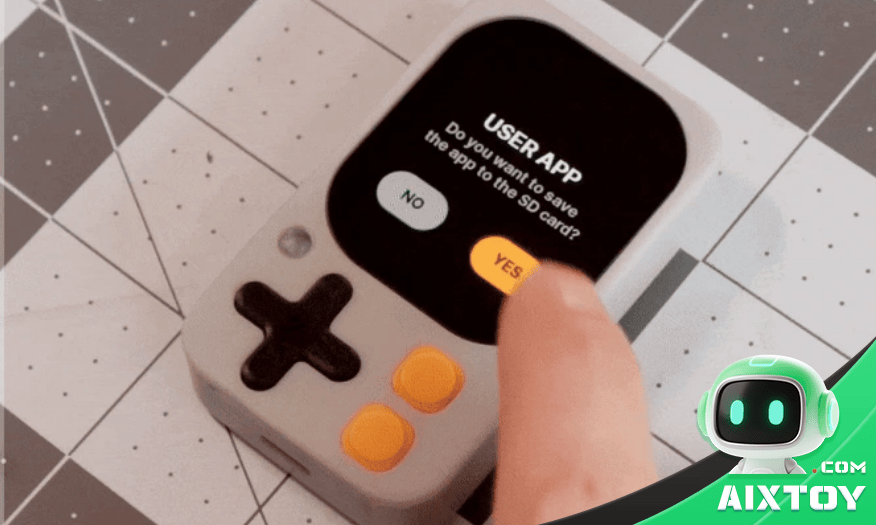
- OS: kodeOS (open source), MicroPython and Arduino IDE compatible
- Storage: microSD card slot (up to 256GB)
- Expansion: Magnetic dock with GPIO breakouts, I2C, SPI, UART
- Estimated Shipping: July 2026
Four Strategic Lessons for Hardware Founders
1. Integration Value Beats Price Competition
The market sent an unambiguous signal: makers and engineers will pay 10× more for a deeply integrated, immediately usable productivity tool than for the cheapest possible dev board. Kode Dot was not competing on price against $5 ESP32 modules. It was competing on time saved, friction eliminated, and polish delivered out of the box. “Better” beats “cheaper” every time when the target audience values their own time — and makers value their time enormously.
2. Open Source Creates Real Switching Costs
kodeOS did not cannibalize revenue. It built an ecosystem of third-party apps, libraries, and hardware modules that no competitor can replicate by simply copying the spec sheet. The moat is no longer the hardware. The moat is the community, the app catalog, and the accumulated knowledge base. Open source turned early adopters into co-creators — and co-creators do not switch to competitors.
3. Radical Transparency During a Campaign Is a Growth Lever
Kode Dot shared manufacturing constraints, component costs, PCB revisions, and design trade-offs publicly throughout the campaign. This did not scare backers. It made them feel like stakeholders. The campaign updates became genuinely interesting content that spread organically across Reddit, Hackaday, Twitter, and Discord servers. Transparency was not a risk management strategy — it was a distribution strategy.
4. Your Best Product Manager Will Never Be on Payroll
The most meticulously planned boardroom roadmap cannot compete with 15,000 passionate users who are also domain experts. Community-driven product definition is not a marketing tactic or a feel-good story. It is a genuine competitive advantage — and one that becomes stronger the more you use it. The most successful hardware products of this decade will not be designed in secret and launched fully formed. They will be co-created, iteratively and publicly, with the communities that will ultimately buy and champion them.
Beyond One Campaign: A New Hardware Paradigm
Kode Dot represents more than one successful Kickstarter. It signals that the old model — design behind closed doors, manufacture at scale, launch with marketing spend — is being replaced by a fundamentally different approach. Design in public. Build with the community. Launch with 15,000 evangelists who already feel like they helped create the product.
For AI hardware and robotics, where development costs are high, user needs evolve rapidly, and the gap between “what engineers think people want” and “what people actually want” is notoriously wide, this community-first model is not optional. It is the most reliable path to product-market fit — and the hardest one for competitors to copy.
Kode Dot ships in July 2026. Whether it becomes a sustainable business remains to be seen. But as a case study in launching hardware in the era of community-driven development, it is already one of the most instructive stories in crowdfunding history. The lesson is simple and uncomfortable: in 2026, the best product manager for your hardware startup is the person who just backed your campaign.
Explore programmable devices, DIY robot kits, and maker tools at AIXTOY Shop.
Tags:AIXTOYESP32-S3Hardware CrowdfundingKickstarter Case StudyKode DotMaker CommunityOpen Source HardwareSTEM Toy