


No products added!
In 2026, the dominant form factor for AI companions is a small robot sitting on a desk. It has a screen, some servos, and a personality. The category has become so standardized that the question of where an AI companion belongs seems already answered.
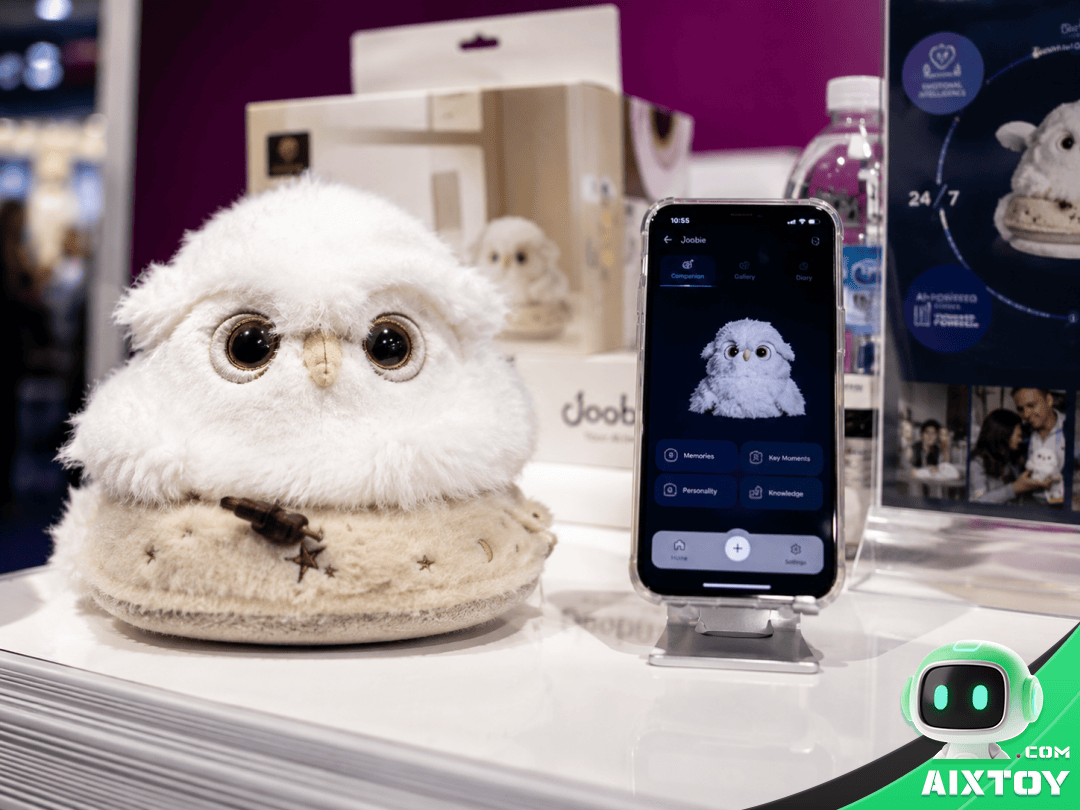
Joobie — a pocket-sized AI companion charm from Hugbibi that clips onto a bag, hangs from a keychain, or attaches to a jacket zipper — suggests the question was wrong all along. Not “where should an AI companion live?” but “should it be tied to a place at all?”
This is not a smaller desktop robot. It is a different product category entirely — one that repositions AI companionship from “home device” to “wearable accessory.” For an AI toy industry that has spent years iterating on screen size, servo precision, and model integration, Joobie raises an uncomfortable possibility: the next breakthrough might not be about more capability. It might be about more portability.
From Stationary Device to Carry-Everywhere Companion
Joobie is built around an owl-like character design. It has a compact display face for expressions, touch sensors for physical interaction, motion feedback, voice capabilities, and a personality system that evolves over weeks and months of interaction. The feature list is not revolutionary — dozens of AI pet products offer similar capabilities.
What is revolutionary is the product thesis: an AI companion should not ask users to come to it. It should go with them.
A desktop robot competes for attention with a monitor, keyboard, phone, and coffee cup. It occupies space that is already contested. A bag charm competes for attention with other accessories — and wins by being the only one that talks back. This is a fundamentally different competitive landscape, with different purchase psychology, different use patterns, and different distribution channels.
The interaction model shifts accordingly. A desktop AI companion says “come sit with me.” Joobie says “take me with you.” Touch becomes a primary input channel — holding, tapping, and carrying the device throughout the day. Voice becomes supplementary rather than central. The emotional relationship is built through physical proximity and shared context rather than conversation alone.
This constraint — the limitation of a tiny battery, a compact display, and a wearable form factor — actually produces better interaction design. When a robot cannot rely on a large screen and a powerful processor to impress users, it must earn attention through character, responsiveness, and the quiet consistency of simply being there.
The Product as Social Object: Built-In Distribution
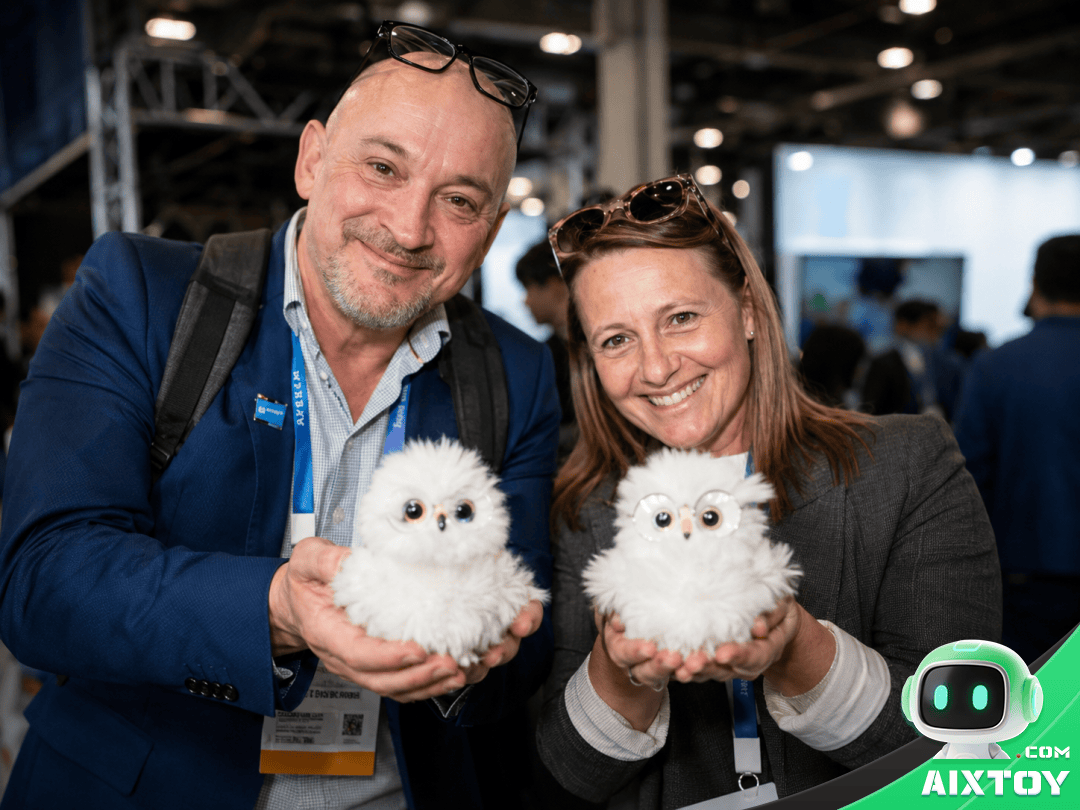
When someone carries Joobie on their bag strap, other people see it. The inevitable response — “What is that?” — is designed into the product experience, not added through a marketing campaign.
This visibility dynamic is well understood in fashion, accessories, and designer toys, but remains almost entirely unexplored in AI hardware. A desktop robot is seen by its owner and maybe a visiting friend. A wearable AI companion is seen by everyone the owner encounters — on public transit, in coffee shops, at coworking spaces, in university hallways.
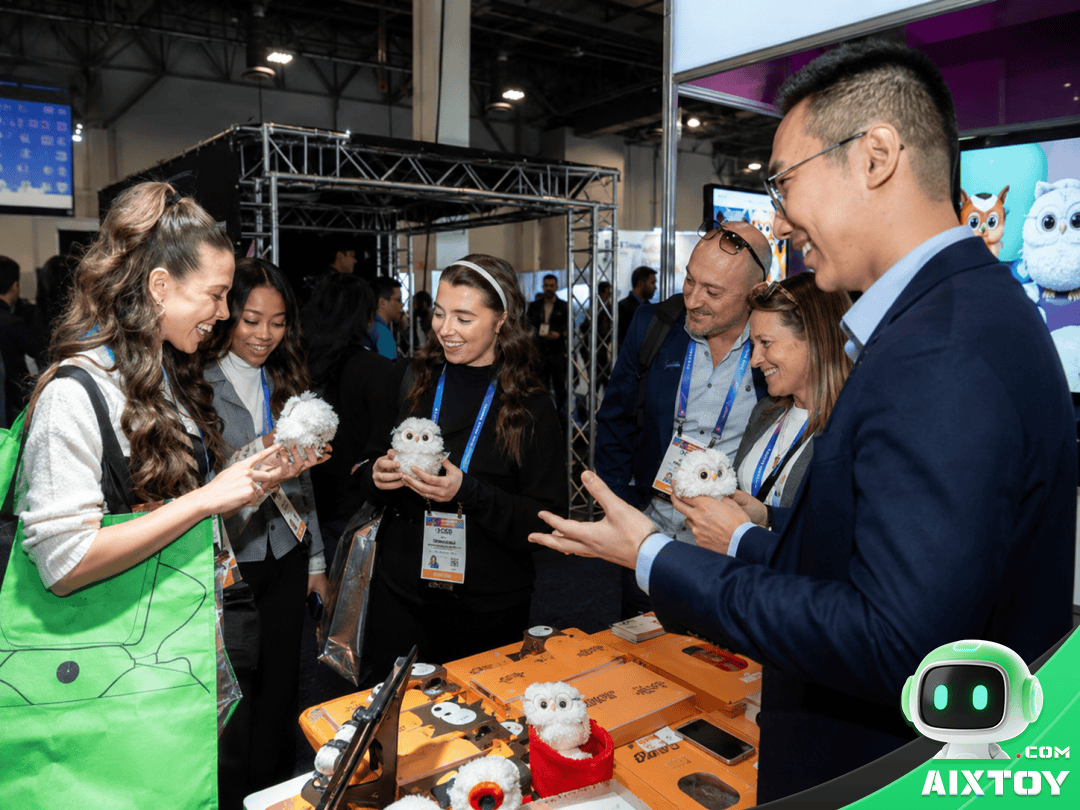
Visibility generates curiosity. Curiosity generates conversation. Conversation generates word-of-mouth distribution at zero marginal cost. The product becomes its own most effective marketing channel — not through paid ads or influencer sponsorships, but through the simple, unavoidable act of being worn in public. Every Joobie owner is a walking product demonstration.
This “social object” positioning also changes the purchase decision. People buy designer keychains, collectible bag charms, and limited-edition accessories as expressions of identity and taste — not as utilitarian tools. When an AI companion enters this purchase category, it benefits from existing consumer behaviors that are emotional, impulse-driven, and repeatable. Collectors do not buy one. They buy variants.
Designing for Emotional Portability
Building a wearable AI companion imposes design constraints that desktop robots never face. Weight must be measured in grams, not hundreds of grams. Battery life must survive a full day out, not a few hours on a charger. Durability matters — a bag charm gets bumped, dropped, and exposed to weather. The display must be readable in sunlight. The speaker must be audible in a noisy environment.
Joobie addresses this through focused constraint: a small but high-contrast display optimized for character expressions rather than information density, touch and motion as primary interaction modalities, and a personality system that prioritizes mood awareness and emotional responsiveness over conversational depth.
The result is a product that asks less of the user — less attention, less dedicated interaction time, less physical space — but maintains an emotional presence throughout the day. This is “emotional portability”: the ability for an AI character relationship to survive outside the home, moving through the world with its owner. It is a design challenge that most AI companion products have not yet attempted to solve.
Expanding the AI Toy Market Beyond Children
One of Joobie’s most deliberate strategic choices is invisible in the spec sheet but visible in every product photo: this is not positioned as a children’s toy.
The product language — bag charms, accessories, character collectibles, lifestyle imagery — speaks fluently to young adults who already spend disposable income on designer keychains, blind-box figures, enamel pins, and limited-edition collaborations. These consumers do not need to be educated about why someone would buy a decorative object for emotional reasons. They are already doing it. Joobie simply adds AI capability to a purchase behavior that already exists.
This is a strategically significant expansion of the AI toy market. Children’s AI products face a gauntlet of barriers: parental gatekeeping, screen-time concerns, educational value scrutiny, safety regulations, and age-appropriate content requirements. Adult accessories face none of these. The purchase decision is individual. Price sensitivity is lower. Regulatory friction is minimal. And the product can live in fashion boutiques, lifestyle e-commerce, tech accessory stores, designer toy shops, and gift catalogs — distribution channels that children’s toys cannot access.
What This Signals for the AI Toy Industry
Joobie is not proof that AI charm pendants will replace desktop robots. It is evidence that the AI toy product category is diversifying faster than most industry observers expected.
The first-generation question was: “Can we build an AI toy that talks?” The second-generation question was: “Can we build one that remembers and grows?” Joobie asks a third-generation question: “Can we build an AI companion that fits into a lifestyle, not just a room?”
This evolution from capability-driven product definition to context-driven product definition is likely to define the next wave of AI companion hardware. The winners will not necessarily have the best language model, the most precise servos, or the highest-resolution display. They will be the products that find the most natural, frictionless, and persistent place in a user’s daily life — at home, at work, and everywhere in between.
For AI toy companies, the product questions worth asking are shifting:
- Can it be carried, or is it stuck on a desk?
- Can it be part of an outfit, or is it hidden at home?
- Does it have an accessories ecosystem, or is it a one-and-done purchase?
- Is there a social sharing moment built into the experience?
- Does it still feel fresh on day 30, day 90, day 365?
- Can it evolve from a single product into a character IP?
These are different questions from the spec-sheet checklist of processor benchmarks, sensor counts, and API integrations. They point toward a more mature, more diverse, and ultimately larger AI toy market — one where products compete on context and character, not just capability.
Sources: Hugbibi official website, Joobie Kickstarter/BackerKit pages, CES 2026 coverage.
Explore AI companions, wearable tech, and interactive toys at AIXTOY Shop.
Tags:AI CompanionAI Pet CharmAI Robot ToyAIXTOYHugbibiJoobieWearable AIWearable Robot