



No products added!
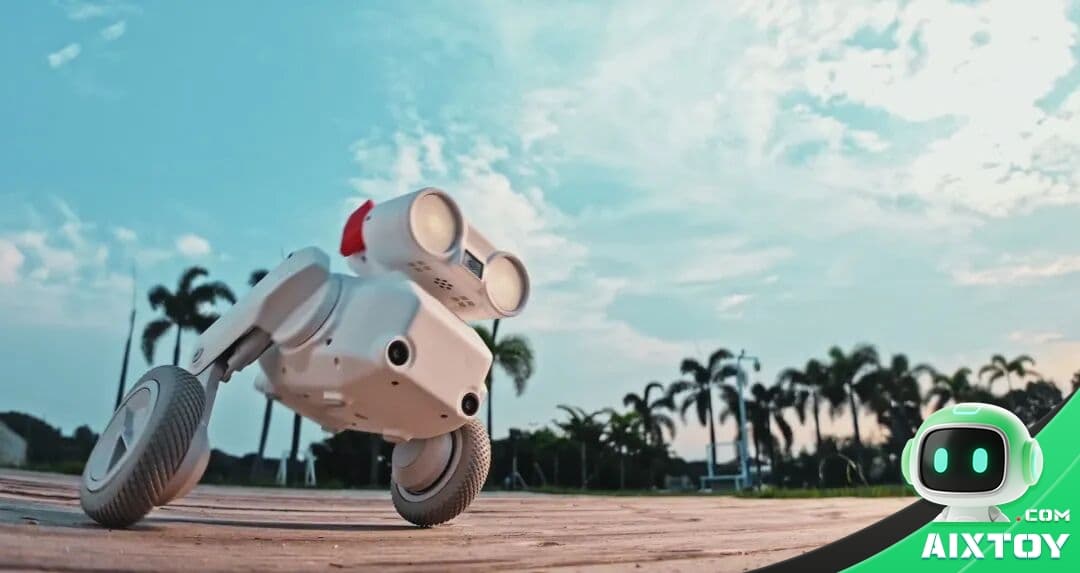
Mondo Robotics is quietly warming up something called Beni. The website defines it with disarming simplicity: “Your First Camera Robot.” A wheeled, all-terrain, auto-following, auto-editing robot with a 4K camera — and a personality.
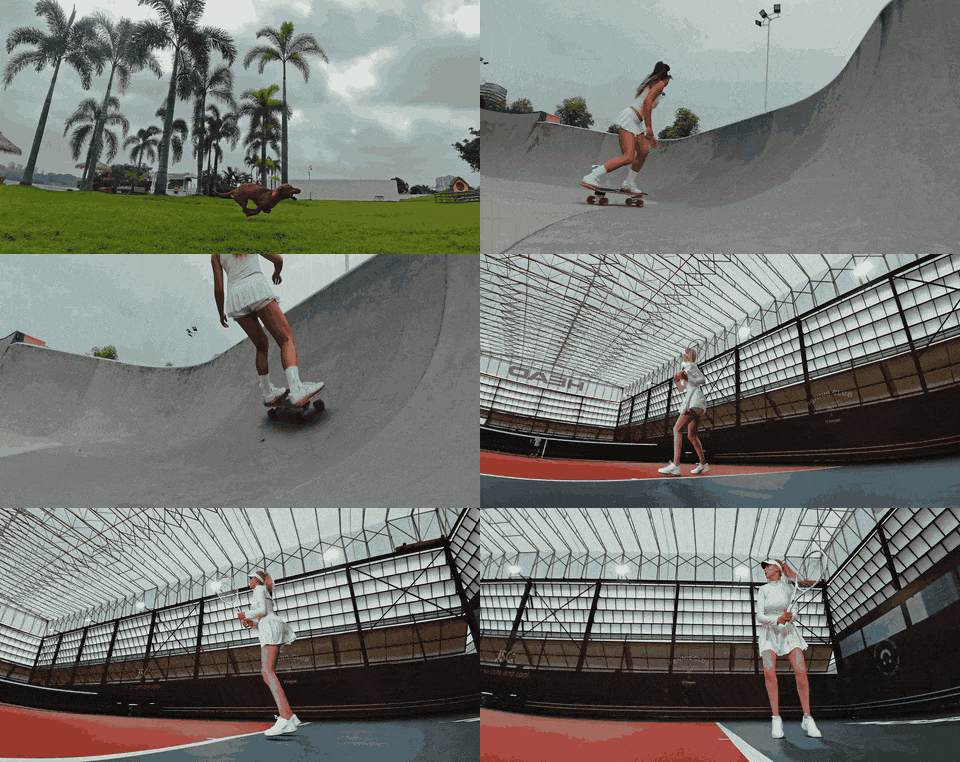
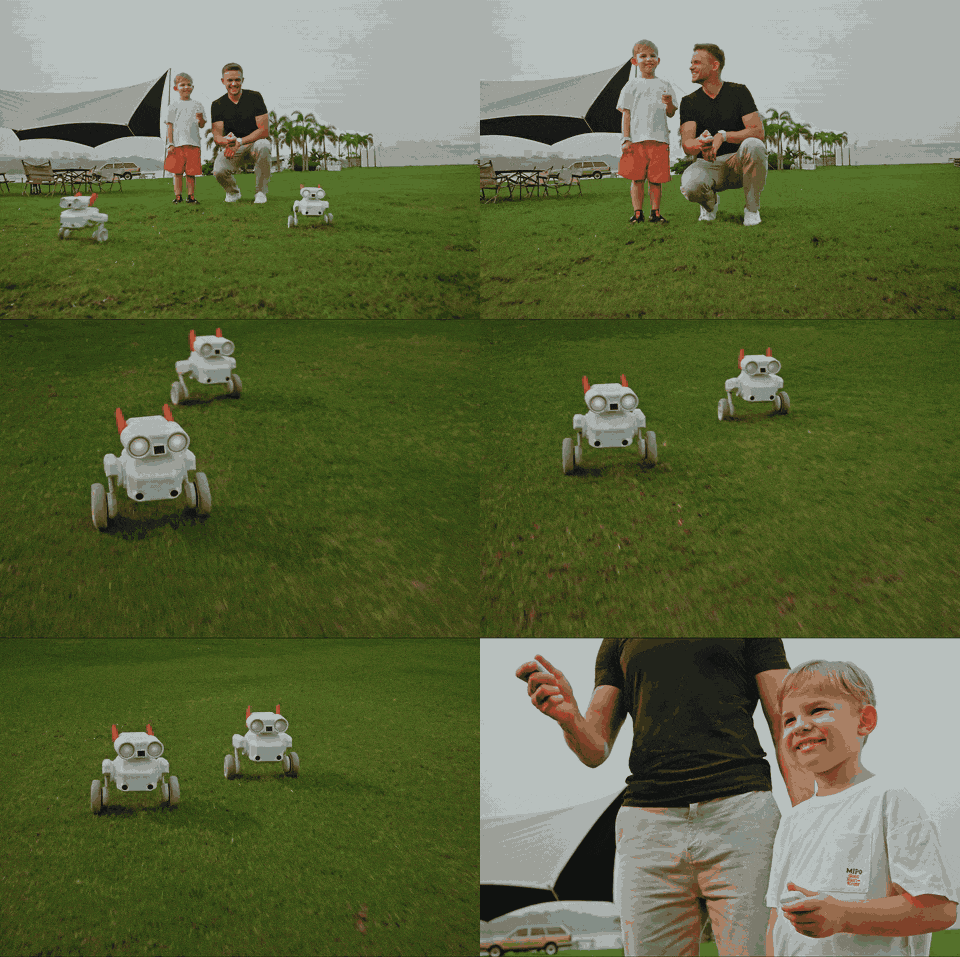
If you judge by appearance alone, Beni looks like a GoPro bolted onto an RC car. But that misses the point entirely. Beni is not trying to build a smarter action camera. It is solving a much more specific, much more relatable problem: when you are skateboarding, walking your dog, playing sports, or chasing your kids around the yard — who is filming you?
The old answers were tripods, gimbals, drones, or a patient friend holding your phone. Beni proposes a different answer: a small robot that acts as your personal mobile film crew.
This is what makes Beni worth paying attention to. The AI is not wrapped in an abstract “assistant” narrative. It is embedded in a concrete set of actions: follow, film, frame, edit. The intelligence serves a workflow, not a marketing pitch.
What Is Beni?
Beni is a consumer camera robot from Mondo Robotics, currently teased ahead of a Kickstarter launch. Its core specs read like a collision between an action camera and a robotic platform:
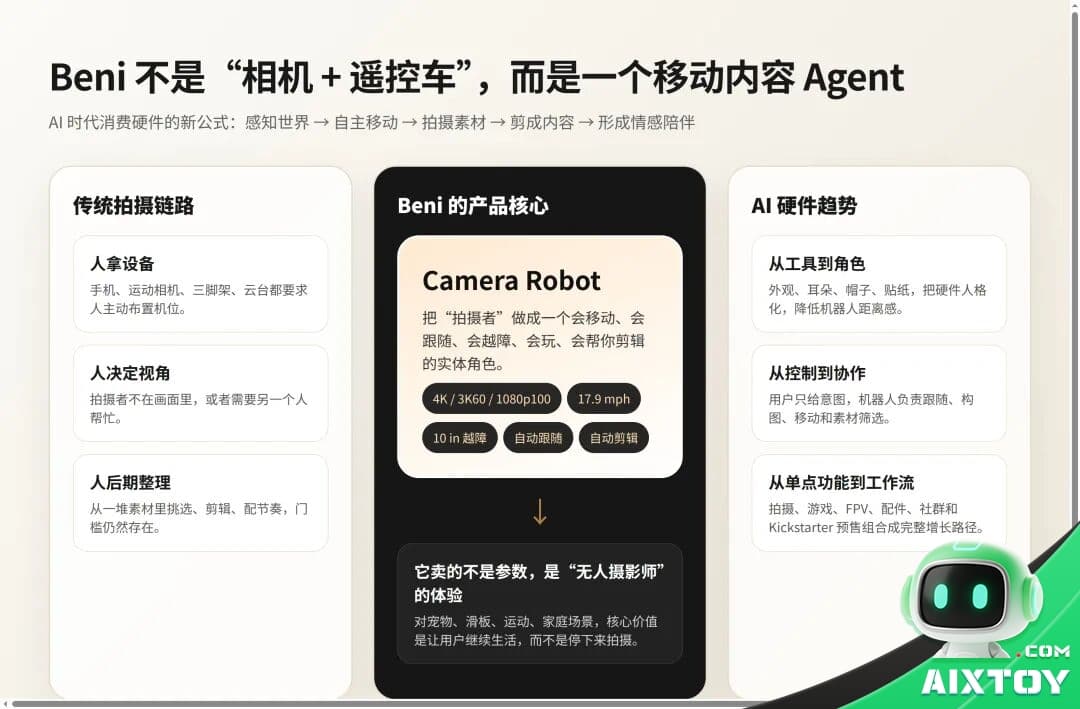
- 4K filming: 4K @ 30 fps, 3K @ 60 fps, 1080p @ 100 fps
- Auto-follow: Recognizes and tracks a person, maintaining cinematic shot composition automatically
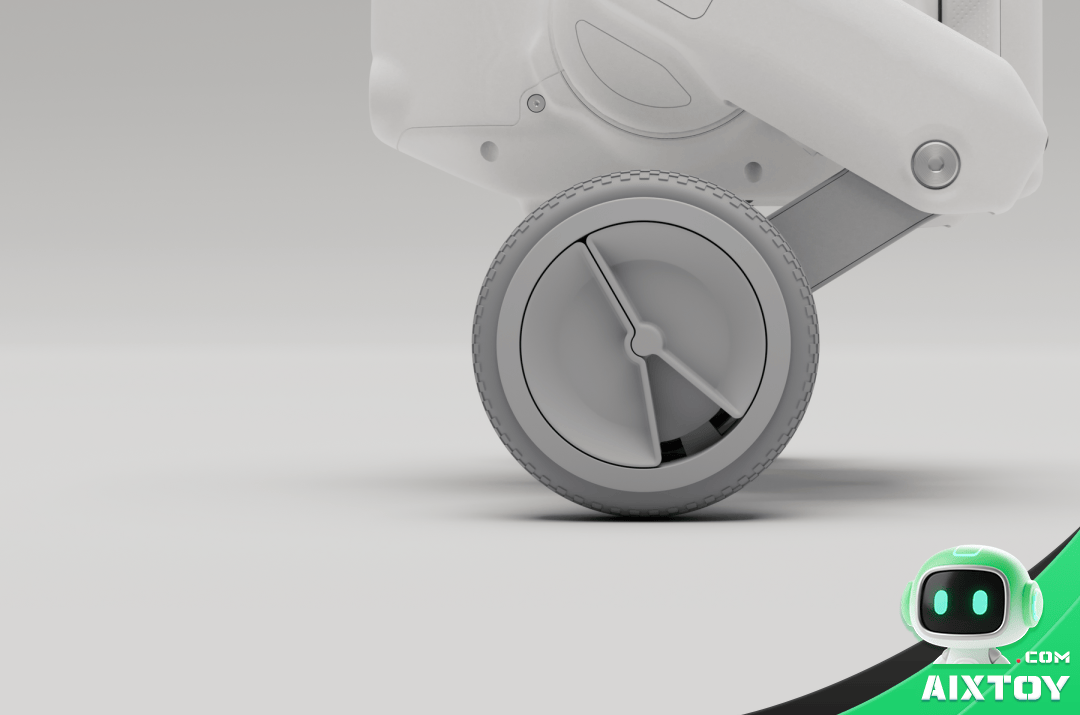
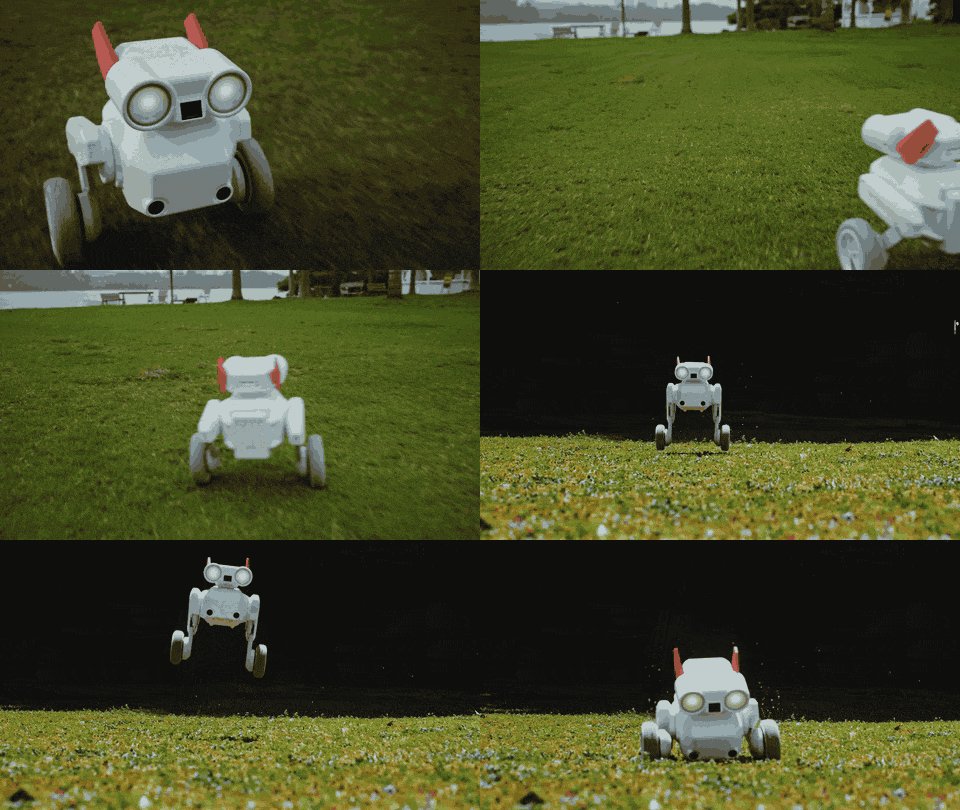
- All-terrain mobility: Top speed 17.9 mph, clears obstacles up to 10 inches
- Auto-edit highlights: Select favorite clips, Beni compiles a highlights reel
- Motion Controller: Direct manual control without a phone for movement, jumps, and photos
- Game Mode: Interactive games including tug-of-war
- Explore Mode: Real-time first-person view through the camera
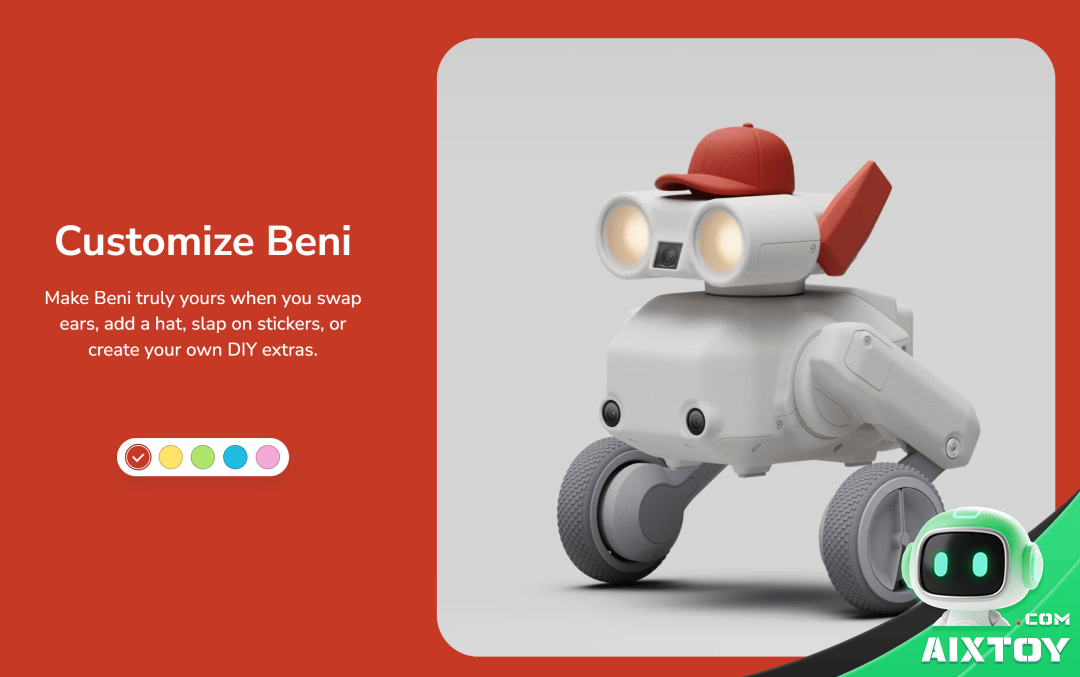
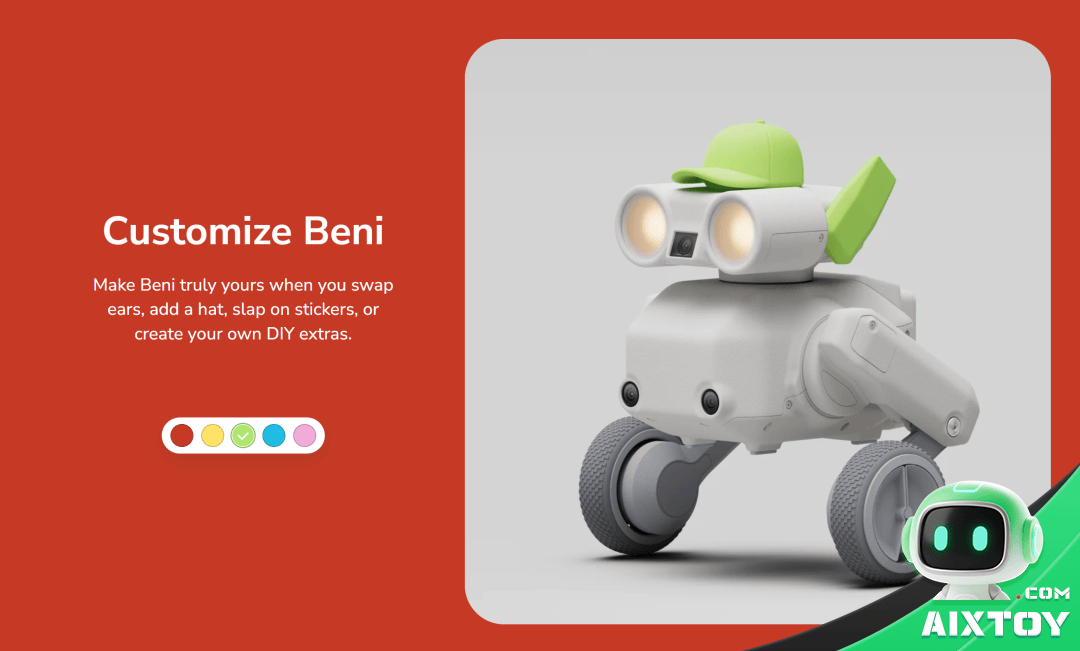
- Customizable accessories: Ears, hats, stickers, DIY/3D-printed add-ons
The official description: “Beni auto-follows and films you with cinematic shots from various angles — behind, side, or orbit — and is even capable of editing the highlights from your favourite clips.”
The keywords are auto-follows, films, various angles, and editing highlights. Beni is not content with being a fixed camera or a remote-control toy. It is trying to become a specific labor replacement: the person who films you while you do things that matter.

Why Build a Robot Instead of a Smarter Camera?
Because the problem is not camera quality. It is camera position.
Smartphone cameras are excellent. Action cameras are mature and reliable. The real bottleneck in content creation is physical: when you are the subject, where does the camera stand? When does it move closer? Circle to the side? Hold its distance?
Beni solves this with a wheeled mobility platform — filming from behind, from the side, in orbital tracking shots, adapting its position to maintain a cinematic frame without human intervention. Similar to what drones do for aerial footage, but applied to ground-level, pet-height, and action-following perspectives. Its low angle of view is distinctive: less surveillance device, more another participant on the field.
Obstacle Clearing: Where Beni Feels Like a Real Robot
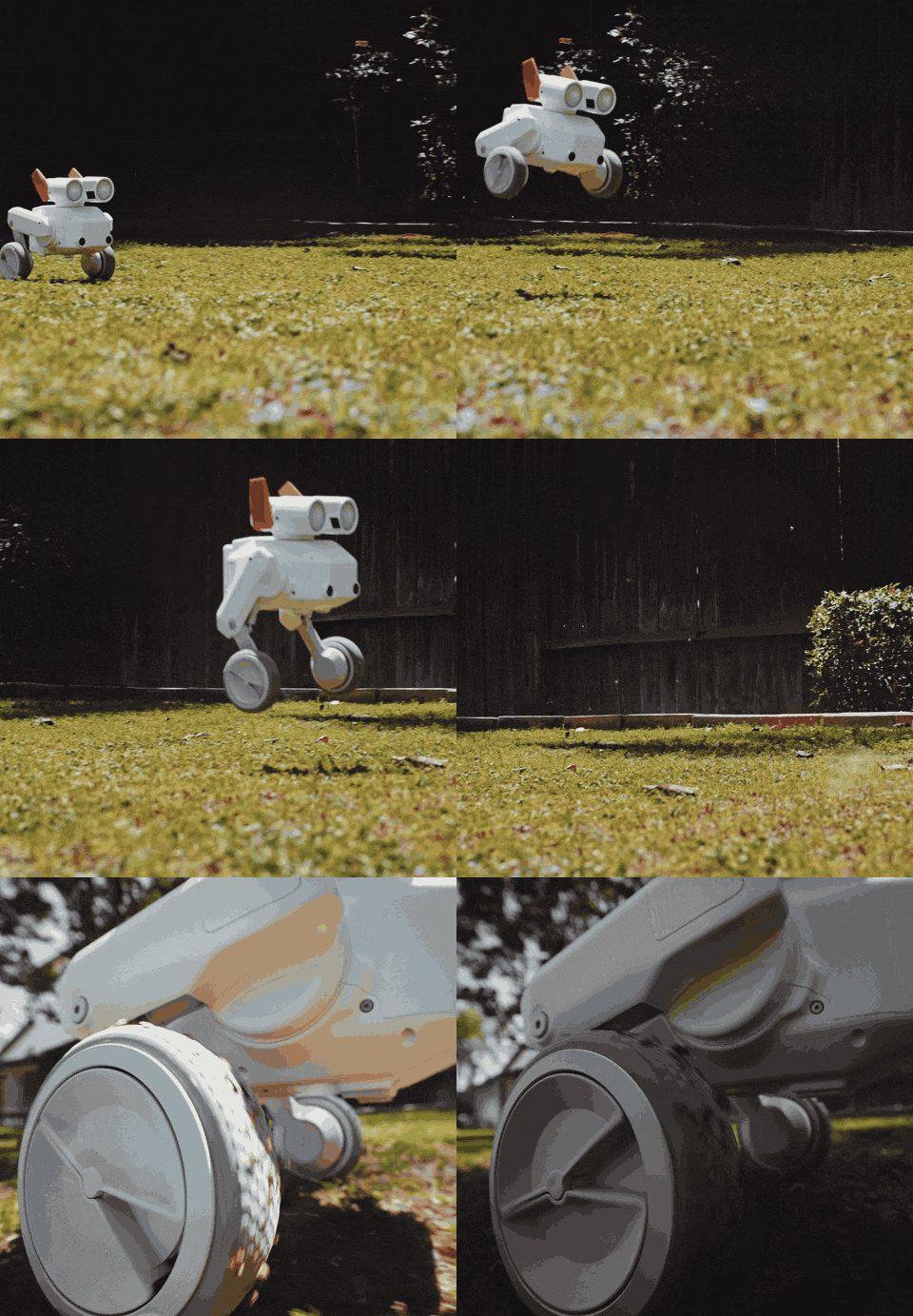
Buried in the spec sheet: clears obstacles up to 10 inches.
Mondo Robotics posted a “Stair Jump Challenge” video with a telling caption: “Push forward! BENI sees the stairs and decides to jump on its own.” The phrasing matters. It does not say “the user presses a button.” It says Beni sees and decides.
Marketing language deserves a discount — production-unit recognition stability, obstacle boundaries, and safety policies will only be known after deliveries. But the product narrative is clear: a camera-on-wheels gets boring. A robot that displays even a small amount of autonomous decision-making is a fundamentally different value proposition.

Auto-Edit: Solving the Post-Production Bottleneck
Filming is half the battle. Most action camera owners have hard drives full of footage they will never edit. Beni addresses this with Auto-Edit Highlights: select clips, Beni compiles a highlights reel automatically.
This is where Beni crosses from camera accessory into content production tool. It does not just capture moments. It turns them into something watchable — closing the loop from capture to shareable output. For parents, pet owners, and sports enthusiasts who want the video without the editing workload, this feature may be the difference between a device used daily and one that collects dust.

More Than a Camera: Games, FPV, and Personality
Beni ships with Game Mode supporting interactive tug-of-war and physical games


But the most strategically overlooked feature
Four Design Lessons from Beni for AI Hardware
1. Define the labor being replaced
Most AI hardware describes what it can do — “answer questions,” “recognize objects” — without clarifying which segment of the user’s labor it eliminates. Beni’s value proposition is specific: it replaces part of a photographer, part of a video editor, and part of a playmate. This clarity makes the yes/no purchase decision dramatically easier.
2. Robots need character, not just features
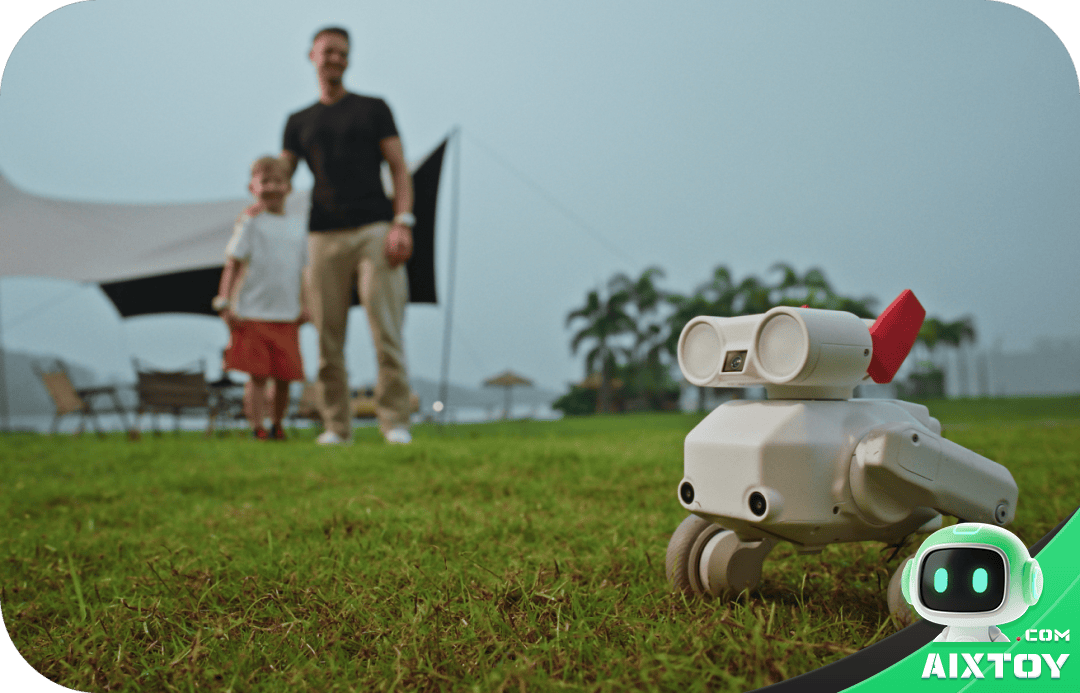
Ears, hats, stickers, a name, a “sidekick” narrative — all serve the same goal: making users willing to integrate Beni into their lives. Consumer robots do not enter factories. They enter living rooms, yards, skate parks, and dog walks. The design language for these spaces must lower intrusion, not amplify it.

3. Demonstrations beat specifications every time
The most effective content on Beni’s website is not the spec sheet. It is the action demonstrations

4. AI hardware is becoming workflow hardware
Previous hardware generations sold single-point capabilities: sharper photos
Beni Matters Because It Is Specific
Over the past two years, many AI hardware products failed for the same reason: they were too abstract. They wanted to be platforms, assistants, the next smartphone. But the problems people actually face every day are small and concrete: film myself skateboarding, capture my dog running, play with my kids without holding a phone, get the video without the editing.
Beni takes these small, concrete problems and wraps them in a cute, capable, wheeled robot. It has a specific use case seen in dynamic demonstrations, a personality, an accessories ecosystem, and a clear path to market. Plenty remains unproven. But the direction is more honest — and more interesting — than most AI hardware we have seen.
Stop trying to build the next general-purpose computing platform. Start by building something that enters someone’s life and completes one specific job — beautifully, reliably, and with personality. AI hardware gets genuinely interesting when ambition shrinks to something a person can actually use every day
Explore AI robots, camera drones, and interactive tech toys at AIXTOY Shop.
Tags:AI Camera RobotAI Robot ToyAIXTOYBeni Camera RobotKickstarter RobotMobile Filming RobotMondo Robotics