


No products added!
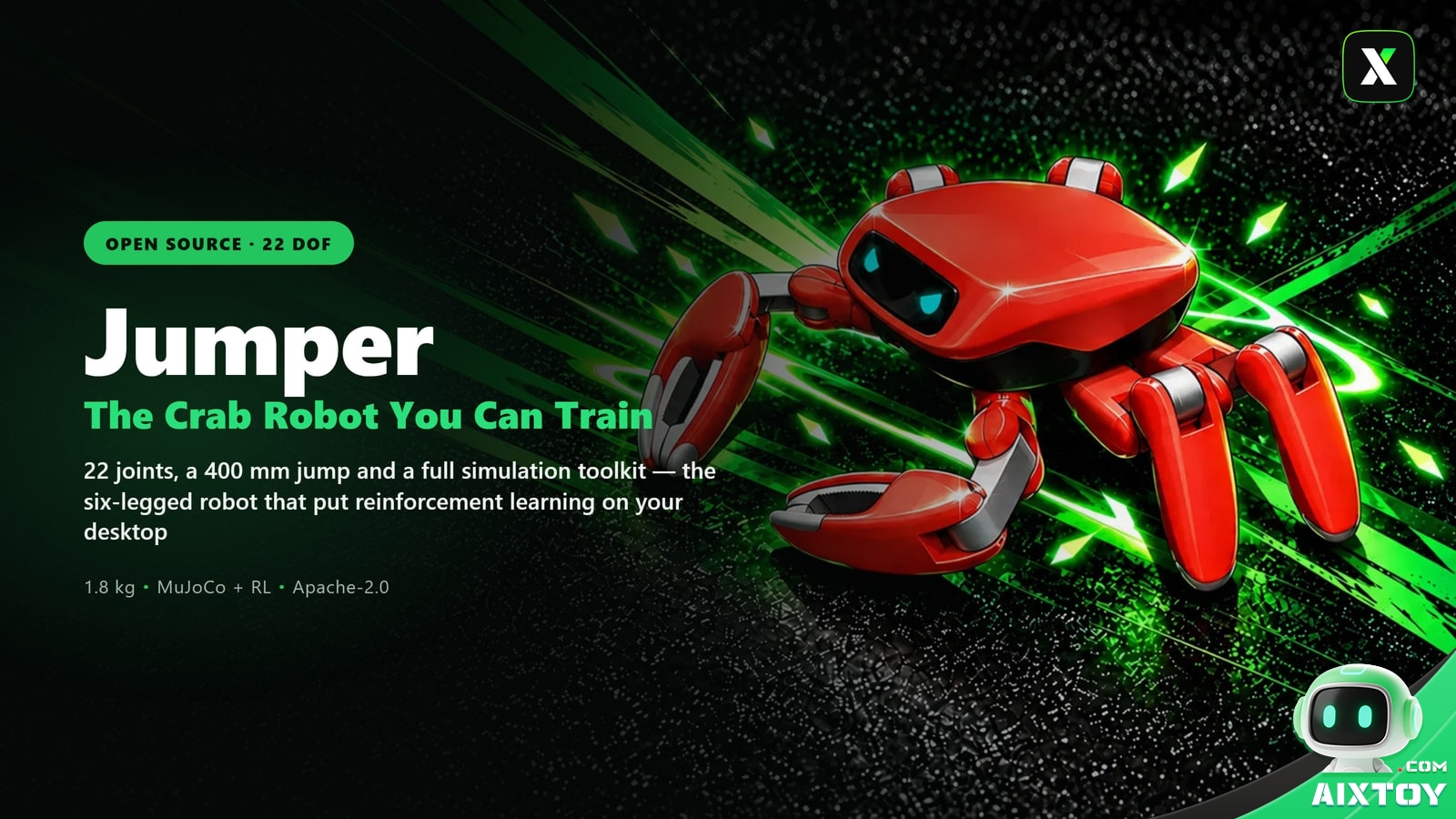
It jumped, it danced, it went viral three times. Then its makers published the training pipeline and offered 100 of them to anyone who could teach it something new.
The most repeated question under the videos was the simplest one: where can I buy it? A small red crab robot had walked sideways across the World Artificial Intelligence Conference in Shanghai, danced in time to a pop song at the World Robot Conference in Beijing, and been described on live national television as looking like a crab that had already been cooked. By the end of September 2026, the clip had passed ten million views, and the manufacturer had not put a price on it.
Instead, on September 30, KingKong Technology open-sourced the software that teaches the robot to move — and offered 100 engineering units as prizes to the people who do the most interesting things with it.
That combination — a crowd-pleasing robot, a published reinforcement-learning pipeline, and a competition with hardware as the reward — is a genuinely unusual way to launch a consumer machine. It is also a good deal more informative than a price tag, because the repository tells you exactly what the robot can do, and exactly what it cannot.
What Jumper actually is
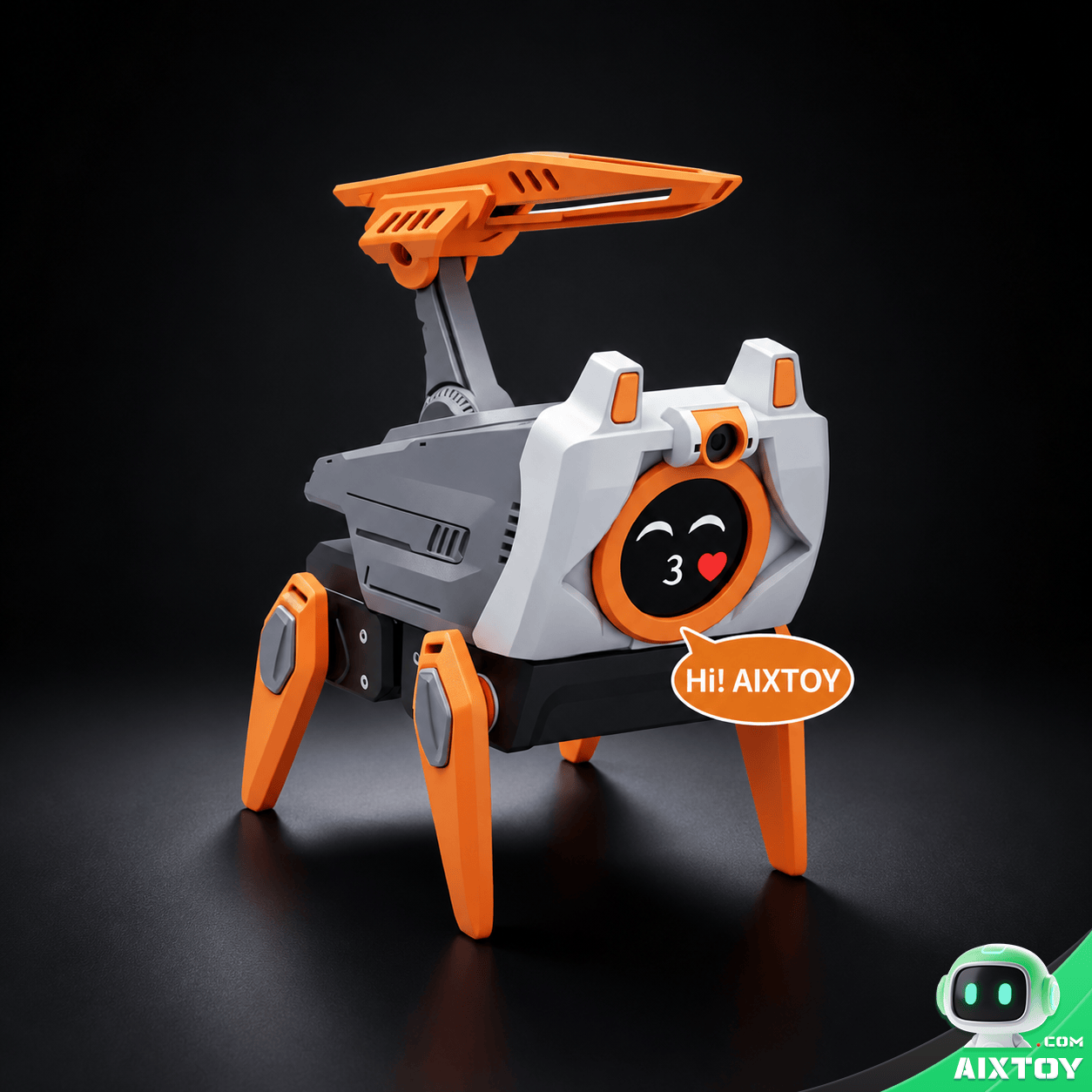
Jumper is a 22-degree-of-freedom six-legged robot from KingKong Technology, a Shenzhen company founded in 2017. It measures 400 × 400 × 200 mm and weighs 1.8 kg — the engineering prototype is heavier, at 2.8 kg — and it is unmistakably crab-shaped, with two forward claws and six legs.
The headline trick is the jump: the official figure is a maximum jump height of 400 mm or more, which is roughly the robot’s own body length. Getting a 1.8 kg machine to leave the ground and land stably means six legs have to cooperate through support, compression, take-off and landing while the body stays level. Walking is comparatively easy; the jump is where the engineering budget went.
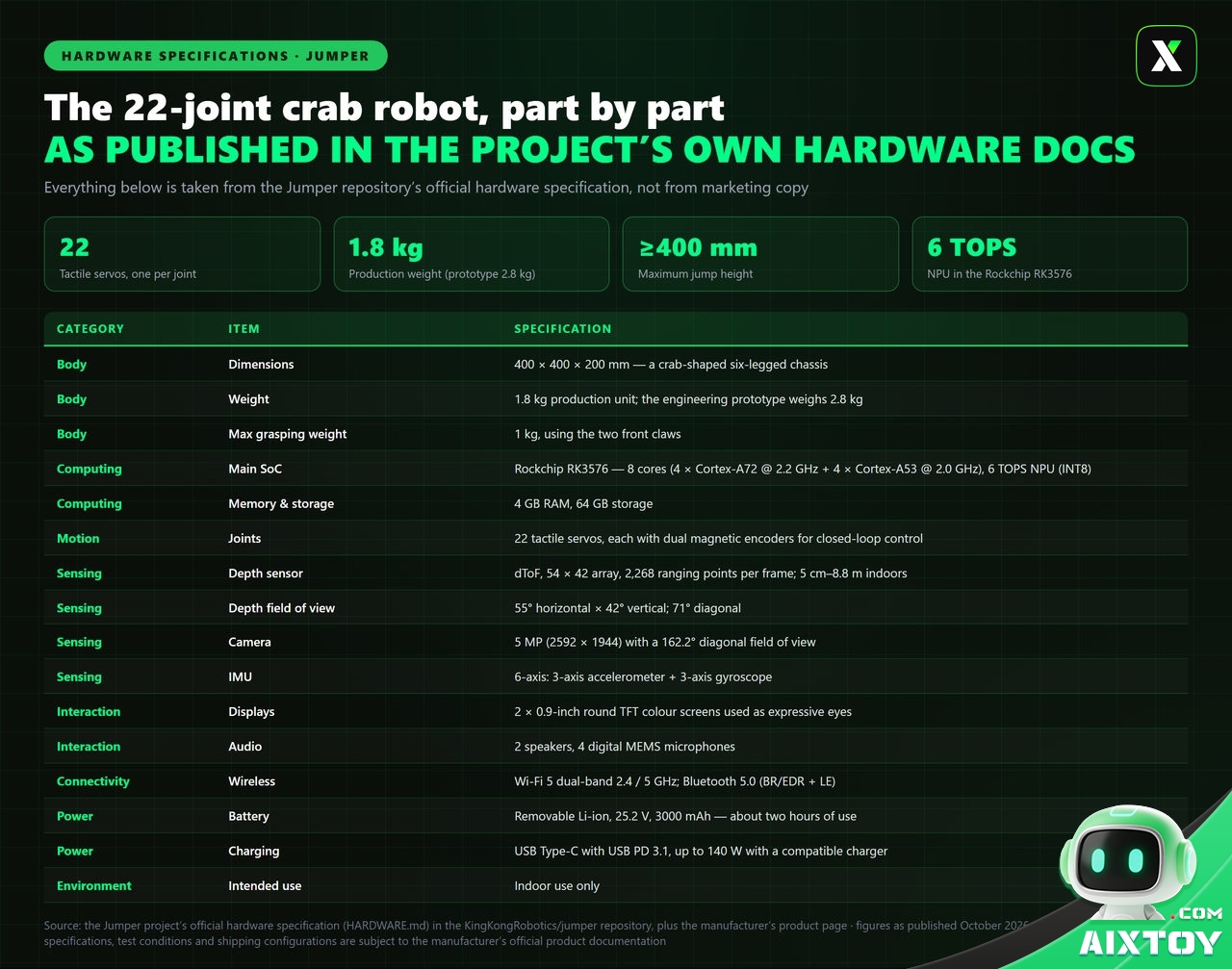
Each of the 22 joints is driven by a tactile servo developed in-house, and each servo contains two magnetic encoders — one reading the motor output, the other reading the joint after the gear reduction. That second reading is the point. A controller that only knows how far the motor has turned cannot tell whether the leg has actually reached the position it was asked for; a controller that can also see the joint can detect resistance, catch a failed step, and hold a posture under load. For a small robot where every millimetre of internal space is contested, that is the difference between a toy that mimes movement and a machine that can jump.
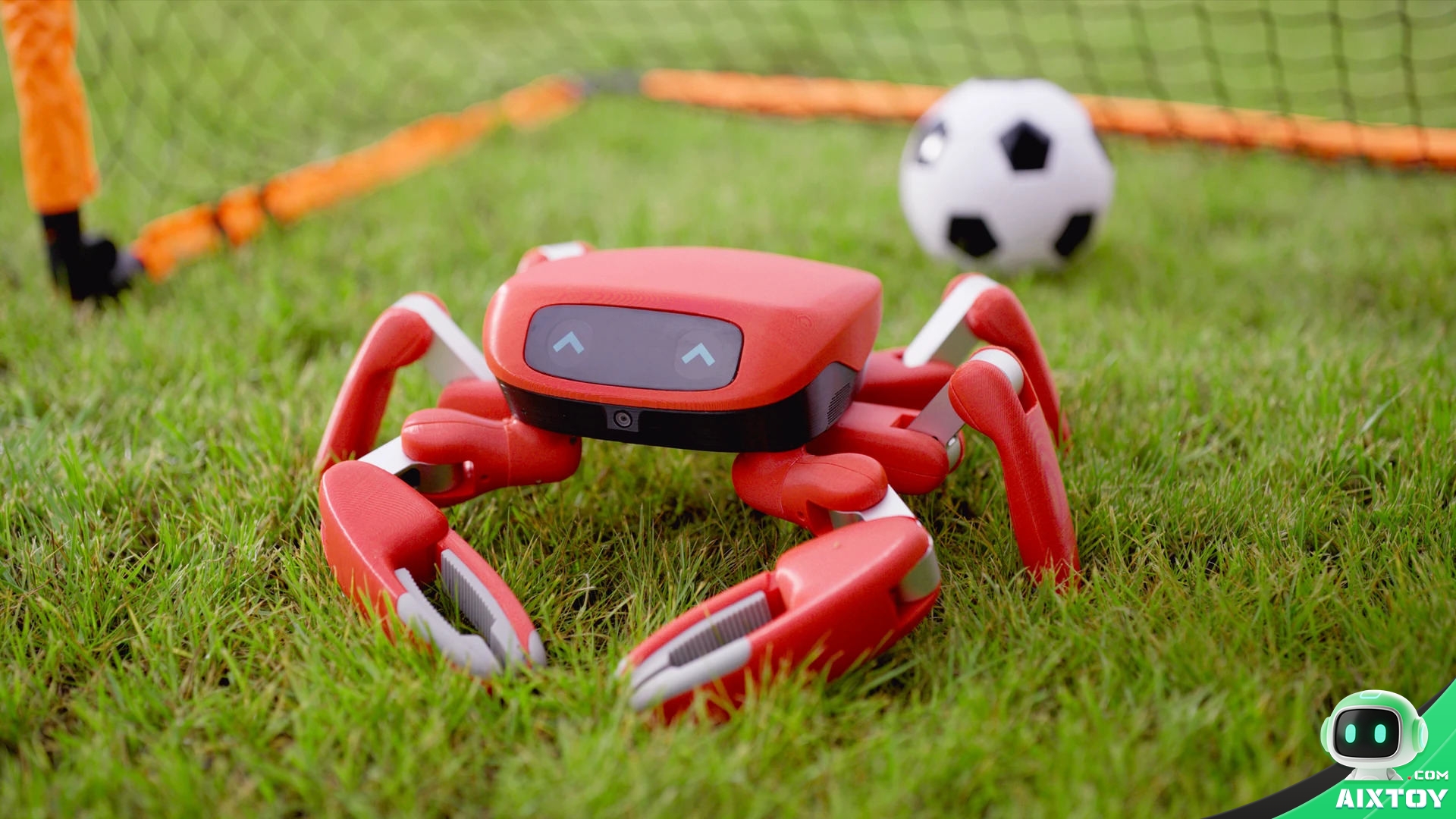
The brain is a Rockchip RK3576: eight cores split between four Cortex-A72 at 2.2 GHz and four Cortex-A53 at 2.0 GHz, a 6 TOPS NPU for inference, 4 GB of RAM and 64 GB of storage. Perception comes from a dToF depth sensor producing 2,268 ranging points per frame over a 5 cm to 8.8 m indoor range, a 5 MP camera with a 162.2-degree diagonal field of view, and a six-axis IMU. Interaction runs through two 0.9-inch round TFT screens used as expressive eyes, two speakers and four microphones.
Power comes from a removable 25.2 V, 3,000 mAh battery good for about two hours, recharged over USB-C with USB PD 3.1 at up to 140 W. It is an indoor robot; nothing in the documentation suggests it should go outside.
One sentence to teach it a new trick
The repository is not a datasheet dump. It is an AI toolkit, and the project describes its three workflows with example prompts written in plain language. You open the repository in an AI coding assistant and ask:
- Design an appearance — “Design a warm sand ranger appearance for Jumper with coordinated body and limb colours, then export a
.skin.” - Train a motion — “Train a stable tripod gait for Jumper, replay and evaluate the result, then package it as an
.app.” - Create a scene — “Create a park pump-track scene for Jumper with rolling terrain, trees and benches, then export a
.map.”
Underneath, the training stack is a serious one: MuJoCo for physics, MuJoCo Warp for GPU-parallel simulation, mjlab and rsl_rl for the reinforcement-learning pipeline, and PPO as the learning algorithm. The project ships tasks for a tripod gait, walking, posture, gestures, beat-synced dance, jumping and two-claw grasping — and because the task configurations, reward functions and control parameters are all in the repository, you can rewrite them and retrain.

The detail that matters most for anyone without a workstation GPU: the pipeline runs on two backends. With an NVIDIA card it uses MuJoCo Warp on the GPU; without one it falls back to native MuJoCo on multiple CPU threads, with the same tasks and the same PPO code. It will be slower — the project says so plainly — but the barrier to entry is a laptop, not a lab.
Deployment is covered too. A trained policy can be exported to ONNX and converted to RKNN for the robot’s NPU, then wrapped with the controller and a state machine into an .app bundle. Libraries of ready-made skins and scenes are included, and everything is published under the Apache-2.0 licence.
What is open — and what very much is not
This is where the project becomes interesting, and where a careful reading pays off. Jumper is described as open source, and the software genuinely is. But the repository will not let you build the robot.
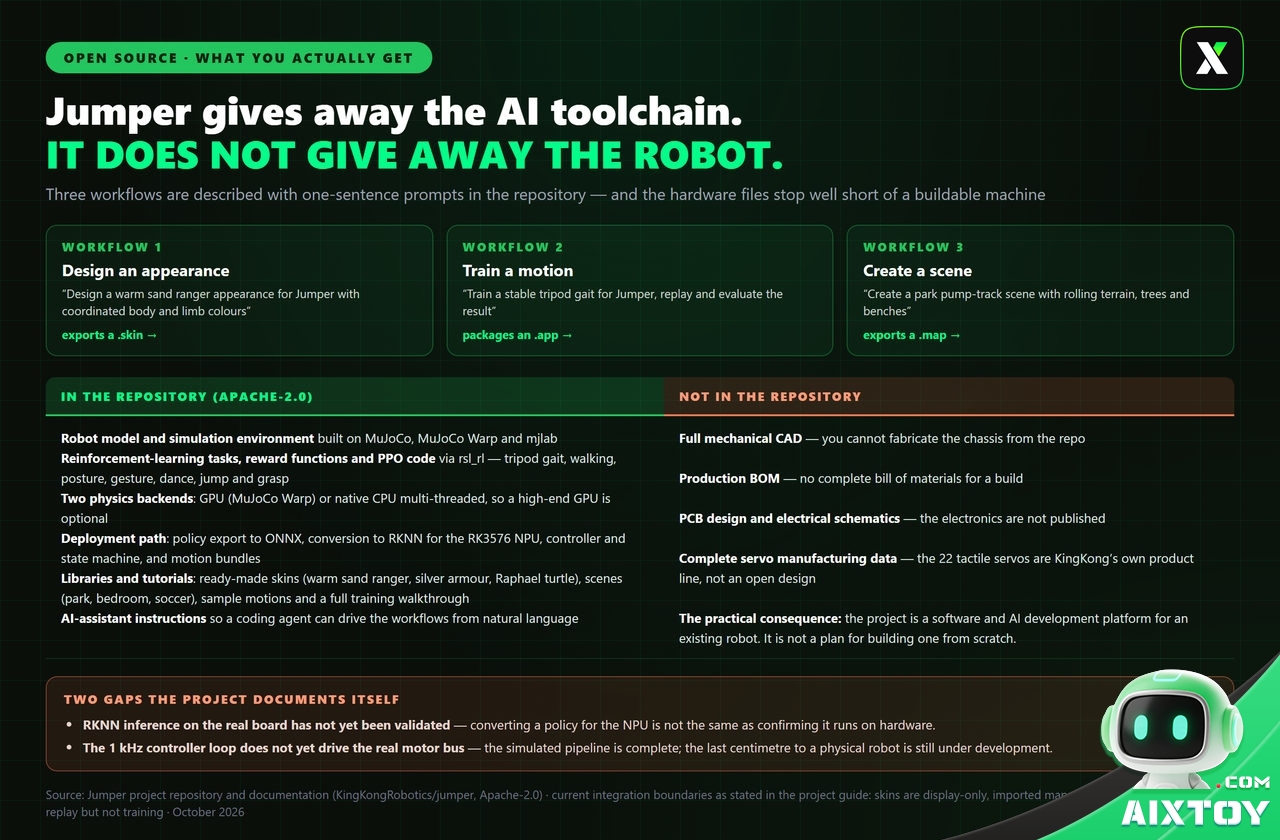
Full mechanical CAD, the production bill of materials, the PCB design and electrical schematics, and the complete manufacturing data for those 22 servos are all absent. That is a deliberate boundary, and a logical one: KingKong’s core business is those encoders and servos, which it sells to other robot makers. Publishing the AI stack costs the company nothing commercially and buys it a developer community. Publishing the hardware would hand over its product.
The project is unusually honest about a second boundary, too. Its own documentation states that RKNN inference on the real board has not yet been validated, and that the 1 kHz controller loop does not yet drive the real motor bus. In other words, the path from a trained policy to a moving physical robot is complete in simulation and still in progress in reality. The project also notes smaller current limits: skins are display-only, imported scenes can be replayed but not used for training, and the training tool has no .skin loader.
None of that undermines the release. It simply defines it correctly: this is a software and AI development platform for an existing robot, not a plan for assembling one from parts. The realistic route today is to develop skills in simulation and then work towards hardware with the company’s support — which is precisely what the competition is designed to find.
The competition: 100 robots, judged 60% on how many people watch
The Crab Robot Open Source Challenge opened for entries on September 30, 2026, jointly run by KingKong Technology and Douyin’s technology arm. There are 100 Jumper engineering units as prizes, and the entry requirements are deliberately low.
Participants build something with the open toolkit — an appearance, a movement, a scene, a role or a task — record a video of at least 15 seconds, and post it to Douyin with the contest hashtags while tagging the founder’s account and the company’s. Crucially, you do not need a robot to enter: everything can be developed and demonstrated in simulation first. The company has also encouraged entrants to show the failures, not just the finished result.
The judging split is the part that says most about the intent: 60% video popularity, 40% expert scoring, assessed against three criteria that translate roughly as looks good, plays well, and does something useful. As the founder put it, an action that makes a hundred thousand people laugh and share is closer to real life than one that impresses three professors.
It is a clever piece of product research. A small robot’s possible uses are limited by the imagination of the company that built it; handing the toolchain to a few thousand developers is a cheap way to find out what people actually want, and the 100 units act as a hardware bonus for the ideas that survive contact with simulation.
The company behind it, and the price nobody has announced
KingKong Technology was founded in 2017 and spent most of its life as a component supplier: magnetic encoders first, then integrated tactile servos. By the company’s own account, its encoders now sit inside more than 80% of China’s humanoid robots. Jumper is its first move from selling parts to selling a finished product, and the shape of that product follows from the parts — a machine designed around joints the company already makes better than anyone else.
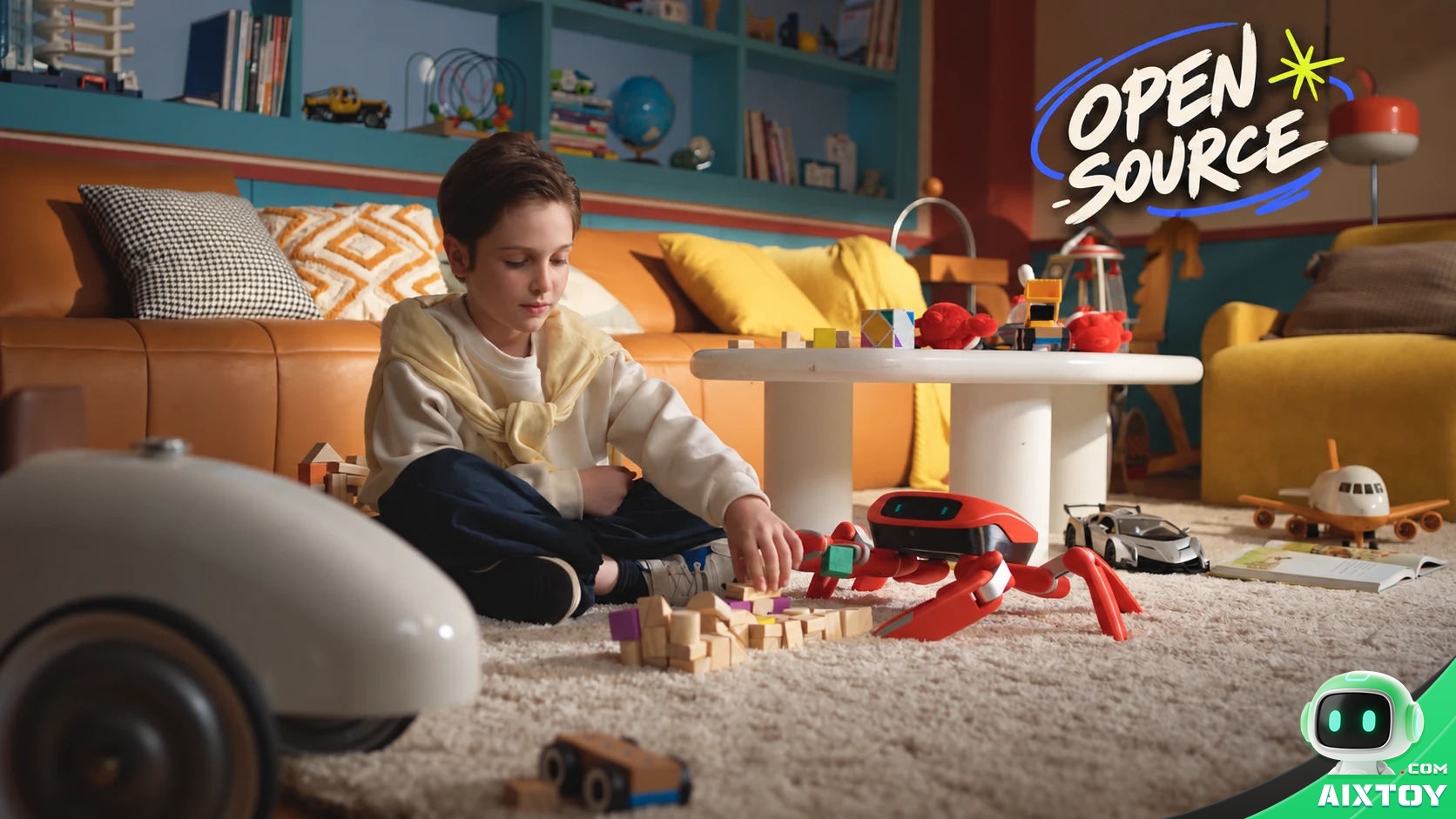
The commercial plan is the genuinely uncertain part. The company has said it is aiming Jumper at the thousand-yuan band — broadly the low hundreds of dollars, in the same territory as cheap consumer robots rather than research platforms — and has sketched a roadmap of quadruped pets and small bipedal humanoids at similar prices. But as of October 2026 there is no announced price, no launch date, and no retail channel: the product page says coming soon, and the robot cannot be bought anywhere, in China or abroad.
That is an unusual position for a device with over ten million video views and a GitHub repository near two thousand stars. It suggests a company that wants the developer community and the design feedback before it commits to a manufacturing run — and that treats the open-source release as market research with a very small budget.
The AIXTOY take
Strip away the viral videos and Jumper is the clearest example yet of a pattern worth watching: the robot is becoming the accessory to the software. Twenty-two servos and a depth sensor are hard to make, but they are no longer the scarce part. What is scarce is a training pipeline that a normal person can run on a normal computer, and that is exactly what KingKong gave away.
The honest limits are as useful as the capabilities. A robot whose own documentation admits the real hardware is not yet driven by the published controller is a robot in the middle of a transition, not a finished consumer product. Anyone tempted by the videos should read the repository first: it will tell them, in more detail than any marketing page, what they are actually getting.
Our read on the market is that the strategy is sound and the timing is early. Open-sourcing the software creates a developer base before the hardware exists; the competition converts that base into tested use cases; and if the thousand-yuan price lands, the company will have a product, a community and a library of things it can do — three things most small robot launches have to buy expensively, one at a time. The risk is the obvious one: the gap between simulated and real is where many promising small robots quietly stop.
Jumper has not crossed that gap yet. It has, at least, published a map of where it is.
The bottom line
A 22-joint crab robot that jumps 400 mm, a fully open MuJoCo and reinforcement-learning pipeline, an Apache-2.0 licence, and a competition handing out 100 machines to the people who build the best things with it. What is missing is the only thing most buyers care about: a price and a date.
We are tracking Jumper and will open orders if and when the retail version ships. Until then, the repository is the product — and it runs on your laptop.
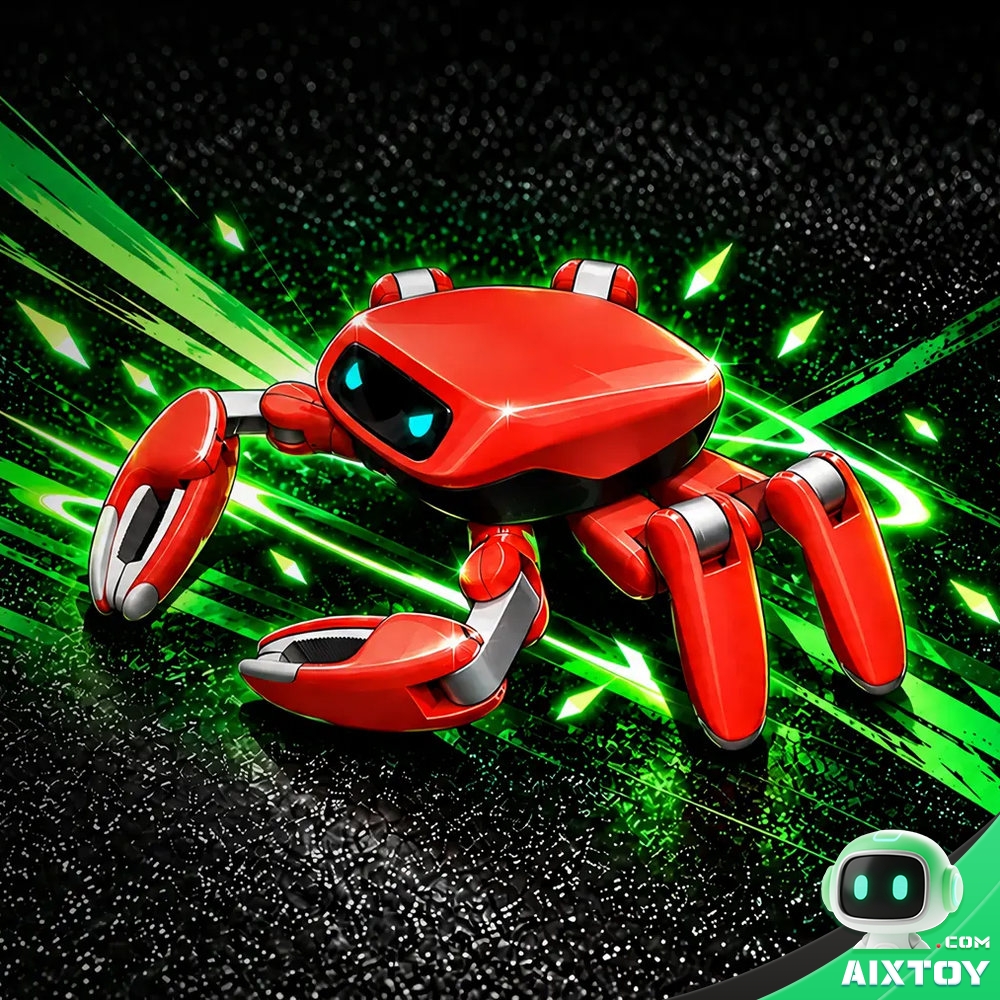
Coming soon · tracking the launch
Jumper 22-DOF Open-Source Crab Robot
A 1.8 kg six-legged crab robot with 22 tactile servos, a Rockchip RK3576 and a 400 mm jump — plus the full MuJoCo reinforcement-learning toolkit, published under Apache-2.0. Pricing and the retail launch have not been announced; we are tracking the official status.
Tags:Jumper AIXTOY Open Source Robot Programmable Robot Robotics Educational Robot AI Robot AI Toy AI Toys for Kids Christmas Gift Birthday Gift Crab Robot Reinforcement Learning