


No products added!

Three Chinese giants put companion robots on their IFA stands this year. Two of those products still cannot be bought.
Every September, IFA gives the consumer-electronics industry a chance to answer one question: what does everyone think the next category is? At IFA 2026 in Berlin, held September 4–8, the answer was unusually specific. It was the small, soft object sitting on the side table.
Ecovacs brought LilMilo, a plush robot pet with a body held at a constant 38°C. TCL showed AiMe, a modular family companion that lives on a detachable moving base. And Tuya Smart — the company best known for the cloud and connectivity layer underneath other people’s hardware — showed Doova, a wheeled companion aimed at seniors living alone.
Three very different companies, three very different products, one shared bet. And they had plenty of company: more than 900 Chinese firms exhibited at IFA 2026, close to half of all exhibitors and up from roughly 700 the year before, with robots as the loudest theme of the show. IFA even ran its first “Robots on the Runway” event, with humanoids and robot pets walking the catwalk instead of models.
The interesting question is not why appliance makers would try this. It is what each of them is actually selling — because the three routes into this market look nothing alike, and the trade-offs behind them are completely different.
A market that cannot agree on its own size
Start with the numbers, and with their disagreements. In its narrowest, best-defined form — the “pet companion robot” category tracked by Fact.MR — the global market was worth about $480 million in 2025, is estimated at $532.3 million in 2026, and is forecast to reach $1.5 billion by 2036, a compound annual growth rate of 10.9%. Within that, robotic dogs account for roughly a third of the product segment, and Sony’s Aibo still holds around 14% of the market.
Put that next to one company’s income statement and the category looks almost comically small. Ecovacs alone booked about $2.8 billion of revenue in 2025. The entire global market for robot pets, by that definition, is a rounding error against a single vacuum-cleaner manufacturer.
Widen the lens and the picture inverts. China’s Ministry of Industry and Information Technology puts the country’s domestic AI toy market at roughly $3.7 billion in 2024, rising to about $4.3 billion in 2025 — a figure that bundles companion robots together with every talking plush and smart plush in between. Widen it further still and TCL can cite forecasts of a $117 billion companion-robot market by 2033.
A $532 million market and a $117 billion market are not the same market, and the gap is not a data error. It is a definition problem, and definition problems are the most honest signal a young category produces. When nobody can agree on what counts, nobody has yet found out what people will actually pay for. The industry is still running that experiment in public — with desk pets, pendants, plush dogs, wheeled butlers and elderly-care monitors all filed under the same heading.
Three routes into the same living room
That uncertainty is why the field has split into three camps with almost nothing in common except the destination. Startups are trying to win on a single product. Established brands are trying to win on channels they already own. Platform companies are trying not to win at all — they would rather sell to everyone who might.
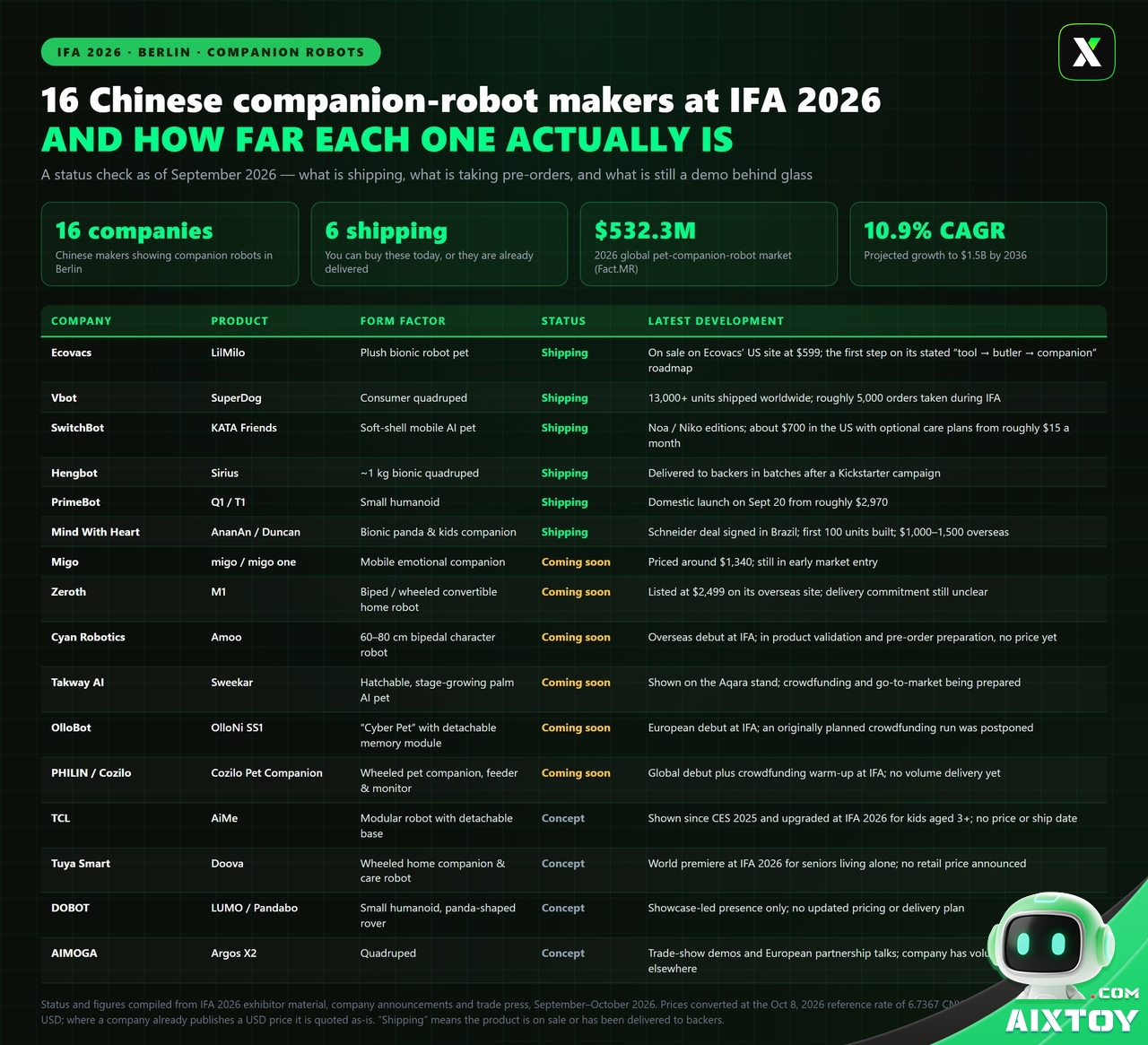
Of the sixteen Chinese companies that brought companion robots to Berlin, only six had a product on sale or already delivered to backers. Six were preparing to launch, and four — including two of the three headline names — were showing concepts with no announced price and no shipping date at all.
Route one: startups — win one product, then survive shipping
The clearest evidence that this category can produce real demand comes from companies that are not in that sixteen at all, because they were busy delivering.
Ropet: subtraction as a strategy
MengYou Intelligence, a Beijing company founded in 2022, took the opposite approach to feature creep. Its Ropet — renamed “Roupaipai” in the Chinese market this March — is a plush desktop pet that deliberately cannot walk. It reacts to voice, touch and gesture, develops a personality over time, and can be re-dressed with different plush covers and face parts. The trade-off was conscious: strip out locomotion, and you cut mechanical complexity, cost and failure modes in one move.
The numbers suggest the trade was worth making. Since starting global deliveries in September 2025, Ropet has shipped close to 20,000 units, about 70% of them overseas, at a price band of roughly $300 to $445. More telling than the unit count are the retention figures the company published alongside its April 2026 Series A of more than $10 million: a return rate below 4%, average daily power-on time above 20 hours, more than two hours a day of what it calls deep interaction, and an 80–90% 90-day retention rate.
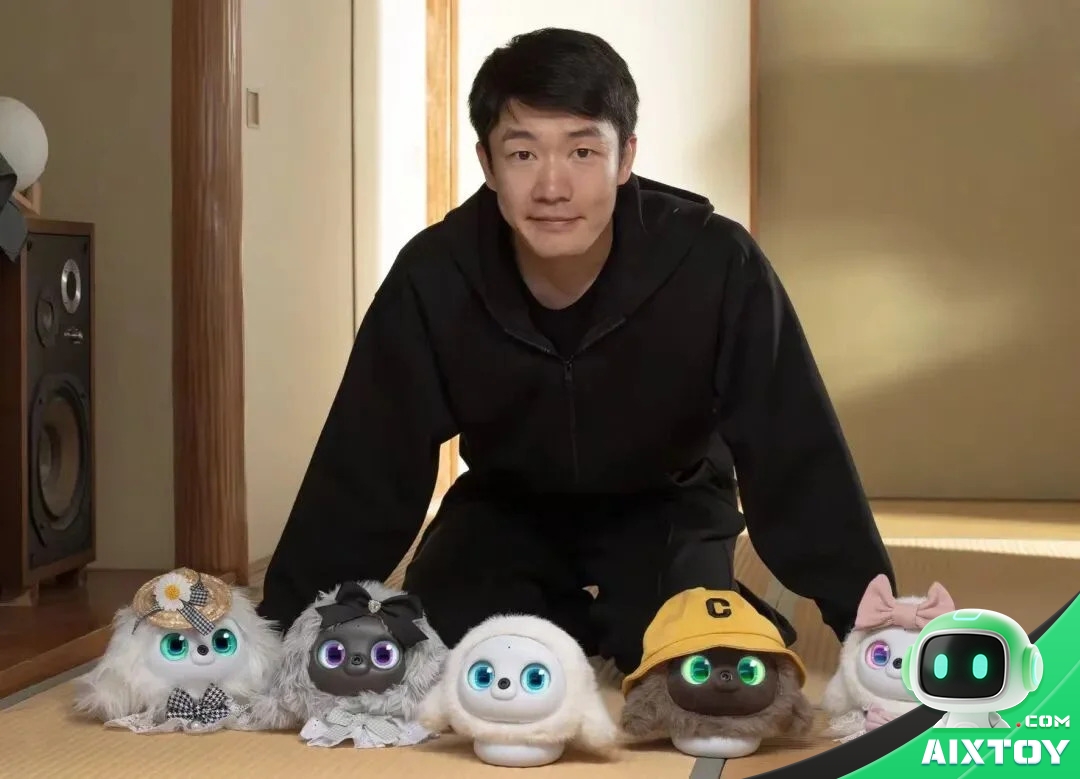
That last number is the one to sit with. Consumer AI hardware has a churn problem: a large share of AI toys are played with for a week and then parked on a shelf. A 90-day retention rate in the 80s is closer to a subscription service than a toy. It is also why the company’s March 2026 licensing deal with Universal’s How to Train Your Dragon sold more than 1,000 units in five days of pre-orders — there is an installed base willing to buy a second one.
None of this makes shipping easy. The company’s own account of its early overseas tests reads like a list of everything a trade-show demo hides: unstable network connections in some markets, heat trapped inside a plush shell, and servo vibration that made the whole desk hum. Those are not software bugs. They are the kind of problems that only appear once thousands of units are sitting in thousands of different homes.
If a desk-bound plush companion is the shape you are after, this is the closest match in our own store to what Ropet is building — plush, desktop-only, and re-dressable:
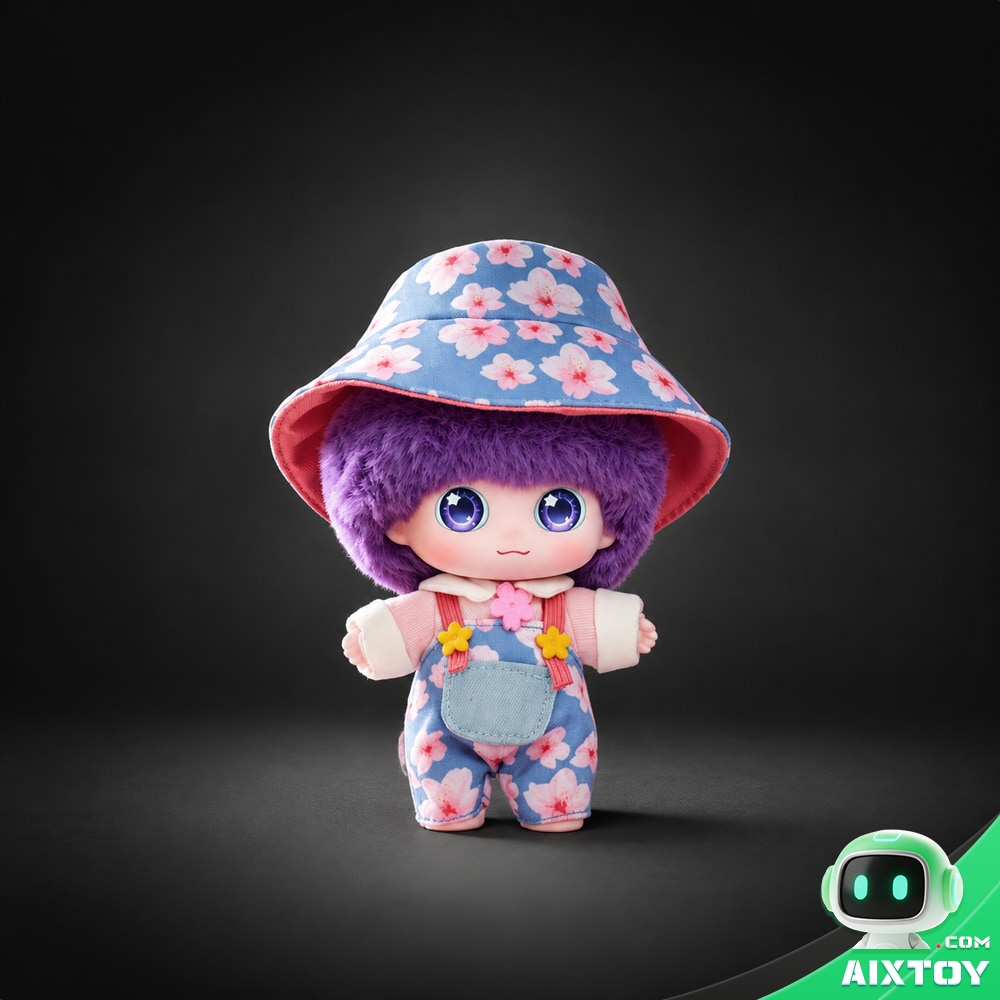
Xingzai AI Plush Companion Robot
$175.99
A designer plush robot that mixes soft fur with a robot face and answers when you speak to it — the desktop-pet formula, with six changeable outfits so the character can be redressed rather than replaced.
Fuzozo: a pendant, not a pet
Where Ropet went premium and desk-bound, Robopoet — a Shanghai company founded in 2024 — went cheap and portable. Its Fuzozo is a fur-ball pendant that clips onto a bag, blinks, responds to a stroke on the forehead, and holds a conversation. Launched in China in mid-2025 at about $59, it had sold close to 300,000 units domestically by June 2026 — the closest thing the category has to mass-market volume.
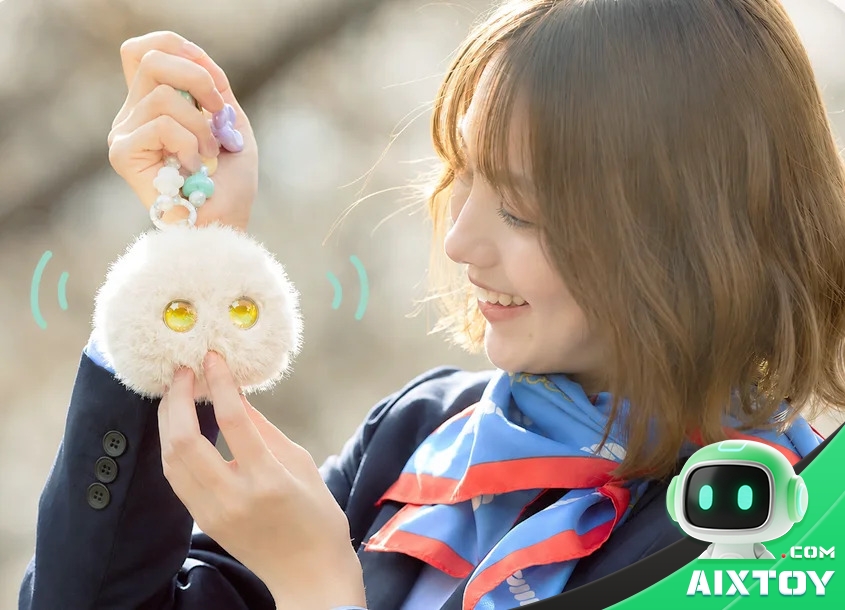
Its overseas first stop was Japan, which is the hardest possible test market for this idea — home to both Tamagotchi and LOVOT, and a country with a deep, expensive local IP culture. On the crowdfunding platform Makuake, Fuzozo raised the equivalent of roughly $127,000 in its first eight hours and more than $220,000 within 72 hours, topping the platform’s daily chart. Robopoet’s founder has described the Japanese retail price — equivalent to about $125 — as a “cliff-edge” advantage against local competitors selling at several times that.
The funding followed the shipments. Robopoet closed a nine-figure-renminbi Pre-A round with Huaying Capital and cellular-module maker Fibocom leading and Tuya participating, alongside existing investors Sequoia China and GSR Ventures. Huawei built a co-branded version called Hanhan at the same $59 price point; it sold out in minutes.
Robopoet’s founder makes an argument that should worry every hardware-first entrant: the moat in this category is not the hardware. Anyone can stuff a speaker and a Wi-Fi module into a plush shell — which is precisely what a great many Shenzhen vendors did, and why the founder puts the industry’s return rate at around 40%, against under 4% for the products that work. What is hard is memory that recalls at the right moment, personalities that stay consistent, and conversation that does not feel like a chatbot wearing a hat.
If that portable, cellular companion sounds like the right shape for you but you would rather not import one from Japan, our store already carries the same idea:
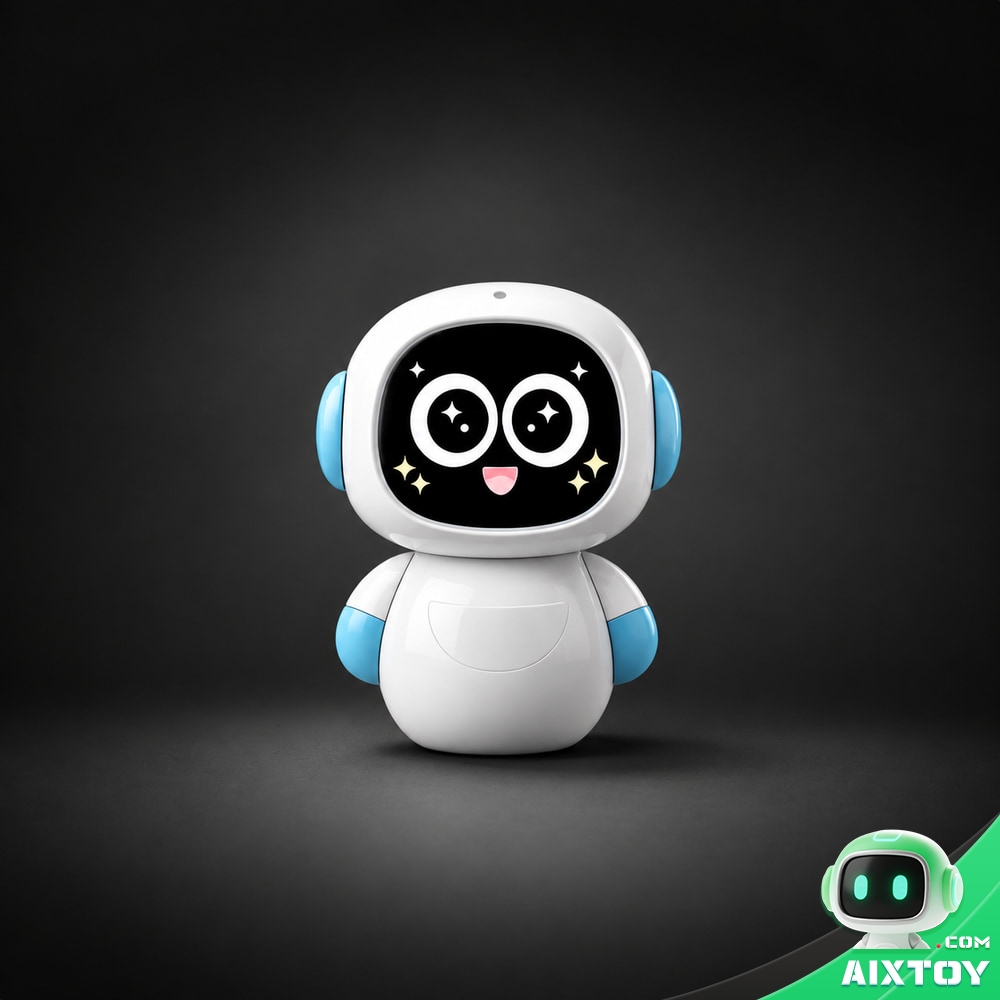
YOYO AI Companion Robot
$152.99
A pocket-sized talking companion robot with its own 4G connection, so the conversation keeps working once you leave home Wi-Fi — the same problem the cellular Fuzozo was built to solve. Comes with plush pals and outfits.
Route two: incumbents — reuse the channel you already own
If startups have to invent demand, appliance makers start with something more valuable: a customer relationship, a fulfilment system, and a place to put the returns.
Ecovacs is the clearest case. LilMilo is on sale on the company’s US store at $599, listed against a $799 reference price. It is a Maltese-shaped plush with a body kept at 38°C, a three-degree-of-freedom neck, bionic eyes that track movement, a wide-angle camera in the nose, a three-microphone array, and more than 40 sensors. Ecovacs describes five core personality traits and seven emotion types across three intensity levels — 21 emotional states — that shift as it lives with you. It runs offline for everyday commands, charges to 50% in 30 minutes, and manages up to six hours of use.
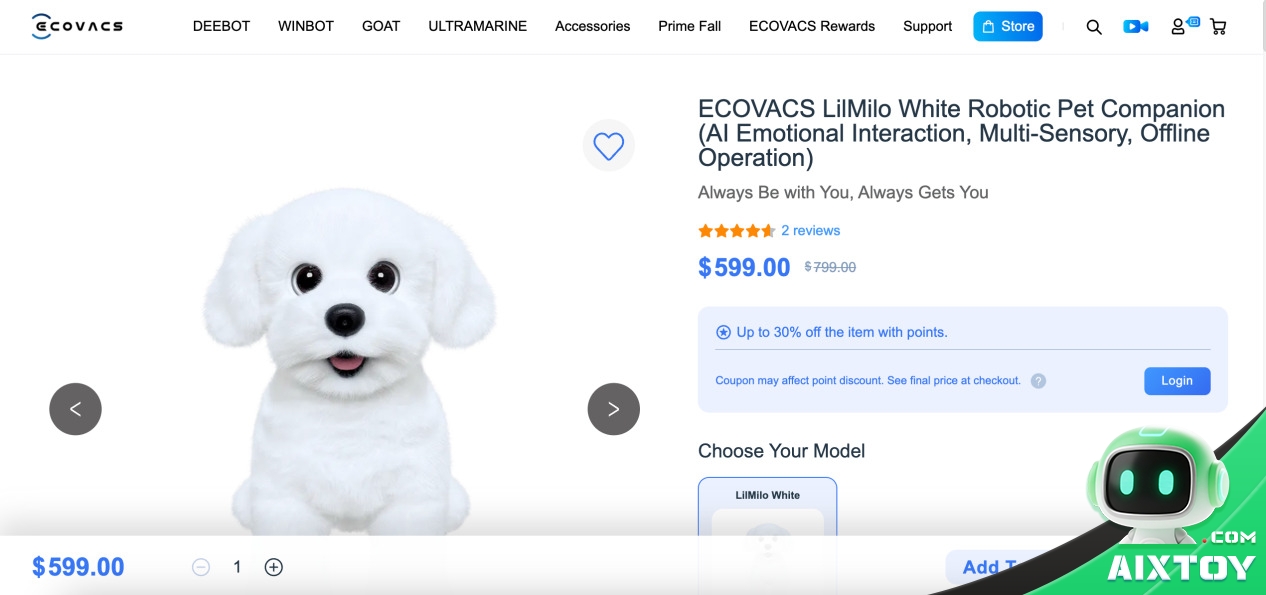
The reason Ecovacs can do that on day one is the boring part. In 2025 the Ecovacs brand grew overseas revenue 52%, with overseas markets rising to 45.4% of the brand’s revenue — Europe up more than 60%, the US up nearly 110%. Group revenue reached about $2.8 billion, with net profit more than doubling. A new product category dropped into that machine inherits an order pipeline, a delivery network and an after-sales organisation that a startup would spend years building.
It also fits a stated plan. Ecovacs’ annual report describes a path from “tool” to “butler” to “companion”, and in the first quarter of 2026 the company unveiled both a housekeeping robot and an AI biomimetic companion pet. A companion is not a detour from vacuum cleaners; it is the far end of the roadmap the company already published.
TCL is following the same logic from a different starting point. AiMe was first shown at CES 2025 and again at IFA 2025; the IFA 2026 version was presented as a family “companion and education” robot for children aged three and up, with natural multimodal interaction, lifelike motion and a content system built around three goals — active exploration, confident expression and positive habits. Its architecture is genuinely unusual: the intelligence sits in interchangeable cores, with a Baby Core for the home, a Mini Core for carrying and a Drive Core base for moving around the house.
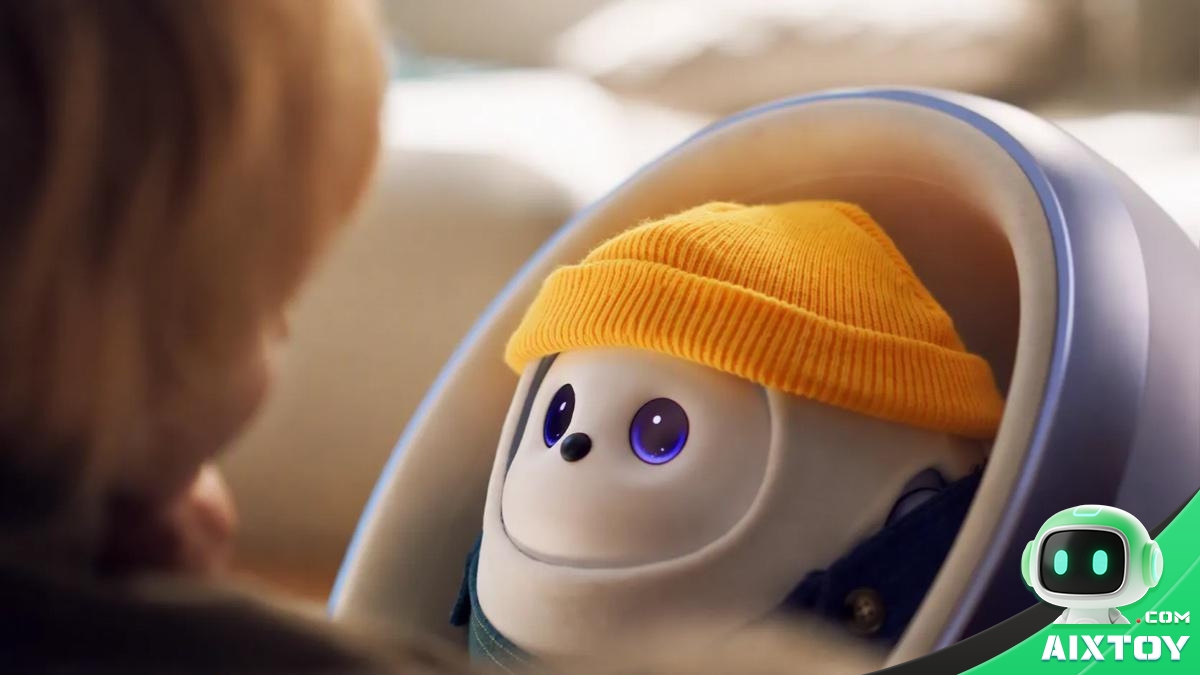
What TCL has that a startup does not is reach: the company sells into more than 160 markets and has exhibited at IFA for sixteen consecutive years. What it does not have, at least publicly, is a product. AiMe remains a concept, with no announced price and no shipping date — a reminder that a stand at a trade show is a claim, not a shipment.
For families who want the companion-and-education idea TCL is aiming at, in a product you can actually order today rather than wait for:
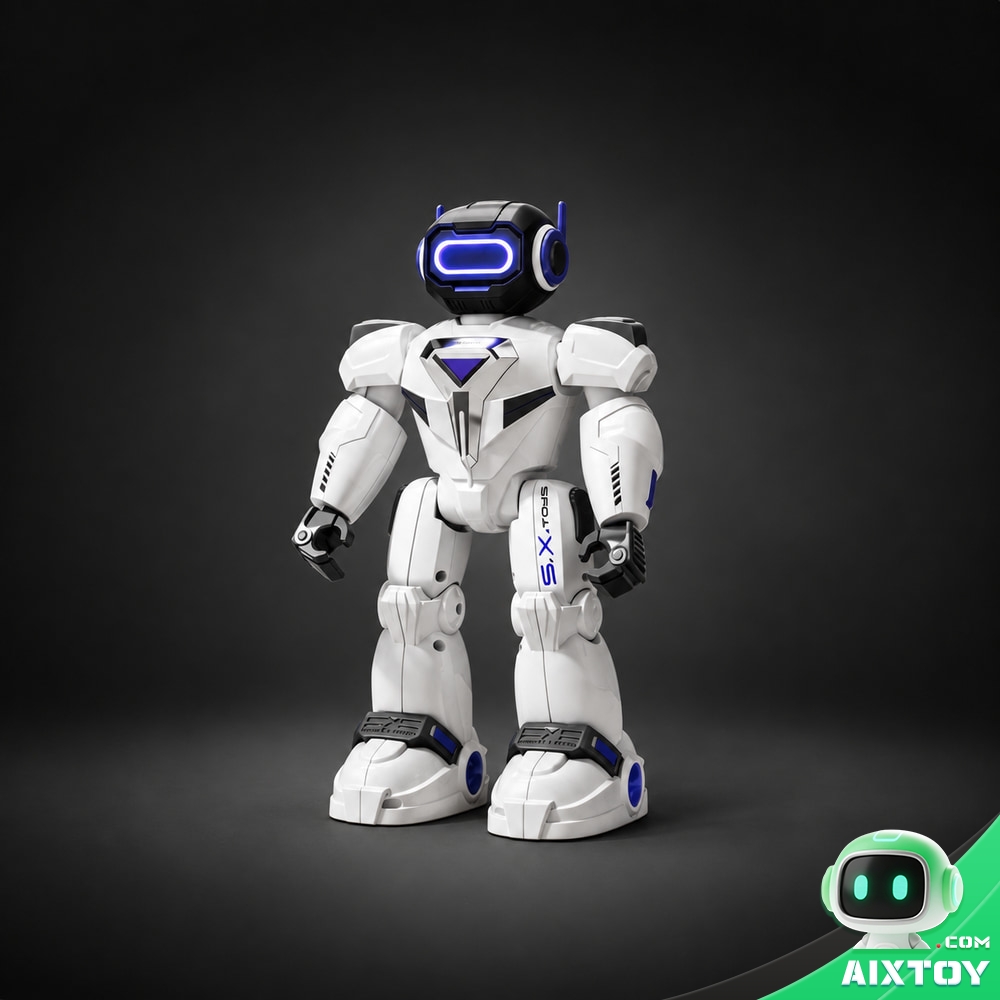
AI Kids Talking Companion Robot
$74.99
A desktop robot that listens, understands and answers children out loud, in single-model, dual-model or premium three-model editions, each available with an extended battery. Companion and education in one box.
Route three: platforms — sell the picks and shovels
Tuya Smart is not trying to win the category. It is trying to be underneath it.
Doova, unveiled at IFA 2026, is a wheeled companion for seniors living alone. It carries LDS LiDAR, a four-microphone sound-source localisation array and AI vision-based posture recognition. A user who falls can call out “Hey Tuya, help”; the robot locates them, moves to their side and assesses the situation. If there is no response within 60 seconds, it starts an emergency workflow and places a two-way video call to family. Between emergencies it handles medication and appointment reminders, reads letters and bills, flags potential scams, patrols the house room by room and pushes a safety report to a phone. There is a 10.1-inch display, and Tuya wants the price to land in roughly the same bracket as a smartphone.
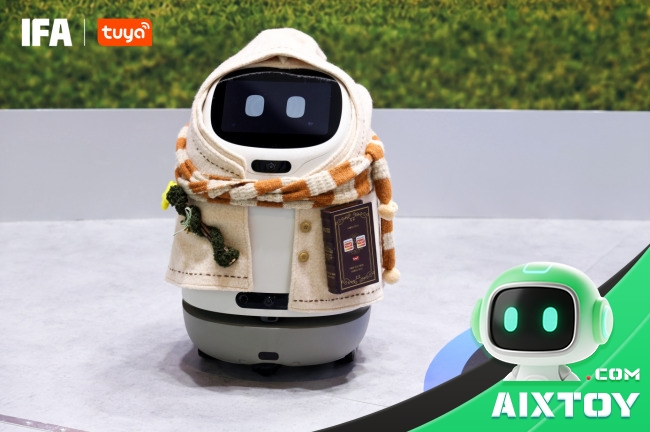
The economics explain the positioning. In the second quarter of 2026, Tuya’s platform-as-a-service business generated about $67.9 million, roughly 73% of total revenue. Tuya does not need any single robot to win. It needs many robots to exist, because every one of them needs cloud infrastructure, an app, device management and connectivity — and most startups cannot build that globally on their own.
The template is already running. In January 2026 Tuya and Robopoet announced a cellular-connected version of Fuzozo, fixing the obvious flaw in a pendant designed to leave the house: the original relied on Wi-Fi, so it went offline the moment its owner did. Cellular modules and a global eSIM came from Fibocom, another investor in the same company.
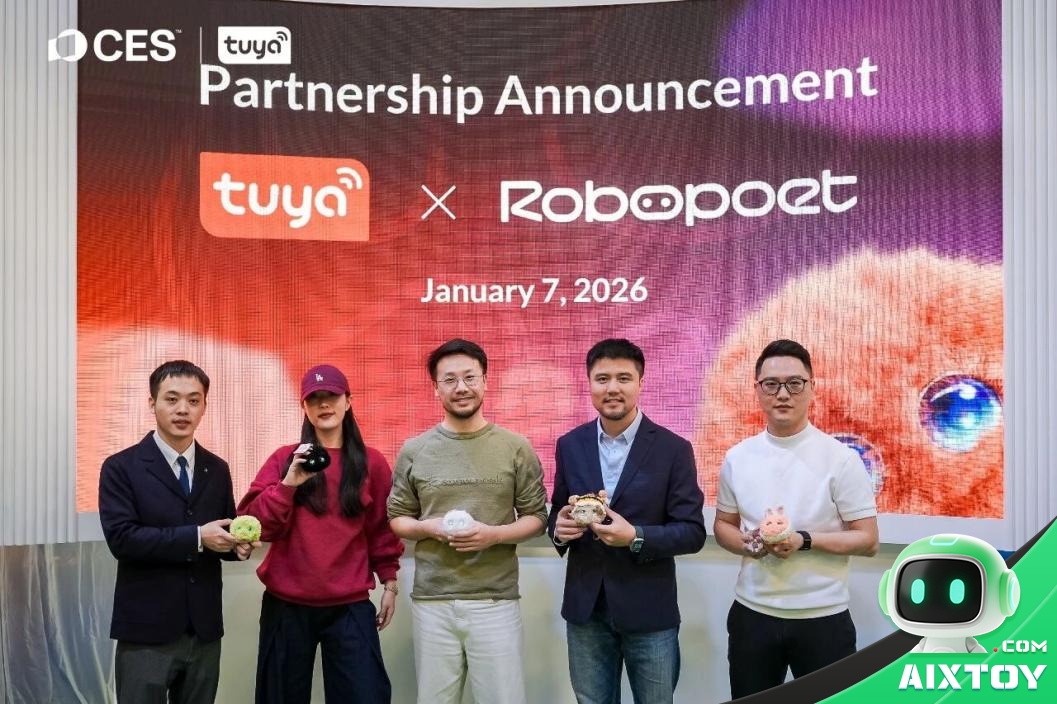
It is worth noticing how quickly that loop closed. Tuya went from supplying technology, to co-developing a product, to holding equity in the company selling it. For a platform business, that is not a side bet; it is the business model, applied to a category where few customers can afford to build their own stack.
What buyers should actually watch
Across all three routes, four things matter more than the demo reel.
The subscription is becoming the product. SwitchBot’s KATA Friends, for example, is about $700 in the US, but its care plans run from roughly $17 a month up to a one-off plan that folds the AI and software in for life. Japan’s LOVOT — still the benchmark for the premium tier at roughly $3,650 plus a mandatory plan of about $63 a month — is raising its hardware price twice over the next few months. Once a category starts charging monthly for personality and cloud memory, the thing customers quietly judge is retention, not specs.
Returns are the real scoreboard. The gap between a 40% industry return rate and a sub-4% leader is the single most useful number in this market. It separates products that hold a relationship from products that hold attention for a week.
Memory is the feature that decides everything. Early reviews of shipping companion robots are consistent on this point: the voice chat is pleasant, and then the robot forgets. Losing context is what breaks the illusion, and it is the hardest engineering problem in the category — which is why so many companies are describing themselves as memory companies first.
Always-on cameras and microphones need a privacy answer. A robot that follows you around the house to recognise your feelings is also a robot that watches your house. Companion products aimed at children and at seniors carry the same obligation, and regulation in both markets is only going to tighten.
The AIXTOY take
Two years ago this category was mostly a slide deck. This year it produced something more interesting: a split verdict. The startups have proven that people will pay for emotional companionship and keep using it — the retention figures are too good to dismiss. The appliance giants have proven they can put a companion product in a box and ship it through an existing channel. What nobody has proven is that a companion robot is a durable consumer category rather than a very good gift.
Our read is that the platform route is the most underestimated of the three. Tuya’s Doova will not sell in the volumes Fuzozo does, but if Tuya becomes the default cloud, connectivity and app layer for companion robots leaving China, it captures value from every brand that succeeds — including the ones that fail and are replaced. In a category with a 40% return rate, selling to the survivors is a better business than betting on any single one.
For buyers, the practical consequence is a market with unusually wide price tiers and unusually wide quality within each tier. A $59 pendant and a $3,650 LOVOT are not competitors; they are different answers to the same question. The rule that holds across both: buy for the relationship, not the feature list. Personality and memory are what people keep paying for — and mobility, screens and sensors are the parts that get abandoned.
The bottom line
One year on from the last time this category was declared promising, the honest summary is that it has stopped pretending. The concepts are still concepts, but the shipped products have delivery numbers, return rates and retention curves behind them now, and the incumbents have started spending real channel resources rather than showing prototypes on a rotating plinth.
The question for IFA 2027 is not whether companion robots arrive. Sixteen Chinese companies have already arrived. It is whether any of the four concepts still behind glass — including the two from the biggest names on the show floor — turn into something you can add to a cart before the next round of forecasts makes the market sound ten times larger than it is.
Tags:AIXTOY Companion Robot AI Companion Robot Robot Pet Emotional AI AI Hardware IFA 2026 Ecovacs TCL Tuya Smart AI Toy Industry Consumer Robotics