


No products added!
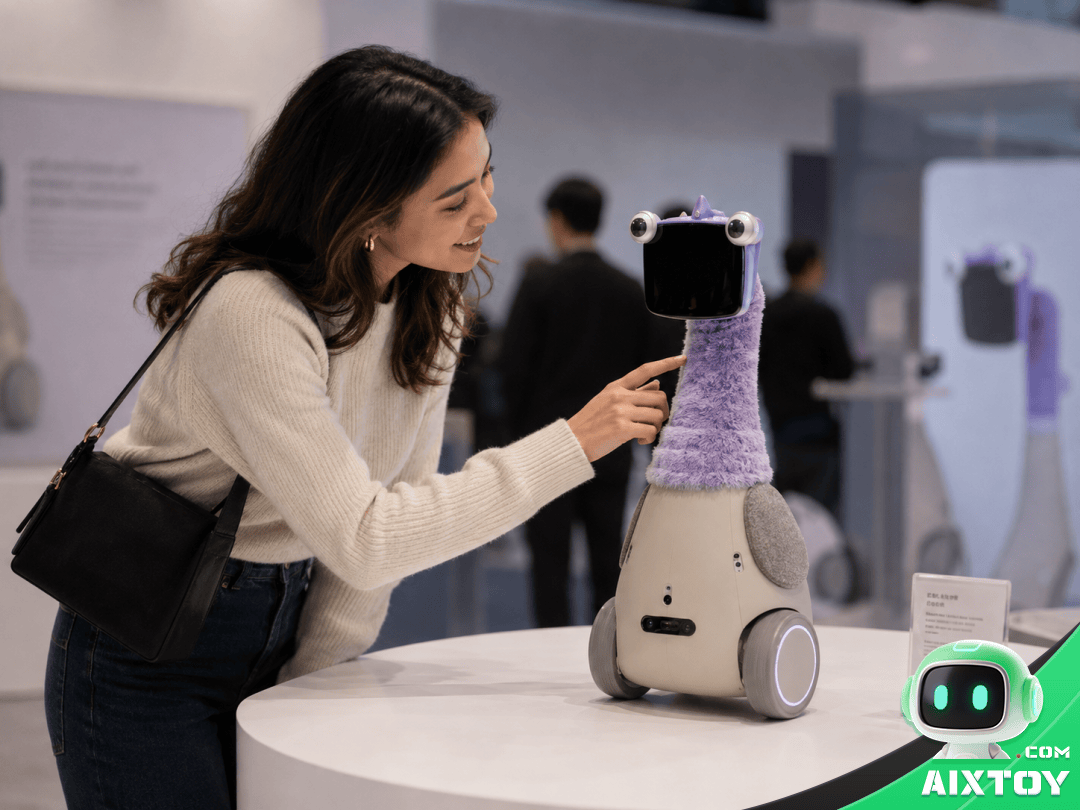
An AI pet turns its head. Blinks. Makes a small, endearing movement. Set to soft music in a 30-second video, it looks like magic — a little creature that might actually feel something. Millions watch. Thousands save the Kickstarter preview. And then the product ships, and the real test begins: does it still feel alive when there is no edit button, no curated lighting, no soundtrack smoothing over the rough edges?
This is the trust problem at the heart of the AI pet market. Short-form video is exceptional at generating desire. It is terrible at generating confidence. And for a product category that lives and dies on the question “does this thing deserve a spot in my home?”, the gap between video-cute and real-space-acceptable is the entire business. OlloBot, the team behind the upcoming OlloNi cyber pet, is betting that the only way to bridge that gap is to stand in front of real people, in real rooms, and let them decide for themselves.
The Trust Problem AI Pets Can’t Solve on a Spec Sheet
Walk through the standard consumer electronics purchase funnel and it follows a familiar rhythm: see the product, read the specs, check reviews, click buy. This works for mechanical keyboards. It works for smart speakers. It does not work for AI pets, because the things users actually care about are almost impossible to quantify:
- Is the sound annoying? A motor whine that seems minimal in a demo video can become unbearable after three days in a quiet living room.
- Does the movement feel cheap? The difference between “lifelike” and “mechanical toy” is often a fraction of a second of latency that no spec sheet captures.
- Does it feel like a toy or a presence? The tactile experience — the fur texture, the weight, the warmth — collapses on a product page into “soft-touch materials.”
- Will it look strange in my actual home? Exhibition lighting and a white backdrop are not your coffee table at 8 PM with clutter and ambient noise.
- Will my kids be scared? Will I feel embarrassed? These are emotional calculations, not technical ones.
These questions are the quiet killers of AI pet products. They do not surface in the comments section of a launch video. They surface two weeks after delivery, when the device is sitting unplugged on a shelf. And they cannot be answered by a better data sheet, a sharper render, or a more persuasive landing page. They can only be answered by standing in the same room.
This is the same dynamic we explored in our analysis of why the $8,000 LOVOT refuses to speak — the most successful AI companion products are not the ones with the longest feature lists, but the ones that pass the first-moment test of physical presence. A robot that convinces you it belongs in your space in the first five seconds has already won. A robot that needs thirty minutes and a manual to explain itself has already lost.
OlloBot’s Offline-First Bet: North America Before Kickstarter
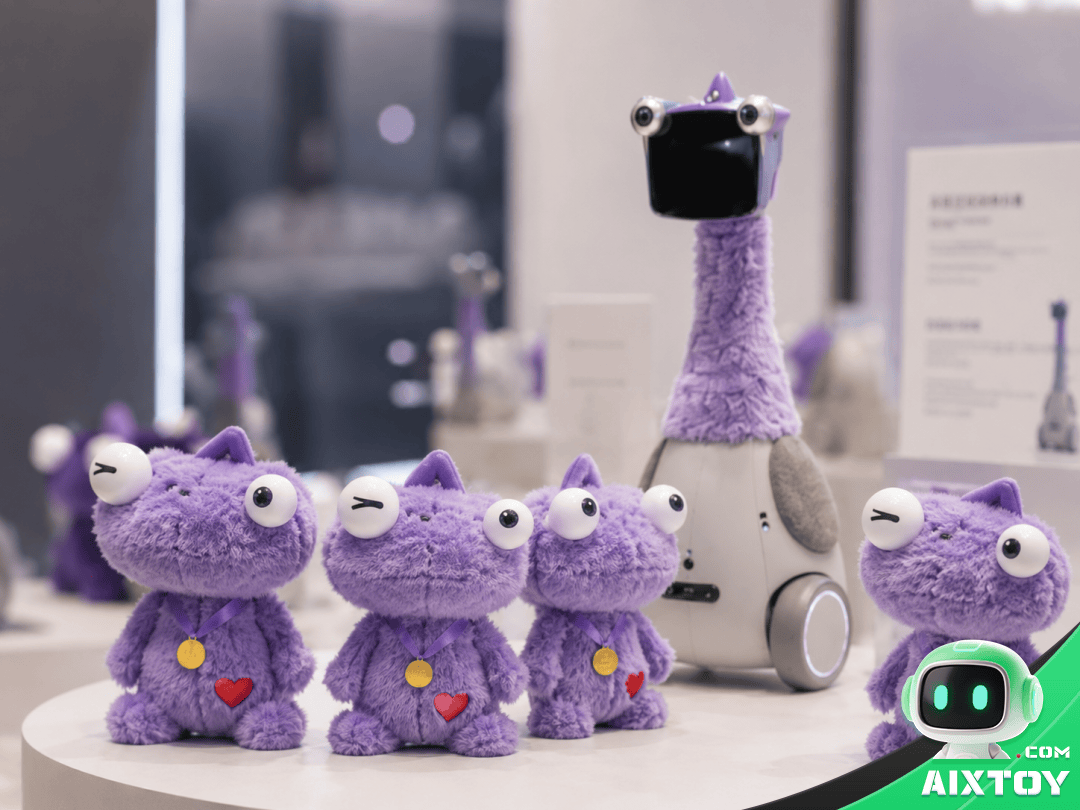
OlloBot is not waiting for the Kickstarter page to do the heavy lifting. Before the campaign goes live, the team is bringing OlloNi to North American offline experience events — putting the cyber pet in front of real visitors, in real rooms, with real ambient noise, real lighting, and real first reactions.
This looks like a marketing warm-up. It is actually something more fundamental: an experience asset build. Every genuine reaction — the surprise when the neck turns, the laugh when it responds to a touch, the visitor who says “I didn’t expect it to feel so natural” — becomes raw material that carries more weight than any polished pitch deck. When the Kickstarter eventually launches, the trust has already been seeded in the physical world. The pledge page is not asking for a leap of faith. It is asking for a commitment to something people have already met.
The logic is straightforward but rarely executed in the AI toy space: crowdfunding pages close transactions. Offline experiences build the trust that makes transactions possible. Short videos attract attention. Real touch converts attention into conviction. Spec sheets explain what the product does. Physical presence demonstrates what it feels like to live with it.
Don’t Imitate Real Pets. Build a New Species.
OlloNi’s product positioning is worth studying closely because it makes a deliberate choice that most AI pet companies avoid: it refuses to imitate a real animal.
It is not a dog. It is not a cat. It is not a humanoid. OlloBot calls it a Cyber Pet — a term that lands somewhere between playful and sincere — and the physical design supports the label. Long neck. Round body. Electronic expressions. Interchangeable plush collectibles. The overall silhouette sits at the intersection of robot, designer toy, and companion creature. It does not ask you to believe “this is a machine dog.” It asks you to accept “this is a new small creature that can live in your home.”
The distinction matters enormously. When an AI pet tries to replicate a dog or cat, the user’s brain immediately activates a comparison engine that is almost impossible to win. The walk is not natural enough. The sounds are not quite right. The weight is wrong. Every deviation from the biological original registers as a failure. But when an AI pet declares itself as a new species from the start, there is no reference animal to fall short of. It gets to establish its own rules for what counts as lifelike, what counts as charming, and what counts as enough.
This is a lesson that extends across the entire AI companion category. From AI plush companions designed for emotional warmth to programmable desktop robots built for creative tinkering, the products that earn lasting affection are the ones that commit to a coherent identity — not the ones that try to be a cheaper version of something that already exists.
Plush Collectibles: The Clever Soft Entry Point
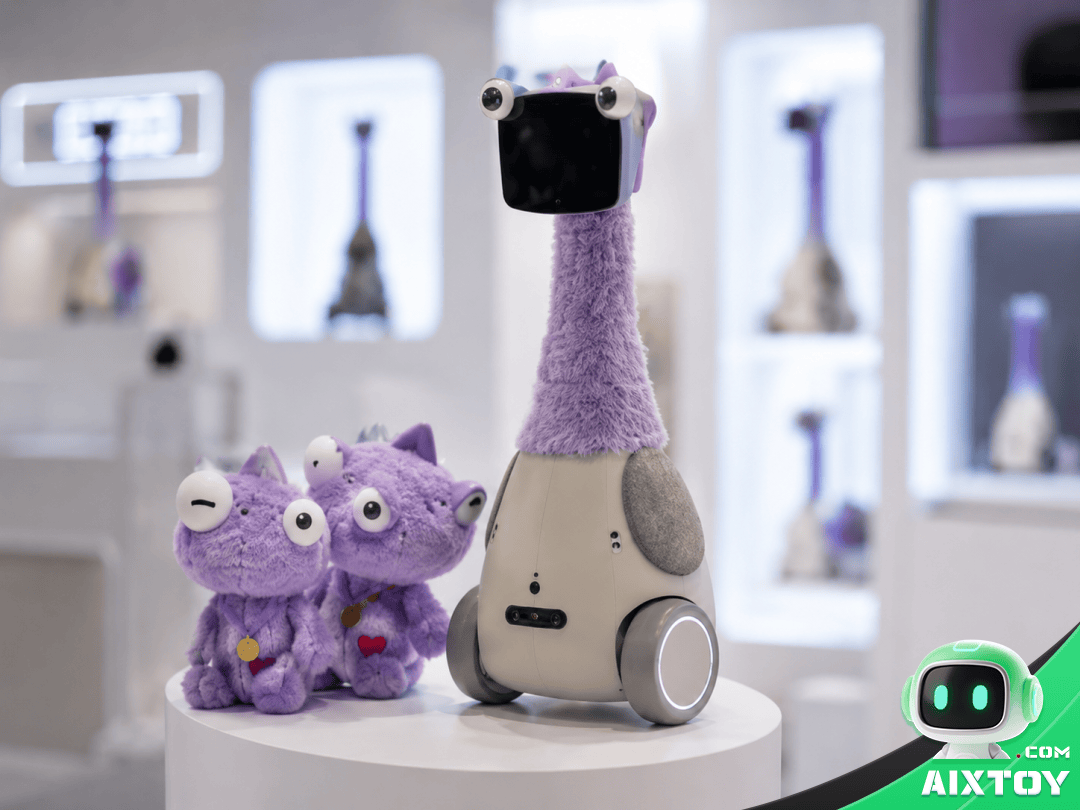
There is a detail in OlloBot’s offline experience plan that would be easy to overlook: alongside the OlloNi prototypes, the team is showcasing plush collectibles inspired by the character. These are not the main product. They are not the AI robot. They are soft, low-cost, low-risk items that let users form a relationship with the OlloNi character before they are ever asked to invest in the OlloNi hardware.
This is IP strategy in hardware clothing, and it is smart. An AI pet involves a genuinely heavy purchase decision — price, technology maturity, production stability, after-sales support, long-term commitment. Not every visitor who meets OlloNi at an event will be ready to back a Kickstarter campaign on the spot. But a plush version costs little, requires no explanation, and travels home in a bag. It turns a stranger into a fan, and a fan into a potential backer on a timeline that does not need to be rushed.
Many AI toy companies do the reverse. They lead with the chip architecture, the sensor array, the model parameters, the subscription tiers — and then wonder why nobody formed an emotional connection. The plush collectible is a buffer layer that says: fall in love with the character first. The AI can earn its place later.
What This Means for Chinese AI Toy Brands Going Global
OlloBot is part of a wave that is larger than any single product. Chinese AI hardware teams have mastered the Kickstarter-to-DTC pipeline over the past decade — build awareness, collect emails, test demand on a crowdfunding page, then scale through independent sites, Amazon, TikTok, and retail channels. It is a proven path for keyboards, chargers, lamps, and a thousand other gadget categories.
AI pets break the template. They involve aesthetics, sound, motion, privacy concerns, family dynamics, and emotional intuition — none of which travel well through a pre-launch landing page. A keyboard reviewer can judge switch feel from a spec sheet. An AI pet reviewer cannot judge “presence” without being in the room. If the first time a potential customer encounters your product is through a polished video and a pledge button, you are asking them to make one of the most personal purchase decisions imaginable based on too little information. The conversion rate will reflect that gap.
OlloBot’s offline-first approach points toward a more sustainable model: build experience assets in the physical world first, then let the digital channels amplify what already happened. Real videos of real reactions. Real media impressions from real interactions. Real social proof from real people who touched, heard, and decided. The crowdfunding page is still essential — but it lands differently when it is documenting conviction rather than trying to manufacture it from scratch.
The First Test Is Always the Same
The AI pet industry sometimes gets ahead of itself. It wants to talk about emotional intelligence, multimodal recognition, long-term memory, family companionship, new species, cyber life. All of these are real and important technical frontiers. But none of them matter if the product fails a simpler test: does a person want to reach out and touch it?
OlloBot bringing OlloNi to North American offline experiences is answering that question before it asks for anything else. Not “will this bot change your life?” Not “will this bot replace your dog?” Just: walk up to it, see it move, hear it react, spend a few minutes in its presence. If the instinct is to lean in, the conversation can continue. If the instinct is to step back, no amount of AI capability will salvage the relationship.
For AI toys, the real first barrier has never been the spec sheet. It has always been whether a human being, standing in front of it in an ordinary room, feels the urge to reach out a hand. Everything else — the technology, the business model, the brand — depends on clearing that threshold first. OlloBot seems to understand this. More AI toy companies should.
At AIXTOY, we watch this space closely because the products that succeed are rarely the ones with the most impressive demos — they are the ones that earn a permanent place in someone’s home. Browse the AIXTOY collection to explore AI companions that are building genuine relationships with their owners, one room at a time.
Tags:OlloBotOlloNiAI PetCyber PetAI CompanionAIXTOYKickstarterAI Robot ToyAI Plush ToysOffline Experience