



No products added!

In a middle school physics class in China, a boy raised his hand and asked: “If the universe is expanding at the speed of light, what exists beyond the boundary it has not yet reached?” His teacher had no answer. Instead, she told him to stop asking distracting questions and finish his homework. Nearly twenty years later, on the day GPT-4 launched, that boy — now a man named Reni Cao — asked the same question to an AI chatbot. This time, the answer was a philosophical essay citing Wittgenstein: the limits of language are the limits of the world. “I thought: if I had someone, or something, that responded to my curiosity like this when I was a child,” Cao recalled, “I might be more enlightened today. Then I thought: how do I give this power to children? Or rather, to my past self?” That question led him to quit his product marketing job at a major tech company and co-found Dex.
A Magnifying Glass for Language, Not Another Screen Toy
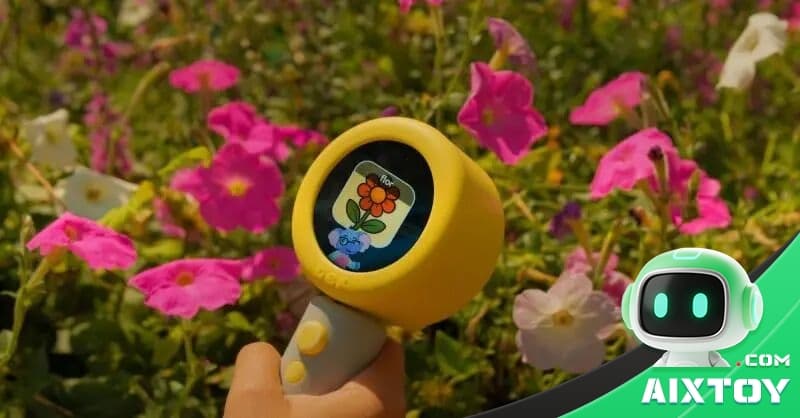
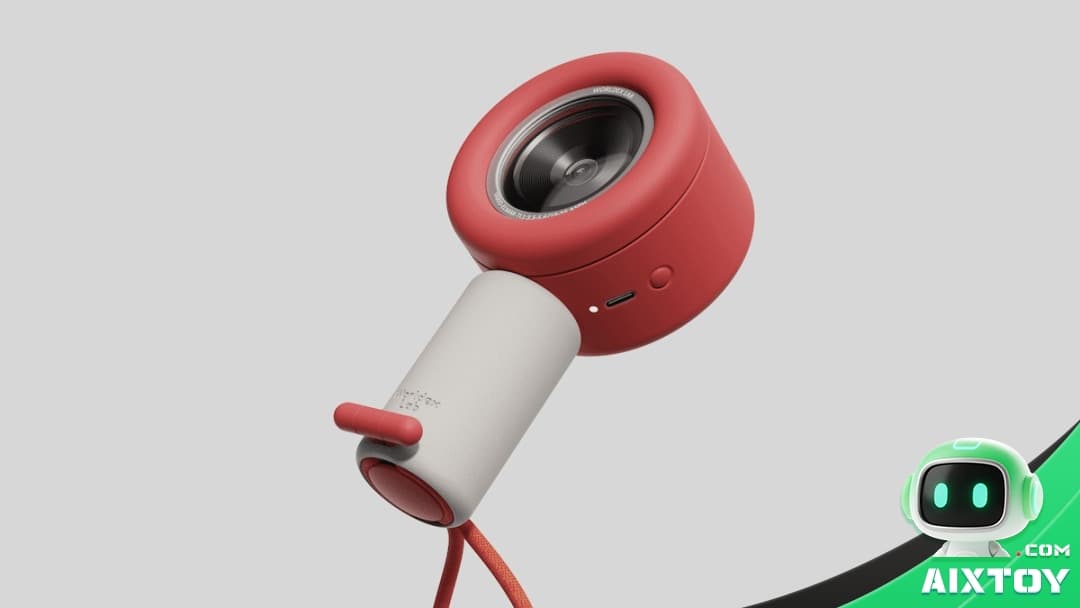
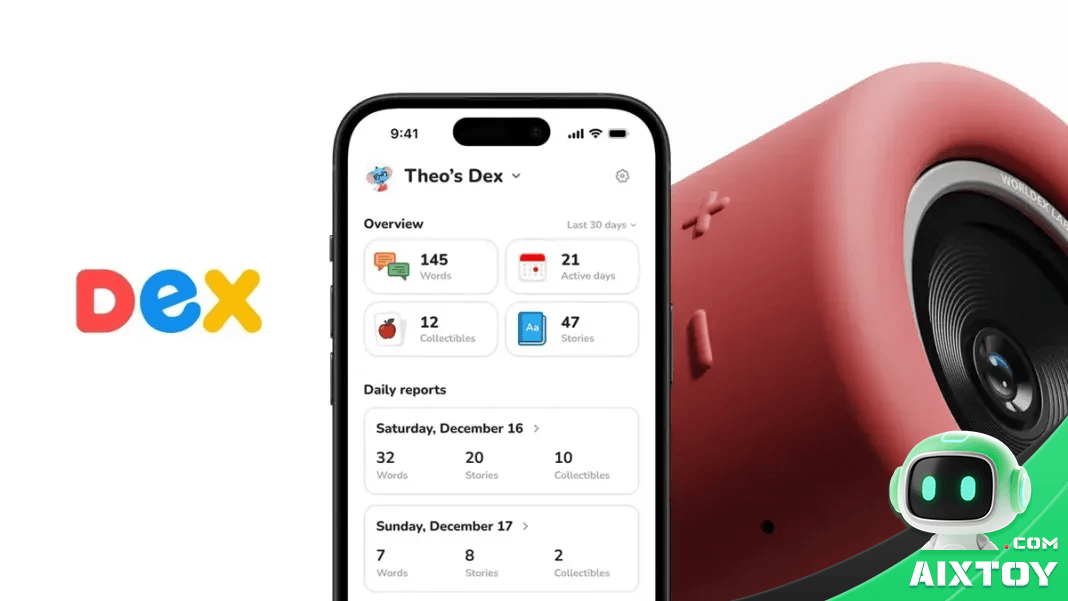
Dex looks like a playful magnifying glass. One end has a camera. The other has a touchscreen. The interaction is almost absurdly simple: a child points the device at an object in the real world, and the built-in AI identifies it and translates the name into 8 major languages and 34 dialects simultaneously. Launched in August 2025, the device is already in hundreds of homes. But the product is less interesting than the philosophy behind it. Cao designed Dex for the children who, like him, were told they ask too many questions — the ones labeled “distracted” by teachers who wanted them to stay in their lane. In an era obsessed with specialization and efficiency, Cao is placing a bet on something harder to quantify: curiosity itself.
“A Gentleman Is Not a Vessel” — The Generalist’s Edge
Cao’s own career trajectory would look like a cautionary tale to a traditional career counselor. As an undergraduate studying financial engineering in China, he came to the United States as an exchange student and proceeded to take what he describes as “a complete mess” of electives: finance, abstract algebra, computer science, electrical engineering. “My advisor criticized me for spreading too thin,” he said. “They asked: what good is all this random knowledge? You need to become an expert.” Instead, Cao went to Carnegie Mellon for a master’s in information systems. When he graduated, his résumé fit no box — not purely computer science, not purely finance. He did not know what jobs to apply for until he discovered the product manager role, a position that demanded exactly his odd combination of analytical thinking, technical fluency, and business sense. That year, LinkedIn’s associate product manager program received over 1,300 applications and hired six people. Cao was one of them. He invokes a classical Chinese phrase to summarize his belief: “Junzi bu qi” — a gentleman is not a vessel — a Confucian concept meaning a gentleman is not a vessel, not a tool limited to a single narrow function. “I have always believed that in modern society, generalists will beat specialists,” Cao said. “In the AI era, this will be even more true.” In Silicon Valley, where depth of expertise is currency, this is a contrarian bet. But to Cao, his scattered background was not a bug. It was preparation.
The Blueberry Moment: Why Dex Is Changing How Children Learn
Becoming a father sharpened Cao’s thinking about education. His daughter, now five, is growing up bilingual in Chinese and English. Unlike many immigrant parents who worry about cultural disconnection, Cao focuses on something different: the unlocking of latent potential. “She is not struggling,” he said. “But I always feel her potential is not yet fully tapped.” Watching his daughter’s vocabulary explode, he realized existing education systems are not designed to unlock this astonishing capacity for language acquisition. For his co-founder Charlie Zhang, the need was even more acute. Zhang’s younger son faced a speech delay and resisted speaking. When the family handed the child an early Dex prototype, something changed. The child’s first spoken word was “Blueberry” — not directed at his parents, but at the device. Another early user, a child who was learning only Spanish, discovered that Dex supported multiple languages and began exploring different ways to say the same thing, like watching a film with multiple subtitle tracks. Cao connects this to Wittgenstein’s concept of the “language game” — language as a form of play. “To a child, speaking a word into the device is like casting a spell. You say the magic word, and the world responds. That is how reality works for children.”
“If Nine Out of Ten Investors Think You Are a Fool, You Are onto Something”
Leaving a stable tech salary to build an educational toy looks, to most people, like a bad decision. Cao understood this. Big companies are structured to minimize risk, and as long as the revenue engine is running, innovation takes a back seat. A single executive veto can kill a project. A startup flips this logic. “If you talk to ten investors and nine think you are a fool and one believes in you, you have won,” Cao said. “If investors reach consensus, it usually means the idea is not bold enough — it is mediocre, competitive, and hard to build a great company on.” He and his co-founders faced countless rejections. The criticisms were predictable: the market is too niche, hardware is too risky, the concept is too unconventional. One venture capitalist even suggested they rebrand as “Kid’s AI” or “Kid’s ChatGPT” for better marketing. “We refused. This had to be conviction-driven, not consensus-driven,” Cao said. “We had to be true to ourselves.” That conviction was rewarded: Dex recently raised $4.8 million from ClayVC, EmbeddingVC, Parable, UpscaleX, and several angel investors.
A Letter to His Daughter, Written in Code and Courage
Cao could have stayed at a major tech company with a generous salary, or jumped to a hot AI startup for a lucrative compensation package. Instead, he chose to take a minimal salary — and for extended periods, no salary at all — to build a product that even venture capitalists struggled to categorize. It echoes, unmistakably, that moment in the middle school classroom: a boy asking about the edge of the universe, and being told to stop asking. He never did. Now he has built a device that tells his daughter and every child who picks up a Dex: your curiosity is not a distraction. It is a compass. “This is a once-in-a-lifetime chance to build an intergenerational product,” Cao said. “It is also my message to my daughter. She will look back and see that her father could have taken the safe job and made money, but chose to do something he believed mattered. Life has other possibilities beyond climbing ladders and accumulating wealth.”
At AIXTOY, we track the products built on conviction, not consensus. Browse our AI plush toys, desktop companions, DIY robot kits, and programmable robot cars. Explore the full AIXTOY collection for toys that start with a question.
Tags:Ai Language LearningAI ToyAIXTOYDexedtechEducational ToyKids AiLanguage AcquisitionMultilingual ToySilicon Valley Startup