


No products added!
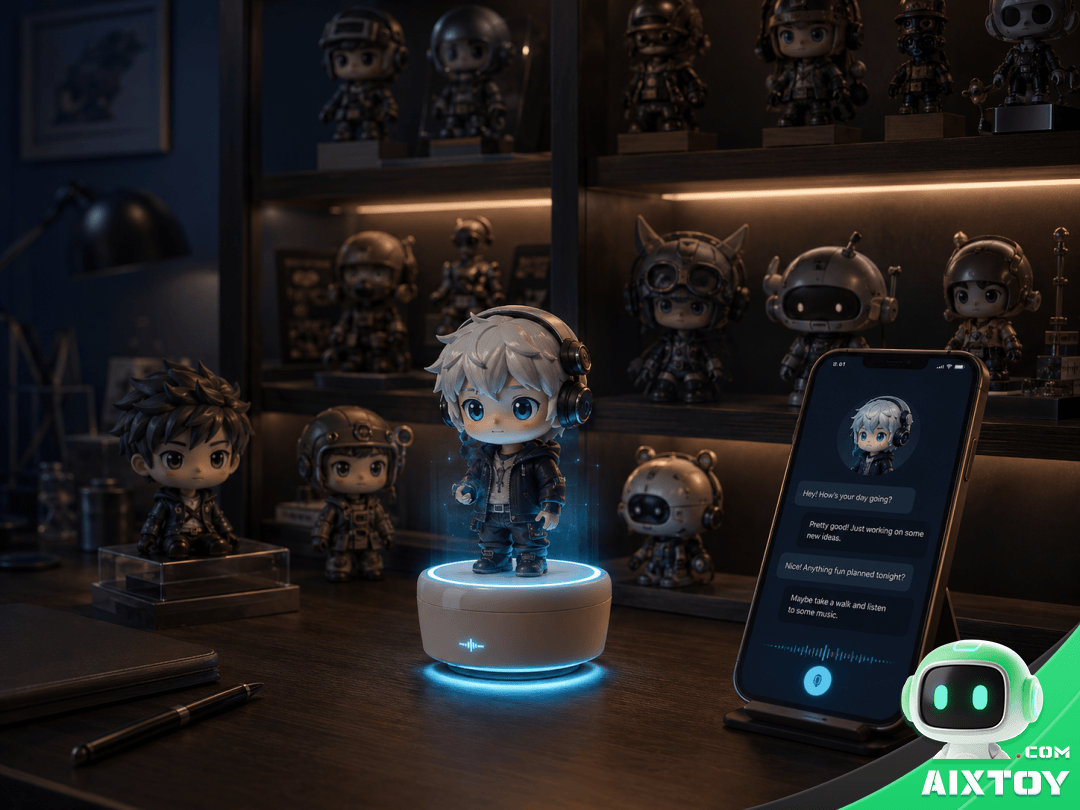
Most people who buy a Funko Pop, an Amiibo, or a POP MART blind box are not buying a toy. They are buying a character — something that already means something to them, that already occupies a shelf, a desk, or a display cabinet. These figures do not move. They do not talk. And yet millions of adults make space for them, position them carefully, and keep adding to the collection. The affection is already there. What it has never had is a voice.
CES 2026 introduced two products that suggest this is about to change. One is HeyMates, from Olli, which builds original AI-powered collectible figures from scratch — each with a defined personality, a voice, and a conversational style. The other is Buddyo, which takes a radically different approach: instead of selling new figures, it builds an AI Pod that gives existing collectibles — Funko Pops, Amiibos, POP MART figures — a voice, a memory, and a personality. Together, they mark the arrival of AI in a market that has been quietly waiting for it: adult collectibles.
Not “Toys That Talk” — Characters That Finally Can
Framing this as “talking toys” misses the point entirely. The collectible figure market operates on a fundamentally different logic than the children’s toy market. These are purchases driven by identity expression, fandom affiliation, nostalgia, and aesthetic appreciation. The person who lines up for a limited-edition Marvel figure is not looking for something to play with. They are looking for something that represents who they are and what they love.
What HeyMates and Buddyo are proposing is not to turn collectibles into playthings. It is to add a second layer of value to objects that already command loyalty and shelf space. The first layer — character design, IP affiliation, visual appeal — gets the figure purchased and displayed. The second layer — interactive personality, voice, memory — keeps the relationship alive long after the unboxing thrill fades. This is not about making figures more entertaining. It is about making them more present.
Two Routes to the Same Shelf
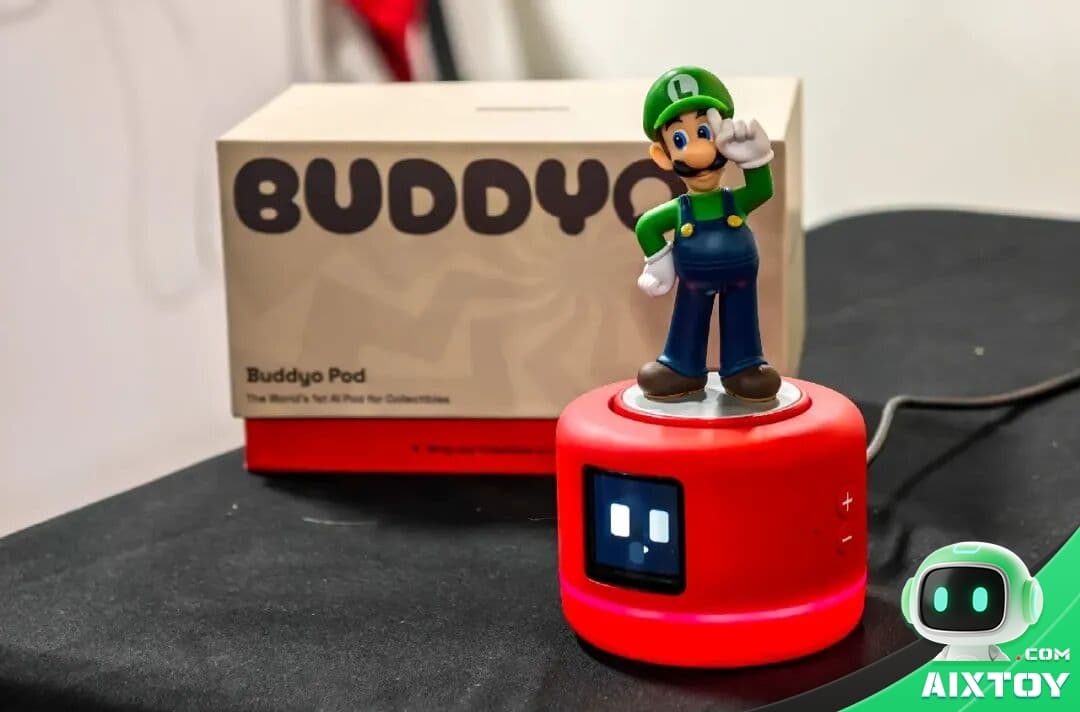
HeyMates and Buddyo represent two different strategic bets on how AI enters the collectibles market, and the contrast is instructive:
HeyMates builds original characters from the ground up. Each figure has a defined persona: Einstein handles science and creative topics, Zara leans into mysticism and daily advice, Chandler channels 1990s sitcom-style sarcasm. The figure sits on an interactive base with a speaker, microphone, and LED effects, and connects to a companion app. It is a complete, closed-loop product — the hardware, the software, the character, and the personality are all designed together. The user buys into a new universe.
Buddyo takes the opposite tack. It does not ask users to adopt new characters. It asks them to bring the characters they already own. The AI Pod is a universal base that can recognize existing figures — Funko Pops, Amiibos, POP MART designs, and other collectibles — and give them a voice, a backstory, and ongoing conversational memory through an app. The pitch is audacious: Buddyo is not a toy brand competing for shelf space. It is an operating system for the collectibles you already love.
This distinction matters. One model requires consumers to form a new attachment. The other piggybacks on attachments that already exist — some of them decades deep. Both have strategic merit. Both carry significant risk. And both point toward the same conclusion: AI in the toy space does not always need to create a new companion from scratch. Sometimes the smarter move is to activate a character the user has already invited into their home.
The Kidult Market Was Already Here
HeyMates uses a term in its official messaging that is worth paying attention to: kidult. These are consumers who are chronologically adult but psychologically invested in collecting, displaying, and emotionally connecting with character-driven merchandise. They are not a niche. They are the core driver of the global collectible figure market — a market that includes Funko’s $1 billion+ in cumulative revenue, POP MART’s explosive international growth, and a thriving secondary market for rare figures on platforms like StockX and eBay.
Kidult consumers do not need to be convinced that characters matter. They already spend significant money proving it. What they have not been offered — until now — is a way for those characters to evolve beyond static display pieces. The AI collectible proposition is not “here is a new toy you might like.” It is “here is a way for the character you already love to say something back.”
This reframing is important for the broader AI toy industry. As we have explored with premium AI companions like LOVOT and emerging players like OlloBot taking AI pets to offline experiences, the products that earn lasting user relationships are rarely the ones with the longest feature lists. They are the ones that meet users where they already are — emotionally, physically, and in terms of existing attachment. AI collectible figures may have the shortest path to that meeting point, because the attachment is already in place.
The Biggest Risk: Characters That Say the Wrong Thing
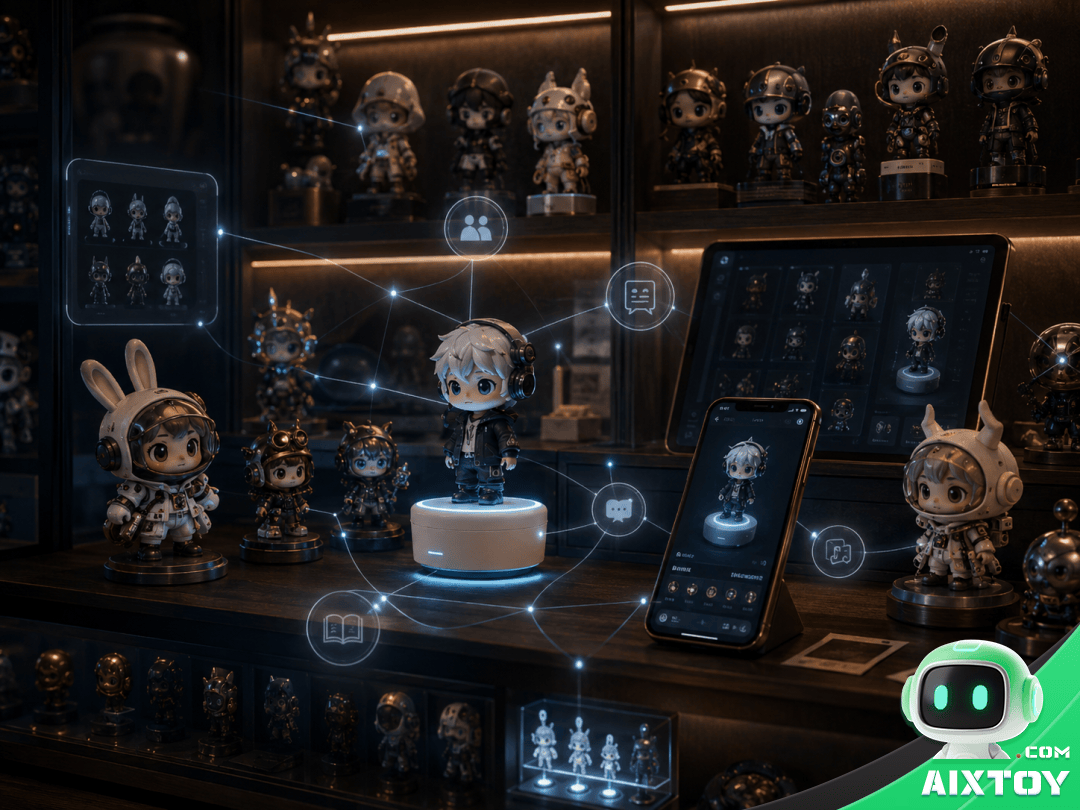
If there is a single factor that will determine whether AI collectible figures succeed or fail, it is not the quality of the language model. It is character fidelity.
When you give a voice to an original AI pet, the user has no prior expectations about how that pet should sound or what it should say. The AI defines the character, and the user accepts or rejects the result. But when you give a voice to an existing IP character — Darth Vader, Mario, Labubu, a Marvel hero, a Disney princess — the user arrives with years of accumulated expectations about tone, vocabulary, worldview, and behavior. A single out-of-character line can break trust instantly. Fans do not experience that moment as “the AI made a mistake.” They experience it as “this product does not understand the character I love.”
Regular AI toys compete on intelligence. AI IP toys compete on not breaking character. This is a harder benchmark, and it is not a technical problem — it is a creative direction, licensing, and content governance problem. Buddyo’s approach of letting users customize personalities through an app is creatively flexible but legally delicate. The closer the AI drifts toward recognizable IP, the more it enters a minefield of licensing agreements, character-rights management, and fan-community scrutiny. For IP holders, AI presents an uncomfortable tradeoff: without AI, the character stays frozen on the shelf. With AI, the character enters an uncontrolled conversational space where every utterance becomes a potential brand crisis.
The winning products in this space will not be the ones with the most powerful models. They will be the ones with the most precise character boundaries — knowing exactly what a given character should say, what it should never say, and when the best response is silence.
Why This Matters for the Broader AI Toy Industry
AI collectible figures represent something larger than a new product category. They signal a shift in where AI companionship lives:
- From the nursery to the desk. Children’s toys go in children’s rooms. AI collectibles are more likely to appear on office desks, bookshelves, streaming setups, gaming rooms, and display cabinets. The adult workspace is an underexplored surface for AI companionship, and collectible figures already command prime real estate there.
- From hardware that moves to hardware that stays still. A collectible figure does not need to walk, turn, or navigate. It just needs to be present — and, occasionally, to say the right thing at the right moment. This dramatically simplifies the engineering while preserving the emotional payload.
- From new brands to existing IP. The hardest problem in AI toys is building affinity from zero. AI collectible figures can borrow affinity that has already been built over years of movies, games, comics, and fan communities. The challenge shifts from “do you like this character?” to “can we add something to a character you already like without ruining it?”
At AIXTOY, we track these developments because they reshape the entire AI toy landscape. A world where collectible figures can talk is a world where the line between decoration and companionship blurs — and where the shelf becomes a legitimate surface for AI interaction. Browse the AIXTOY collection to explore AI toys and companions that are defining the next era of character-driven technology.
The One Question That Determines Everything
AI collectible figures do not need to be brilliant conversationalists. They do not need to answer trivia, manage calendars, or tell bedtime stories. They need to answer exactly one question correctly: if this character said one more thing, would the user love it more — or less?
If the answer is “more,” AI adds genuine value to the collectible experience. If the answer is “less,” AI is not enhancement — it is intrusion. A character that has been silently standing on a shelf for years has its own kind of dignity. Breaking that silence poorly is worse than never breaking it at all.
The AI toy industry is in a noisy, experimental phase. Desktop pets. Plush companions. Walking robots. Storytelling machines. But the collectible figure lane may be the one that moves fastest — not because the technology is better, but because the emotional infrastructure is already in place. The user already likes the character. The character already has a spot. The AI just needs to say the right thing, in the right tone, at the right moment, without ever saying the wrong thing. That is not an easy problem. But it is the right one to solve.
Tags:AI Collectible FiguresHeyMatesBuddyoFunko PopKidultAIXTOYCES 2026IP ToysCollectiblesDesktop Robot