



No products added!
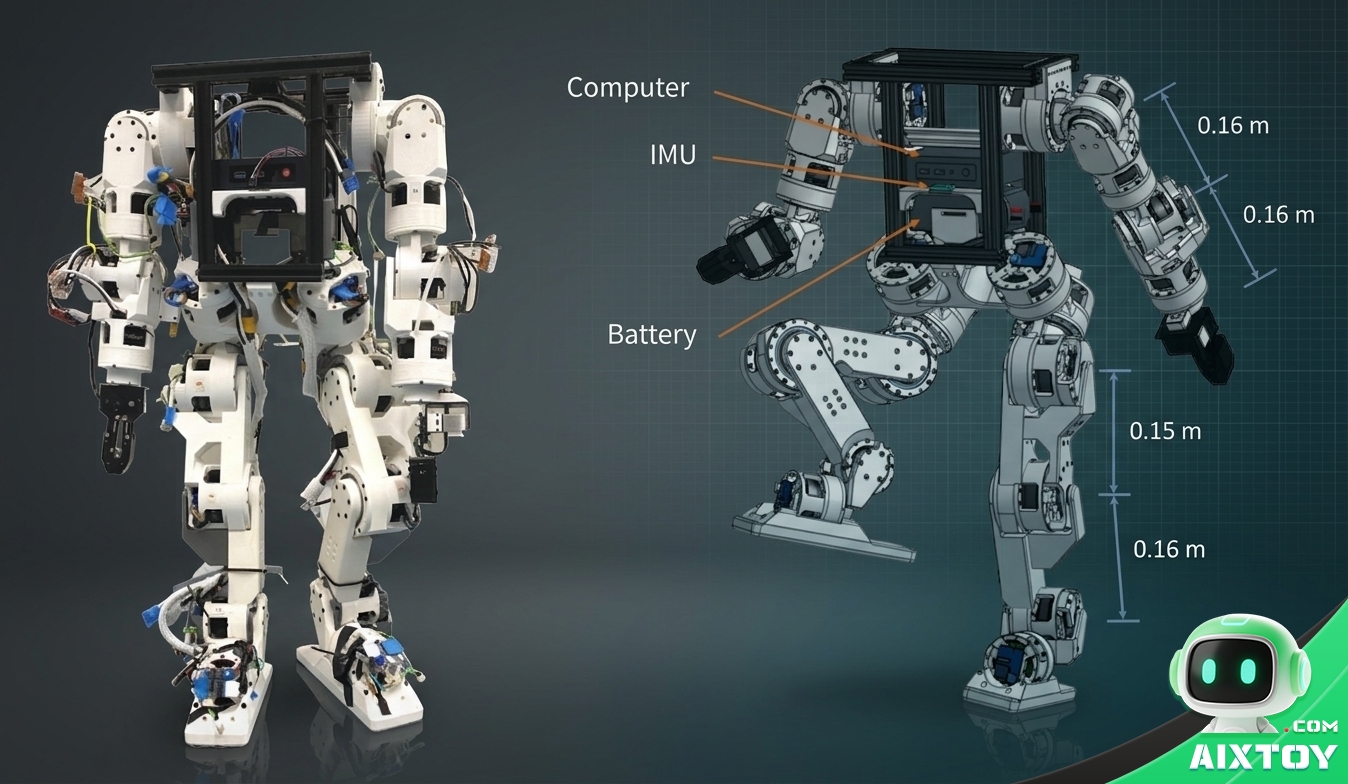
This week, 2,056 humanoid robots raced, practiced tai chi and sorted books at the Ice Ribbon arena in Beijing. On the same days, a lab at UC Berkeley quietly posted a different kind of announcement on GitHub: a fully open-source humanoid robot with hardware costs under $5,000, where most structural parts can be made on a desktop 3D printer. One event celebrated who runs fastest; the other lowered the cost of owning a humanoid at all. The second one may travel further.
What It Is: Berkeley Humanoid Lite
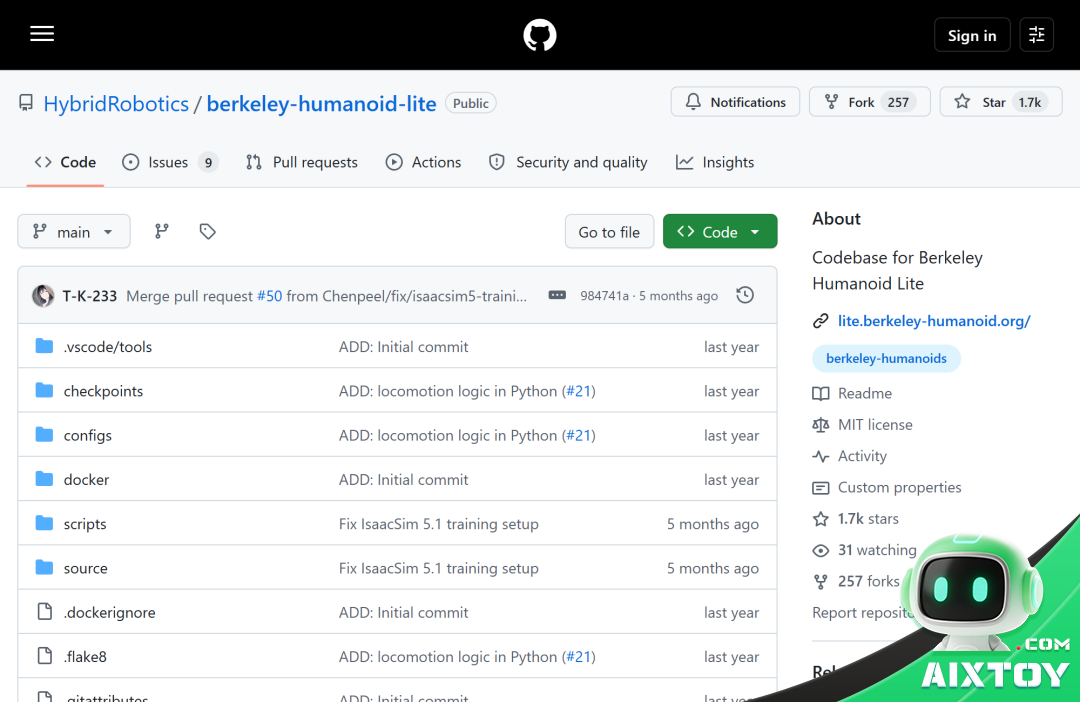
The project is called Berkeley Humanoid Lite, from the Hybrid Robotics Lab in UC Berkeley’s EECS department. The headline numbers:
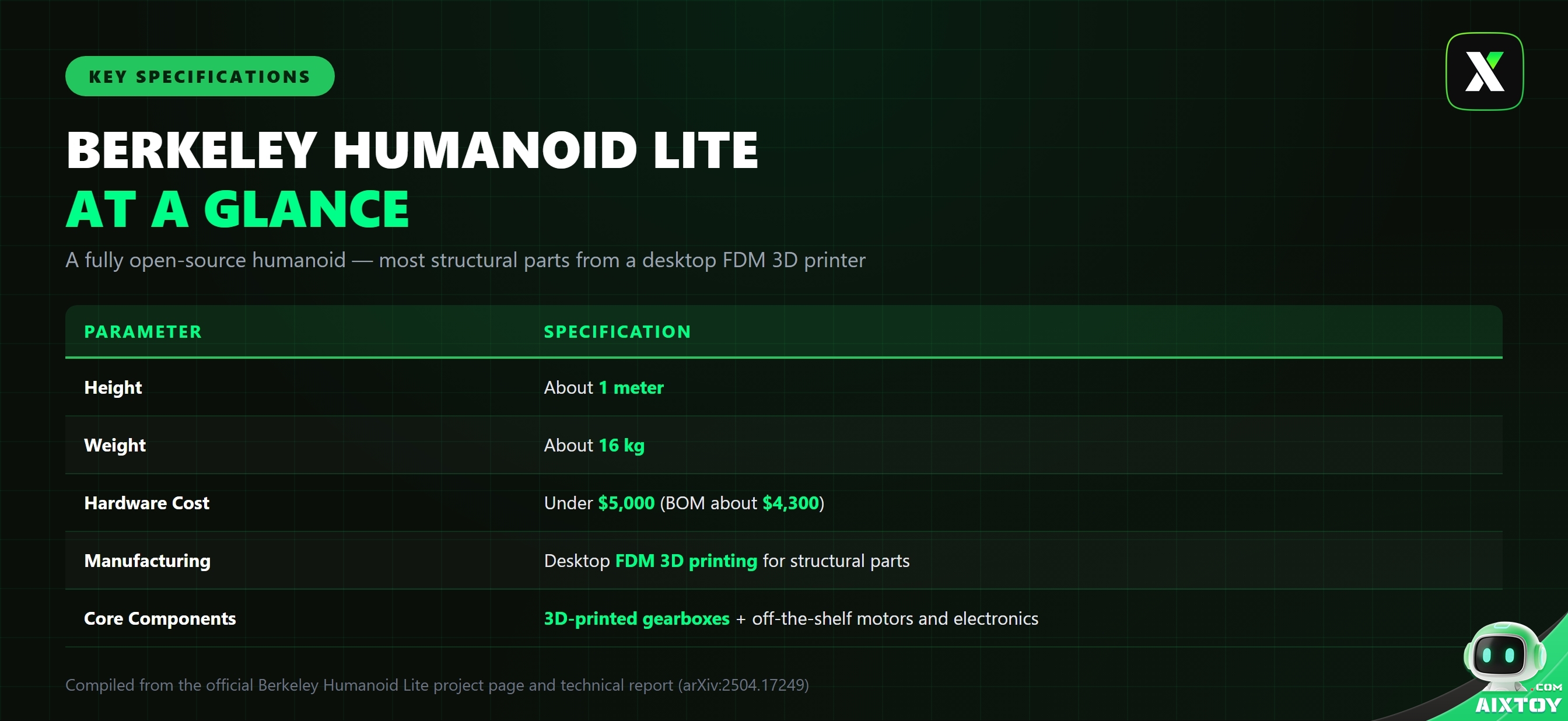
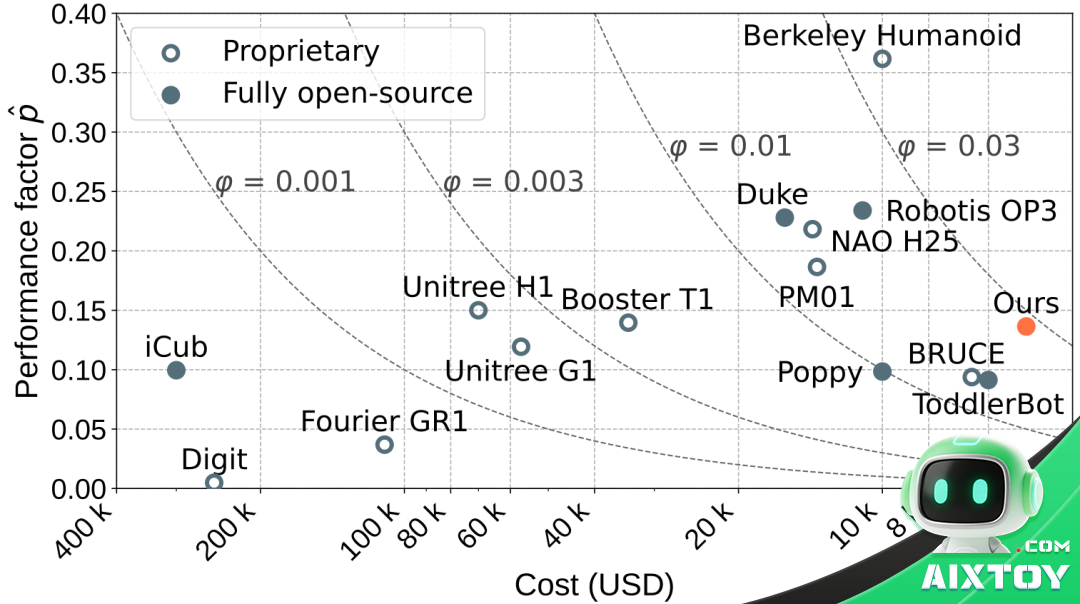
Two numbers deserve a closer look. $4,300: commercially produced humanoids are quoted anywhere from tens of thousands to hundreds of thousands of dollars — under $5,000 means a lab, a maker team or a serious hobbyist can actually reach it. Desktop FDM: no industrial-grade printing service required — a few-hundred-dollar desktop printer can produce the parts. Broke a part? Print another one. That repairability and replicability is what lets open-source hardware roll.
How Open It Really Is
“Open-source” is often watered down — releasing CAD alone is common. This project’s completeness deserves separate attention:
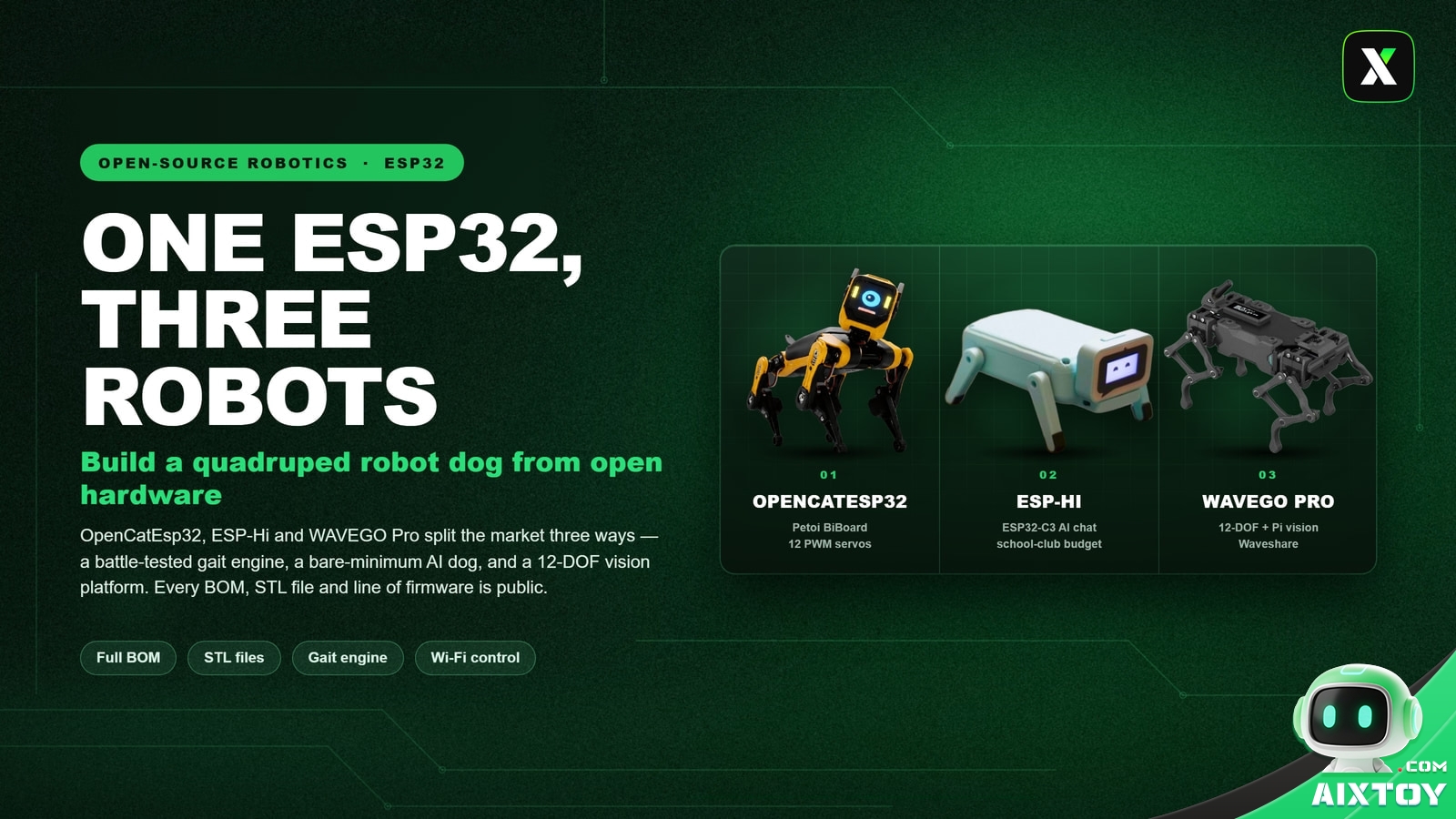
- Mechanics — the full CAD set, from structure to the signature 3D-printed gearboxes.
- Model descriptions — URDF, MJCF and USD formats all provided, so the robot can go straight into mainstream simulators.
- Firmware — motor-control firmware code is open.
- Training — a complete RL training pipeline: train in Isaac Lab, validate in MuJoCo, deploy to the real robot.
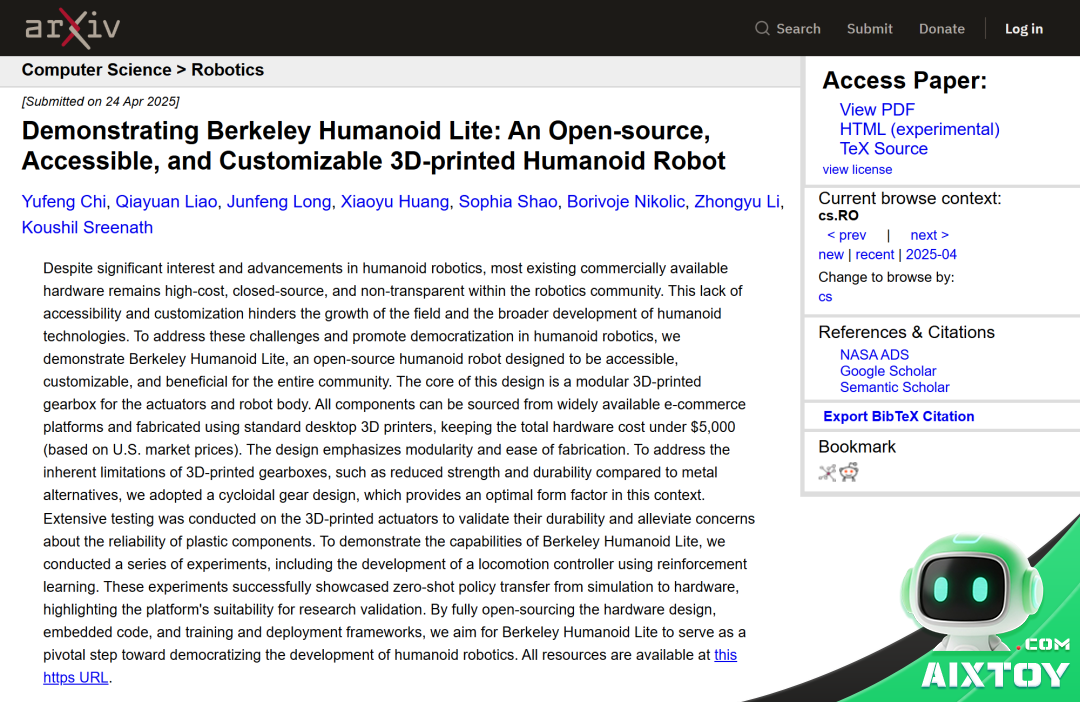
The technical report has been on arXiv since 2025 (ID 2504.17249, accepted at RSS 2025), authored by Yufeng Chi, Qiayuan Liao, Zhongyu Li, Koushil Sreenath and other Berkeley EECS researchers.
What It Can Do
At the $5,000 price point, the capability list is surprisingly long:
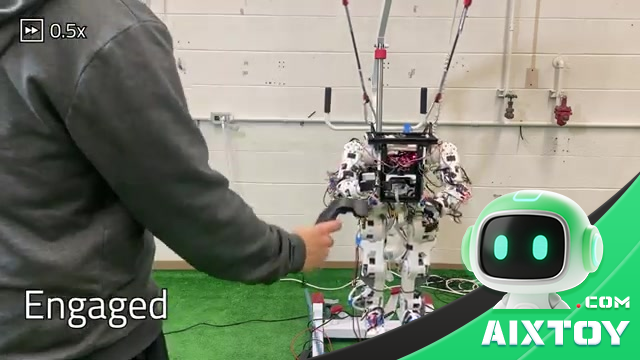
- Walking — reinforcement-learning-trained gaits transfer from simulation to the real robot with zero-shot sim-to-real; no tuning from scratch on hardware.
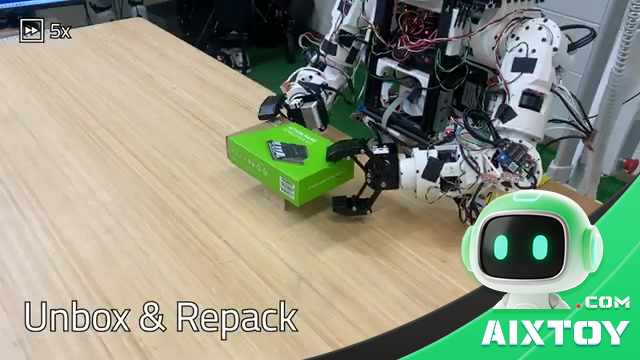
- Bimanual manipulation — teleoperation is supported, with both arms working together.
- Extensible — on the 1-meter, 16-kg platform, room is left for extra sensors and swapped end-effectors.
Learning to walk in simulation, then stepping directly on the real robot — this paradigm used to run only on platforms costing hundreds of thousands of dollars. Now it can be reproduced for $5,000. It will not race 9.39 seconds or practice tai chi. But look at where it sits: research and education infrastructure. The students writing papers on this platform, and the makers prototyping on it, will outnumber those on closed platforms by an order of magnitude.
Two Roads, Same Direction
Stack this week’s two pieces of news together and you see humanoid robotics being pushed from two directions at once.
Road one: industry. China shipped more than 40,000 humanoids in the first half of this year — about 97% of the global total (China Institute of Electronics, August data). The 2,056 robots at the Ice Ribbon were that road’s parade: supply chains and mass production pushing whole-machine prices down year after year.
Road two: open source. Berkeley and others release the drawings, firmware and training code, moving the participation barrier from “can afford to buy one” to “can build one.” The two roads lead to the same place — when mass-produced machines drop to tens of thousands of yuan and open-source machines can be printed at home, “a humanoid in every home” stops being science fiction.
Personal computers walked exactly this path: first manufacturers drove prices down, then the open-source community pushed possibilities outward. The home-brewed motherboards of the Homebrew Computer Club were dismissed as toys once too.
Getting Started
The shortest path for readers who actually want to build one:
- Search hybridrobotics/berkeley-humanoid-lite on GitHub — the README carries the complete BOM: every motor and board, with models and sourcing links.
- Order the structural parts per the BOM (print at home, or use an online print service if you don’t own a printer).
- While parts ship, load the URDF/MJCF files into a simulator and start learning at zero hardware cost.
- Assemble, flash the firmware, and run the official training pipeline.
Within a $5,000 budget, the most expensive part may not be the components — it is the summer you are willing to spend on it.
The robots at the Ice Ribbon are competing for gold medals. Berkeley’s robot is waiting for someone willing to print its first gear.
Sources: GitHub repository hybridrobotics/berkeley-humanoid-lite; paper arXiv:2504.17249; industry data from the China Institute of Electronics (August 2026).
At AIXTOY, we curate AI toys and smart companions with genuine first-party sourcing and quality checks on every product before it ships — from desktop companion robots and STEM robot kits to open-source development boards. If you are weighing robot platforms, our buying guides, industry analysis and open-source project comparison are good starting points.
Tags:Berkeley Humanoid LiteBerkeley HumanoidOpen Source RobotHumanoid Robot3D PrintingRoboticsRobot NewsOpen SourceSim-to-Real