


No products added!
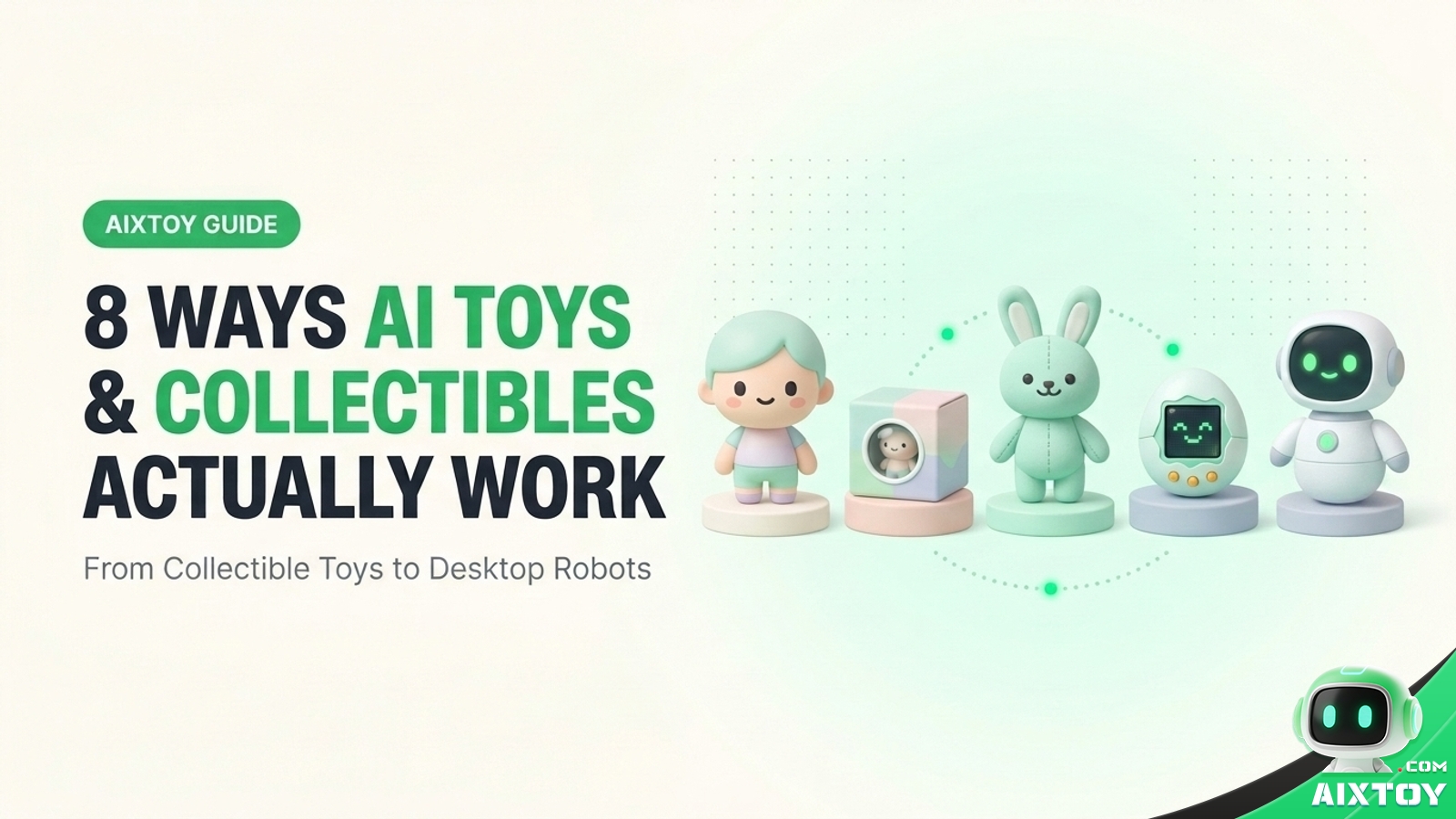
There is no single upgrade path that runs from a collectible toy — a designer figure, a blind box, an IP plush — to a desktop robot. Each category in the collectibles world handles character, ownership and interaction in its own way — and once AI enters the picture, it adds a whole new layer of responsibility. Whether you are a collector, a parent choosing a gift, or a maker exploring AI toys, understanding these eight product logics will help you see through the hype and pick what actually fits your life.
Why the Boundaries of Toy Collectibles Matter
Walk into any toy store or scroll through any industry report and you will find blind boxes, designer figures, plush toys, trading cards, action figures, digital pets — and now AI plush and desktop robots — all listed together. They share shelf space, but their product forms, purchase motivations and usage patterns are wildly different. For most people, these names blur together. For anyone designing, selling or buying these products, the boundaries matter. Comparing plush toys and desktop robots with a simple feature table — or ranking trading cards, digital pets and AI toys by “tech level” — does not explain what these products actually are. They answer different questions and sell different things.
This article organizes the categories one by one, based on publicly available information: listed-company annual reports, brand official sites, product pages and official historical materials, covering Pop Mart, Kayou, 52TOYS, Tamagotchi, and desktop robots such as Eilik and EMO.
What Counts as a “Toy Collectible”?
Terms like collectible toys, smart toys, AI toys and companion robots are often used interchangeably, and brands themselves are not fully consistent. A single product can belong to several categories at once. To keep the comparison clean, this article uses working definitions from product research:
- Collectible toys target teens and adults. They are driven by characters, IP, design language and series operations, and emphasize owning, displaying, handling and collecting — often as aesthetic expression and social display. Figures, plush and action toys can all be collectibles.
- Smart toys have electronic feedback, sensors, program control or connectivity. They may talk, move, or react to touch and distance. A chip and a sensor mean the product has certain smart features — nothing more.
- AI toys put recognition, generation, personalization or learning into the core experience.
- AI collectibles add a character layer on top: users want to own the character and keep interacting with it.
- Companion robots are broader. They may serve children, seniors or whole families, handling reminders, caregiving and home control.
Figures: The Logic of the Eye
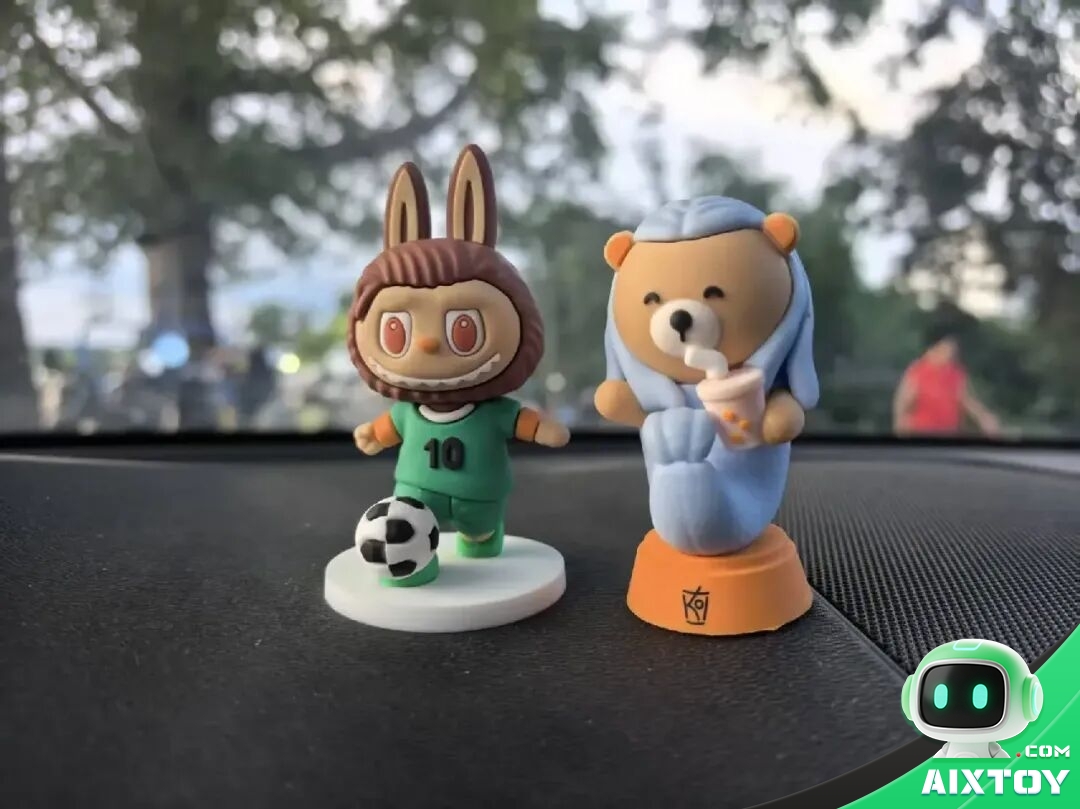
A figure is a product form. A designer turns a character into a three-dimensional model, and the buyer can see the silhouette, material and scale before deciding. The experience lives in looking, handling and displaying: whether the outline is recognizable, whether the expression is accurate, and whether the paint and craftsmanship are consistent. A figure does not actively change over time. To keep the character alive, the brand must release new sculpts, themes, sizes or collaborations. The logic is direct — if you love the character and want it in your living space, the purchase already makes sense.
Blind Boxes: A Sales Format, Not a Product Type
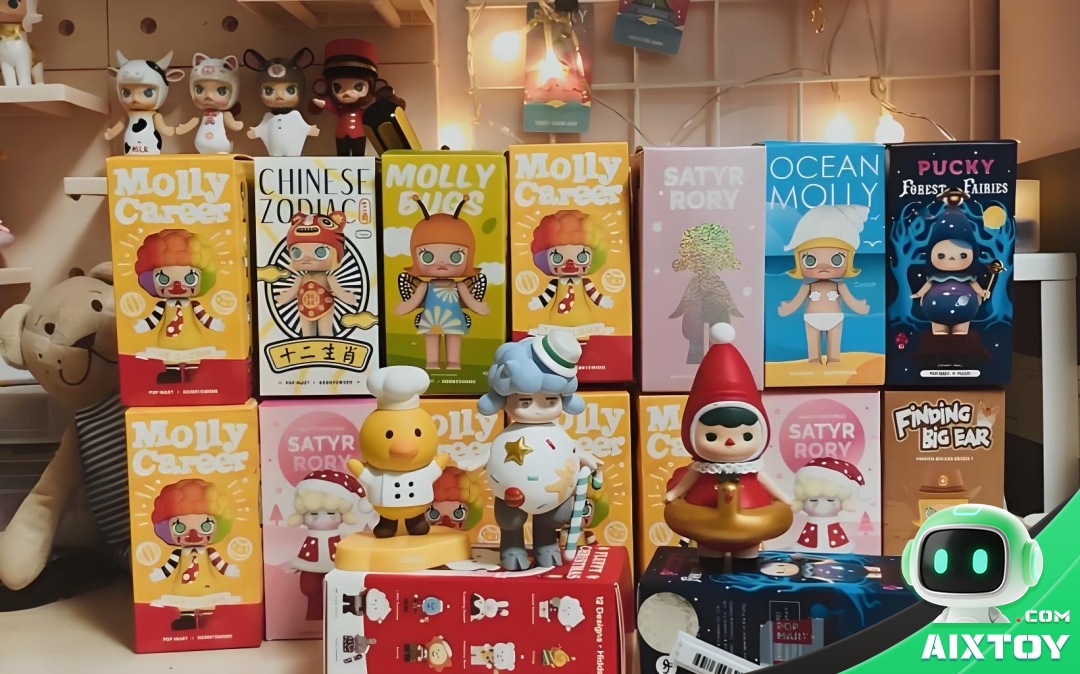
Blind boxes are closer to a sales method than a product category. The box does not reveal which specific design you get. A series usually contains several regular designs plus a hidden rare one. Buying one box gives you a randomized unboxing experience; buying more is about collecting, trading and completing the set. That is why figures can be sold as open designs, while blind boxes can hold plush keychains or other small toys. A figure answers what the product is; a blind box answers how it is sold.
Blind boxes usually start from a series: the same character swaps outfits, poses and themes, or teams up with other characters into a lineup. Brands must balance single-figure appeal against the full-set relationship. Random sales also raise real concerns — repeat purchases, probability disclosure and minors’ spending. Our take: if you are gifting a blind box, set expectations about the random nature — and enjoy the unboxing ritual together.
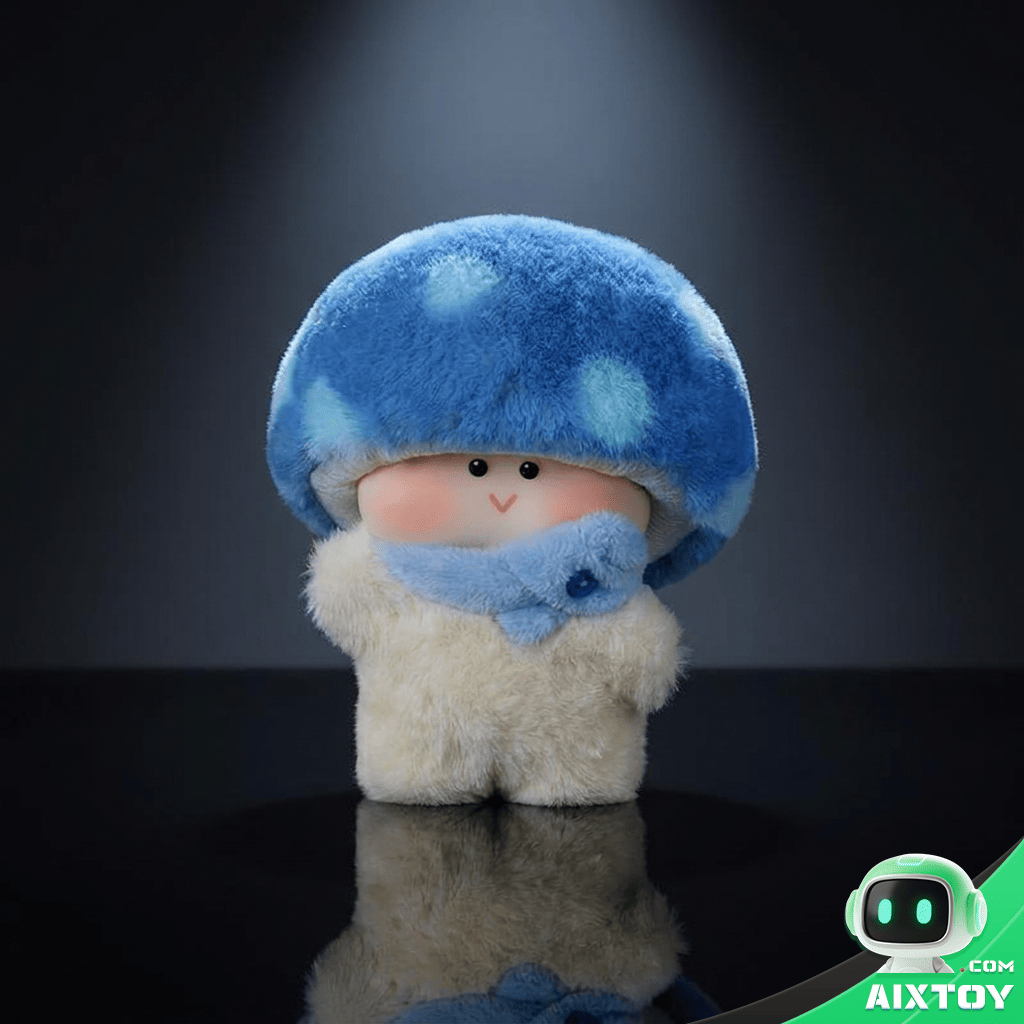
Sowii Mushroom Blind Box
$34.99
A collectible blind box series with adorable mushroom characters — unbox, display and complete the set. A playful entry point into designer-toy collecting.
Plush: When Characters Enter Daily Life
Plush changes how people physically relate to a character. A figure is first seen; plush is also touched, hugged and carried. Once the character becomes soft material, size, filling, surface feel, durability and cleaning all affect the experience. Plush sits closer to people. It appears on beds, desks and backpacks, and can even become part of an outfit. The character shifts from a display object to something that enters daily routines.
Pop Mart’s 2025 annual report offers a striking signal: plush revenue reached 18.7 billion RMB (50% of total revenue), while figure revenue was 12 billion RMB (32%). Under Pop Mart’s 2025 classification, plush has overtaken figures as the highest-revenue category. One company’s structure does not define an industry, but it does confirm that plush has moved to the center of Pop Mart’s business.
Trading Cards: Rarity, Rules and Exchange
Cards look simple — printed images on paper, no mechanics, no electronics. But inside the category there are very different product routes. Collectible cards rely on character art, series numbering, rarity and full-set collecting. Trading card games (TCGs) add deck-building, battling and tournament rules on top. The former is closer to collecting; the latter requires learning rules and interacting with other players.
Kayou is a representative sample of the Chinese card market. According to public sources, Kayou’s 2024 revenue was 10.06 billion RMB, with TCG cards accounting for about 81% — historical operating data that shows the position of cards within the company, not a projection for 2026. Card value does not stop at a single product. Rarity sets collecting difficulty, rules shape deck-building and play, and trading lets cards circulate between people. Brands must maintain not just new cards, but rules, tournaments and offline channels.
Action, Transformable and Build Kits: Hands-On Participation
Action figures offer joints and poses; transformable toys switch between forms; build kits make assembly part of the experience. A static figure arrives complete. Action and transformable products ask the user to pick it up, adjust joints, change structure and restore or restyle it. Build kits add a whole arc from parts to finished piece.
52TOYS is the brand to watch here. According to its official site, the company was founded in 2015, operates more than 100 owned and licensed IPs, and covers static figures, action figures, transformable mecha, build kits and plush. Its flagship line BEASTBOX launched in 2016, folding transformation, play and collection into one product: users convert it from beast or mecha form into a cube and back. These products have no electronic feedback. Whether clips align, structures restore and joints hold position gives users a clear, physical result — and that physical clarity is part of the appeal.

Digital Pets: State That Keeps Changing
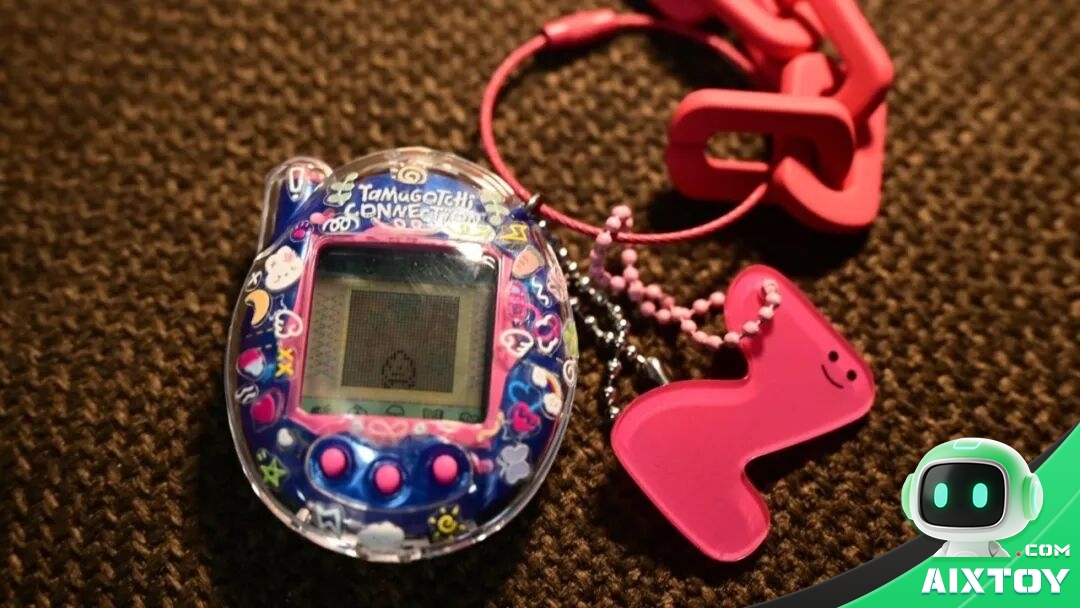
Digital pets add a new condition: even when the user is not touching the device, its state changes over time. Tamagotchi is the most representative product. The first unit launched on November 23, 1996, officially positioned as a “handheld care toy.” Users feed, clean and care for the pet; it grows and enters different states based on care.
There is no complex language in this loop. You open the device, see how the pet is doing, decide what to do, and leave. When you return, you see the result of your last choice. In 2004, Tamagotchi added infrared communication, letting devices connect and expanding from solo care to device-to-device interaction. As of July 2025, official figures put cumulative global shipments since 1996 at over 100 million units — evidence of three decades of sustained market presence. Digital pets also impose burdens: overly frequent reminders and heavy consequences turn care into pressure. The product must make users want to care without feeling they have signed up for a chore.
AI Plush: Character, Touch and Conversation
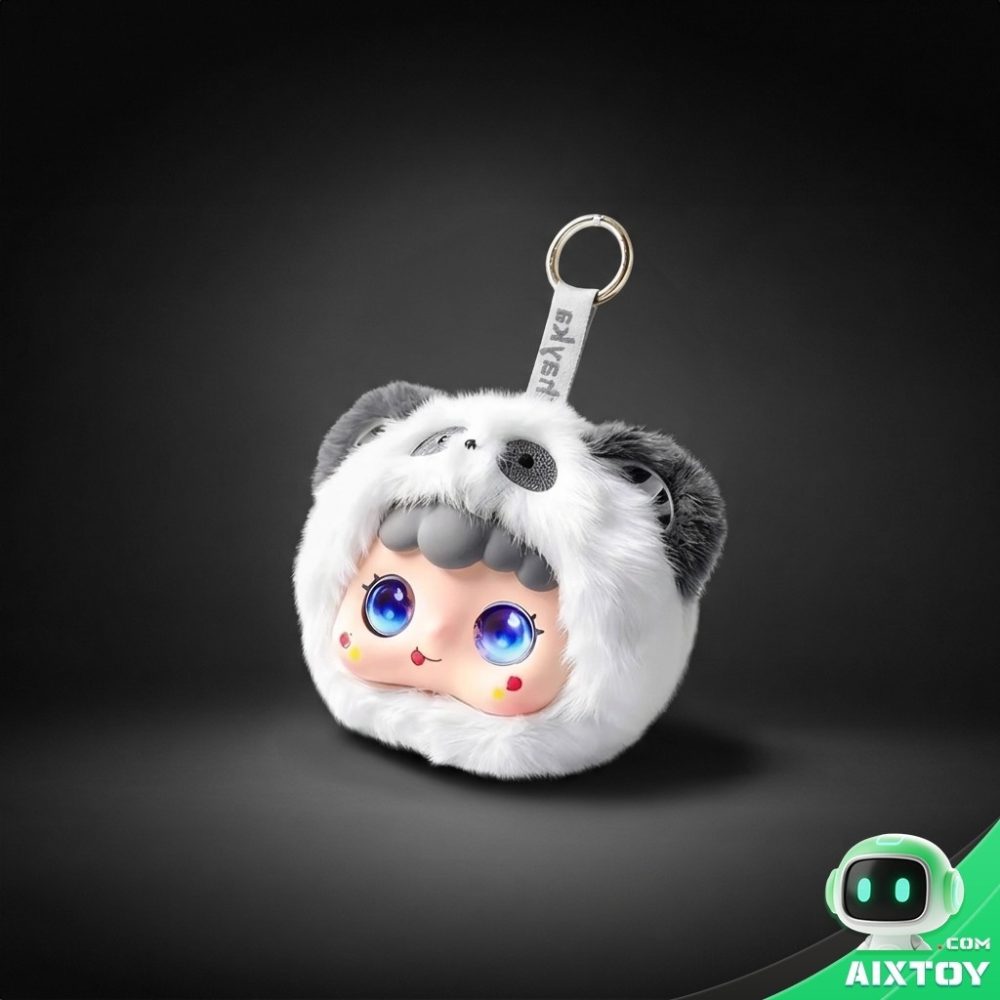
AI plush keeps the form and feel of traditional plush while adding a microphone, speaker, connectivity and character dialogue into the physical object. You can still hug it and display it — and you can also talk to the character. Plush provides the base of touch and character; AI expands the range of content and responses.
A good example is Maka, an AI doll positioned at the intersection of AI plush and desktop companion. Maka’s concept is a personality-driven AI collectible: a plush creature users first want to place in their living space, which then builds presence through eyes, voice, movement and dialogue. Two questions drive this kind of product: Is it attractive and fun enough that people want to get close on day one? And after weeks of use, can users recognize a stable personality and feel that past interactions left traces? Maka’s team is explicit that these are product directions still being validated — not proven market conclusions. Our take: when choosing an AI plush, look for stable character behavior and a realistic update path — not just a cute first impression.
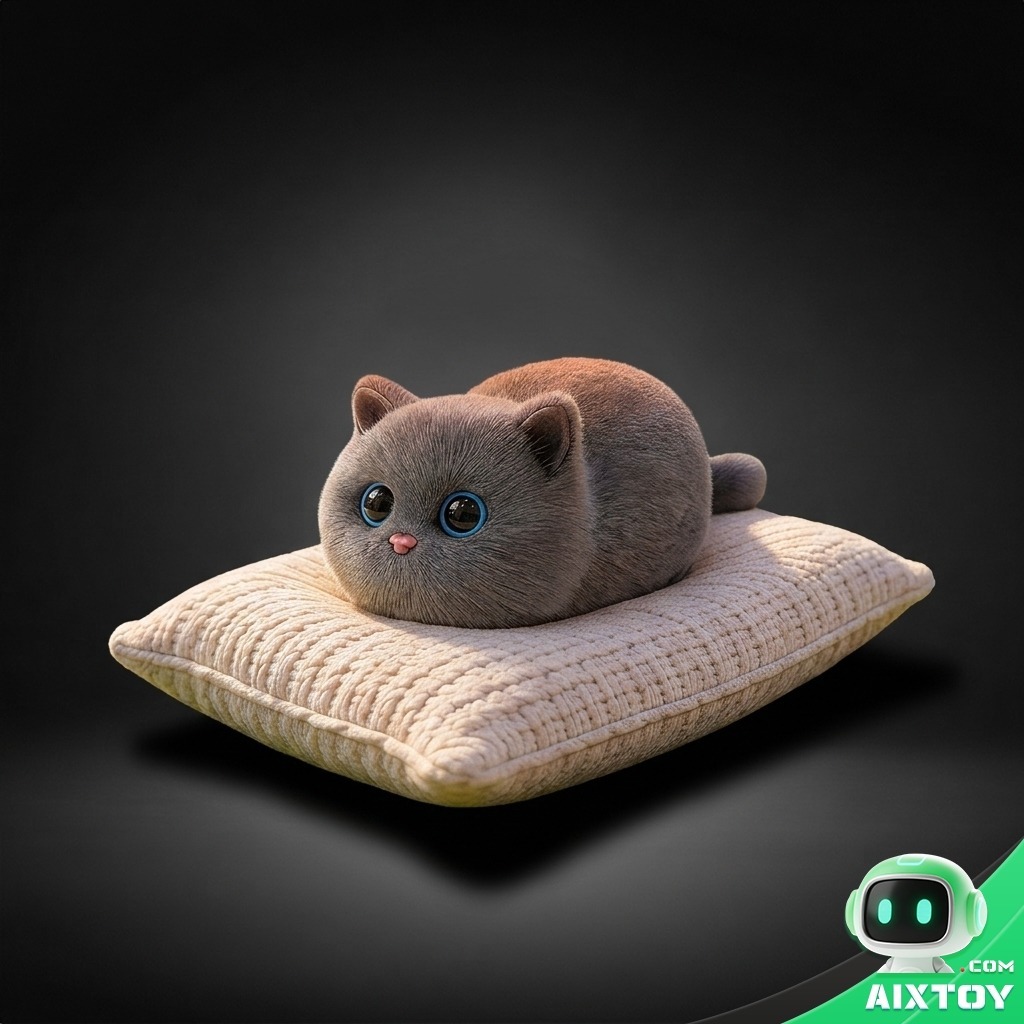
Walulu Cat AI Pet Robot
$145.99
A smart plush feline companion with voice interaction, touch response and playful AI — the warmth of plush meets the magic of an AI pet.
Desktop Robots: From Touch Companions to Mobile AI Pets
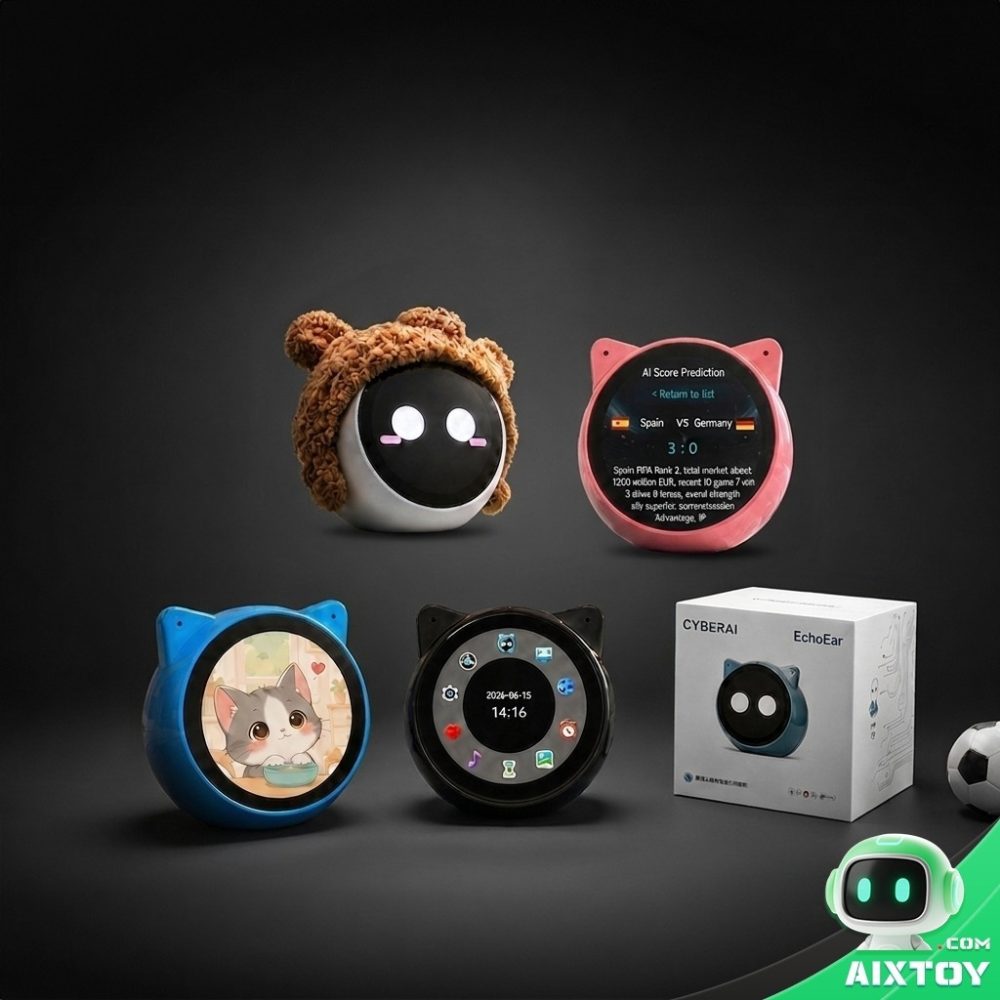
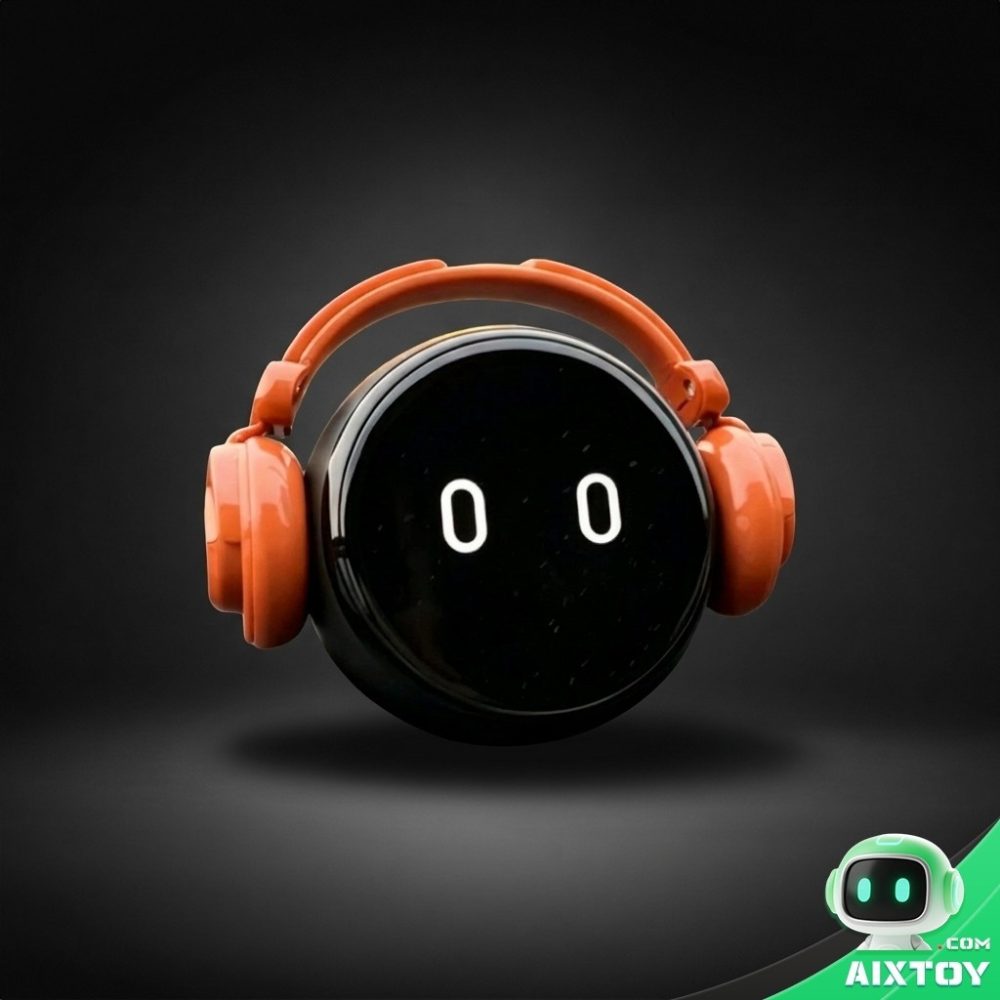
Desktop robots typically combine a screen face, speaker, sensors and mechanical motion. Some sense touch and knocks; some move, recognize faces or hold voice conversations. The technology varies enormously, so “desktop robot” mainly describes a form factor — it does not guarantee a specific level of AI.
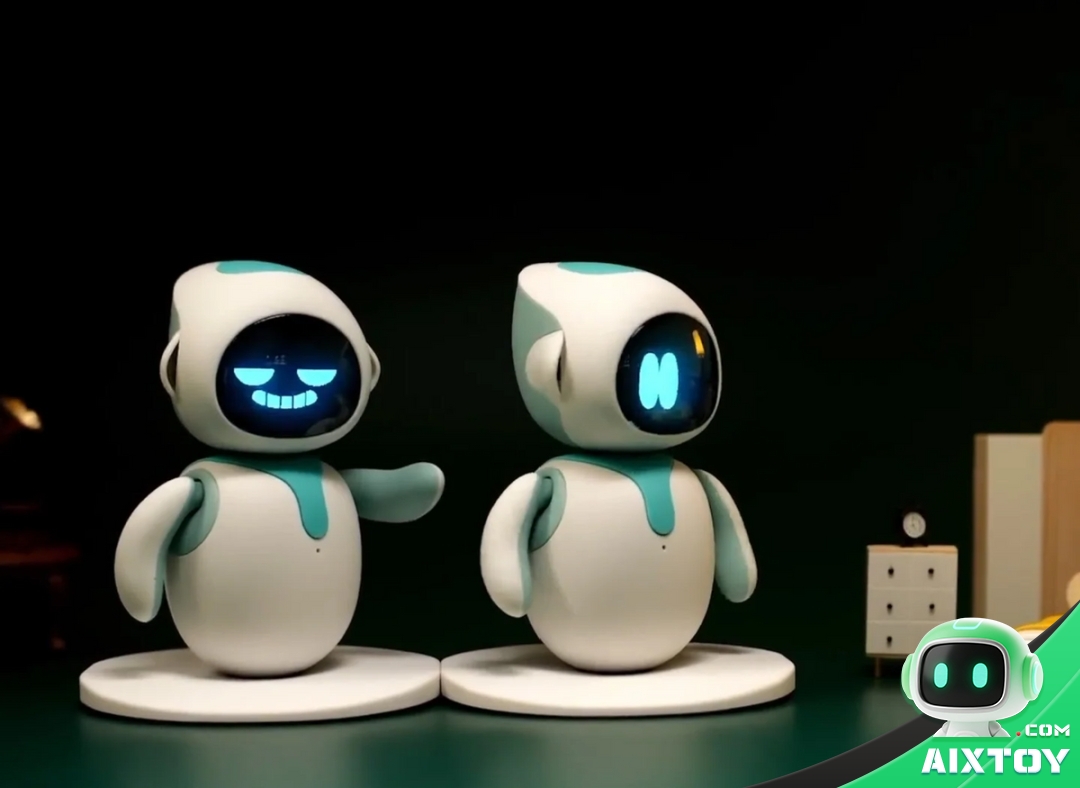
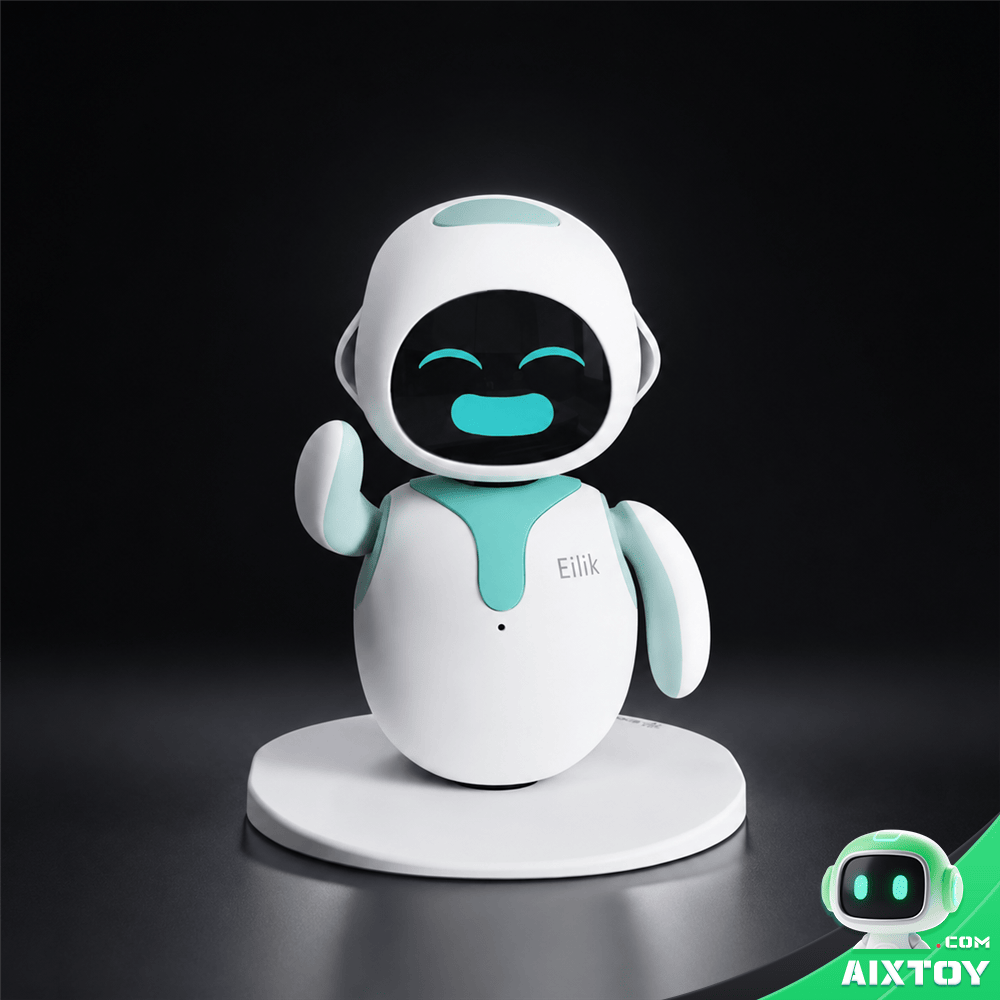
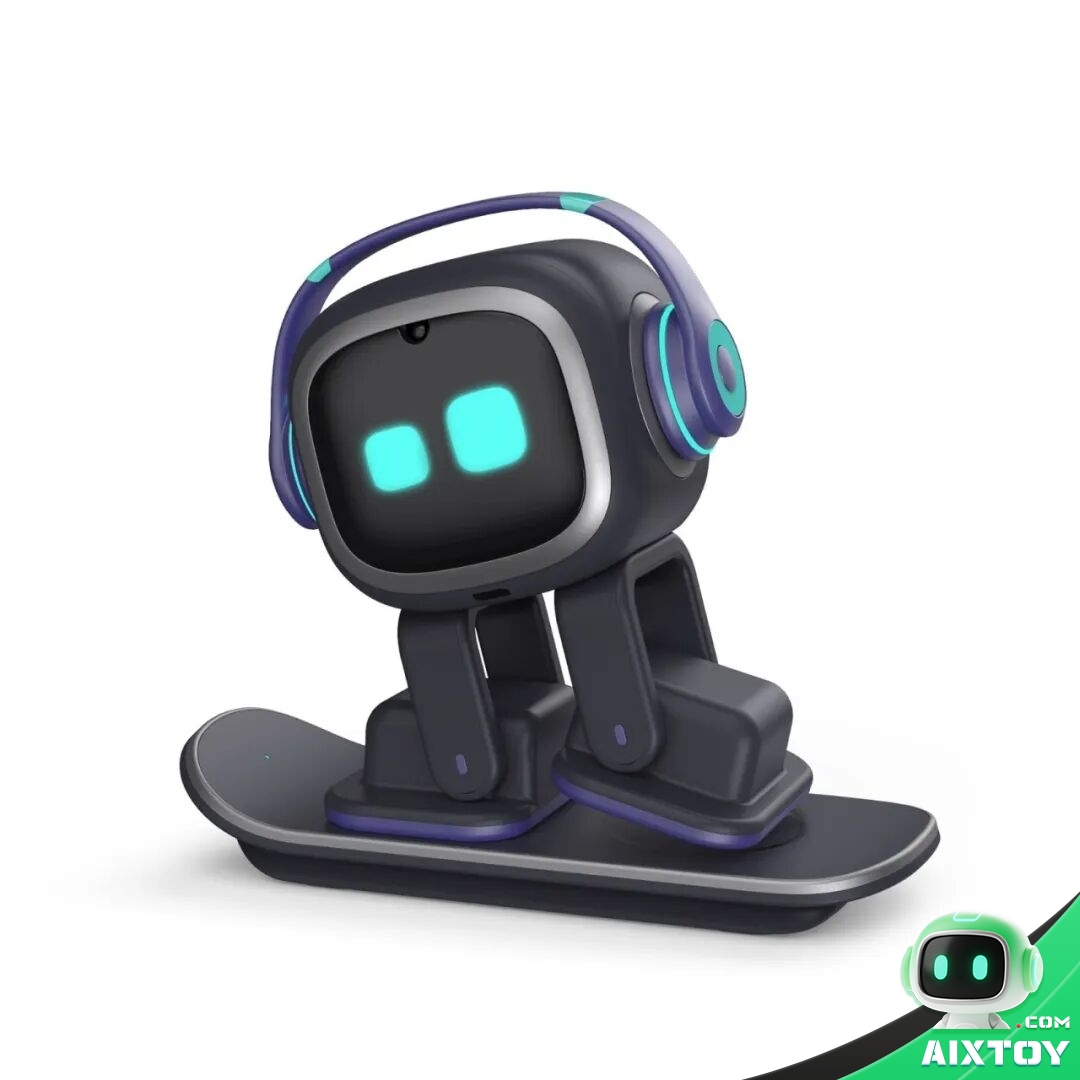
Eilik is closer to a touchable interactive collectible. It senses touch, knocks and being picked up, and responds with screen expressions and body motion. It does not roam; the experience focuses on touch and instant reaction. EMO is closer to a mobile desktop AI pet. It carries a camera, microphone, head-touch sensing and desk-edge detection, and emphasizes person recognition, voice conversation, music and dance, and daily reminders — plus ongoing content via app and software updates. Eilik concentrates the loop inside its body; EMO spreads capability outward into movement, sensing and networked content, with higher dependence on battery, servers and follow-up maintenance.
Eilik AI Desktop Companion Robot
$139.99
An emotional desktop companion with 2000+ expressions, touch interaction and multi-robot social play. Perfect for desks, shelves and collections.
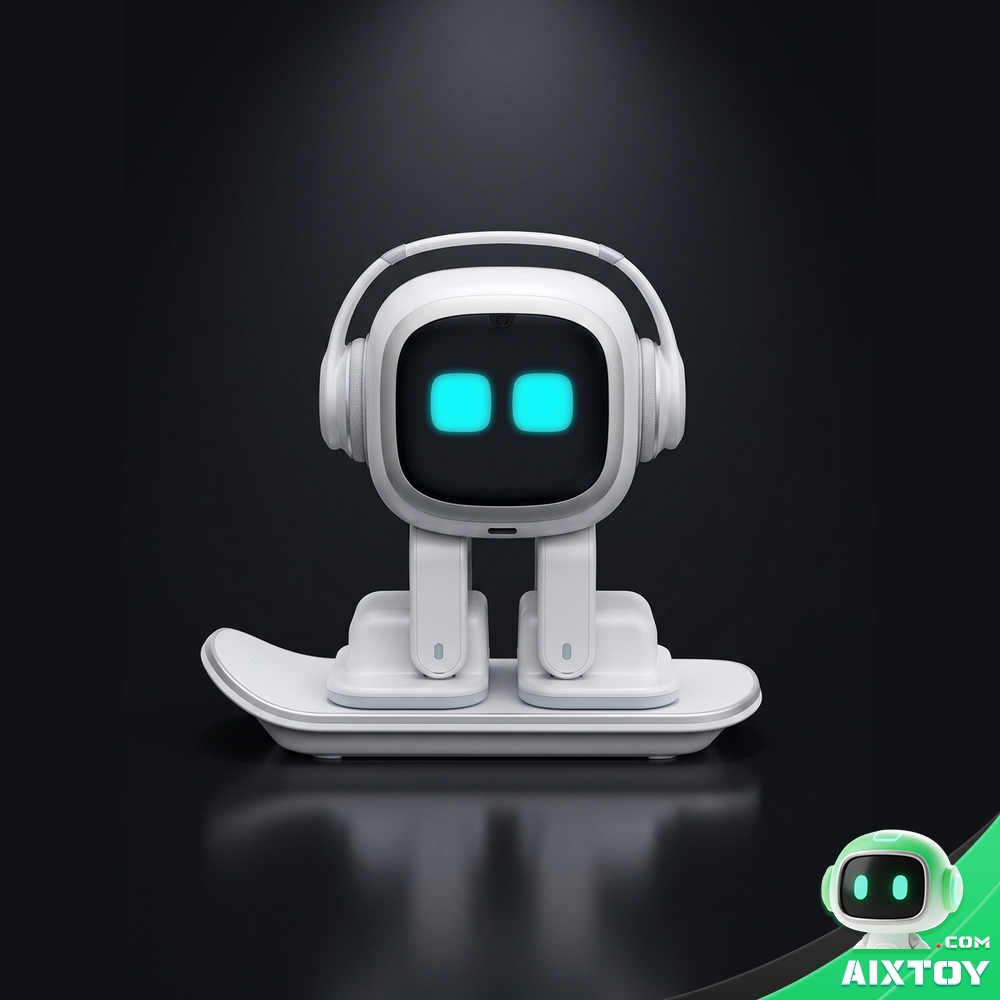
Emo Go Home AI Robot
From $108.90
A true AI pet that walks, watches and learns — with a skateboard charging dock, face recognition and an ever-growing library of expressions and app features.
How the Eight Categories Compare
Instead of ranking categories by “tech level,” compare them with three practical questions: what does the user mainly do with the product, how does it keep changing, and what does long-term use demand?
| Category | Main Experience | How It Changes Over Time | Usage Burden |
|---|---|---|---|
| Figures | Viewing, handling, display | New sculpts and series | Cleaning, storage |
| Blind Boxes | Unboxing, display, completing sets | Hidden designs, collabs, new series | Random purchases, duplicates |
| Plush | Touch, hugging, carrying | New sizes, designs, accessories | Cleaning, wear |
| Trading Cards | Collecting, trading, battling | New card pools, rules, events | Learning rules, ongoing purchases |
| Action / Transformable | Adjusting, assembling, transforming | New structures and accessories | Part wear, operation difficulty |
| Digital Pets | Caring, watching growth | State changes over time | Reminder pressure, battery |
| AI Plush | Touch, dialogue, companionship | Software and character content updates | Connectivity, privacy, content repetition |
| Desktop Robots | Touch, dialogue, watching actions | Online services and new behaviors | Safety, noise, repairs, service shutdown |
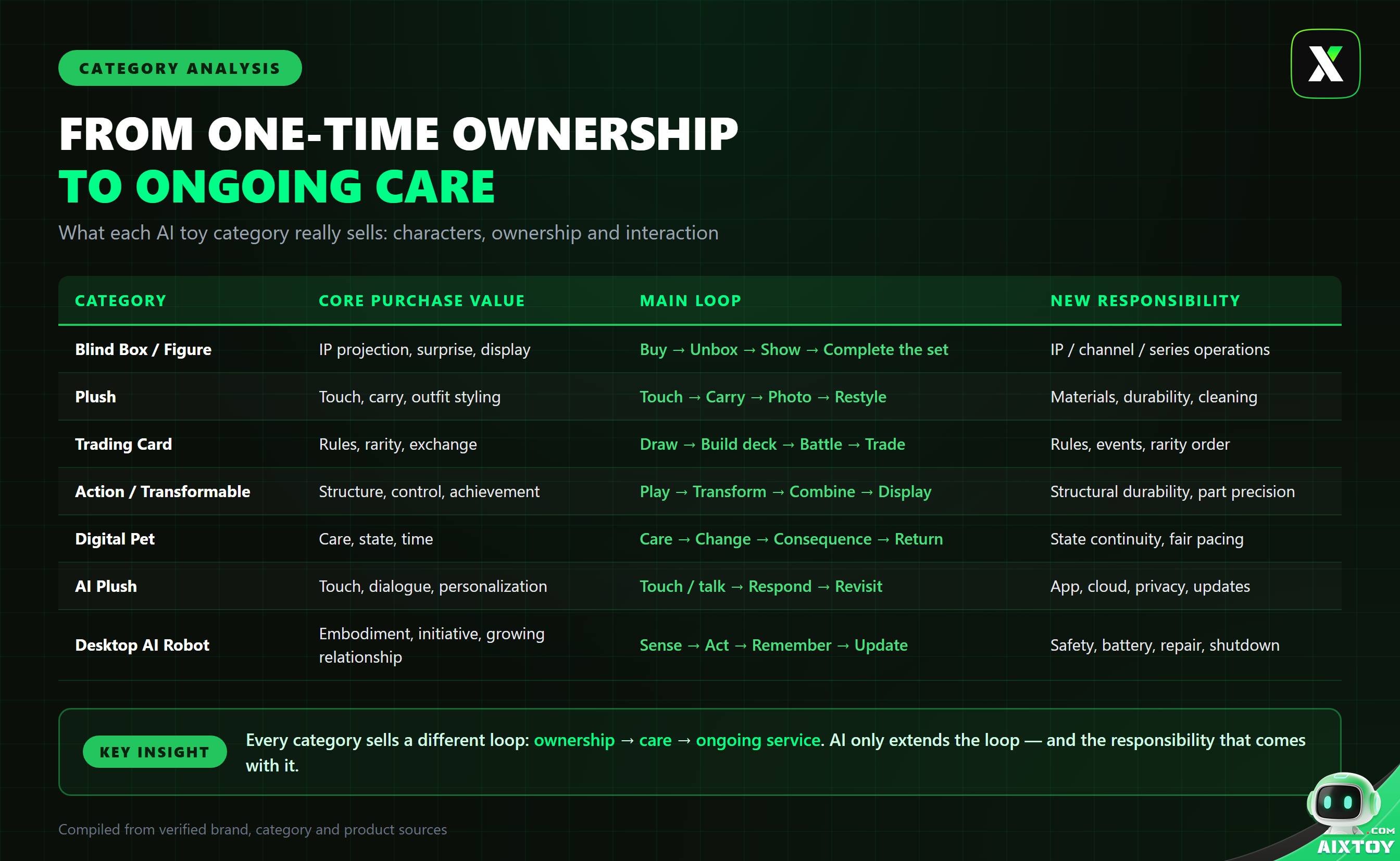
Technical complexity is only part of the difference. Figures and plush lean on the physical object itself; cards and action toys add rules and operation; digital pets make the same object change over time; AI plush and desktop robots add open dialogue, sensing and software updates. The same IP can be a figure, a plush, a card set — or an AI companion. Change the carrier, and the way users relate to the character changes with it.
What AI Actually Changes: Responsibility After Purchase
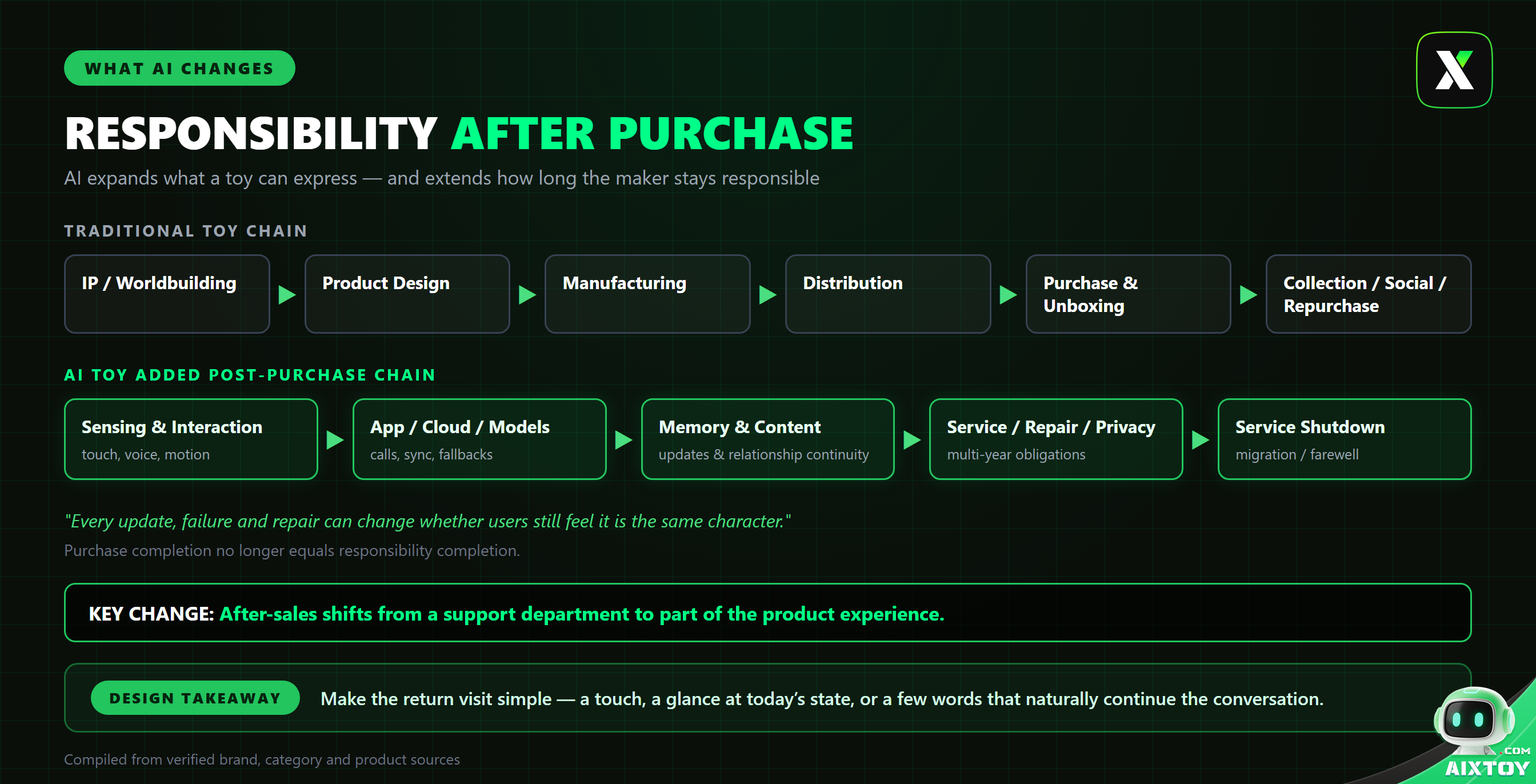
Traditional collectibles start with IP and character design, move through product design, manufacturing and distribution, and end with purchase, unboxing and display. Brands keep attention alive with new series, collaborations and offline events. AI collectibles keep that physical path — and add accounts, apps, cloud services, models, content updates and data processing after the sale. This changes when the product is “finished.”
A figure’s main function is fixed when it reaches your hands. An AI collectible must be activated, connected and continuously updated. Hardware delivery is only part of the delivery. The longer you use it, the more battery degradation, server stability, account issues and software compatibility matter. Cameras and microphones raise privacy questions. Moving products bring drop risk, noise and household safety. Repair and replacement get more complicated — users care not only whether the device boots again, but whether their memories come back and the character continues.
This is the core product judgment from this research: AI expands what a toy can express, and it extends how long the manufacturer stays responsible.
Design Lessons: Back to the Character
When designing an AI collectible, teams naturally split work into appearance, voice, motion, dialogue and memory — because they are different design and engineering tasks. Users do not split them. Users meet one character. What it hears, how it responds, whether actions and expressions line up, and whether it remembers past conversations all merge into a single feeling. If any part is unstable, users experience “it suddenly feels different.”
This review of traditional collectibles re-emphasizes the value of the physical object itself. Figures stand on sculpt; plush enters daily life through touch; action toys engage users through operation. When AI is added, those foundational values still need serious design. Designers also need to make the return visit easy: a touch, a glance at today’s state, or a few words that naturally continue last time’s topic — without forcing users through menus or daily task checklists. And relationship cannot be declared through levels, streaks or copy; users must feel, from concrete behavior, that the character remembers them and that past time together changed something.
The Two-Question Test for Any AI Toy
There is no single upgrade path from collectible toys — designer figures, blind boxes and IP merchandise — straight to desktop robots. Every category handles character, ownership and interaction in its own way. Figures and plush have not lost value because of AI; the rules, operations and time-loops built by cards, action toys and digital pets are worth studying for AI products. To judge any AI collectible, ask two questions:
- Without the AI, is it already a physical product people want to keep close?
- For every online capability it adds, is the maker ready to maintain it long-term?
How far a relationship can go is not something to answer quickly. Look at day two: does the user still reach out and touch it?
Final Thoughts
AI adds a lot of expression space to toys — and it extends the time manufacturers must stay responsible. The best AI collectibles are built on solid physical foundations: a character you want to own, a loop that rewards returning, and a maker that treats after-sales as part of the product.
At AIXTOY, we carefully curate AI toys and smart companions with genuine first-party sourcing and quality checks on every product before it ships. Whether you are looking for a desktop companion, an AI plush friend or a programmable STEM robot, our team can help you choose the right character for your space — learn more about us or reach out anytime. And if you are comparing specific desktop robots, our Eilik vs EMO comparison and complete guide to choosing AI robot toys are good next reads.
Tags:AI ToyAI CompanionAI Desktop RobotAI Plush ToysEmotional RobotSmart ToysRobot PetsInteractive Toys