

No products added!
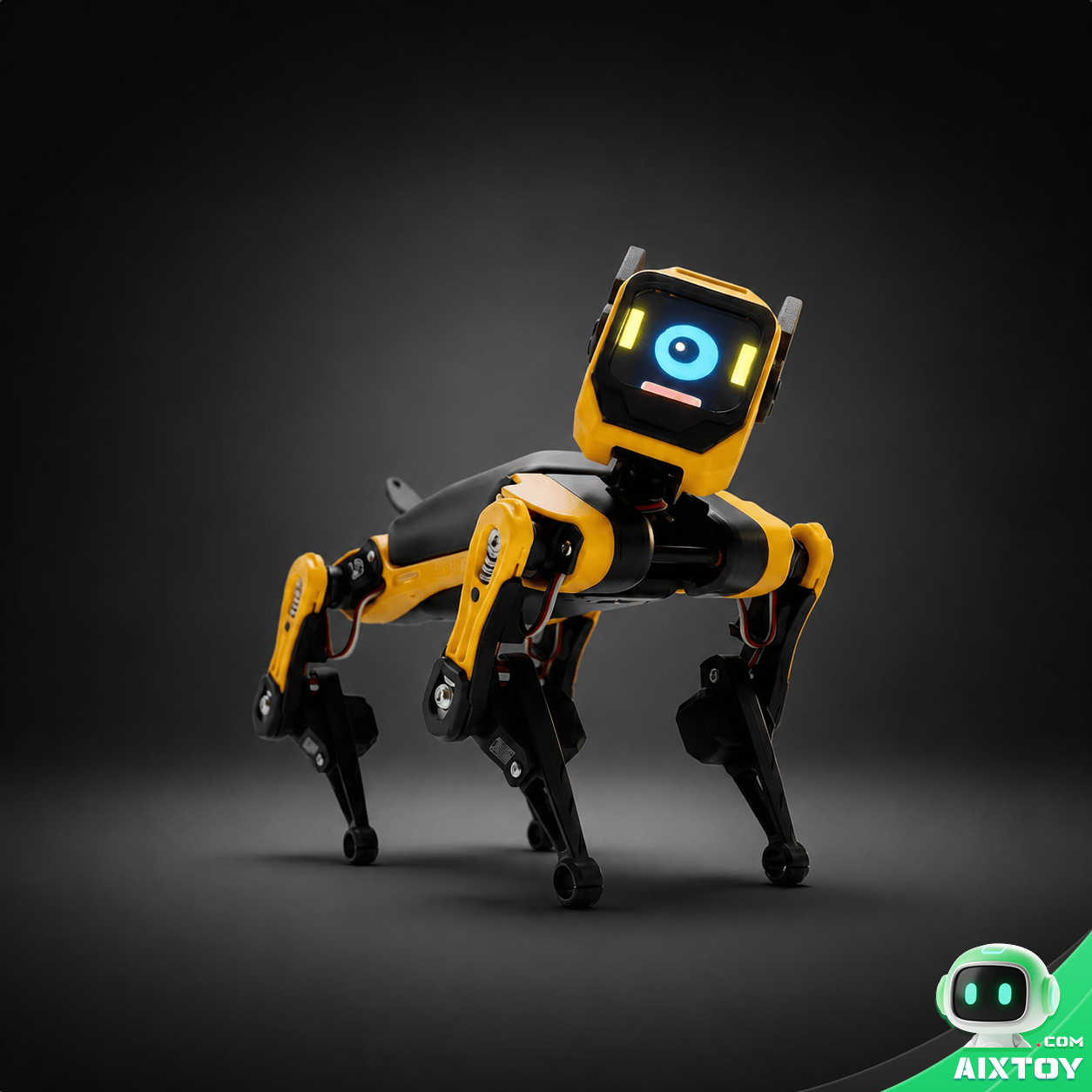
Open-source projects keep multiplying, and 3D printers are no longer exotic equipment. With the right software and hardware, almost anyone can dream of building a desktop robot of their own. Give it arms and legs, write a few lines of code, and watch it go from lying still to wobbling upright to slowly learning how to walk. That process alone is enormously satisfying.
Open any project repository, though, and you will quickly find that “small robot” covers a huge range of difficulty. Some projects get you started for about a thousand yuan; others need dozens of joints, and before the robot can even stand, the wiring, power and calibration tasks already stretch into a long list. Since the whole point of reproducing a project is to enter robotics through a concrete build, every early success matters: a servo finally moving on command, a sensor finally returning data, the robot finally taking its first step. Visible progress keeps people going.
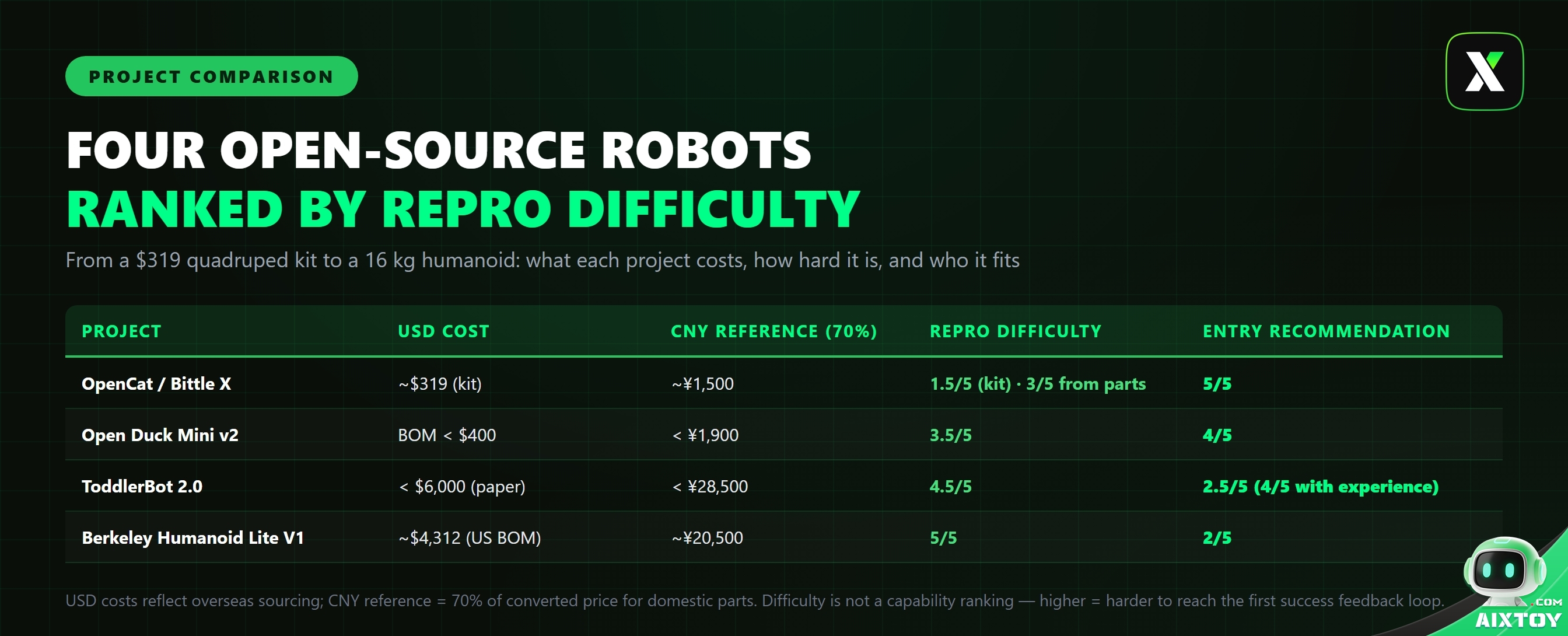
This article picks four representative open-source projects, ordered by increasing difficulty: OpenCat (Bittle X), Open Duck Mini, ToddlerBot, and Berkeley Humanoid Lite. Instead of comparing flashy videos, we look at five practical questions: what it can do, how it works, how hard it is to reproduce, how much it costs, and whether it suits someone entering robotics.
One principle matters above all: your first robot does not need to do everything. Getting it moving early, letting you change one thing, see the result, then change again — that loop matters more than the number of joints.
Four Projects, Four Levels of Difficulty
“Desktop robot” is used loosely here. Bittle X runs directly on a desk; Open Duck Mini stands about 42 cm tall; ToddlerBot is 56 cm tall and about 3.4 kg; Berkeley Humanoid Lite is close to 1 meter and 16 kg, needing its own safe activity area.
OpenCat / Bittle X: The Fast, Reliable Four-Legged Entry
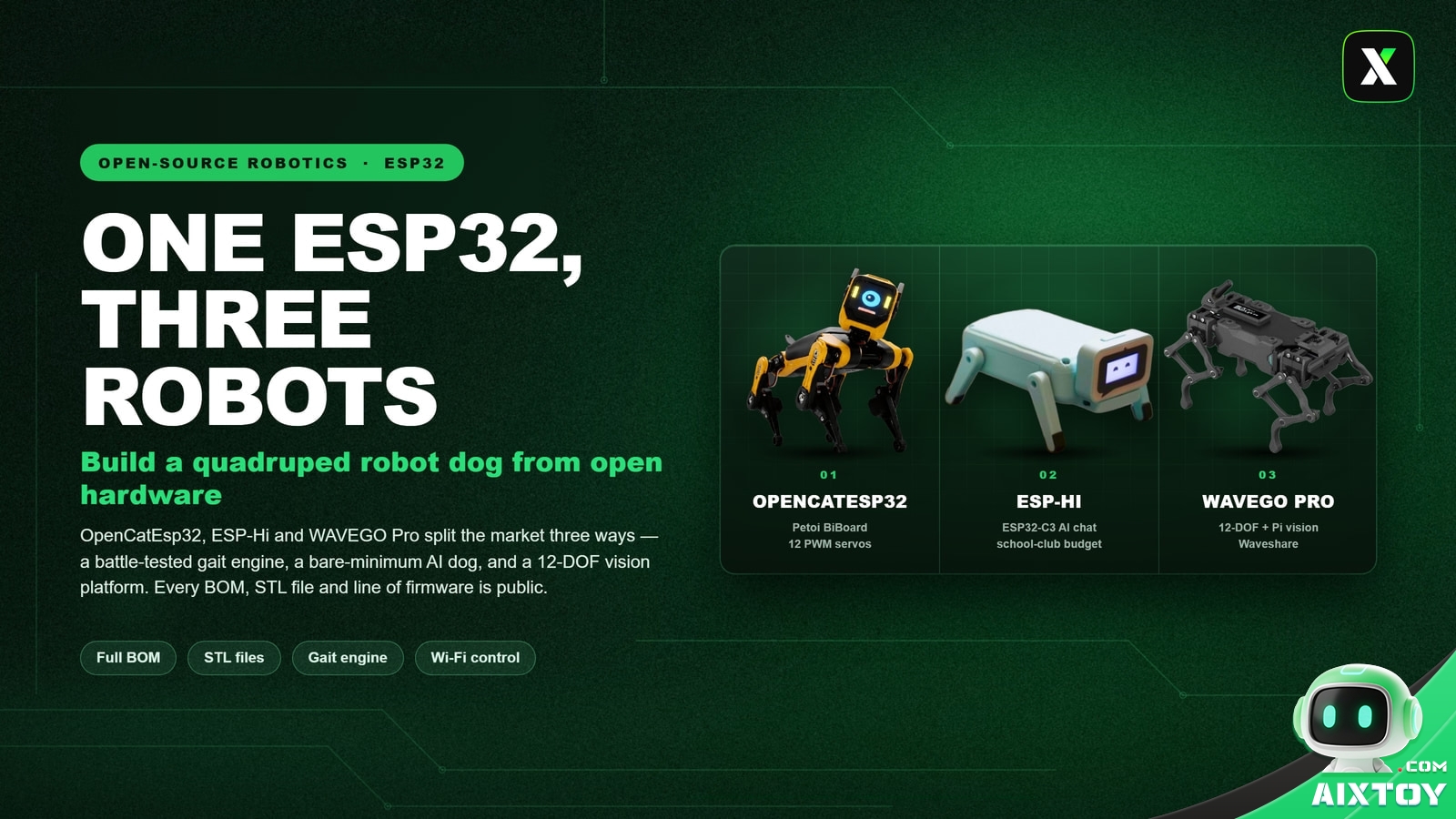
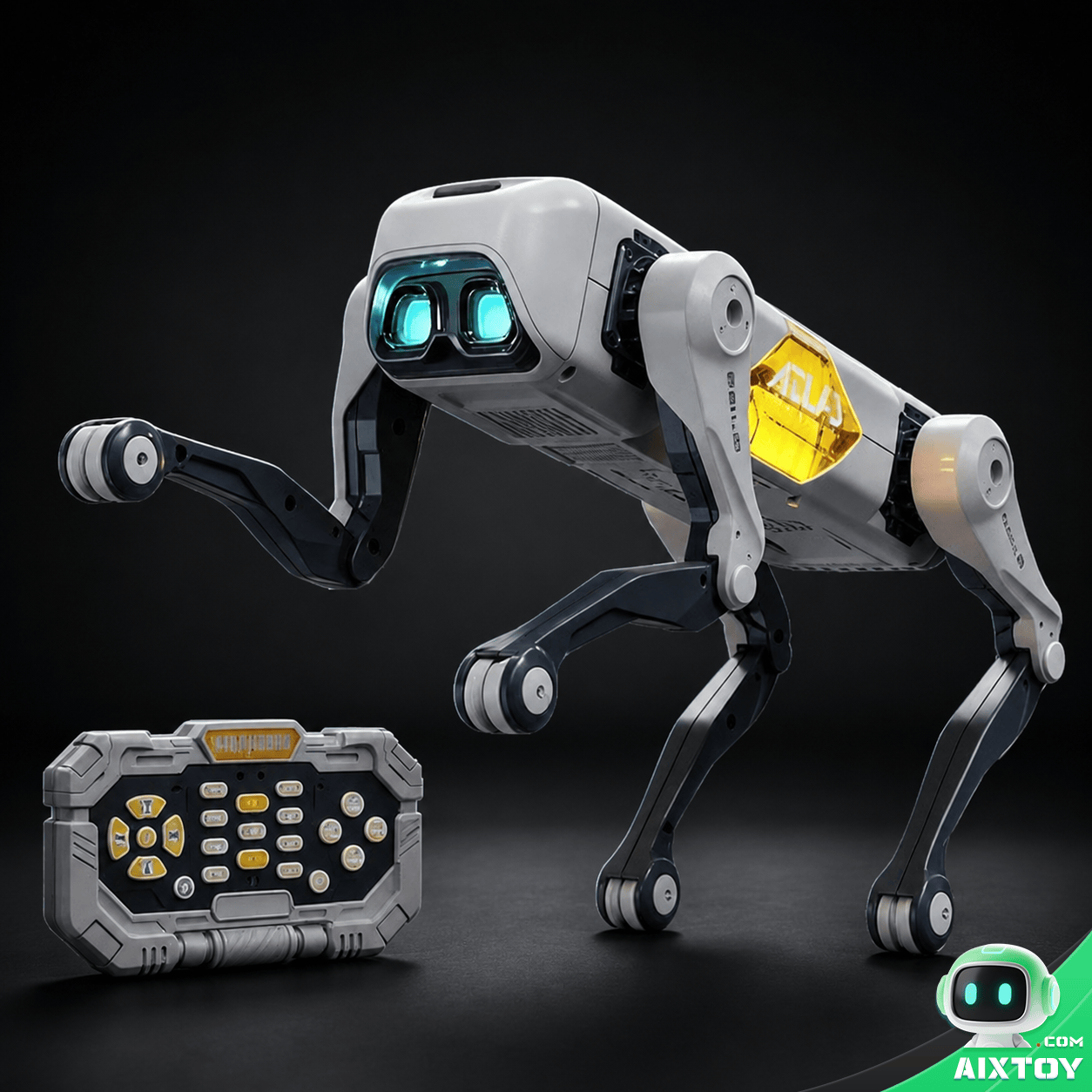
OpenCat is a quadruped robot framework — both the Bittle robot dog and the Nybble robot cat run on it. Here we use the current Bittle X as the reference. After assembly and calibration, Bittle X can walk, run, turn, and perform pre-programmed tricks. Its legs and head are driven by servos, an IMU senses whether the body is tilted, and an ESP32 controller coordinates the joints. You can modify behaviors with graphical programming, C/C++ or Python, and connect cameras, a Raspberry Pi or a Jetson to add vision and voice.
Its best quality is fast feedback: change a leg-lift angle and watch whether the dog walks more steadily; change the action sequence and teach it a new trick. You do not need to solve bipedal balance or reinforcement learning up front — you can still wire servos, sensors, programs and real movement into one complete small system.
The official price for Bittle X is $319 (about ¥1,500 by the conversion used here). Reproducing it from the kit is rated about 1.5/5; starting from loose parts and 3D printing raises that to about 3/5. Entry recommendation: 5/5. It may not be the most capable robot, but it is an excellent first robot that truly runs and keeps accepting new features.
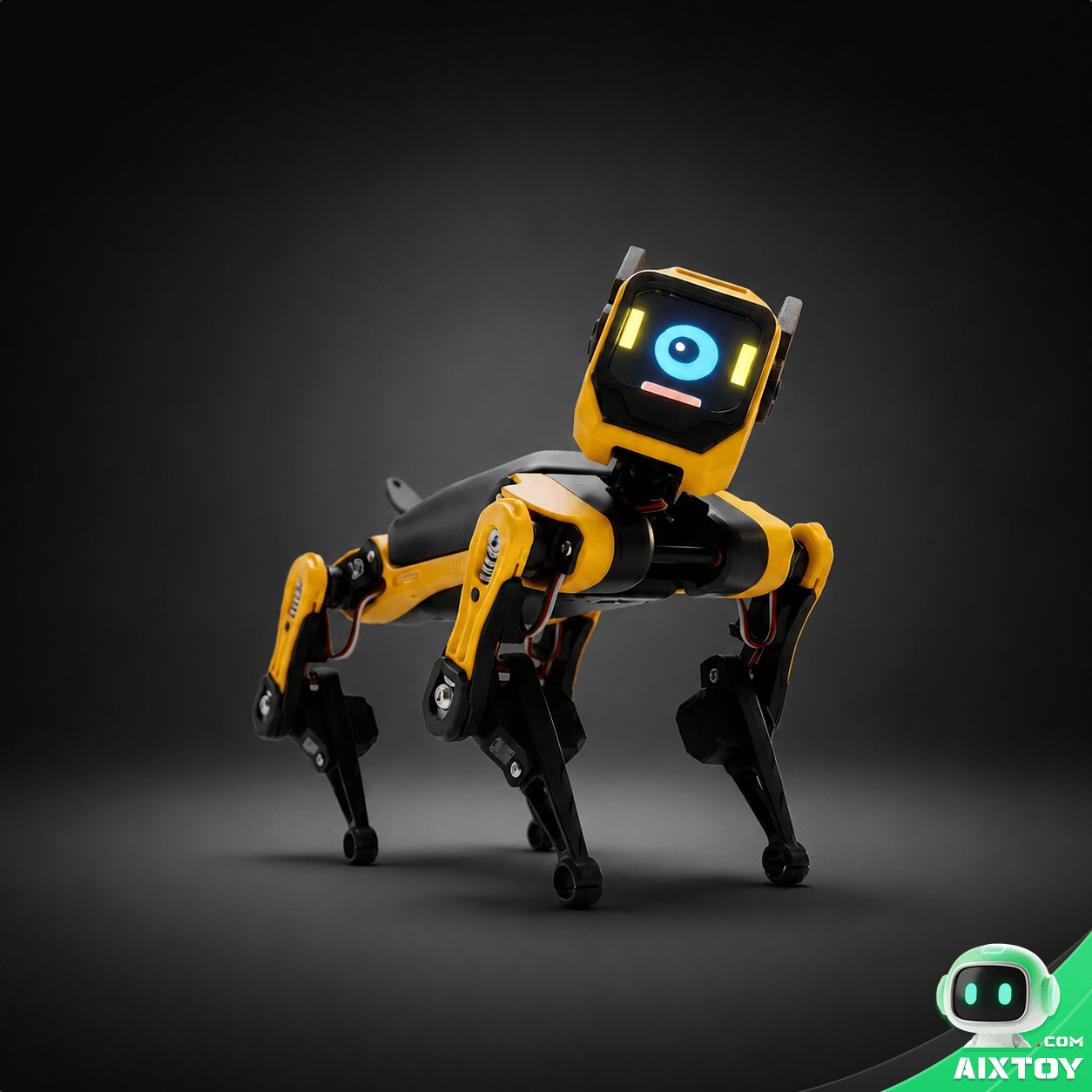
Petoi Bittle V2 Robot Dog
$299.99
The latest Bittle V2: an open-source quadruped robot dog with ESP32 control, IMU balance sensing and graphical programming — walks, runs, turns and performs tricks out of the box.
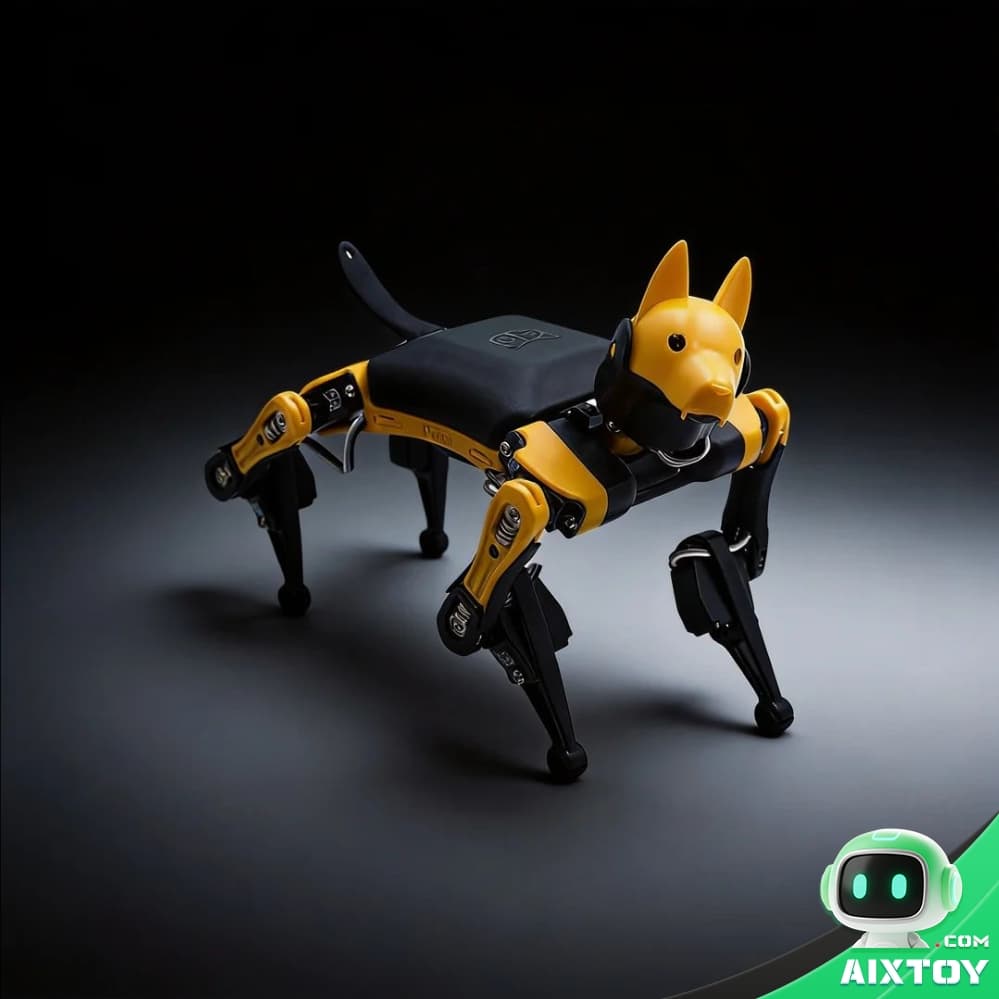
Bittle Open-Source Robot Dog
$381.00
The classic Bittle open-source robot dog: graphical programming, ESP32 + IMU, servo-driven legs and head, ready for cameras, Raspberry Pi and Jetson expansions.
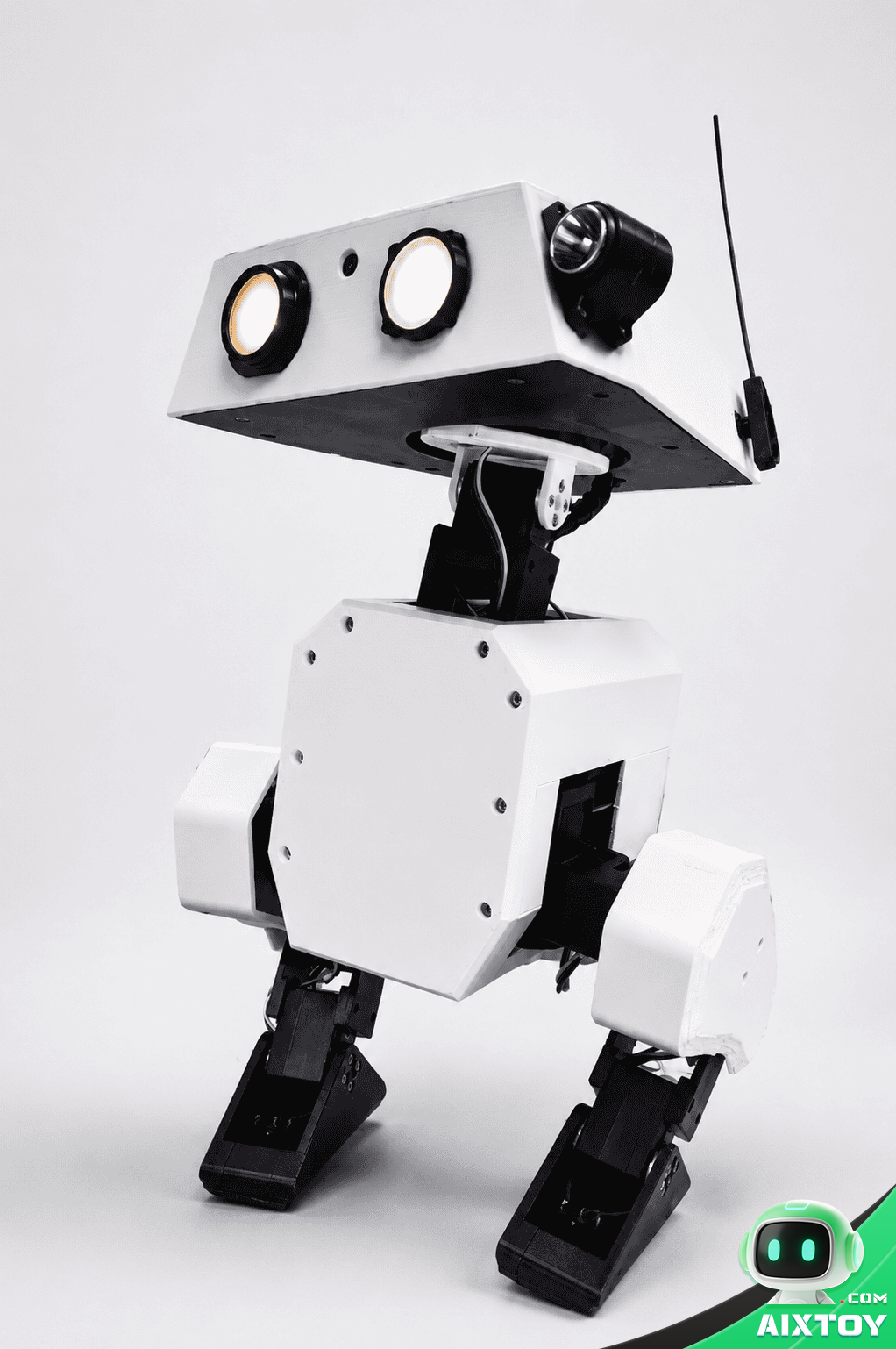
Open Duck Mini: Bipedal Reinforcement Learning, Simplified
If a quadruped is not enough, the next step is two legs. Open Duck Mini v2 mimics the body proportions of the Disney BDX Droid and stands about 42 cm tall. The project targets a complete BOM under $400 (about ¥1,900 in the 70% CNY reference), with onboard compute on a Raspberry Pi Zero 2 W.
Its specialty is walking: standing, moving forward and back, strafing and turning, plus head and antenna motions that give it personality. It has no arms yet — cameras, microphones, speakers and eye lighting are still being completed — so do not expect it to tidy your desk. The project concentrates on one question: how do two legs stay upright and follow commands? Developers first train a virtual duckling in MuJoCo Playground, export the learned walking policy as an ONNX file, and load it into the robot’s Raspberry Pi. The robot reads IMU and joint states while adjusting its servos — a classic sim-to-real workflow.
Assembly is noticeably harder than OpenCat: printed structural parts, a dozen serial-bus servos, power and wiring management, plus per-joint calibration. The main repository still has some unorganized scripts and early assembly docs were incomplete, though newer community build guides now exist. Repro difficulty: 3.5/5. Entry recommendation: 4/5 — a natural next step if you already know some Python and Linux and have finished small servo or sensor projects.
ToddlerBot: Whole-Body Learning on a Humanoid
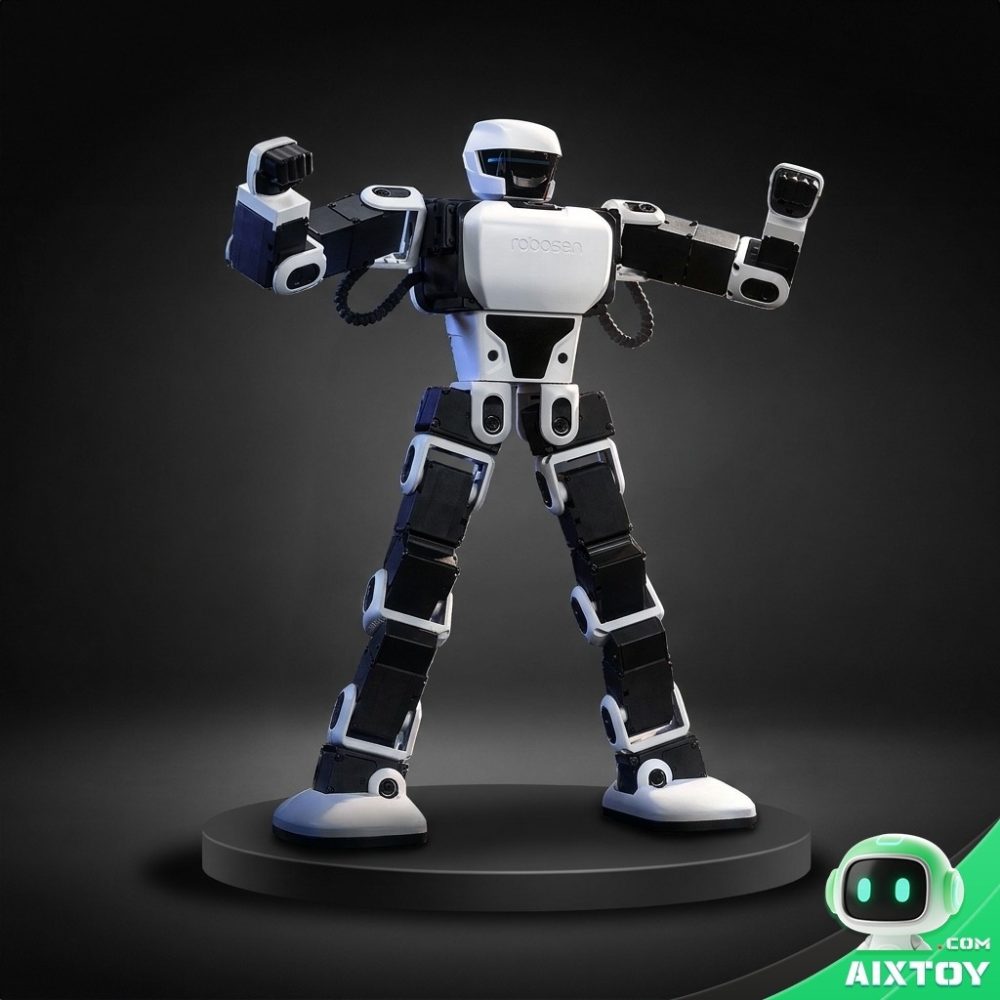
Moving up, the robot finally gets hands. ToddlerBot is 56 cm tall, about 3.4 kg, with 30 active degrees of freedom. It walks omnidirectionally, does push-ups and pull-ups, and has demonstrated two-hand carrying, kneeling to pick up toys, and two robots cooperating to tidy objects. Its 2026 multi-skill system is researching depth-vision-based climbing and stepping decisions.
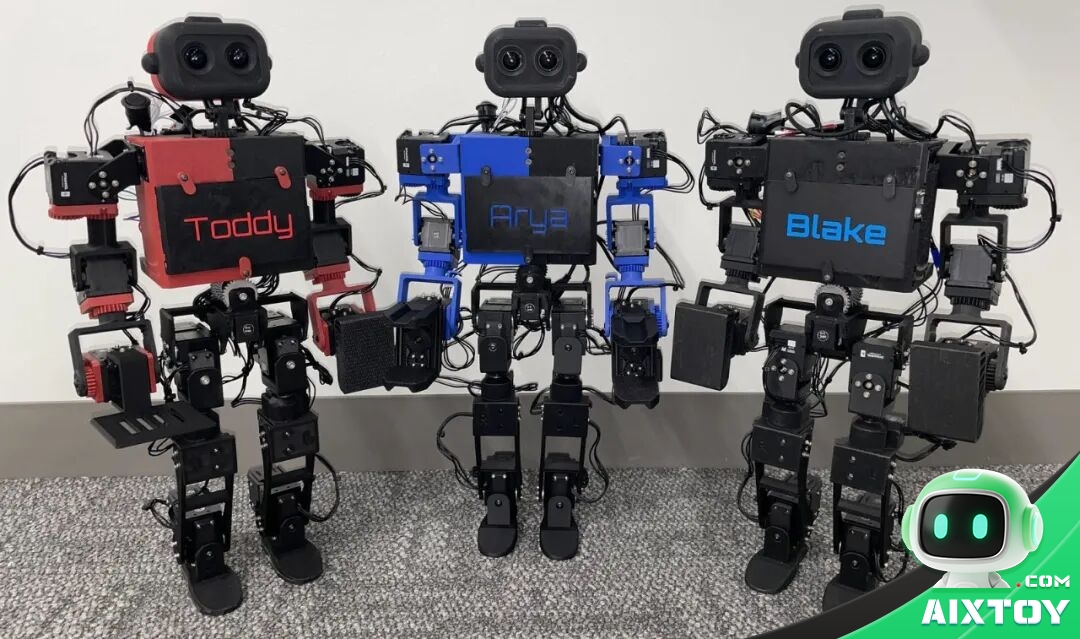
It uses Robotis Dynamixel servos for joints and a Jetson for onboard compute. The project provides MuJoCo simulation models, reinforcement learning, keyframe actions, whole-body teleoperation and vision-based manipulation policies: a person demonstrates in teleoperation, the robot records how the body moves, then uses that data to learn the task itself.
Capability comes with workload — 30 joints to assemble and calibrate, plus a large amount of 3D-printed parts, custom power and communication PCBs, soldering, wiring, cameras and a Jetson environment. Documentation is detailed with assembly videos, but parts will not screw themselves together. Paper-version cost is under $6,000, about 90% on motors and compute; the 70% CNY reference is about ¥28,500. Repro difficulty: 4.5/5; first-timer recommendation 2.5/5, rising to 4/5 if you have built arms, quads or RL projects and have a partner helping. Until then, running its simulation or reproducing a single arm still yields clear milestones.
Berkeley Humanoid Lite: An Actuator-Building Platform
Berkeley Humanoid Lite V1 is about 1 meter tall and 16 kg. The public BOM is about $4,312 purchased in the US (about $3,236 in China); the table uses the US BOM, giving a 70% CNY reference of about ¥20,500. It walks with reinforcement learning policies and has demonstrated teleoperated grasping. Unlike ToddlerBot, it opens up even the gearboxes: brushless motors with modular 3D-printed cycloidal reducers, motor controllers, CAN bus, IMU and an onboard computer. CAD, low-level control, robot models, Isaac Lab training and real-robot deployment materials are all available.
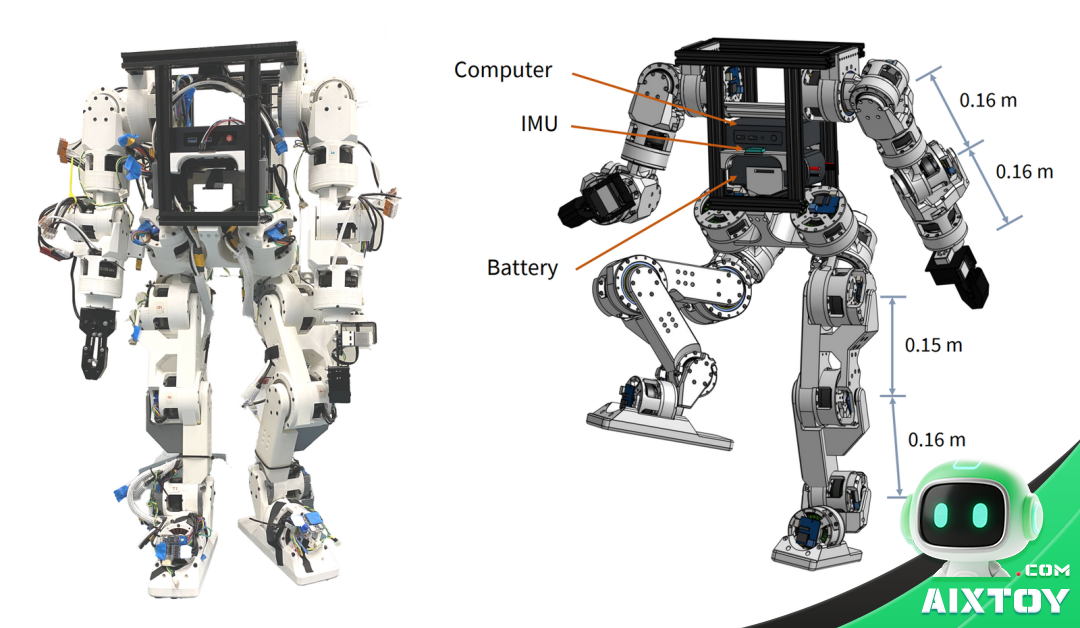
At this level, building a robot is no longer about mounting ready-made servos on a frame. Reducer backlash, motor parameters, joint zero positions and CAN communication stability all decide whether the robot can stand. Project members estimate about a week for a newcomer to complete assembly — though “assembled” and “tuned” are very different things.
V1 also has honest engineering issues: the 3D-printed cycloidal actuators are fragile under high-performance motions, and the STM motor controller connectors and cabling are not durable enough for long-term use. The 2026 V2 description switches to Robstride off-the-shelf actuators. And mind the safety: a 16 kg biped falling over is nothing like a desktop toy tipping. Support stands, e-stops, isolated space and battery safety all need preparation. Repro difficulty: 5/5; first-timer recommendation 2/5 — it becomes a valuable advanced project once you can handle motors, reducers, bus communication and humanoid system integration.
Pick the Right Stage, Then Start Designing
Looking at all four robots, it is easy to be drawn to degrees of freedom and demo moves. But for a personal project, the more practical question is: after you change one thing, how long until you see a result? On OpenCat you can change an action today and see it today. Open Duck Mini adds simulated policies and bipedal balance. ToddlerBot coordinates legs, waist and arms. Berkeley Humanoid Lite demands reliable actuators and communication before any algorithm can run.
If your budget is limited and you want to link servos, IMU, gaits and programming first, start with OpenCat / Bittle X — then add sensors, cameras or new actions once it runs. If you have completed similar projects and want to understand why two legs are so hard, Open Duck Mini is the natural next station. ToddlerBot and Berkeley Humanoid Lite are closer to full research platforms, best approached once goals, budget and building conditions are all ready.
Building robots takes patience, but patience is not built by willpower alone. A servo turning correctly once, a program running once, a robot standing a few seconds longer — these small successes keep replenishing motivation. And after reproduction, you do not have to stop at “followed the build”: change the body shape, add new sensors, redesign an action set, or turn the quadruped into a structure of your own. Open-source projects have already solved many from-scratch problems; the next step is yours.
At AIXTOY, we curate AI toys and smart companions with genuine first-party sourcing and quality checks on every product before it ships — from desktop companion robots and STEM robot kits to open-source development boards. Our robot toy buying guides and industry analysis can help you pick the right platform for your goals.
Tags:BittlePetoiOpen Source RobotQuadruped RobotHumanoid RobotProgrammable RobotSTEM RobotDIY Robot KitESP32