

No products added!
Not Another Talking Teddy Bear
Most AI toy startups follow the same script: stuff a language model into a plush animal, give it a cute voice, and promise parents it will be their child’s new best friend. A small Berlin-based company called a2zebra just tore up that script. Their product, TukToro, is not a chatbot companion. It is a physical dice box. And it might be the smartest AI toy on the market right now.
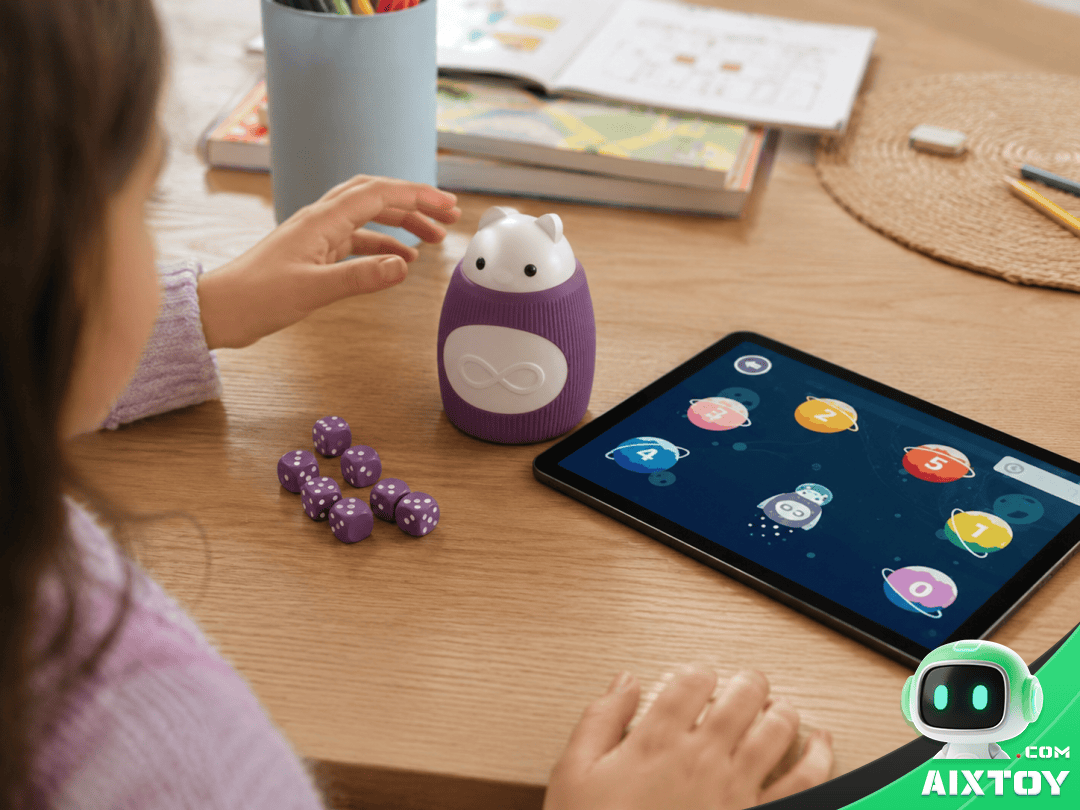
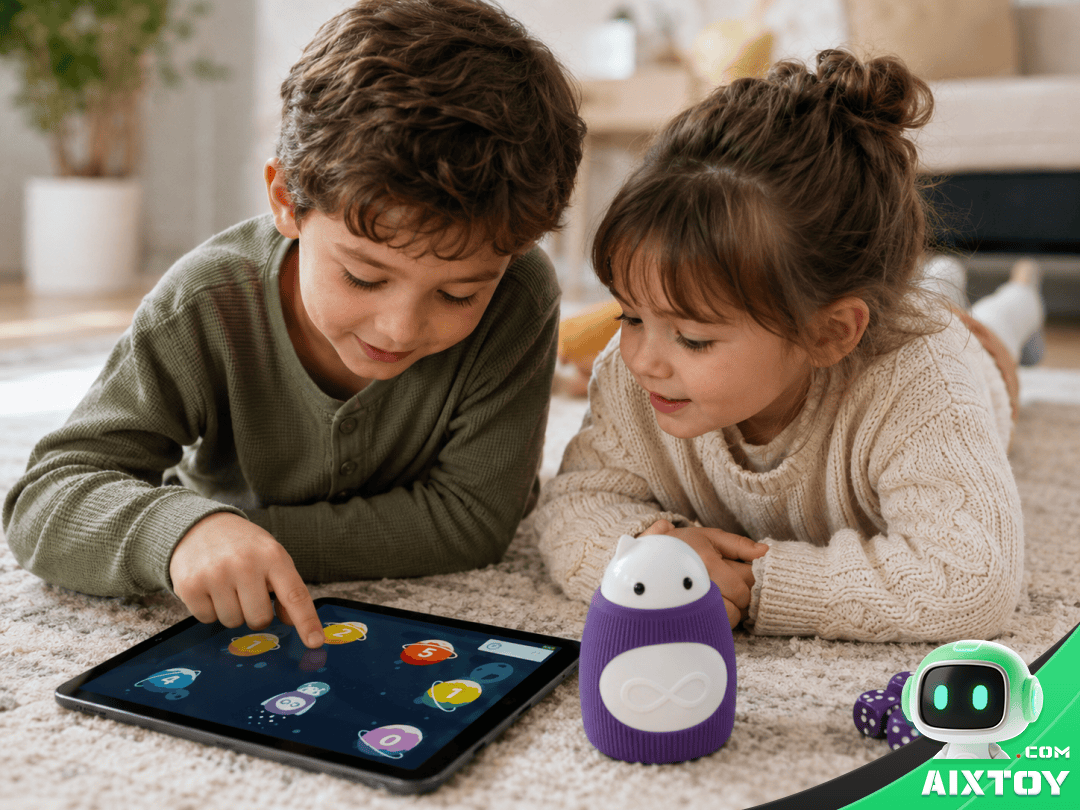
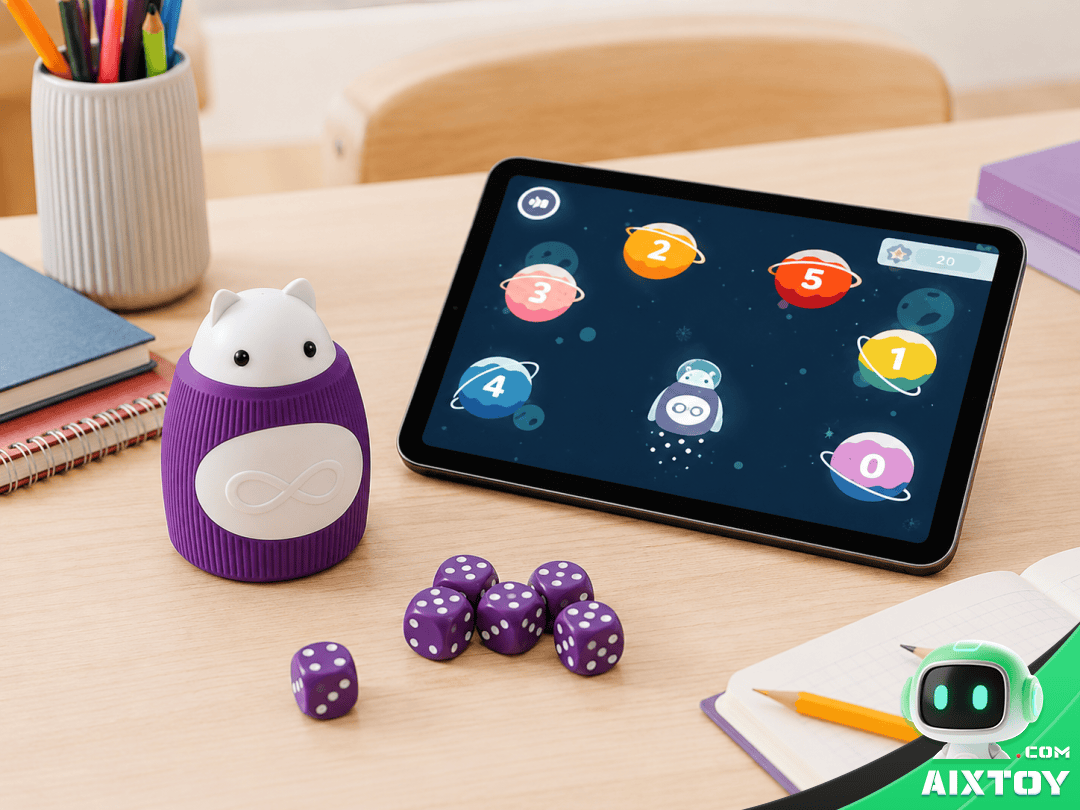
TukToro combines a tangible dice-rolling device with a story-driven app and an AI-powered content engine. Children pick up real dice, drop them into the box, and the system responds with adaptive math challenges wrapped in an adventure narrative. No small talk. No pretend friendship. Just a task, a tool, and a feedback loop that actually works.
In June 2025, a2zebra closed a roughly €2.5 million seed round from DvH Ventures, Simon Capital, IBB Ventures, and Angel Invest, with Toniebox founders Patric Faßbender and Marcus Stahl doubling down. The money is going straight into TukOS, the company’s internal software platform for AI-assisted content creation. The thesis is clear: the future of AI toys is not conversation. It is curriculum.
Why “What Does It Do?” Beats “Who Is It?”
The graveyard of AI companion toys is filling up faster than the funding rounds that built them. Moxie, the $799 social robot from Embodied, shut down after burning through tens of millions. Amazon’s Alexa for Kids pivoted so many times nobody remembers the original pitch. The problem is not the technology. The problem is the value proposition. When a toy promises to be a “friend,” parents ask: friend compared to what? Friend replacing whom? Friend for how long?
TukToro answers a different question entirely. It promises to help a four-year-old understand numbers without fear. That is a task with a beginning, a middle, and a measurable end. You can watch your child go from counting on fingers to solving two-digit addition. You can see the progress. You can justify the €79.99 price tag in a single sentence: “It made math feel like a game.”
This distinction matters enormously for distribution. A chatbot companion has to sell itself on emotional resonance — a soft, subjective promise that collapses the moment the child gets bored or the novelty wears off. A task-oriented learning toy sells itself on outcomes. Teachers can recommend it. Therapists can prescribe it. Retail buyers can merchandise it next to workbooks and flash cards. The entire go-to-market machinery shifts from “trust us, it’s magical” to “here is what your child will learn.”
The Hardware Is the Moat
If TukToro were just another math app, nobody would care. The App Store has thousands of them. What makes it interesting is the physical entry point. The child does not tap a screen to roll virtual dice. They shake a real box. They hear the dice clatter. They feel the weight. The app only reacts once the physical action completes.
This design choice is not cosmetic. It changes the entire cognitive load of the product. Screen-only math apps compete for the same attention span that TikTok and YouTube have already colonized. A physical dice box competes with board games, building blocks, and the sensory world of actual objects. It pulls the child’s hands back from the glass and puts them onto something they can grip, drop, and manipulate.
For toy companies, this is the competitive moat that pure software startups cannot easily cross. A Silicon Valley team can ship a math app in three months. They cannot manufacture a child-safe dice box with haptic feedback, survive EU toy safety certification, and negotiate shelf space in German bookstores. The hardware is not an accessory to the AI. The hardware is the reason the AI has permission to exist in a child’s playroom at all.
AI as Content Factory, Not Personality
The most instructive detail in a2zebra’s fundraising announcement is where the money goes: TukOS, the AI-powered content creation system. The company is not using AI to give the dice box a personality. They are using it to generate endless variations of math problems, story levels, and adaptive learning paths.
This flips the standard AI toy architecture on its head. Instead of one expensive model running live inference on every child interaction, the AI works behind the scenes to build a library of content that the toy draws from. The same addition concept can spawn twenty different story worlds. The same difficulty tier can branch into audio-based, visual, and tactile exercise formats. The same mistake pattern can trigger a custom remedial path without a single API call to a cloud LLM at runtime.
The economics are dramatically better. Live inference burns tokens and introduces latency. Pre-generated content, validated by educators and cached locally, costs almost nothing to serve. It also solves the safety problem. Every piece of content that reaches a child has been reviewed before deployment. No hallucinated answers. No inappropriate tangents. No model drift turning a math tutor into an unmoderated conversationalist.
From Dice to Chess: The Broader Playbook
TukToro is about math, but the underlying pattern extends to any domain with clear, verifiable rules. Chess clocks that teach strategic thinking. Dice towers that explain probability. Card shufflers that drill arithmetic. Game timers that scaffold turn-taking for neurodivergent children. Rulebooks that read the board state and offer hints without giving away the answer.
The common thread is that these are closed-domain tasks. Unlike open-ended conversation, where anything can happen and quality is subjective, a dice roll has exactly six outcomes. A chess position has a finite set of legal moves. A math problem has one correct answer. The AI does not need to be brilliant across every topic. It just needs to be reliable inside a well-defined fence.
Closed-domain reliability is something current AI models actually deliver. GPT-4 and its peers make fewer mistakes when the problem space is bounded and the answer format is constrained. A chatbot asked to discuss the meaning of friendship can wander into existential territory. A dice box asked “what is 7 plus 5” returns 12 or it is broken. The failure modes are detectable. The quality bar is objective. Parents and educators can trust the system because they can verify its output.
The Price Point That Makes Sense
At €79.99, TukToro occupies an interesting pricing tier. It is too expensive to be an impulse buy at the supermarket checkout. It is too cheap to be compared against iPads or game consoles. It sits in the educational toy sweet spot where parents make a deliberate purchasing decision based on perceived learning value — the same zone occupied by Toniebox, Osmo, and LEGO Education kits.
The distribution strategy reinforces this positioning. TukToro sells through its own online store, but also through bookstores, toy shops, and educational channels across Germany and Austria. Bookstores are particularly telling. A plush chatbot does not belong next to textbooks. A math dice box does. The channel aligns with the promise.
For Chinese toy manufacturers watching this space, the pricing lesson is worth internalizing. The market for AI toys is not one market. It is at least two: emotional consumption and learning consumption. Emotional toys compete on character design, voice acting, and narrative depth. Learning toys compete on curriculum design, measurable outcomes, and institutional credibility. You cannot optimize for both with the same product architecture.
What Toy Companies Should Learn
Not the product. The pattern.
First, stop defaulting to chatbot companions. The domestic AI toy pipeline is saturated with talking plushies, and the competitive moat around “our bear has a better personality” is vanishingly thin. A math dice box, a chess tutor, a phonics game board, a handwriting practice slate — these are differentiated, defensible, and easier to explain to a parent standing in a store aisle with a credit card in hand.
Second, treat the physical object as the product, not the packaging. The sensor, the weight, the texture, the drop resistance, the storage solution, the battery compartment — these are not afterthoughts to the software. They are the primary user experience. A toy company that has spent decades perfecting injection molding and child-safe materials has an advantage that OpenAI will not replicate in a hackathon.
Third, build for the curriculum, not the conversation. The hardest part of a learning toy is not the AI model. It is the instructional design. How do you teach number sense? How do you scaffold from concrete objects to abstract symbols? How do you handle wrong answers without discouraging the child? How do you give parents a meaningful progress report without turning playtime into a standardized test? These questions have answers, but they come from pedagogy, not prompt engineering.
The Real Barrier Is Not Technology
Every toy company executive who reads about TukToro will have the same first reaction: “We could build that.” And they are probably right. The hardware is a dice box with a Bluetooth chip. The app is a Unity project. The AI content pipeline is a fine-tuned model and a CMS. None of this is magic.
The barrier is not technical. It is organizational. Building a TukToro competitor requires a team that understands child cognitive development, physical toy manufacturing, game design, AI content generation, and educational assessment — all reporting to the same product manager. Most toy companies have the manufacturing. Most edtech companies have the pedagogy. Almost nobody has both under one roof with a shared roadmap.
a2zebra’s partnership with the Berlin-Northeast Dyscalculia Treatment Center is not a marketing bullet point. It is a signal that the company treats instructional design as a core competency, not an afterthought. The didactic cubes inside TukToro were designed with therapists who treat math learning disorders. The app was built to their specifications. The AI was trained to extend their methodology, not replace it.
Conclusion: The Practice Partner
The AI toy industry is splitting into two camps. One camp builds companions — toys that talk, listen, remember, and simulate friendship. The other camp builds coaches — toys that present challenges, evaluate responses, and adapt difficulty. Companions sell emotional connection. Coaches sell skill acquisition. Both are legitimate. Only one has a clear, verifiable answer to the question every parent eventually asks: “What does this actually teach my child?”
TukToro chose the harder path — harder to explain in a thirty-second TikTok ad, harder to demo at a toy fair, harder to make viral. But once a parent understands it, the value locks in. A dice box that teaches math does not need to be your child’s best friend. It just needs to make numbers less scary. That is a small promise. It is also one the product can keep.
The next breakthrough AI toy might not look like a robot at all. It might look like a chess clock that whispers strategy hints. A deck of cards that teaches probability. A set of dice that grows with the child from counting to multiplication. The future of smart toys is not about making objects that feel alive. It is about making objects that make children feel capable. And that starts with picking a task, not a personality.
References: DvH Ventures, Google Play, TukToro official website, Spielwarenmesse, and public investment materials.
At AIXTOY, we track the products and trends shaping the future of play. Explore our desktop companions, AI plush toys, educational robot kits, and programmable robot cars. Browse the full AIXTOY collection.
Tags: