


No products added!
Most AI toys launch with the same pitch: they can talk. They can tell stories. They can answer questions. They can be a friend. It sounds warm, but it contains a problem that runs deeper than most product teams realize: companionship is too big to verify. Was today’s chat session “effective”? Did the robot remembering a child’s favorite dinosaur count as growth? Would a parent pay a monthly subscription for a “sense of presence” that cannot be measured, demonstrated, or reported? These questions are uncomfortable precisely because they expose the gap between what AI toys promise and what they can actually prove.
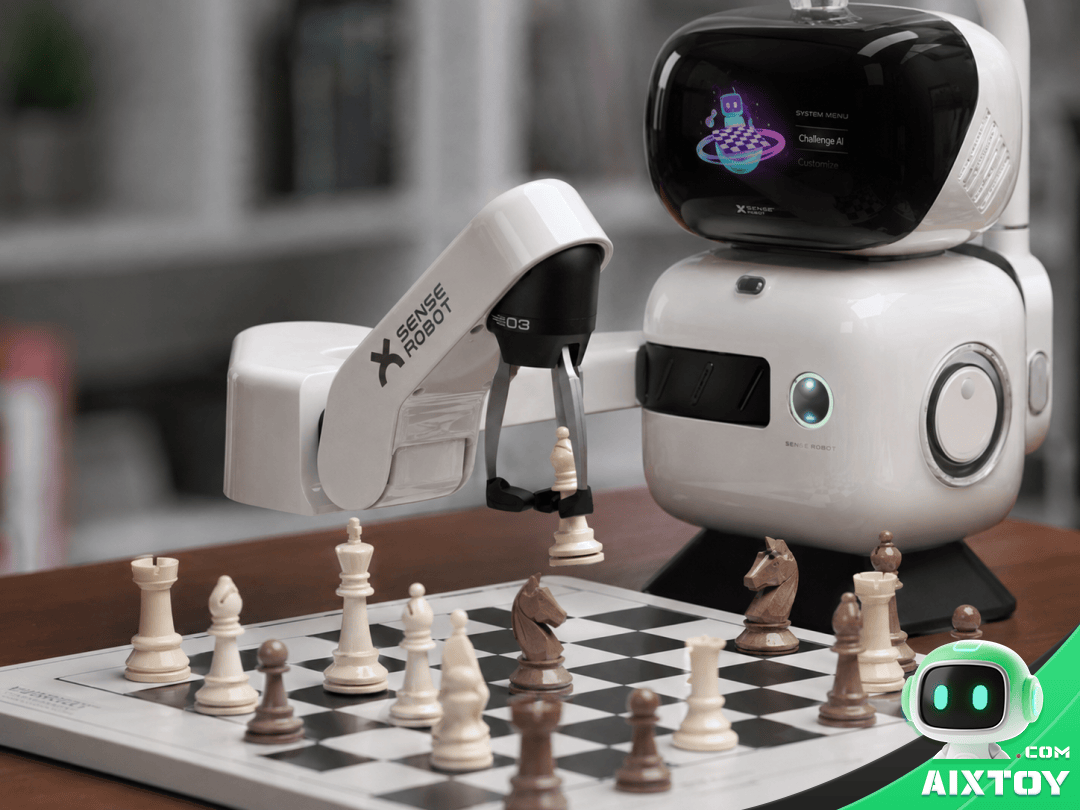
SenseRobot (), an AI-powered chess companion from SenseTime, provides a radically different answer. It does not try to be a friend. It tries to be a coach. An opponent. A training partner. And in making that choice — narrowing the ambition from “companion” to “chess partner” — it demonstrates a product philosophy that the AI toy industry urgently needs to study.
The Verifiable Task: A Smarter Starting Point Than Conversational AI
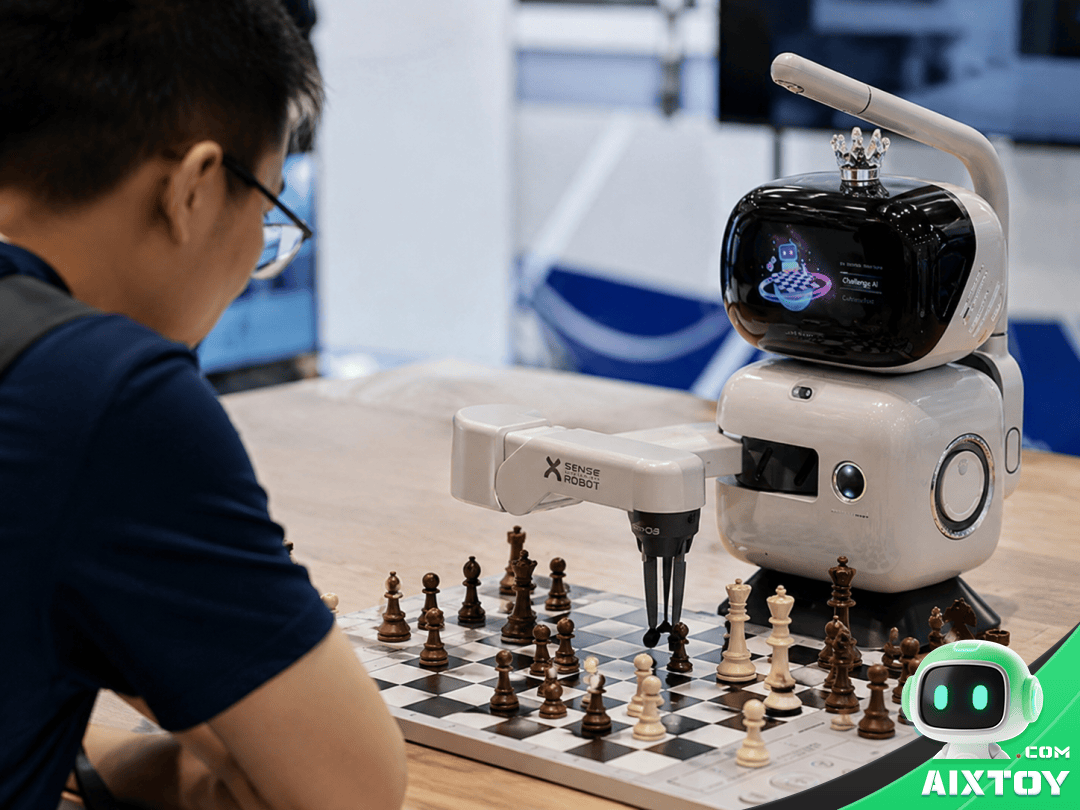
Chess has something that open-ended conversation does not: rules, winners, difficulty levels, practice paths, measurable improvement, and a learning arc that a parent can understand without reading a product manual. When a child sits across from SenseRobot, the value proposition is self-evident. The robot moves pieces with a real mechanical arm on a real board. The child responds. A game is won or lost. A mistake can be reviewed. A skill can be tracked. There is no ambiguity about whether the product “worked.”
From Single Game to Multi-Game Platform
This is what senseRobot gets right at the architectural level: it chose a verifiable task. A verifiable task is something the user can confirm they completed, understood, and can repeat with measurable progress. Finishing a chess game. Learning a new opening. Completing a tactic puzzle. Advancing to a higher difficulty rating. Reviewing a mistake and correcting it in the next match. These are not subjective impressions of companionship. They are concrete actions with clear outcomes. And that clarity does something remarkable for the business: it removes the burden of having to convince a skeptical parent that “invisible emotional value” is worth paying for. The chess practice is visible. The improvement is visible. The purchase justification writes itself.
Why the Robotic Arm Matters More Than the Model
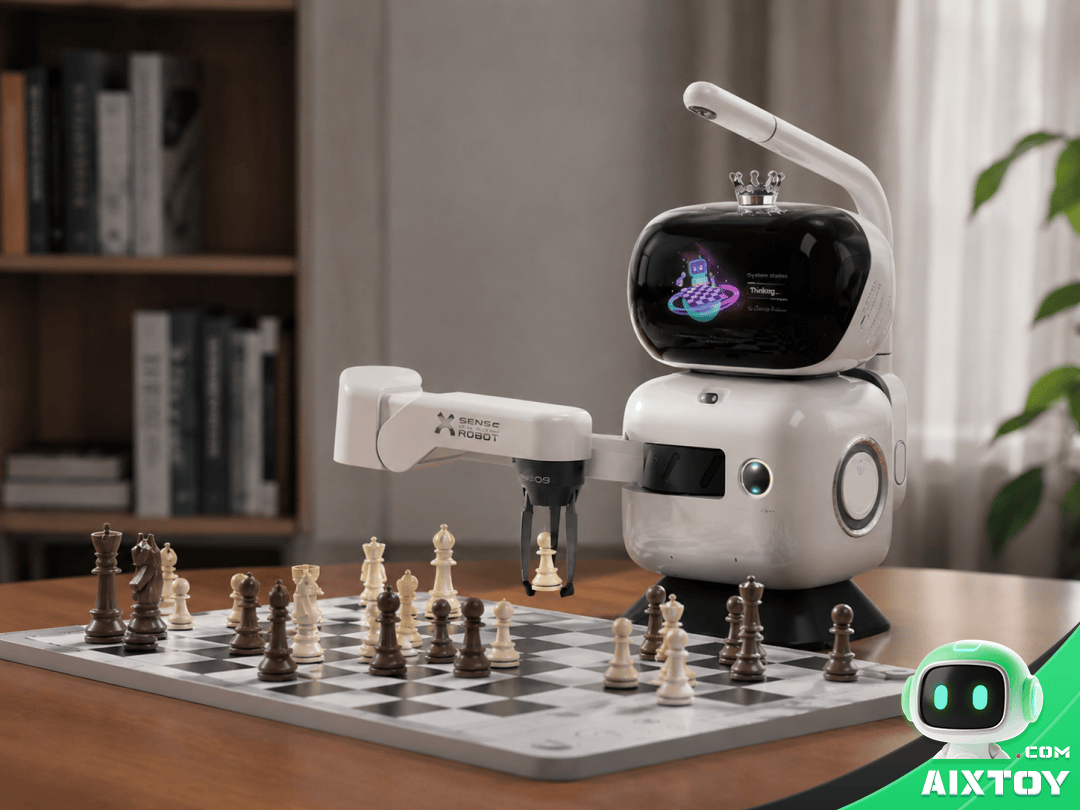
SenseRobot launched with Chinese chess , then expanded to Go , international chess, checkers, and Gomoku — eventually consolidating five games into a single hardware platform. This evolution is worth studying because it solves a structural problem that most AI toys ignore: single-function hardware runs out of novelty.
A child who masters Chinese chess on SenseRobot has a natural next step — try Go. A family more familiar with Western chess can start there. A younger child can begin with Gomoku’s simpler rules before graduating to more complex games. The hardware stays on the desk. The content rotates. The user relationship does not restart from zero with each new purchase. This is the difference between selling a device and building a platform. A device sells once. A platform earns retention through expanding utility. For AI toy companies thinking about lifetime value, the lesson is clear: one game is a product. Five games is a system.
The Ecosystem Play: Joy Inside and the Future of AI Toy Partnerships
SenseRobot’s integration with JD.com’s Joy Inside voice assistant points toward a structural shift in how AI toys will be built. No single hardware company can excel at everything: large language models, voice interaction, content libraries, e-commerce distribution, membership systems, family account management, after-sales support, parental controls, data security, and regulatory compliance. The companies that win will not be the ones that build everything in-house. They will be the ones that can manage an ecosystem of partners — selecting the right model provider, the right voice platform, the right content pipeline, the right retail channel — and integrate them into a coherent product experience that feels like one thing to the end user.
This is a distinctly different capability from traditional toy manufacturing. It requires technical evaluation, API integration, partner negotiation, content governance, and ongoing relationship management. The AI toy company of the future looks less like a factory and more like an orchestrator. SenseRobot’s partnership moves suggest that SenseTime understands this early.
What the Toy Industry Should Take Away
SenseRobot is not the most stylish AI toy. It is not the most conversational. It is not chasing the “emotional companion” narrative that dominates investment decks and crowdfunding pages. But it might be the most instructive case study for an industry that is still figuring out what AI toys are actually supposed to do. Here is what it teaches:
First, not every AI toy needs to be a friend. Training partner, practice coach, puzzle opponent, skill builder, creative tool — these are equally valid and often more commercially defensible positions. As we have explored with LOVOT’s silent companionship model and Pophie’s presence-first desktop approach, the AI toy landscape is diversifying rapidly. Not every product needs to rely on conversational charm. Some should rely on clear, demonstrable outcomes.
Second, the task must be clear enough for a parent to explain in one sentence. “It plays chess with your child and helps them improve” is a value proposition that requires zero imagination to understand. “It provides emotional companionship through multimodal AI interaction” is a value proposition that requires a demo, a trial period, and a leap of faith. In a market where parents control the purchase decision for most children’s products, the one-sentence test is not optional. It is the conversion funnel.
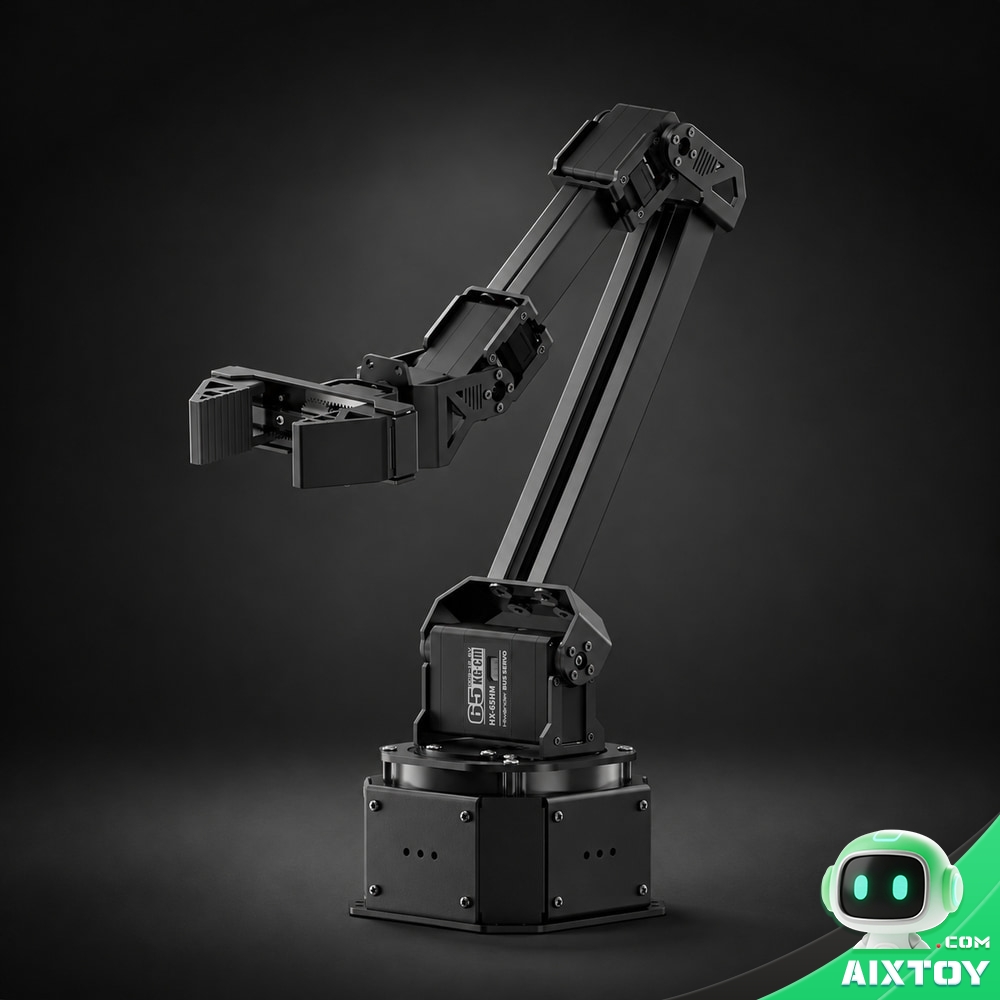
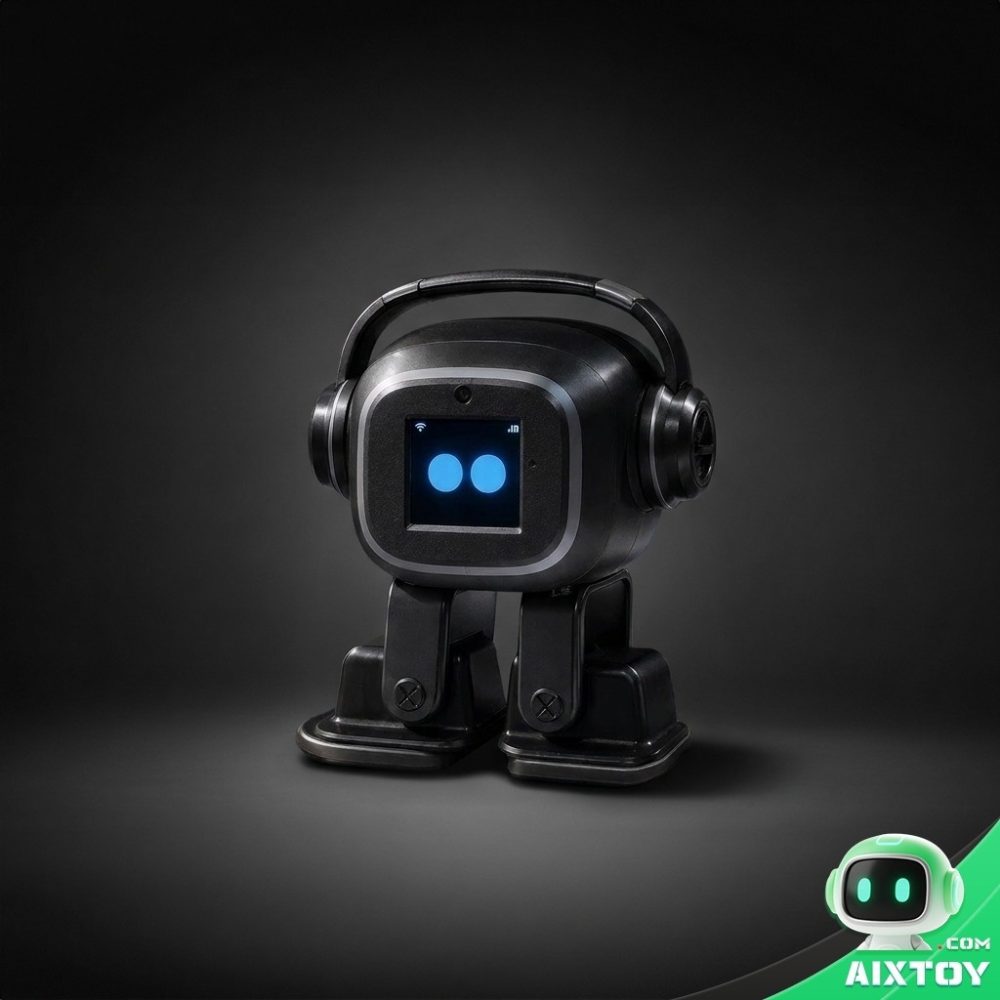
Third, physical presence is a moat. China’s toy supply chain knows how to build robotic arms, sensor arrays, motion systems, and tactile shells at scale and at cost. This is an advantage that pure software companies cannot easily replicate. AI toys should lean into it — not retreat from it into screens. At AIXTOY, our catalog reflects this conviction, with products spanning programmable robot cars, desktop robot companions, and DIY robot kits that keep intelligence grounded in physical, buildable, touchable form factors.
Fourth, content systems matter more than hardware specs. Chess tutorials, tactical puzzles, difficulty levels, replay analysis, progress tracking, certification paths — these are not afterthoughts attached to a robot. They are the product. A robot that plays chess once is a novelty. A robot that provides a structured training curriculum with expanding difficulty and measurable milestones is a recurring value proposition. AI toy companies that treat content as a launch-day checkbox will lose to companies that treat it as an ongoing operations discipline.
The Question Every AI Toy Should Answer
When a parent considers buying an AI toy, they are not asking “how powerful is the model?” They are asking a simpler, harder question: “what exactly will my child do with this, and will they still be doing it next month?”
SenseRobot answers that question with unusual clarity. The child will play chess. They will learn rules. They will practice tactics. They will review mistakes. They will advance through levels. They will face a real robot that moves real pieces on a real board. The answer is concrete enough that a parent can visualize the purchase, explain it to a spouse, and justify it to themselves. That is a higher bar than most AI toys clear. It is worth aiming for.
Not every AI toy company needs to build a chess robot. But every AI toy company should be able to answer the same question — with the same clarity — about whatever their product actually does. The ones that can’t will keep burning marketing budgets trying to explain invisible value. The ones that can will find that the product sells itself.
Tags:SenseRobotSenseTimeAI Chess RobotAI Robot ToySTEM EducationAIXTOYEducational RobotVerifiable AIRobotic Arm KitsKids Coding