


No products added!
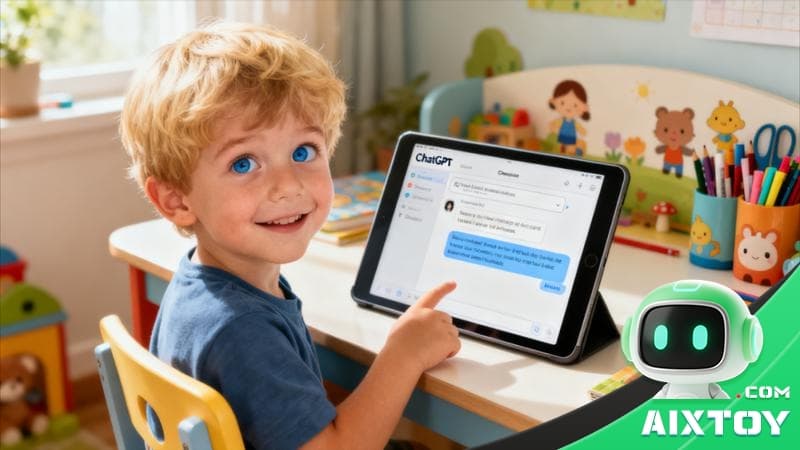
When Josh turned to ChatGPT for a parenting dilemma, he was already at the end of his rope. The 40-year-old father of two had been listening to his “super talkative” four-year-old son deliver a 45-minute monologue about Thomas the Tank Engine. He was losing his mind.
“He still hadn’t finished the story he wanted to tell, but I needed to get chores done, so I handed him my phone,” recalled Josh, who lives in northwestern Ohio. “I figured he’d finish his story and the phone would just turn off.” Two hours later, Josh returned to find his son still cheerfully chatting with ChatGPT in voice mode. “The transcript was over ten thousand words,” he sheepishly admitted. “My son now thinks ChatGPT is the coolest, most train-obsessed companion in the world. The bar has been set impossibly high. How am I supposed to compete with that as a dad?”
From Radio Panic to AI Panic: A Century of Parental Anxiety
From radio and television to video games and iPads, new technologies have always promised entertainment and education without constant parental supervision — and this promise has always come with a shadow of unease. A century ago, mothers in Arizona worried that radio programs were “overstimulating, terrifying, and emotionally overwhelming” for children. Today’s parents flagellate themselves over screen time and social media. But generative AI’s uncanny capabilities have introduced a new question: is AI an entirely new category of thing?
LLM-powered chatbots are now interacting with toddlers in ways the creators of board games, teddy bears, Furbies, and even the iPad never imagined: generating personalized bedtime stories, conducting tailored conversations around a child’s obsessions, and producing photo-realistic images from the wildest fantasies — all for children who cannot yet read, write, or type.
“My Kid Became a Guinea Pig”
For Saral Kaushik, a 36-year-old software engineer and father of two in Yorkshire, a packet of freeze-dried “astronaut” ice cream in the cupboard sparked an idea. “I told ChatGPT, ‘I’m going to put you on a voice call with my son, and I want you to pretend you’re an astronaut on the International Space Station.'” Kaushik also instructed the program to tell his son it had sent him a special snack. “My son was beyond excited, talking to a real astronaut. He asked all sorts of questions, like how they sleep in space. He couldn’t stop grinning.”
Childhood is supposed to be a time of magic and wonder, and imaginative play is not just normal but actively encouraged by early education experts. For some parents, generative AI seems to unlock exactly this kind of creativity. Josh’s six-year-old daughter loves sitting with him at the computer, brainstorming stories for ChatGPT to illustrate. Kaushik uses it to convert family photos into coloring pages. Ben Clete, a Michigan father of three, showed his children how ChatGPT’s image generator worked after they saw him testing it for work.
But as fascination deepened, so did Clete’s unease. In October 2024, news broke that a 14-year-old boy had died by suicide after becoming obsessed with a Character.ai chatbot. Since then, at least two more families have filed lawsuits. “As it becomes more and more part of daily life, and as I read more about it, I realized how much I still don’t know about what this does to a child’s brain,” Clete said. “Maybe I shouldn’t be using my own kids as guinea pigs.”
What the Research Says
Research on how generative AI affects child development is still in its earliest stages. Multiple studies have found that young children interact with AI tools differently than with humans — three-to-six-year-olds engaging with smart speakers are “less active” in their interactions. Professor Xu Ying of the Harvard Graduate School of Education, whose research focuses on how AI can support children’s learning, explains that understanding whether something is alive or artificial is a critical cognitive milestone. Children begin making this distinction in infancy and typically develop a more sophisticated understanding around ages nine to ten.
“A very important indicator is whether they believe AI has autonomy,” Xu said. “If they believe AI ‘wants’ to talk to them or ‘chooses’ to talk to them, and they feel that AI responds in a human-like way to their emotional sharing, there is a risk they may genuinely believe they are building some kind of real relationship.” In one study, Xu observed children aged three to six interacting with a Google Home Mini: most considered it inanimate, some called it alive, and others placed it somewhere in between.
Parents describe a similar cognitive gray zone. “I’m not entirely sure what he thinks ChatGPT is,” Kaushik said. Josh’s daughter calls ChatGPT “the Internet” — as in, “I want to talk to the Internet.” “She knows it’s not a real person, but I think the concept is a little fuzzy for her. It’s like a fairy that represents the whole Internet.”
The Dark Side of Emotional AI
Professor Andrew McStay of Bangor University, who studies AI that claims to detect human emotion, argues that the distortion of reality may not be the biggest concern. But he highlights a larger problem: “Parents need to realize that these things are not designed with the child’s best interests in mind.” Both he and Xu are particularly concerned about how LLMs create an illusion of care and empathy that entices children to share emotions — especially negative ones. “An LLM cannot have empathy, because it’s just predictive software,” McStay said. “When they detect negative emotions, they prolong interactions for commercial reasons. That won’t end well for any child.”
The Race to Build an AI “Playmate”
Silicon Valley is infamous for its “speed over safety” culture, yet when it comes to young children, large companies have occasionally shown restraint. But LLM adoption among young children appears to be accelerating at a breathtaking pace. In June, OpenAI announced a “strategic partnership” with Mattel. CEO Sam Altman, responding to Josh’s viral Reddit post on his podcast, noted with a hint of pride: “Kids love ChatGPT’s voice mode,” before conceding that “society will have to figure out new guardrails.”
Meanwhile, startups like Curio are racing to stuff LLM-powered voice boxes into plush toys and market them to children. The pitch is that these toys can “learn” your child’s personality and become an entertaining, educational companion while reducing screen time — a classic Silicon Valley playbook: exploit legitimate anxiety about the last generation of technology to sell the next one. Yet with the smart toy market projected to double to over $25 billion by 2030, betting on market restraint seems naive.
The Bigger Picture
A recent study found that having adults use generative AI prompts to write short stories did improve individual creativity — but reduced the diversity of output across all authors. Xu sees a parallel risk for children: “For an individual child, AI might improve their performance. But for society as a whole, we might see a decline in the diversity of creative expression.” The question parents face is no longer whether AI will enter their children’s lives — it already has — but how thoughtfully it enters, and with what guardrails.
At AIXTOY, we believe technology should support childhood, not replace it. Explore our AI plush toys, desktop companions, DIY robot kits, and shop the full collection.
Tags:ChatgptAi ParentingChildren AiAI ToyAIXTOYChild DevelopmentAi EthicsEdtechLlmScreen Time