


No products added!
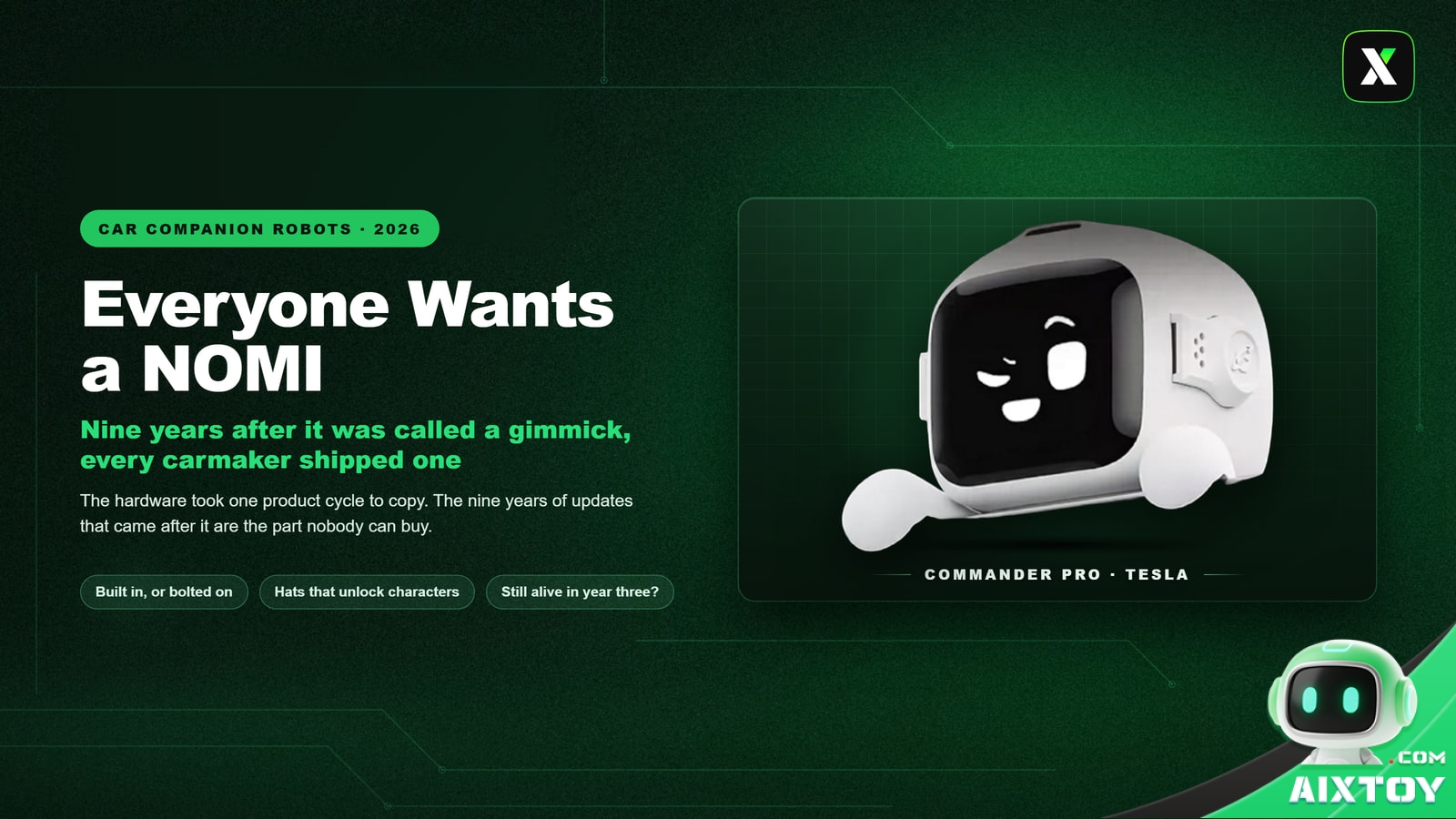
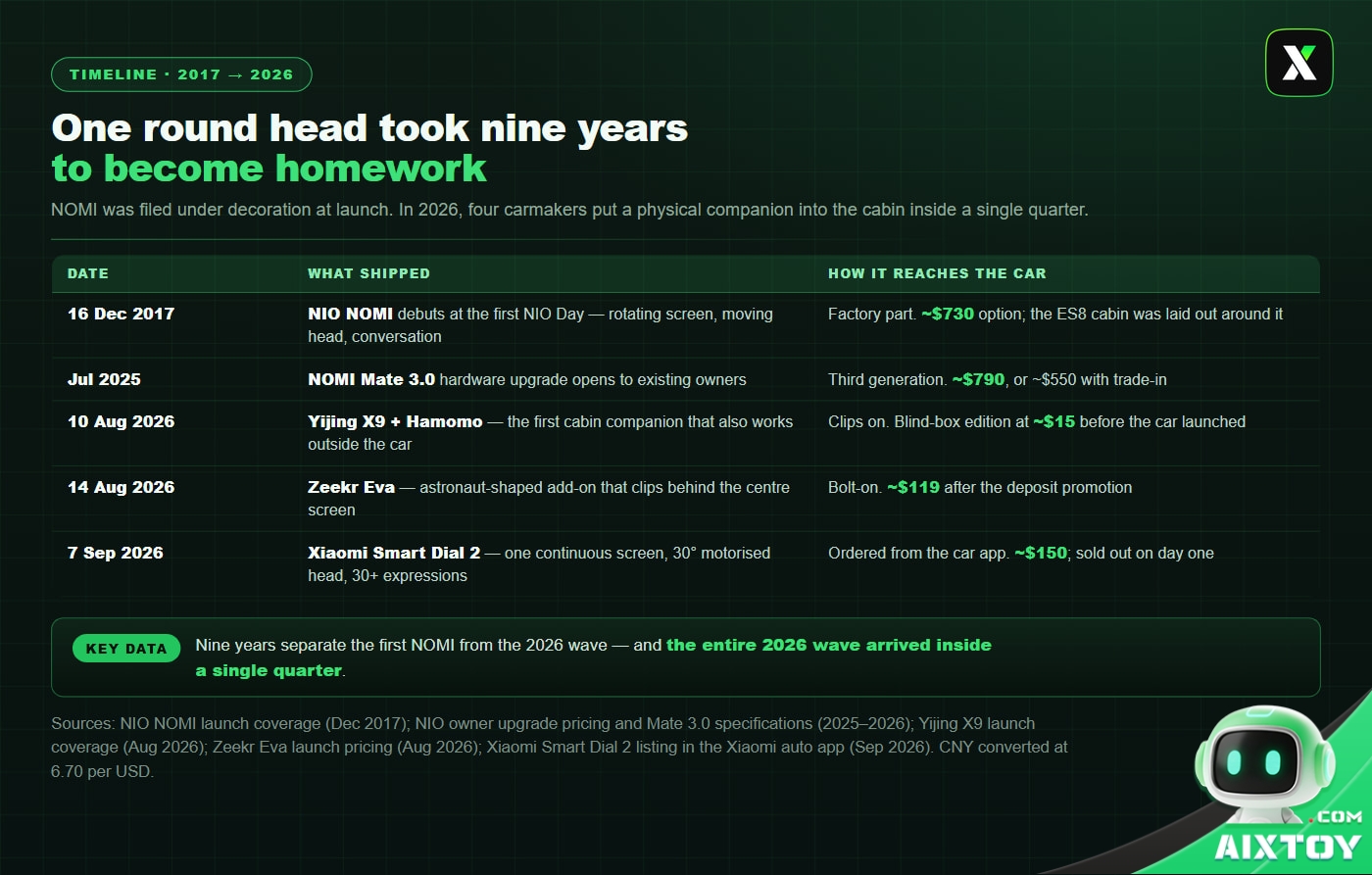
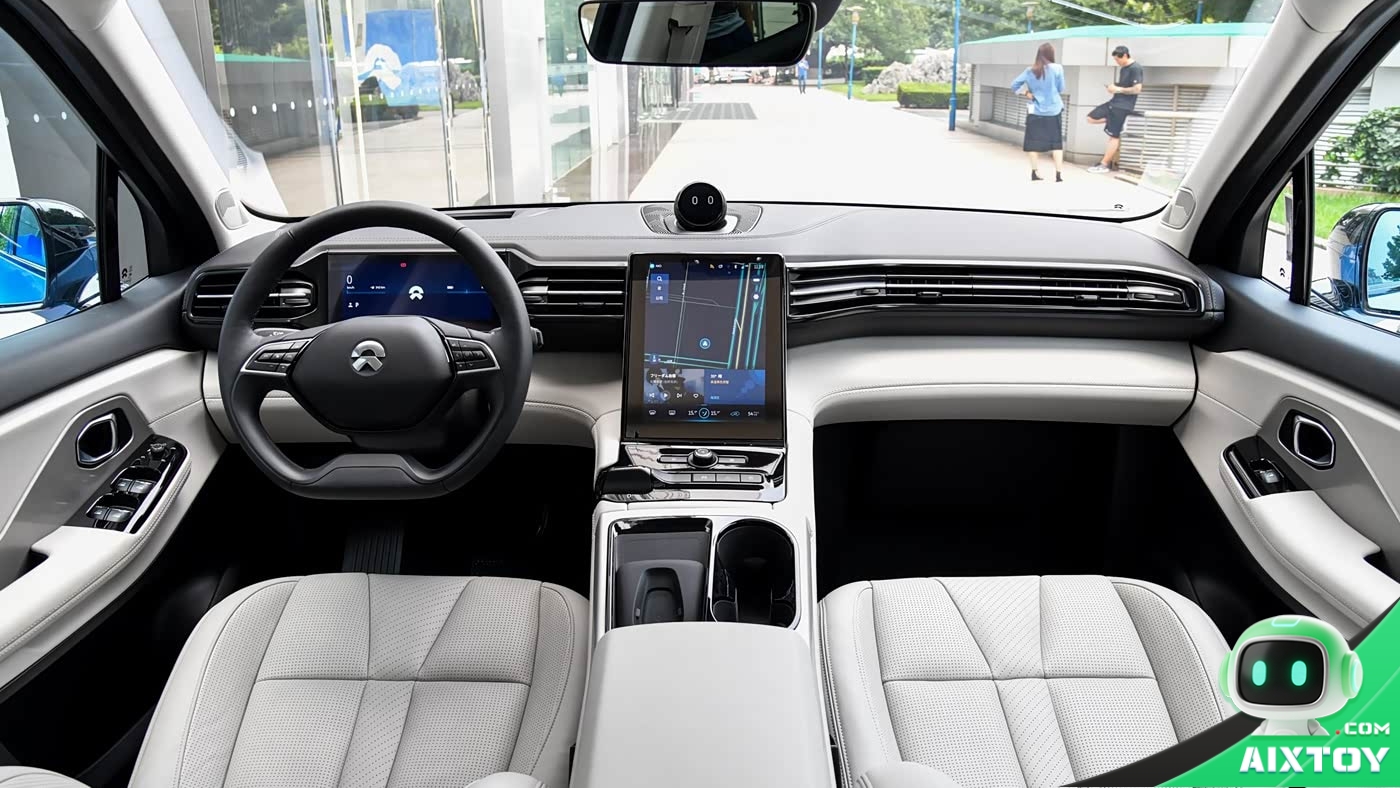
On 16 December 2017, at NIO’s first NIO Day, William Li spent an unusually long stretch of his keynote on a small round object. It sat above the centre console of the ES8, had a rotating circular screen, could turn its head, pull expressions and hold a conversation. Its name was NOMI, a play on “Know Me.”
Most of the room filed it under decoration. A gimmick — charming, expensive, unnecessary.
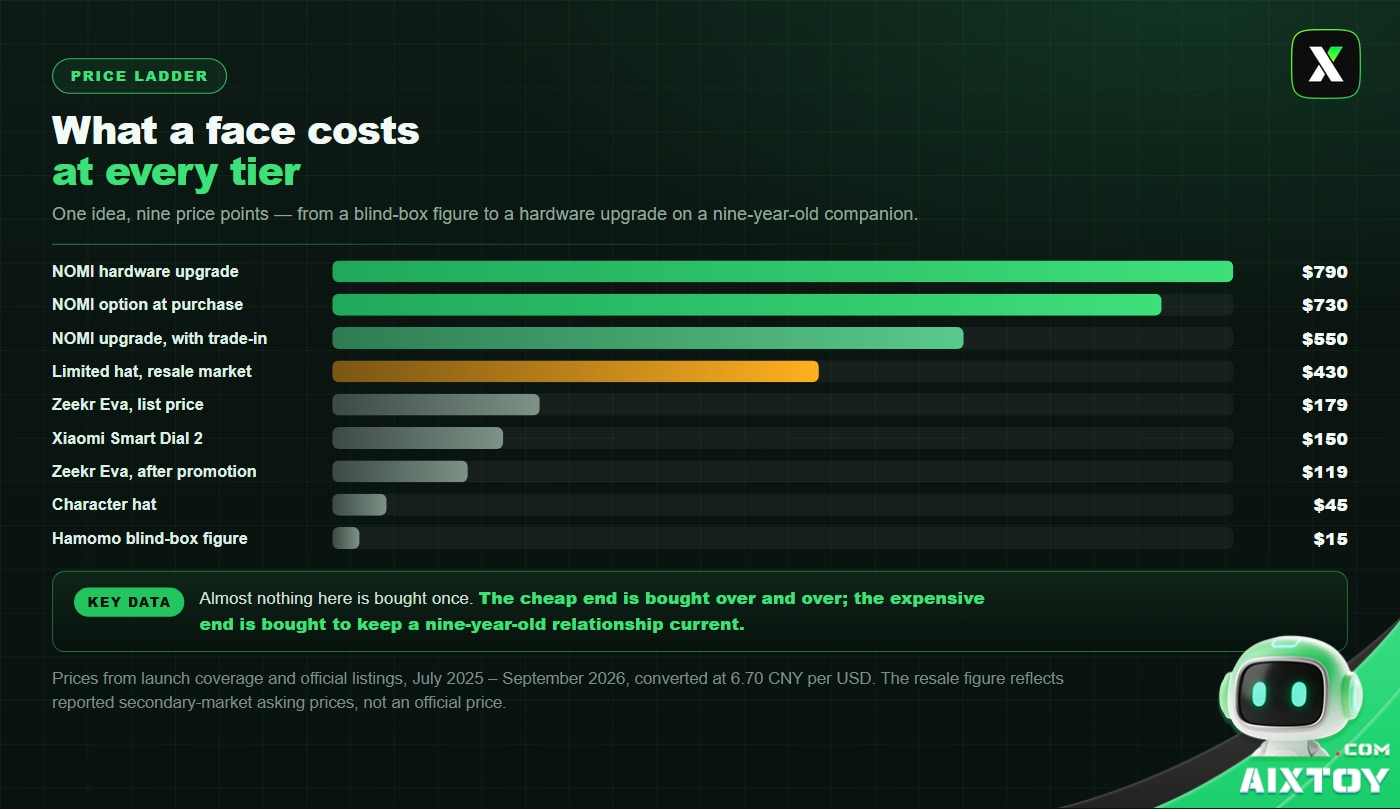
Almost nine years later, in September 2026, Xiaomi put a product called Smart Dial 2 into its car app. It lists at about $150, up from roughly $105 for the previous generation. Its three headline features were a motorised head that turns 30 degrees left and right, more than 30 animated expressions, and something the launch copy called “eye contact.”
The comments underneath were unanimous: this is just Xiaomi’s NOMI.
The buying was equally unanimous. The first batch sold out the day it went live, third-party sellers were asking about $30 over list, and weeks later it was still listed as out of stock.
Xiaomi is not alone. Zeekr, BYD’s Fangchengbao brand and Yijing all put a physical companion into the cabin this year. Nine years after a room of journalists rolled their eyes at one, the shape that got laughed at has become homework.
The same friendly face, four different bets
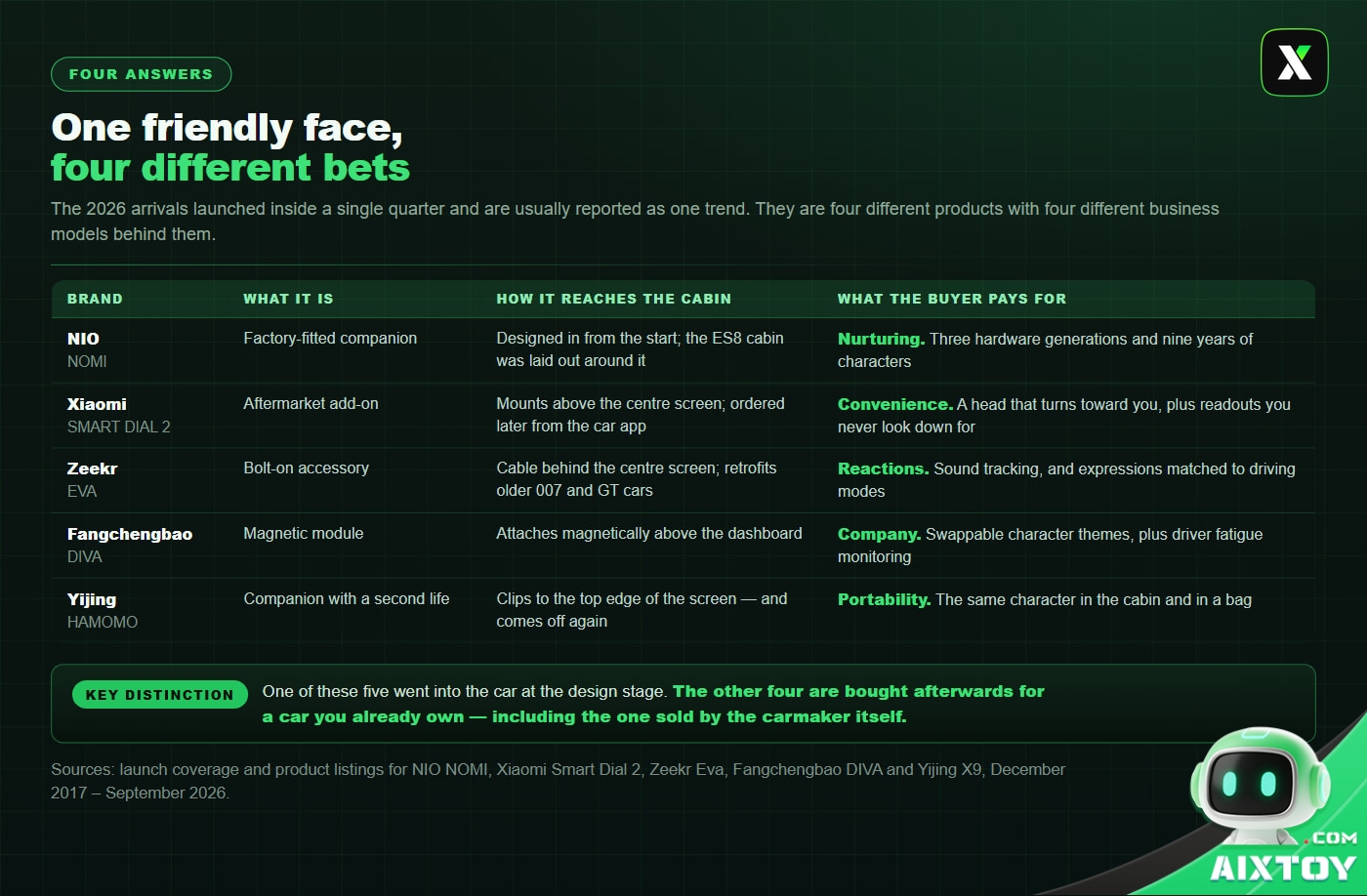
The 2026 arrivals look like one product. They are four, and it is worth being precise about them, because they are usually lumped together as “the car robot trend.”
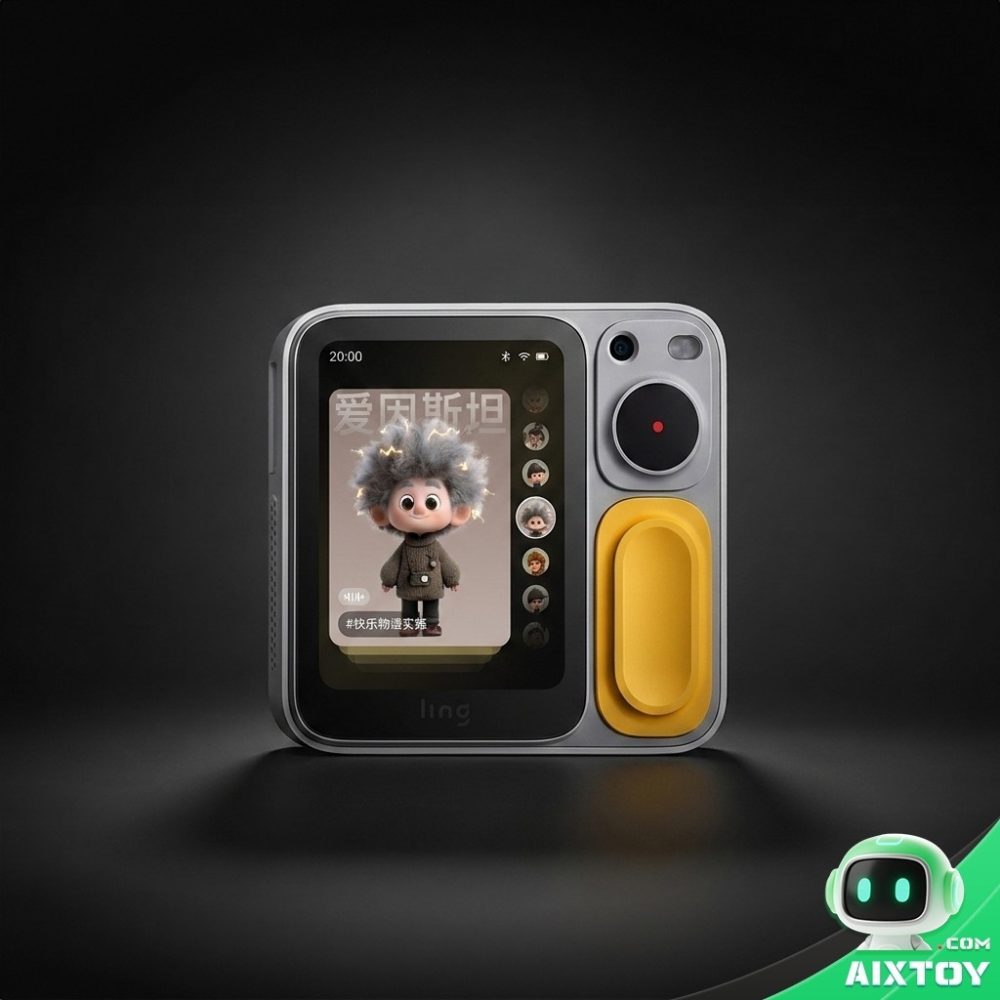
Xiaomi’s Smart Dial 2 is aftermarket hardware. It mounts above the centre screen and works across the Xiaomi range, which means you do not have to decide at purchase — you buy the car, then order the dial from the app whenever you want it. That is a very Xiaomi move: enter through accessories, hold people with price and ecosystem.
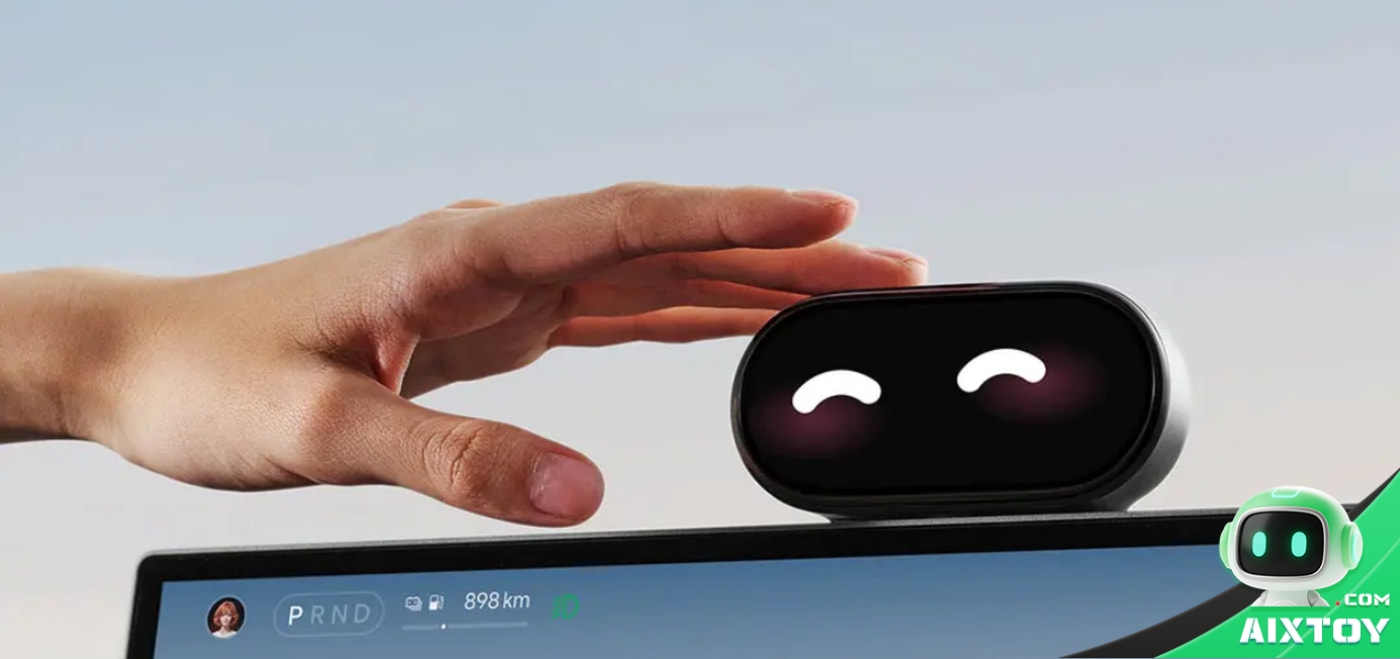
The hardware change between generations is the interesting part. The previous version was two separate round screens with a gap between them, and animations broke across the seam. The new one is a single continuous screen, and it adds the bit everyone notices: a head that turns 30 degrees left and right. That sounds trivial. It is not, because it gives a static display body language. Say the wake word and it turns toward whoever spoke — which is why the launch copy could use the phrase “eye contact” without it being pure marketing.
It also runs two modes. An expression dial, where tapping the top of the head produces an offended face and holding it produces a pleased, stroked one, and where music produces its own set of reactions. And a function dial showing time, range, speed, mileage, G-force, weather and power output. That second mode is the whole argument in miniature: a cabin robot that only looks cute raises an obvious question about whether anyone will keep paying for it, and Xiaomi’s answer is to make it useful at the same time. Because the dial sits higher than the centre screen, those readouts arrive without a glance downward.
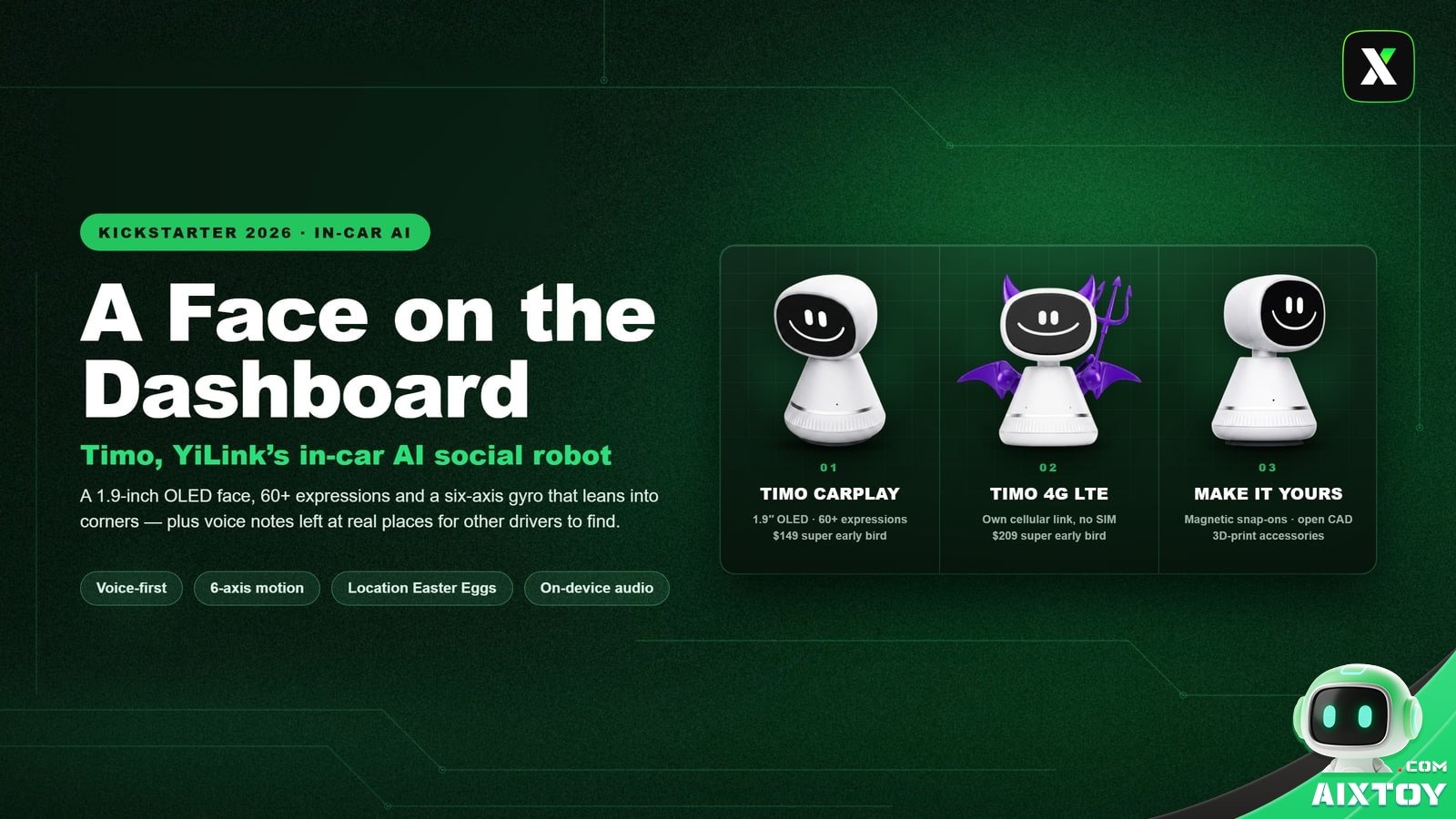
Zeekr’s Eva is a bolt-on accessory. It connects by cable behind the screen, which some owners already find untidy, and it is retrofittable to older 007 and 007 GT cars — an accessory, in other words, that admits it is an add-on. Its signature ability is sound-source tracking: wake it and it turns toward the person speaking, and it matches expressions to driving-mode changes, reversing and unfastened seatbelts. It is an astronaut. Zeekr’s own framing is careful: Eva extends the cabin’s emotional interaction rather than controlling anything.
Fangchengbao’s DIVA is a magnetic module. A smart dial fixed above the dashboard, with three character themes, customisable readouts, and driver monitoring that watches for fatigue. Its job is the opposite of the cabin’s super-agent — that one exists to operate the car, this one exists to keep you company — and the distinction is worth holding on to for everything that follows.
Yijing’s Hamengmeng is the one that leaves. A fluffy body that clips magnetically to the top edge of the centre screen, acting as the physical face and body of the voice assistant: wake the assistant and it turns to look at you, ask it to warm your seat and a matching icon lights up in its eyes, tug its head and the expression changes. Then you unclip it, put it in a bag, and it keeps working on its own. Yijing started selling a blind-box version of the character for about $15 before the car even went on sale. Of the four, it is the only one designed to leave the cabin — and for a household with children, it is easily the most interesting of the group.

The latecomers’ paradox
All four face the same question, and it is the question the whole category keeps circling: you can copy NOMI’s shape. Copying its standing is another matter.
The difference is not really where the device sits. It is what kind of object it is. NOMI was never an accessory. It went into the car at the design stage, coupled to the vehicle’s electrical and electronic architecture, and the original ES8 was laid out around it — instrument cluster, centre screen and HUD were arranged in sequence after it. It is a factory part. A device you order from an app store and clip above the screen is not, no matter how good the expressions are.
An owner’s summary of the cheaper, later devices puts it in four words: what you are buying is the tinkering itself. An installation job, a cable route, a compatibility list, and a device that will be made obsolete by the car’s next hardware generation.
Which leaves the honest question that no spec sheet answers: a screen bolted next to the centre display, and a companion built into the car — how different are they, actually? The gap is not in the hardware. It is in what happens after launch.
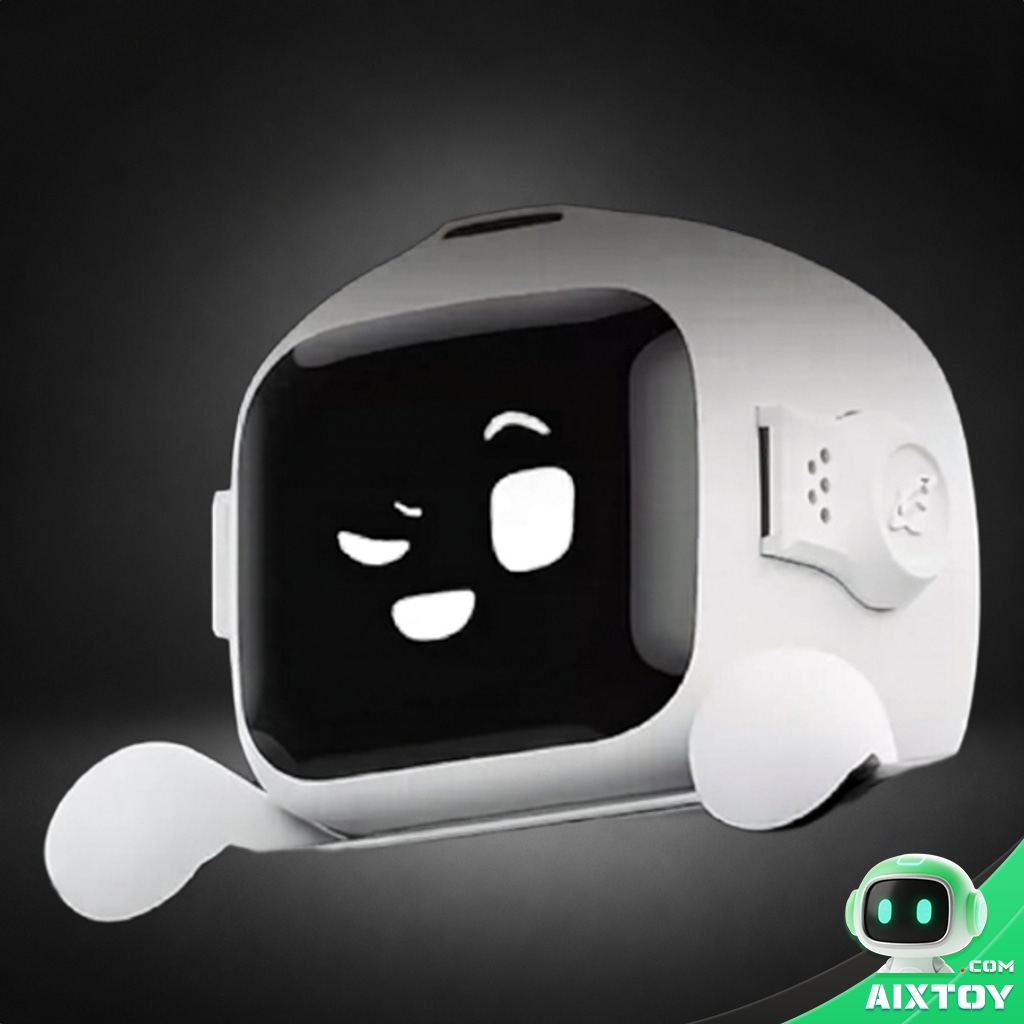
Commander Pro Car AI Companion
$223.99
The add-on, done properly. It connects to the car so the character reacts to what the vehicle is actually doing — a dashboard buddy that earns its place by being useful while it is being charming.
Nine years of “Know Me”
NOMI’s name is also its brief. Know me — the stated ambition NIO was aiming at in 2017, and the thing it has been spending the time since then on.
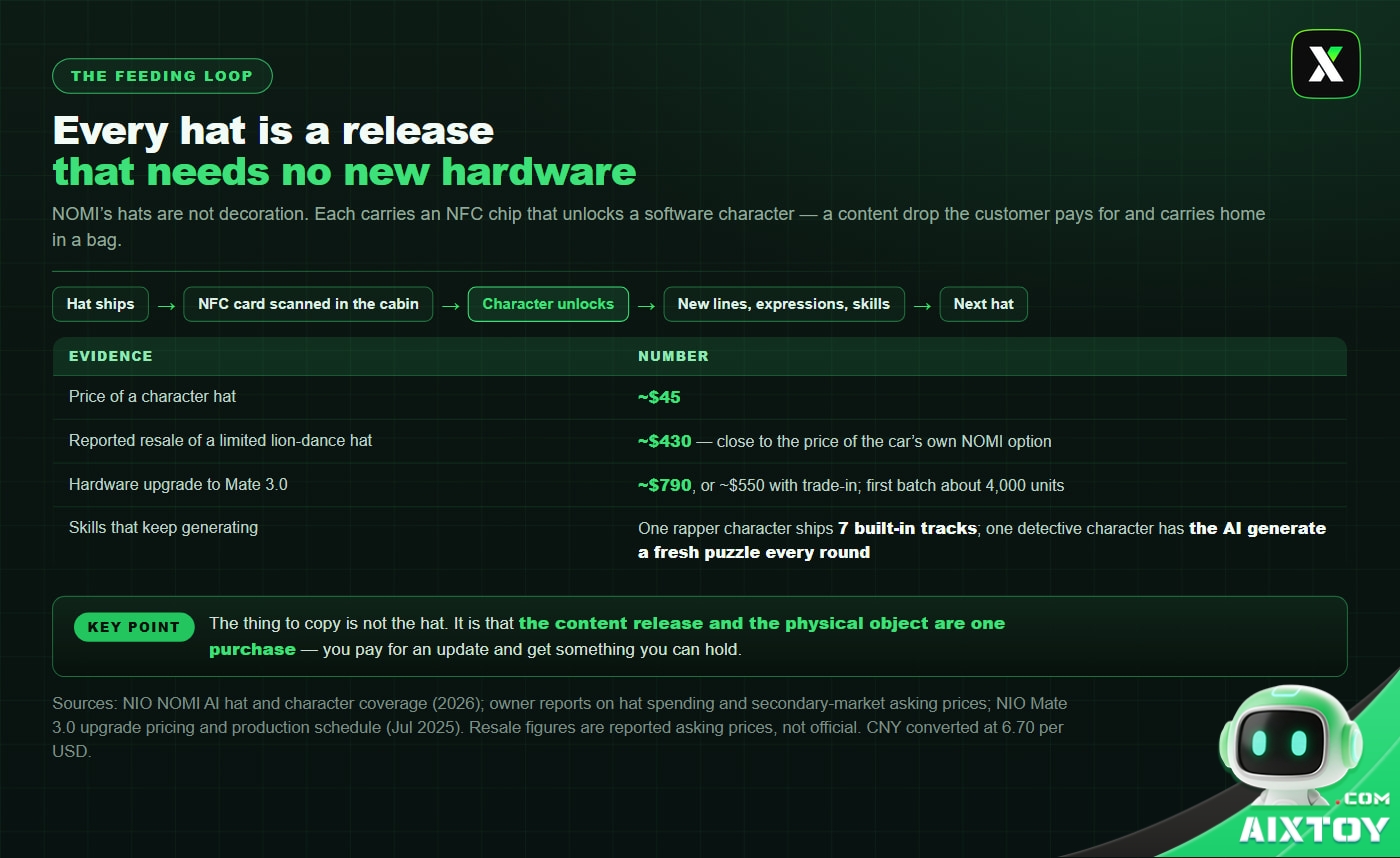
Put the numbers next to each other and the shape of that decade becomes clear. NOMI Mate has gone through three hardware generations, the Banyan software platform has shipped in dozens of versions, and the hat business grew from nothing into a full merchandise ecosystem in which each hat carries an NFC card that unlocks a whole software character when scanned inside the car — its own entrance animation, its own vocabulary, its own catchphrases, its own expressions, its own skills.
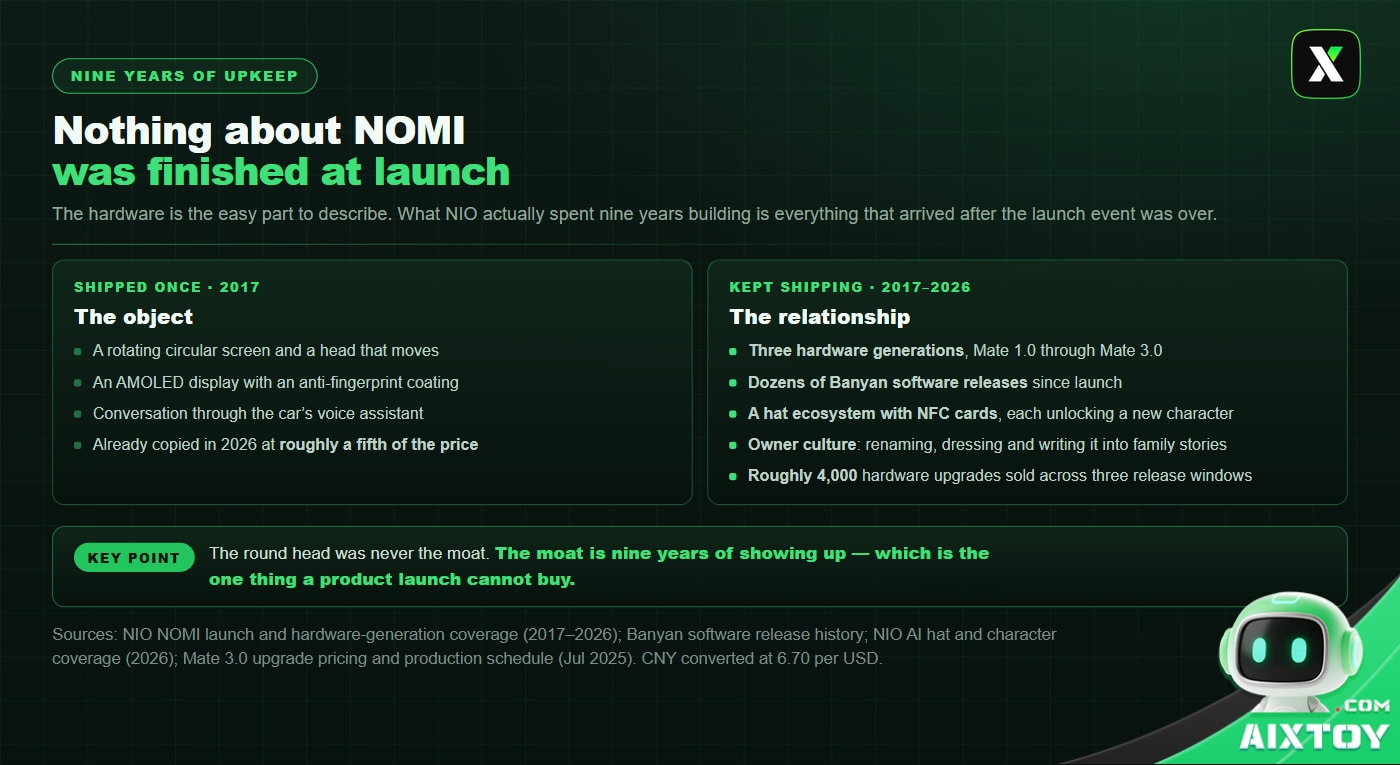
The current unit, Mate 3.0, is a genuinely better object than the one that got laughed at: a 340-degree direct-drive brushless motor with the gearbox deleted entirely, maximum movement speed about ten times the previous generation, and an AMOLED screen with an anti-fingerprint coating. The upgrade to it costs about $790, or about $550 with a trade-in of the previous generation, and the first batch of roughly 4,000 units moved through three separate release windows.
The market’s response is louder than the spec sheet. Owners rename their NOMI, dress it for holidays and write it into family stories. A limited-edition lion-dance hat has resold for the equivalent of about $430 — nearly the price of the car’s own optional NOMI unit. NIO’s owner centres run hat-making workshops, and signing up for a slot is compared, without irony, to getting concert tickets.
One owner, writing after paying that upgrade price, was blunt about it: a small machine head costing that much does hurt. He also said he was satisfied — it turns far faster than the old one, and he can barely hear it move.
Nine years of that is the actual product. Not the ball, not the screen, not the motor.
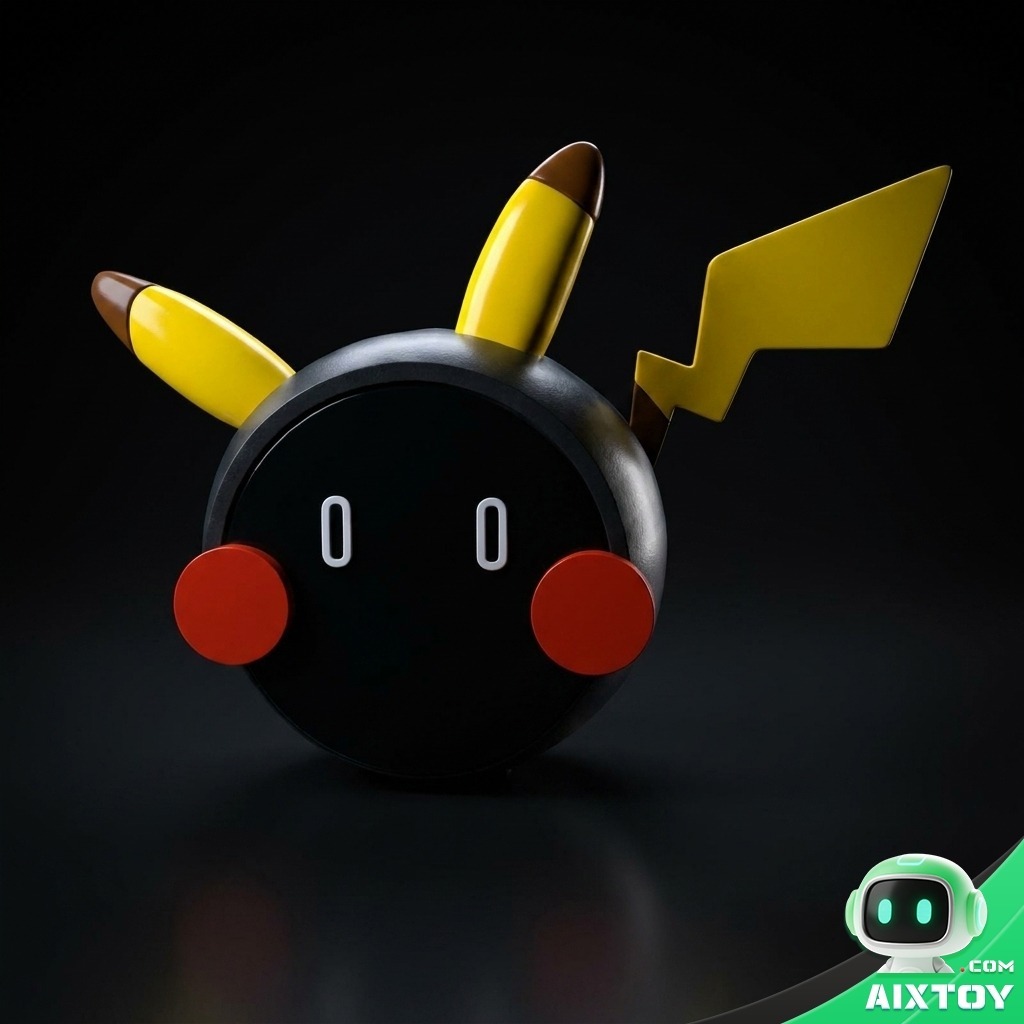
NOMI Pikachu 3.0 Helmet Decoration
$44.99
The feeding mechanism, sold separately. An officially licensed NOMI hat — the same idea as the character drops in this article: a small physical object that makes an existing companion feel new again without replacing any hardware.
The feeling of “alive” is operated, not designed
Here is the part the followers cannot buy with a better motor.
None of it was finished at launch. Not the expressions, not the skills, not the hats, not the relationship. Emotional attachment in this category has never been built by a hardware release; it is built afterwards, by continuing to show up: software updates that keep adding characters and abilities, an accessory ecosystem people are willing to spend money and time on, and a brand that treats the thing as a long-term asset rather than a one-off selling point.
NOMI became NIO’s signature not because the round head is remarkable — a ball with a screen and a motor is a hardware exercise anyone can copy, and in 2026 they did — but because NIO spent nearly a decade keeping that head alive. It sulks. It changes outfits for festivals. It chats on a long drive.
That sense of being alive is operated into existence. It is not designed into existence, and it cannot be shipped in a box.
What that means if you are buying one
Range, compute and performance are converging fast across the electric car market. Emotional interaction is the one dimension that is hardest to put in a spec sheet and easiest for an owner to feel — which is exactly why it is where the honest differences now sit.
Ship one piece of hardware, sell one wave, collect one round of praise, and stop. What is left is an ornament gathering dust on a dashboard. The test of any companion product, in a car or anywhere else, is what it looks like in year three.
So when you are choosing one — a factory-fitted companion, or one of the aftermarket devices available today — ask the boring question rather than the exciting one. Not “how good is the face?” but “who is going to keep feeding it?”
That question is answerable before you buy. Look at the update record of the previous model in the range. A company that shipped one batch of expressions and stopped is selling a screensaver. A company that has shipped dozens of software releases and keeps releasing new characters for a $45 accessory is selling a habit.
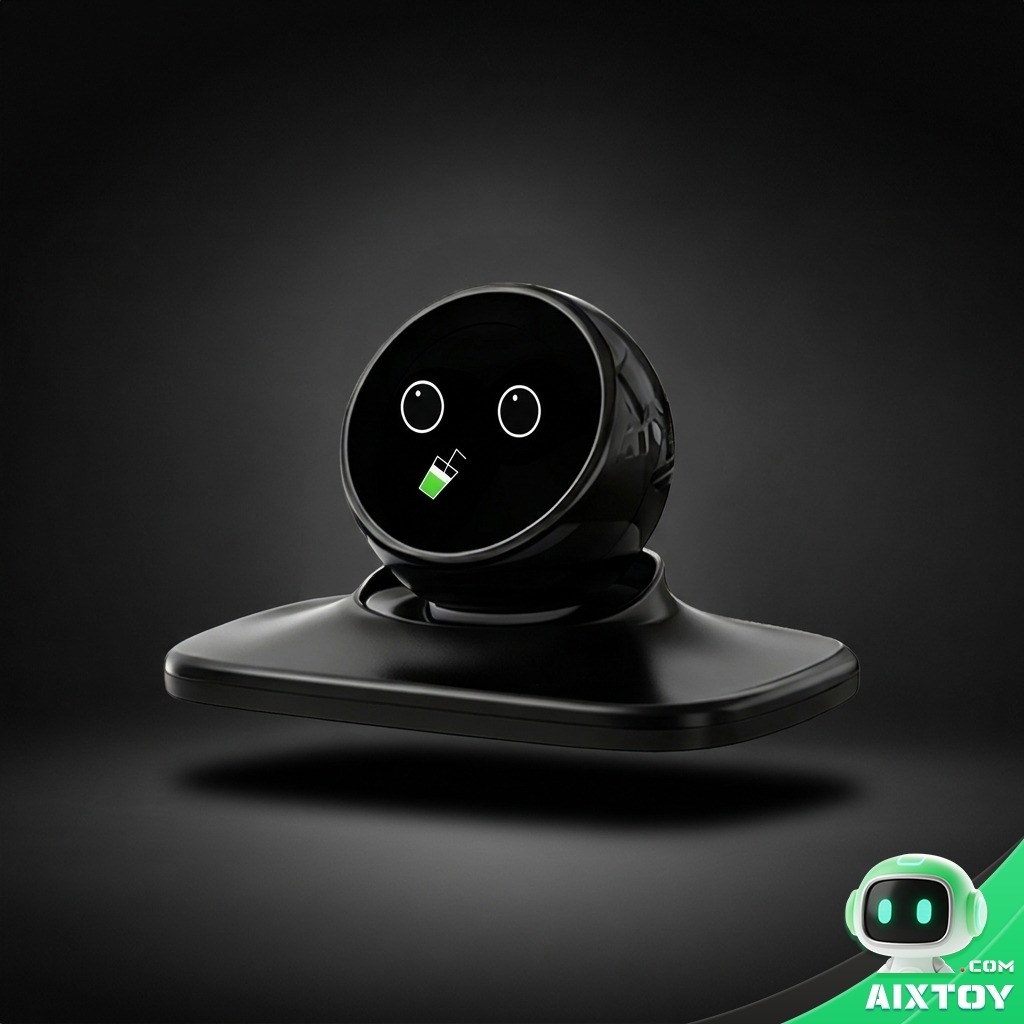
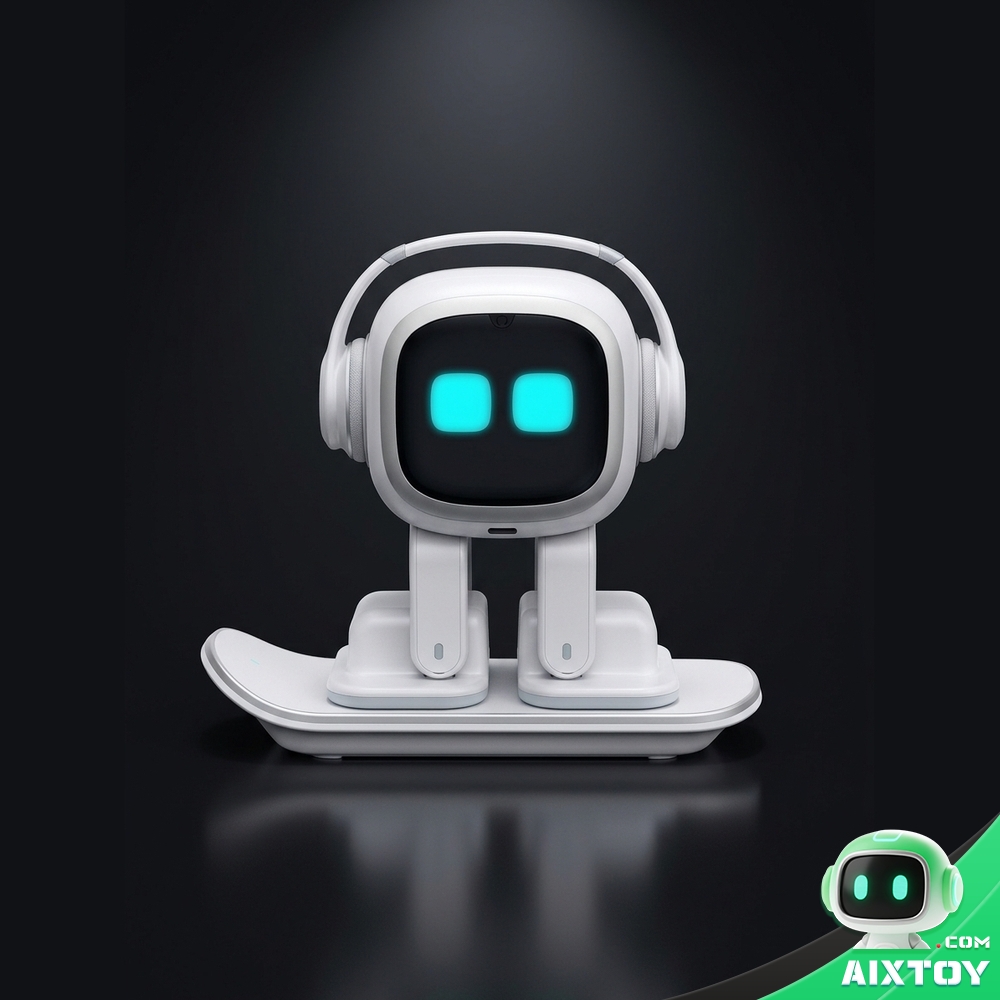
LUMI Car AI Robot
$110.99
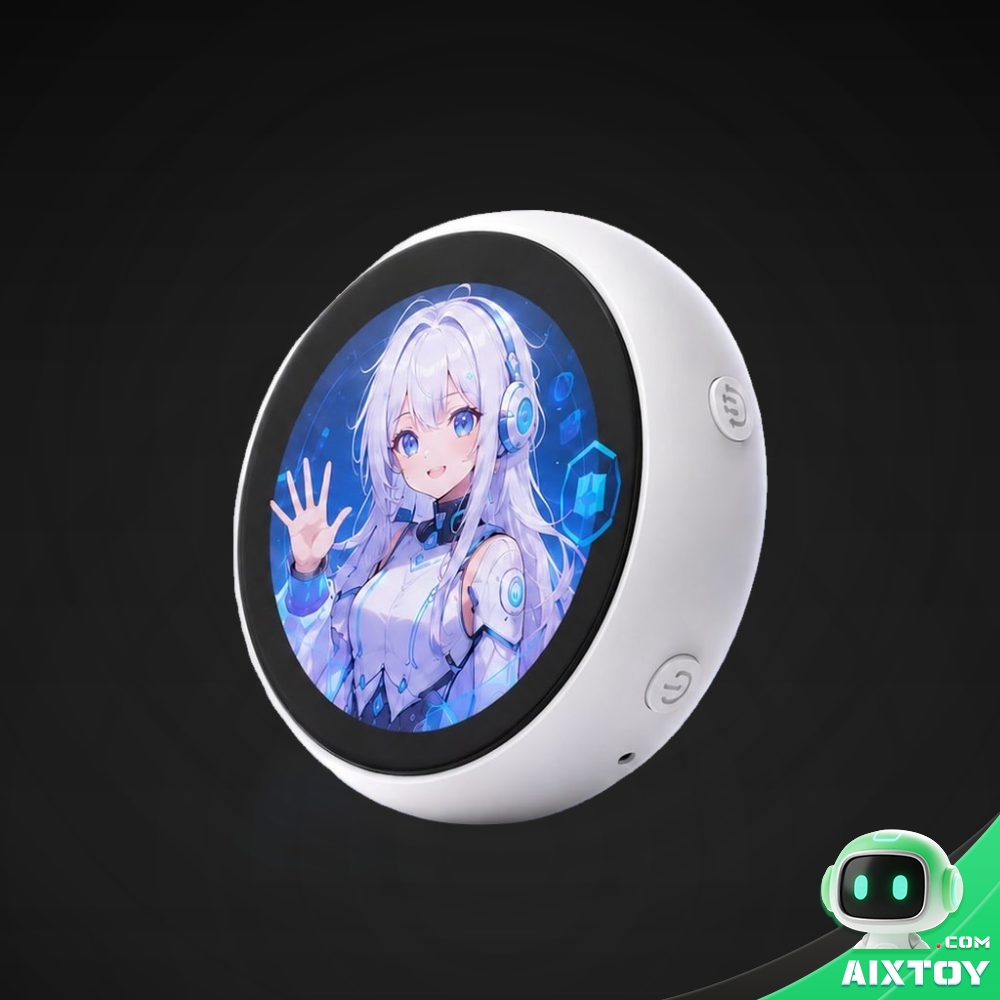
A companion that solved the placement problem with its own body: a weighted flat base that keeps it steady on a dashboard, a desk or a nightstand — and an LED face that reads at a glance.
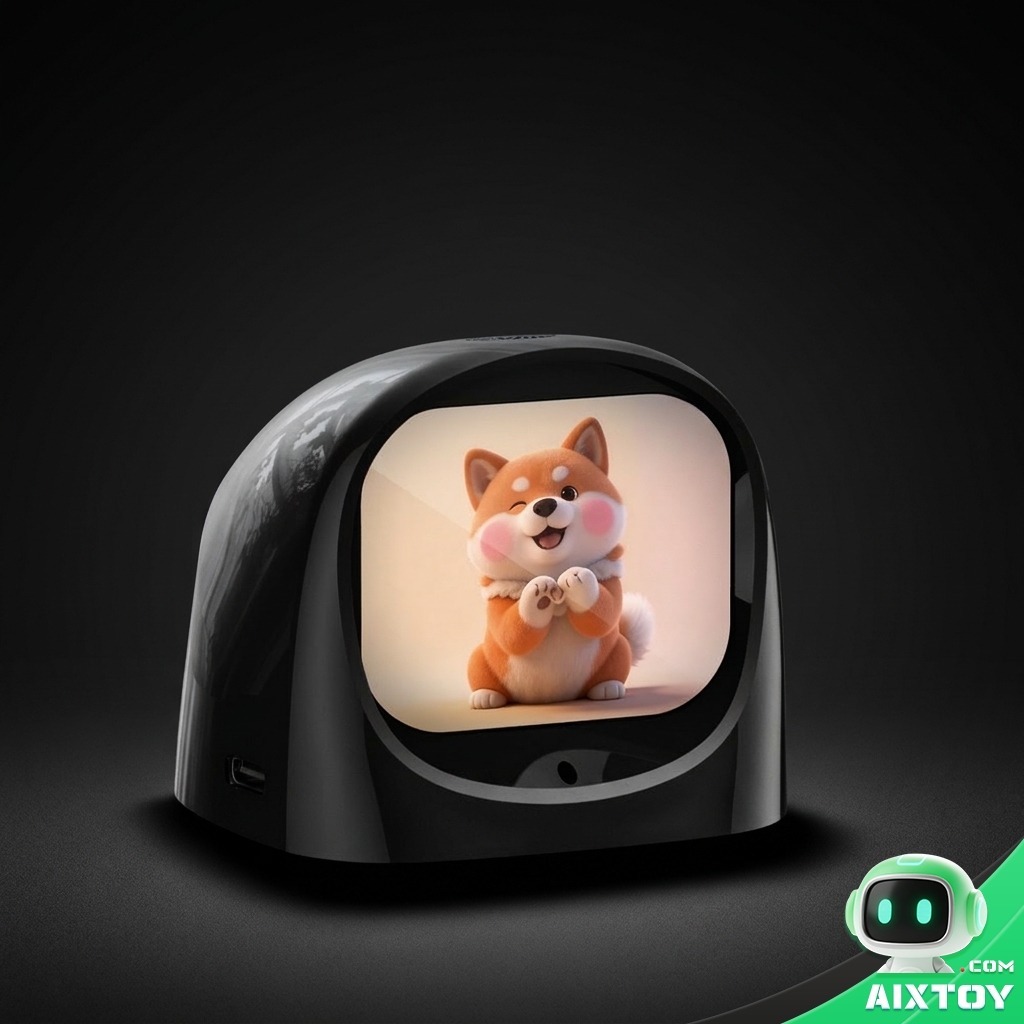
AI XiaoZhi Car Robot Companion
$86.99
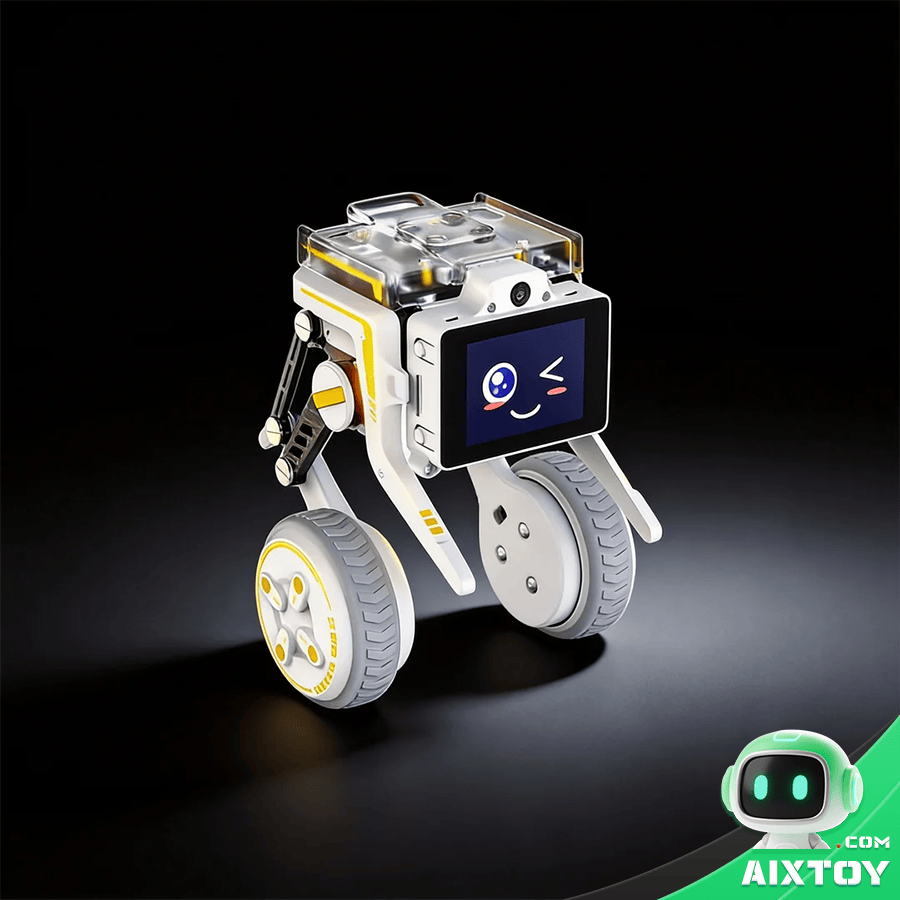
The entry tier. A dashboard companion at a price that makes the experiment cheap — useful for finding out whether you actually want a face on your dashboard before spending on a factory-fitted one.
The short version
Nine years ago NOMI was mocked as a gimmick, and the mockery was not stupid — the object itself is not remarkable. A ball with a screen and a motor is a hardware exercise anyone can copy, and in 2026 they did, at roughly a fifth of what NIO charges to build one into the car.
What cannot be copied is everything wrapped around it: nine years of software releases, three generations of hardware, an accessory line that turned into a fan culture, and the habit of treating a smiling head as something that has to be kept alive.
Any cabin ecosystem is not a fast business. The carmakers who win this category will not be the ones with the biggest turning angle or the funniest expressions. They will be the ones willing to keep feeding the thing after the launch coverage is over.
The 2026 wave has proved that a carmaker can build a NOMI-shaped object in a single product cycle. The open question is whether anyone can keep one alive for nine years.
Tags:Car Companion RobotsNOMIIn-Car AIDashboard RobotsAI Toy IndustryProduct StrategyNIOBYDXiaomiNFC Toys