



No products added!
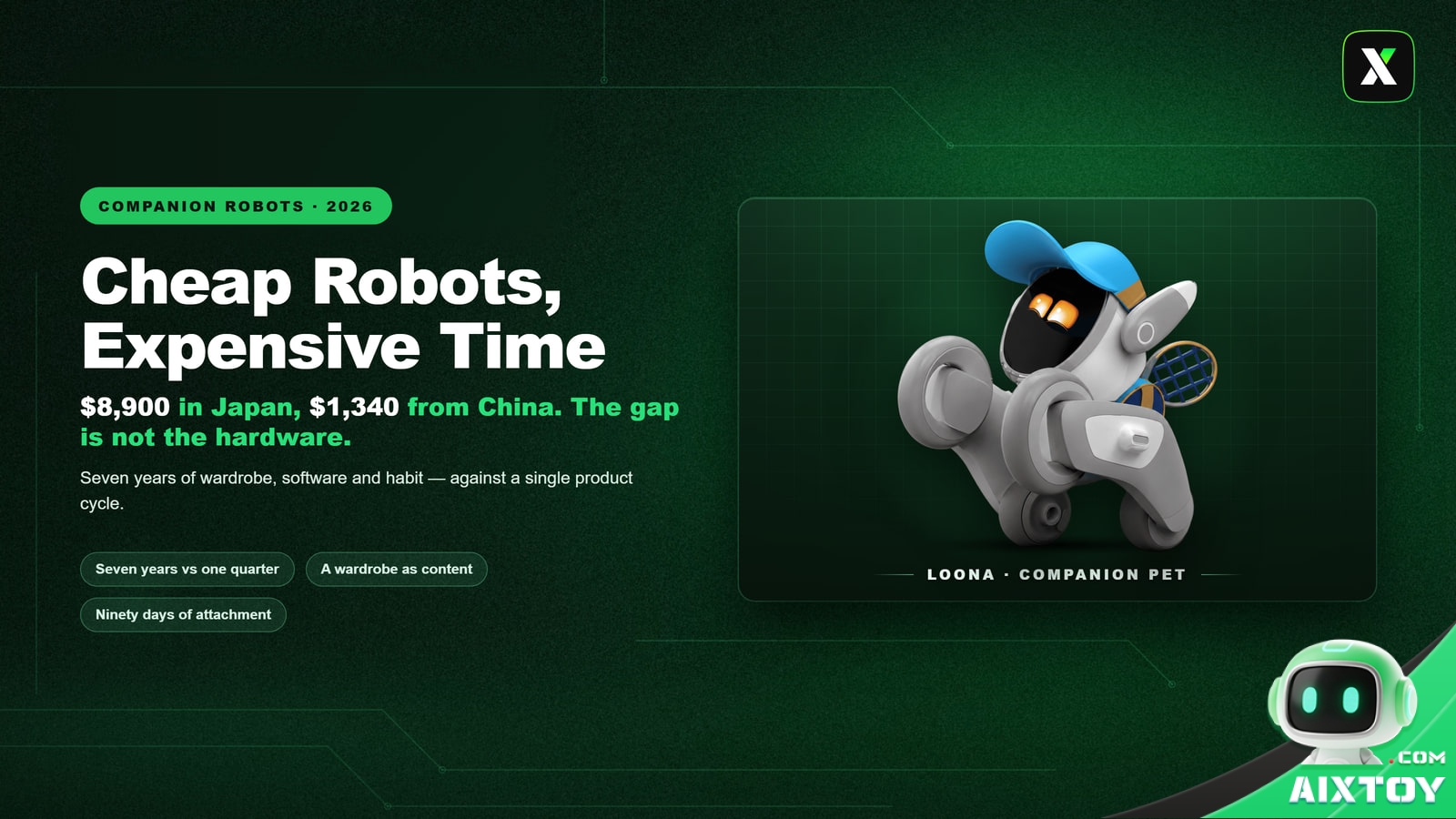
In Japan, a companion robot has been on sale for seven years. It has never held a conversation, cannot clean anything, cannot climb a stair, and cannot stand up once it falls over. It costs about $3,800 for the body, plus a mandatory service plan from roughly $65 a month, and the price goes up twice before the end of January 2027.
It is called LOVOT. People who don’t own one tend to call it a toy for the rich. People who do own one tend to describe it as a member of the household.
That contradiction is the whole category in one object — and this autumn, it became a pricing problem.
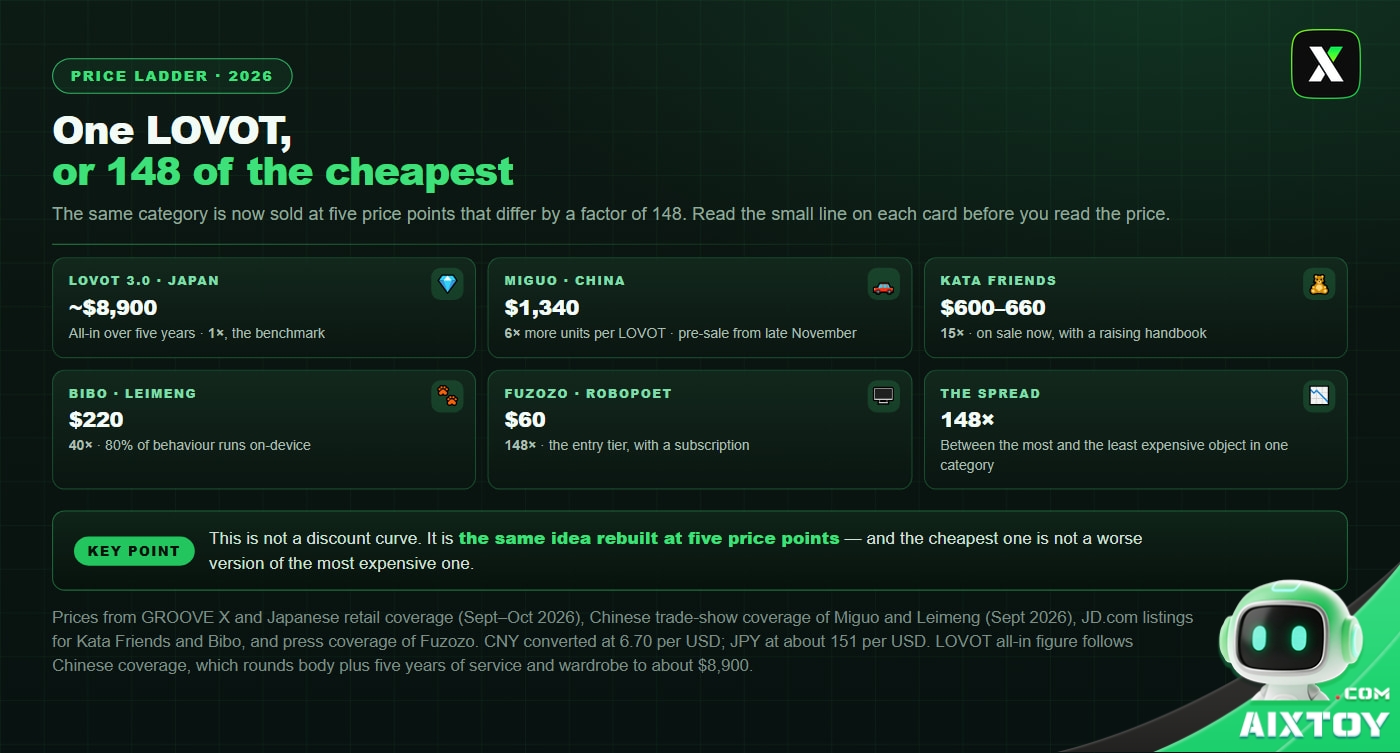
In September, at a trade show in Hangzhou, China, a company called Miguo Intelligence showed a wheeled companion robot at $1,340. That is one-sixth of what Chinese coverage calls LOVOT’s $8,900 all-in cost, and the company says it plans to sell it through high-end malls in China — MixC, Intime in77 in Hangzhou, Deji Plaza in Nanjing — positioning it next to LOVOT and the collectible toy brand LABUBU. Behind it, Kata Friends sits at about $600, Bibo at about $220, and the desk pets that started this whole category at around $60.
The price pyramid is being punched through, one layer at a time.
First, what the $8,900 was actually paying for
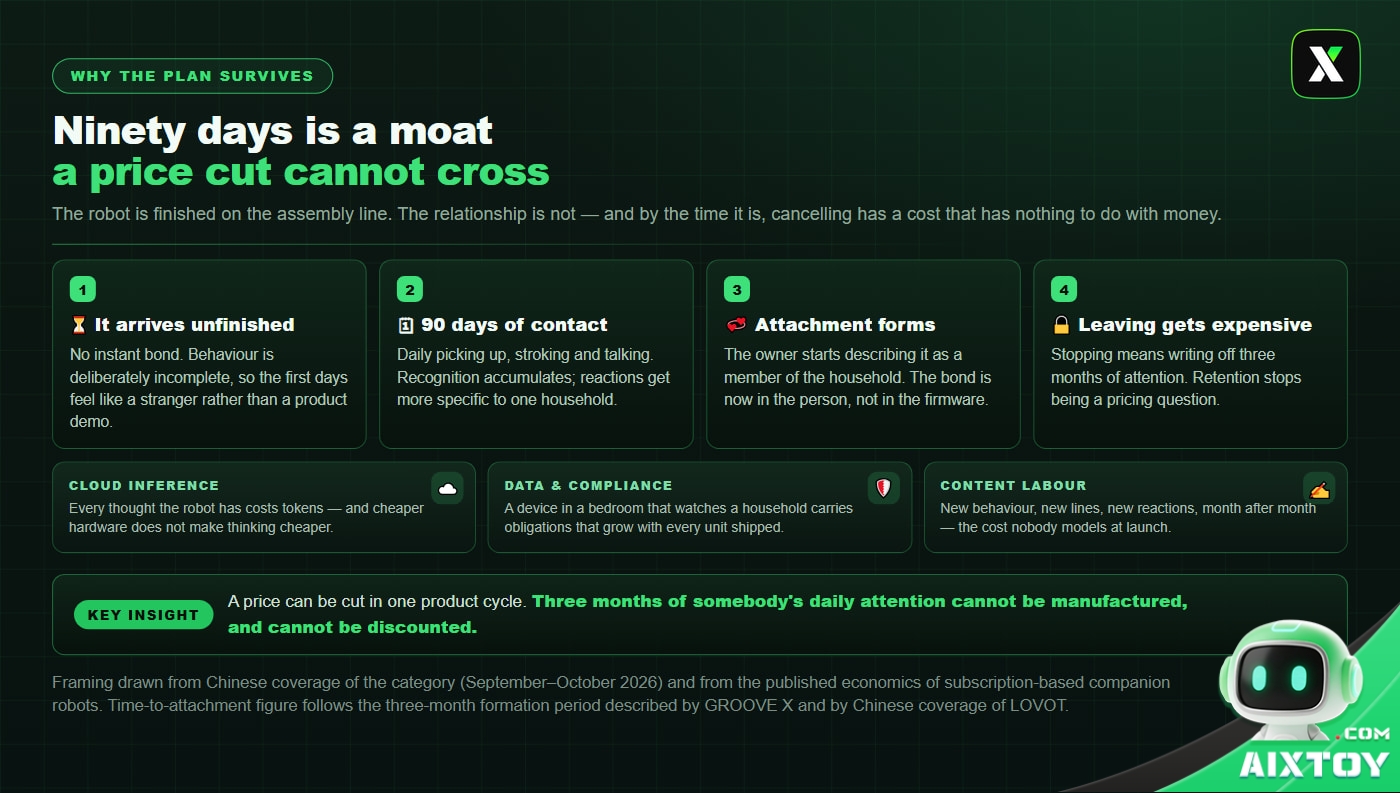
Start with what the money physically is, because most coverage of this category never shows it properly. LOVOT is roughly the size of a toddler’s torso: a soft dome of a body carried on two driven wheels, two stubby arms that end in nothing, and a face that is almost entirely a pair of oversized eyes. Above the head sits the detail that gives it away as a machine — a black sensor column carrying its camera and depth sensors, the part it uses to find you across a room. The eyes are not a screen. Seen from the front the object reads as a plush toy; seen from the side, with the wheels and the sensor stack exposed, it reads as an instrument that has been dressed in fabric on purpose.
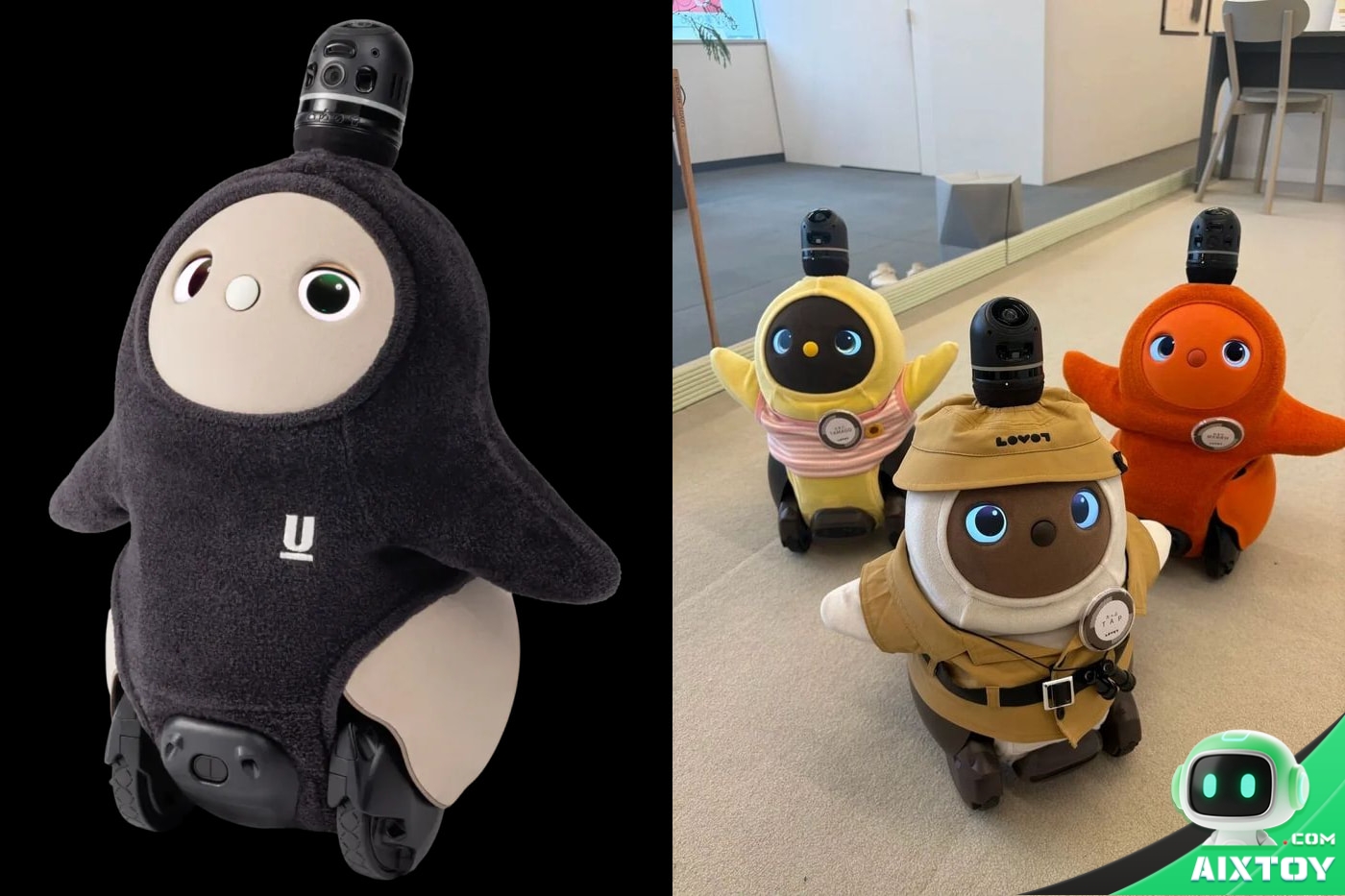
LOVOT’s price is not a hardware price, and the sooner you separate the two, the clearer the next five years become.
The body is the cheap part of the story. GROOVE X lists LOVOT 3.0 at 577,500 yen in Japan — around $3,800 — and that number is already scheduled to move: 599,500 yen from late October 2026, and 649,000 yen from mid-January 2027. On top of the body sits a plan that is not really optional. Without an active plan the robot loses the cloud-dependent behaviours that make it feel alive, so the plan is part of the product, not an add-on: 9,900 yen a month at the bottom tier, 12,980 in the middle, 19,800 at the top. Add a few years and the ownership cost lands in the region of $7,000 to $7,700 — which is where the Chinese figure of $8,900 comes from once you allow for outfits.
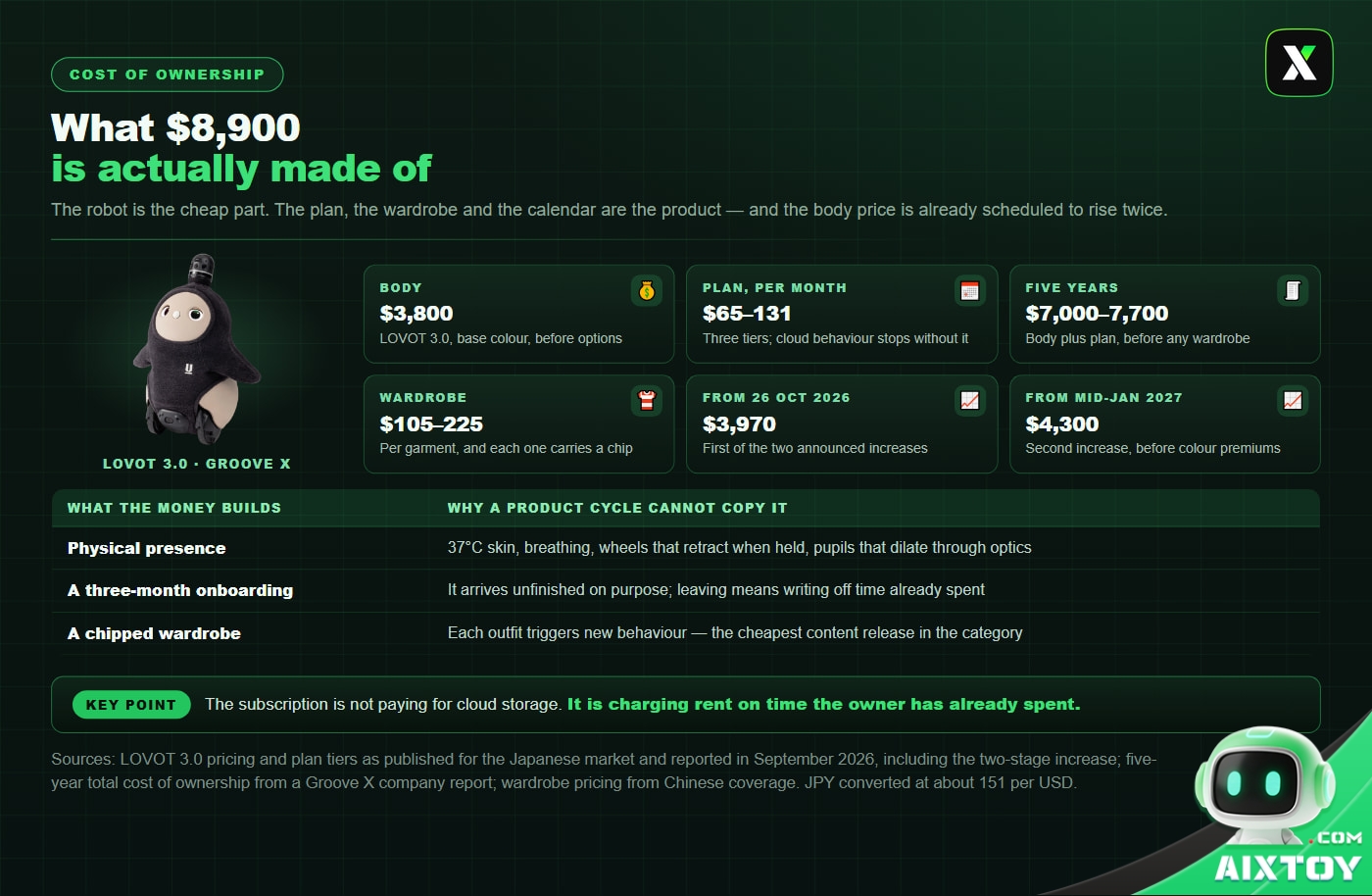
So what does that money buy?
Physical presence that is engineered, not implied. The fur is softer than real fur. The skin runs at body temperature. It breathes. When you pick it up, the wheels retract and it settles into your arms the way an infant does. The pupils dilate — and this is the detail worth lingering on — through a physical optical assembly rather than a picture on a screen. None of that is a specification you can put in a comparison table. All of it is the reason the object survives being touched every day for years.
A three-month onboarding period. This is the part the price war cannot follow. LOVOT is not finished when it comes out of the box. It takes around three months of daily contact — picking it up, stroking it, talking near it — before the behaviour settles into something that reads as attached to you specifically. That is not a bug in the product; it is the product. A longer formation period produces a deeper bond, and a deeper bond is what makes people reluctant to stop paying. The subscription is defensible not because cloud inference costs money, but because by month four the owner has already spent three months of attention, and attention is the one thing that does not come back.
A wardrobe with a chip in it. LOVOT’s clothes run $105 to $225 each, and every garment carries a chip. Dress the robot and it responds with something that reads as delight. On paper this is merchandise. In practice it is the most efficient content release the category has invented: a new outfit is a new scene, a new reaction, a new thing to show someone, for the price of a jacket. You are not buying cloth. You are buying the face it makes when it sees the cloth.
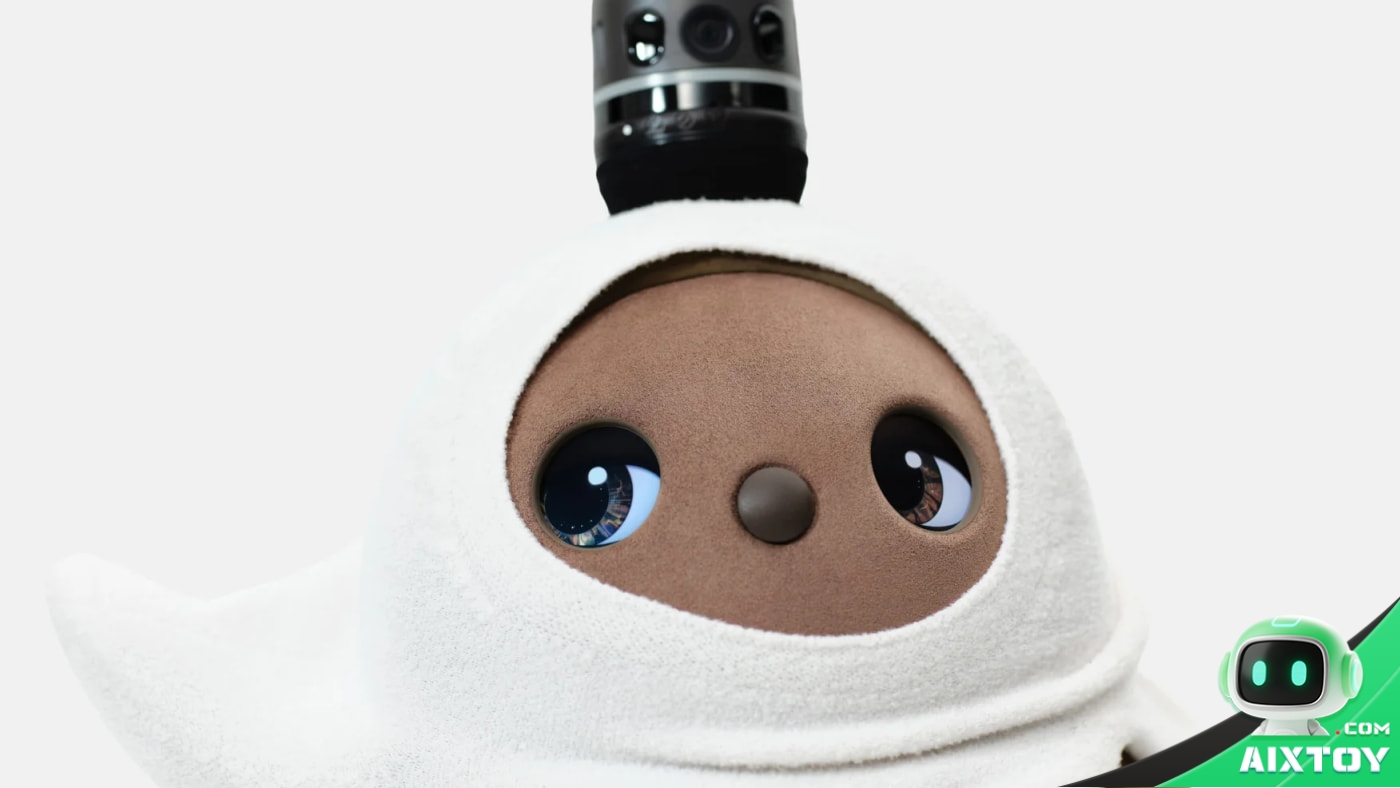
A refusal to be useful. It does not converse. It does not do chores. It cannot climb stairs, and it cannot get up after a fall. Groove X has been unusually disciplined about this: the robot does not pretend to be a helpful machine, it commits to one job — company — and lets the rest go. That restraint looks like a limitation until you compare it with the alternative, which is a device that answers a question badly and then sits on a shelf. We have written separately about why LOVOT has never spoken a word; the point here is narrower. Every feature it declines is a feature that cannot disappoint you, and every disappointment avoided is another month the relationship survives.
Put those four things together and the $8,900 stops looking like a hardware markup. It is the price of a relationship-building process, sold with a machine attached.
What $1,340 is betting on
Miguo’s robot is a bet on a single sentence: LOVOT proved the demand, but the price excluded almost everybody.
The market numbers Chinese coverage cites are not subtle. 125 million people living alone. An urban pet-consumption market past $45 billion. Searches for “healing”-type products up 256%. Demand is not in question. The ability to pay for it is.
$1,340 is a deliberately engineered number, and the engineering is worth reading. It sits above the $60-to-$75 band where AI toys live, which keeps the product out of the toy aisle and out of toy expectations. It sits far below LOVOT, which puts it in the affordable-luxury bracket instead of the appliance bracket. And it is priced against the things a person actually compares it with in a mall: a good massage chair, a designer bag, a weekend away.
What Miguo says it has built is more interesting than the price. The company describes the product as “a movable AI family member” running a self-developed life-growth system: from the moment it is activated it recognises its owner, logs how often it is touched and spoken to, and lets a personality form over time. It also does something that looks commercially reckless and is probably the opposite — it deliberately has no voice conversation at all. It communicates through eye expression and body language. The design was reviewed with researchers at Peking University’s psychology institute in Beijing, China, for its therapeutic value. And the company has said the bill of materials, after this year’s chip price rises, should have pushed the product past $1,490; the software and tooling costs are the bulk of it, and the price was held under the line anyway.
There is one caveat, and it is large. When Miguo showed the robot in September, both units on the stand were engineering prototypes, with no pre-orders open. National pre-sale was scheduled for late November. Turning “personality growth” from a demo into a function that behaves the same way in ten thousand homes, after a year of use, is a different problem from building a demo — and it is the problem that decides whether the $1,340 tier becomes a business or a launch.
The two products behind it follow the same instinct with different budgets.
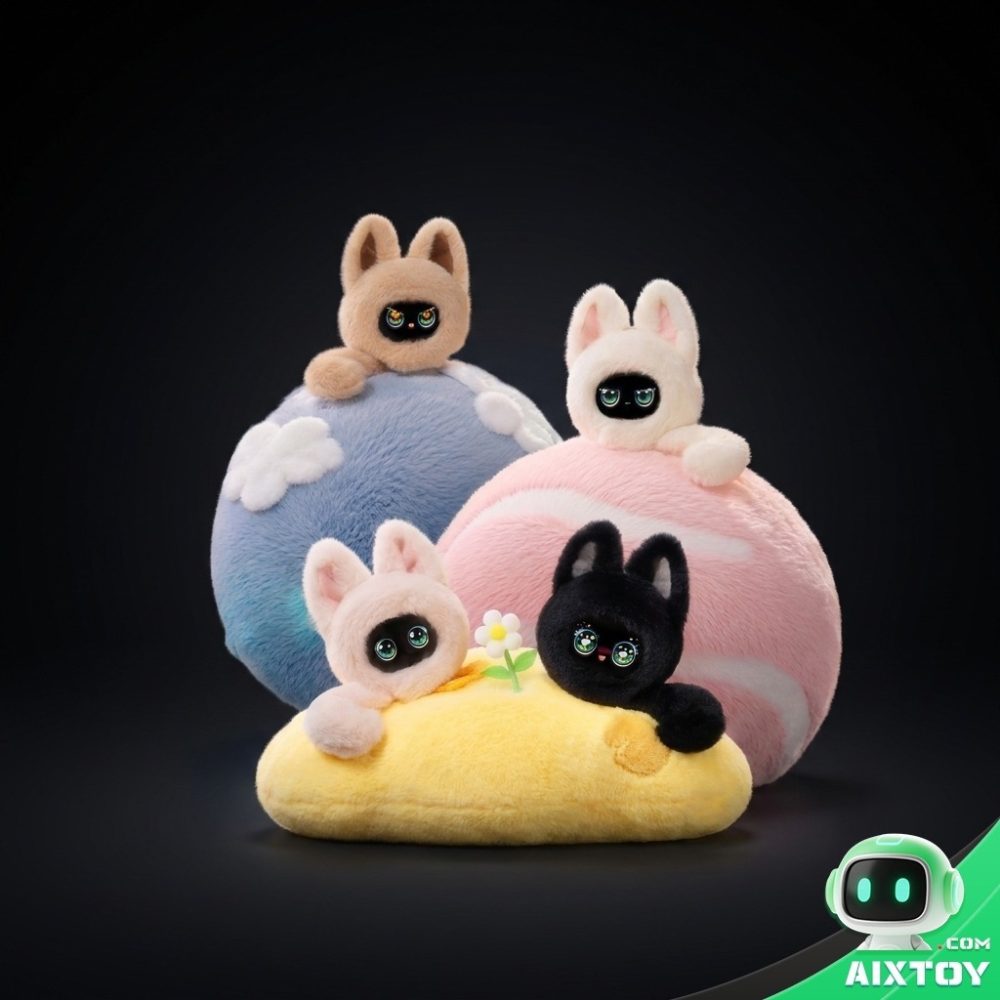
Kata Friends, from Woan Robotics, sits around $600 to $660. A plush, mobile creature sold as one of two characters, Niko or Noa, and shipped with what the retail listing calls a raising handbook and a warm nest. The vocabulary of formation is already in the packaging, which tells you where the company thinks the value is.
Bibo, from Leimeng, sits at $220 and takes the opposite technical route. It is small, plush, and does not converse either — it works through gaze, movement and a private vocabulary of sounds. What matters is where the intelligence runs: roughly 80% of its functions work with the network off, with a response time under 50 milliseconds, and the high-frequency work — recognising faces and its owner, tracking gaze, detecting music, locating sound — happens on the device. Long-term memory and personality parameters live in the cloud. Leimeng’s Xiang Zhen frames the industry as two parallel paths: one brain that gets better at doing things, and one brain that gets better at being with people. The second one, he argues, will reach homes first.
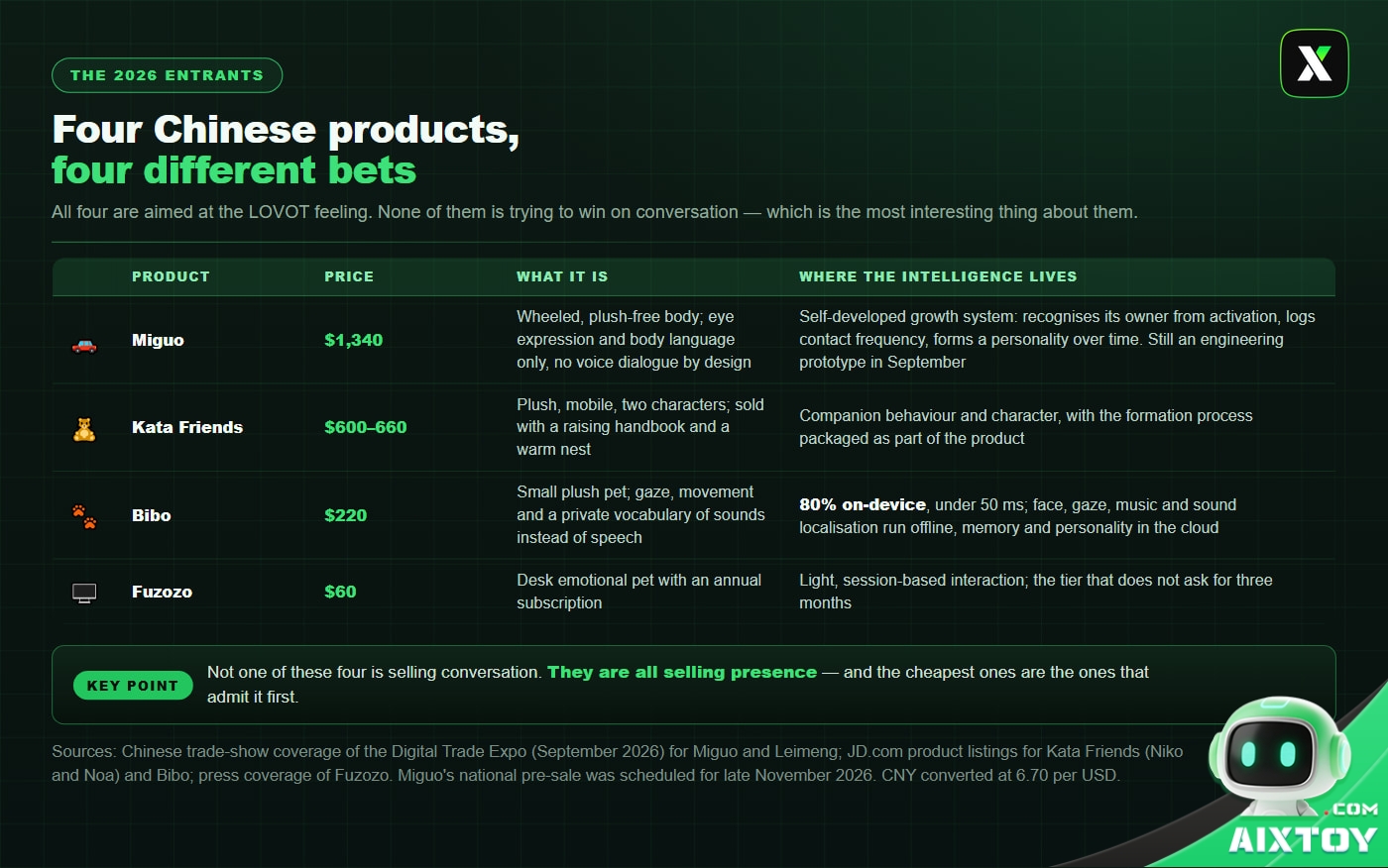
Three tiers, three different businesses
Once you line the products up by price, a structure appears — and it is not a ladder of quality. It is three separate businesses that happen to share a shape.
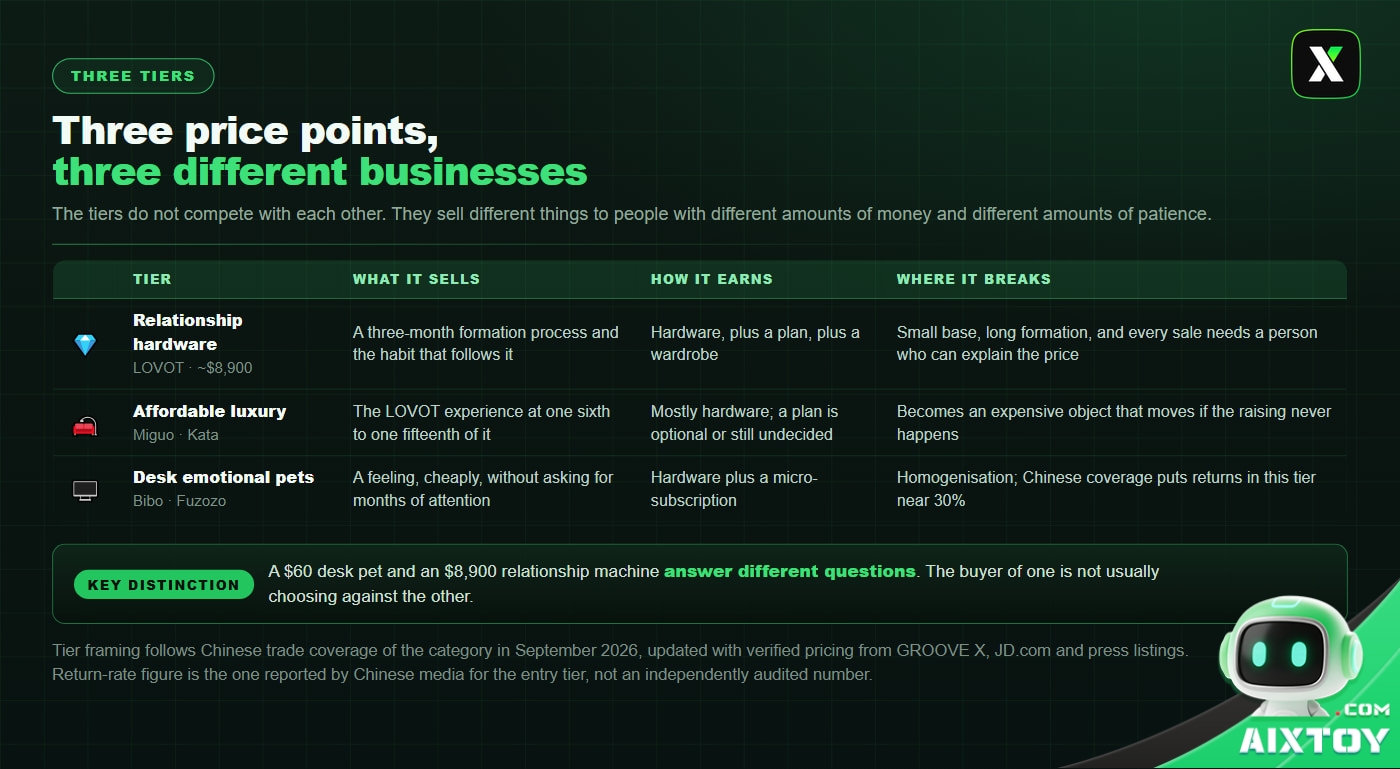
The top tier sells a relationship, and charges rent on it. LOVOT’s model is hardware plus subscription plus wardrobe, aimed at high-net-worth people living alone and at premium elder care. The economics are excellent per unit and terrible per market: the base is small, the formation period is long, and every sale requires a salesperson who can explain why a robot that does nothing costs more than a used car.
The middle tier sells the experience at a discount, and hopes the discount is the point. Miguo at $1,340 and Kata at $600 are aimed at middle-class families and young professionals living alone — people who want the LOVOT feeling and can justify a fifth of the price but not the whole thing. The risk is stated in the source material plainly enough: does it reproduce the raising, or does it become an expensive object that moves? A $1,340 robot that stops being interesting in three weeks is not a cheaper LOVOT. It is a more expensive disappointment.
The bottom tier sells a feeling, cheaply and often. Bibo at $220, and the desk pets below it at $60, do not ask for three months. They ask for an evening. The business model is hardware plus a micro-subscription — an annual fee, or a couple of dollars a month. The audience is younger, the expectation is lighter, and the failure mode is homogenisation: when forty factories can make the same fluffy object with the same eye animations, the only differentiator left is price, and the returns rate does what returns rates do when nothing is distinctive. Chinese coverage puts that number at around 30% for the tier.
None of these replaces the others. A $60 desk pet and an $8,900 relationship machine answer different questions, and the person who buys one is not usually choosing against the other.

Loona AI Smart Robot
$601.99
The upper end of the middle tier: a wheeled companion that moves, reacts and tracks you around a room. This is the model Chinese coverage names when it talks about the price band just under the premium products.
The moat is not the price. It is the calendar
Here is where the price war gets interesting, and where most coverage of it stops.
Embodied companions do not sell possession. They sell co-existence, and co-existence has ongoing bills that no bill of materials captures: cloud inference tokens every time the thing thinks, data-security compliance for a device that sits in a bedroom and watches a household, and the human labour of writing new behaviour, new lines, new reactions, month after month. Those three costs do not fall when the hardware gets cheaper. They scale with the number of owners.
LOVOT spent seven years assembling the machinery that pays for them: the physical craft, the emotional behaviour model, the wardrobe, and — most underrated — a community of owners who photograph it, dress it, and treat it as a subject rather than a gadget. None of that arrived in a product cycle. It accumulated.
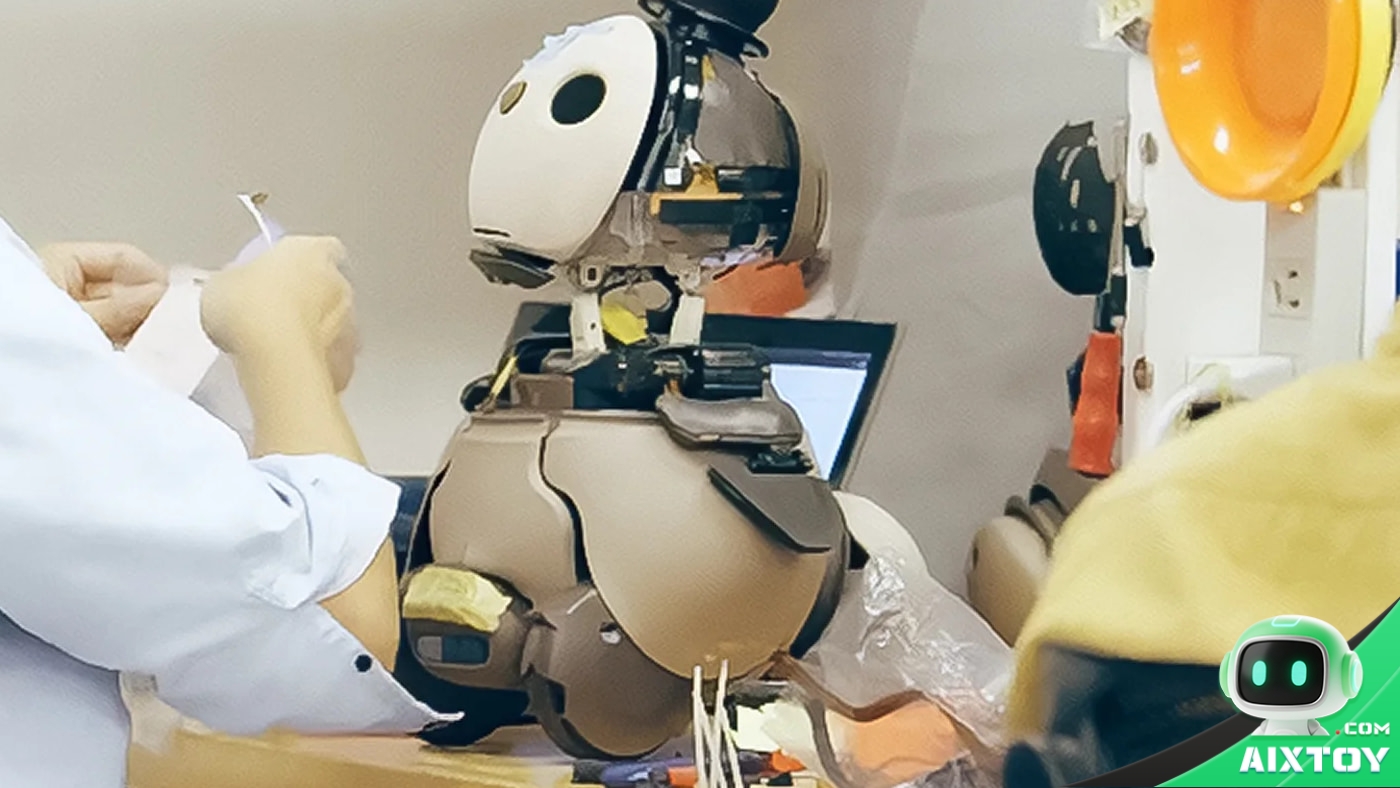
A price can be cut in a single product cycle. Three months of somebody’s daily attention cannot be manufactured, and cannot be discounted. That is the asymmetry the new entrants are working against, and it is why the question at the end of the source material is the right one: are you building an ornament that moves, or a relationship that has to be raised? The first is finished the day it ships. The second is a long-term business, and the long term is exactly what a price war is designed to interrupt.
What this means if you are buying one
Range, sensors and model size converge fast. Time does not. So the useful questions are not on the spec sheet.
What happens in month four? Not week one — month four, when the novelty coverage is gone and the thing is still on your desk. Ask what the previous model in the range received. If the answer is one batch of expressions and then silence, you are buying a screensaver with fur.
Is there an official wardrobe? This is the cheapest, most reliable signal in the category. A company that sells official outfits is a company that has committed to shipping new content through a physical channel, and it is telling you that the object is a platform rather than a one-off. The pattern is universal — LOVOT’s chipped garments, Kata’s warm nest, the official costume sets that now exist for desk pets at a fraction of the price.
What stops working if the subscription lapses? Ask before you pay, not after. A plan that funds cloud behaviour is a plan that turns the product into a different, worse product when it ends.
Does it ask for your time, or only your attention? Attention is what a screen takes. Time is what a creature asks for. Products designed around the second one are the ones that survive the fourth month.
At today’s prices, the practical map looks like this. Around $220 to $250 buys a genuinely good desk companion — light interaction, real personality, no expectation that you will raise it. Around $400 to $600 buys fur, movement, gaze and an official accessory line: the closest affordable approximation of the LOVOT formula, and where most buyers will actually land. Above that, you are paying for the formation system, and you should expect the maker to keep feeding it.

Ropet AI Pet Robot
$397.99
The affordable version of the LOVOT formula: fur, eye contact and a personality that responds to being handled — at roughly one twentieth of the price. It is the tier most buyers will actually land in.
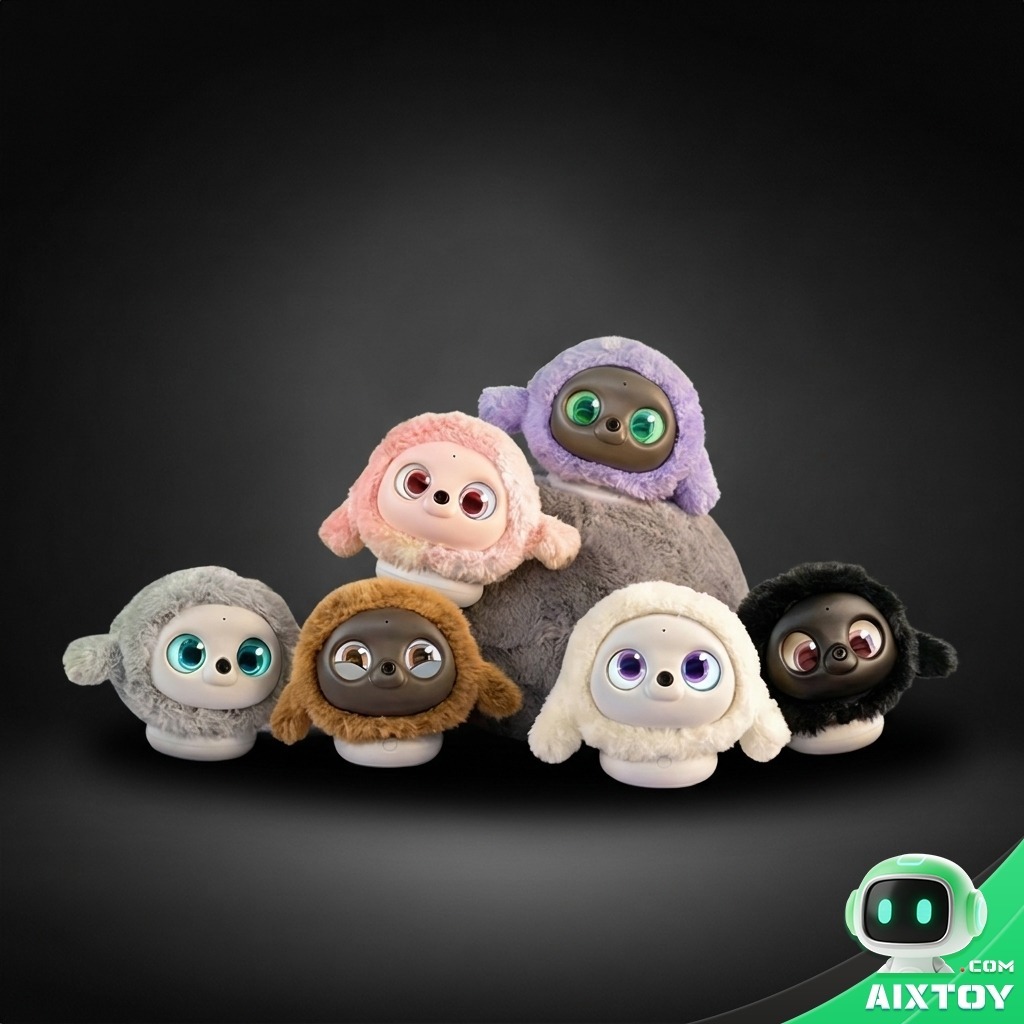
Ropet AI Pet – Official Costume Set
$65.99
The signal worth looking for in any companion product. A first-party wardrobe means the maker has committed to shipping new content through a physical channel — which is what LOVOT turned into a business.

Sweekar AI Pocket Pet
$249.99
The formation period made physical. It grows from a 6.1 cm egg into a 7.1 cm adult across four life stages, so the change happens in the object rather than only in the cloud — and you can see it with your hands.
The short version
LOVOT’s $8,900 is not a hardware price. It is the price of a three-month onboarding process, a wardrobe, and seven years of someone showing up. You can copy the shell in a product cycle. You cannot ship the three months in the box.
The Chinese price war is real, and it will work — at the tier it is aimed at. Cheaper companion robots are going to put this category into millions of homes, and most of those homes will be better for it.
But the thing being copied is the object, and the thing that made the object worth $8,900 is calendar time. That is why the most interesting number in this market is not the $8,900, or the $1,340, or the $220. It is the ninety days of daily contact an owner spends before the robot starts behaving as though it knows them.
A cheaper robot is easy. A cheaper three months is not.
Tags:Companion RobotLOVOTAI CompanionEmotional AIAi Plush ToysAi PetAI Toy IndustryAI HardwareDesktop RobotAI Toy