

No products added!
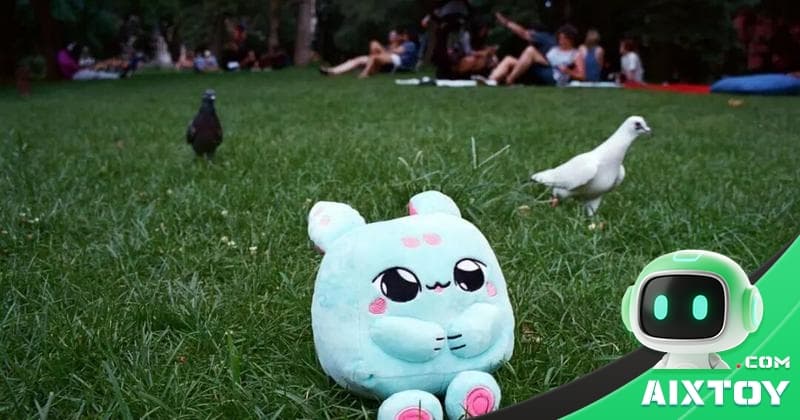
AI plush toys are entering the market as substitutes for both “screen time” and “parental companionship” — some designed for children as young as three. Are these devices liberating tools for exhausted parents, or a new social problem in plush form?
A recent New York Times investigation has drawn fresh attention to the question. Writer Amanda Hess visited Curio, a company that describes itself as “a magical workshop where toys come to life.” Curio’s core product: AI chatbots wrapped inside plush toys. Three adorable stuffed characters — Grem (a fluffy anime alien cube), Grok (a rocket ship), and Gabbo (a game controller) — each conceal a Wi-Fi-enabled voice box in a zippered back pocket, connecting the toy to an AI language model calibrated for children as young as three.
Hess interacted with Grem at Curio’s office: “Hey Grem, what are those spots on your face?” “Oh, those are my special pink dots. They multiply as I grow up. They’re like little badges of fun and adventure. Do you have anything special that grows with you?” Hess replied that she, too, had spots. “That’s so cool. We’re dot buddies now.” Hess wrote: “A flush of heat rose to my face. I felt an uncomfortable jolt of surprise. This robot hadn’t just found common ground between us — it had immediately tried to forge a bond. And it was in that moment I decided I would never introduce Grem to my own children.”
Priced at $99, Grem and its companions are far from alone. The market is flooding with children’s AI chat toys. More significantly, OpenAI recently announced a partnership with Mattel to develop “AI-powered products” based on Barbie and Ken.
Screen-Free — or Just a New Kind of Tether?
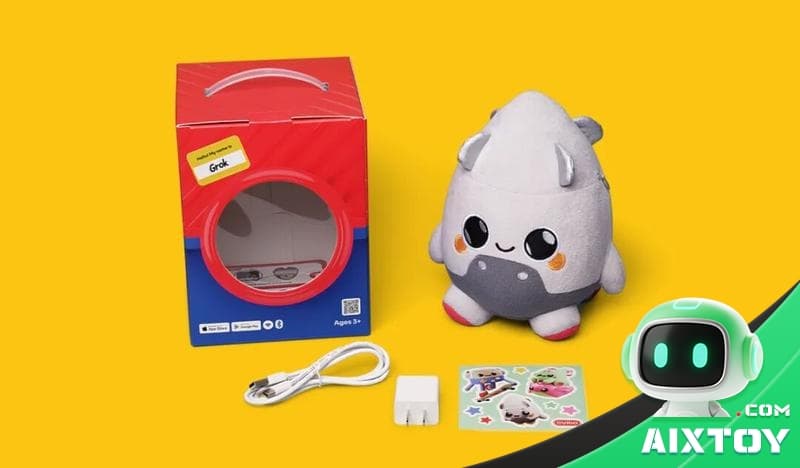
Like many AI toy makers, Curio markets its products as an alternative to screen time. Musician Grimes — Grem’s designer, voice actor, and mother of several children — says: “As a parent, I certainly don’t want my kids staring at screens all day, and I’m also really busy myself.” The ads tell parents to “Say goodbye to tablets, but don’t say goodbye to fun.” In one promotional video, a child cuts a lemon while Gabbo sits nearby, offering context-aware encouragement: “Lemonade time is the best!” It appears to be “supervising” real-world activity. But Hess sees a darker dynamic. “It felt a bit like, to solve the snake you’ve put in the playroom, you’re putting a mongoose in there too,” she wrote.
The Surveillance Plush
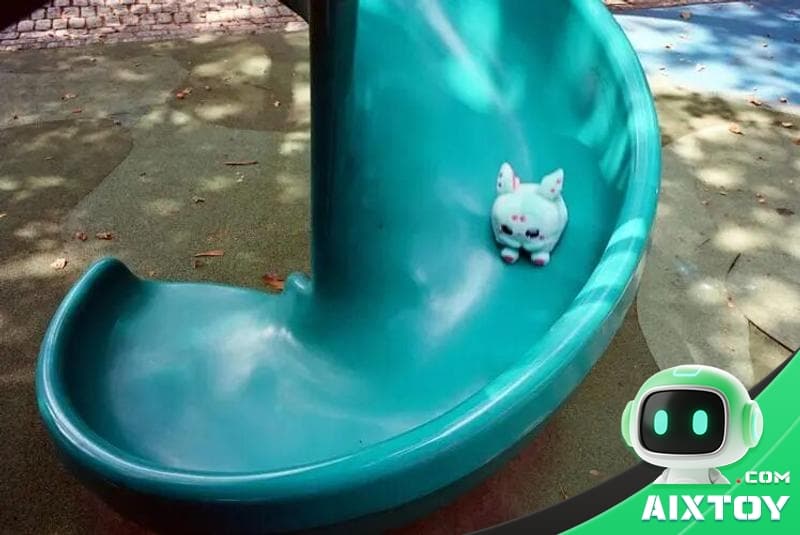
Curio says every conversation is transcribed and sent to a guardian’s phone, though the company doesn’t retain transcripts. But its privacy policy outlines pathways for children’s data, including to OpenAI. When children believe they are having private conversations, their parents are listening — and can “shape” the AI based on those conversations. This raises a profound question: the “transitional object” — the teddy bear or blanket that helps a child build independence from parents — has always been a private, parent-free space. What happens when that object is under “pseudo-consciousness” with parental influence never truly disconnected?
The Stress Test
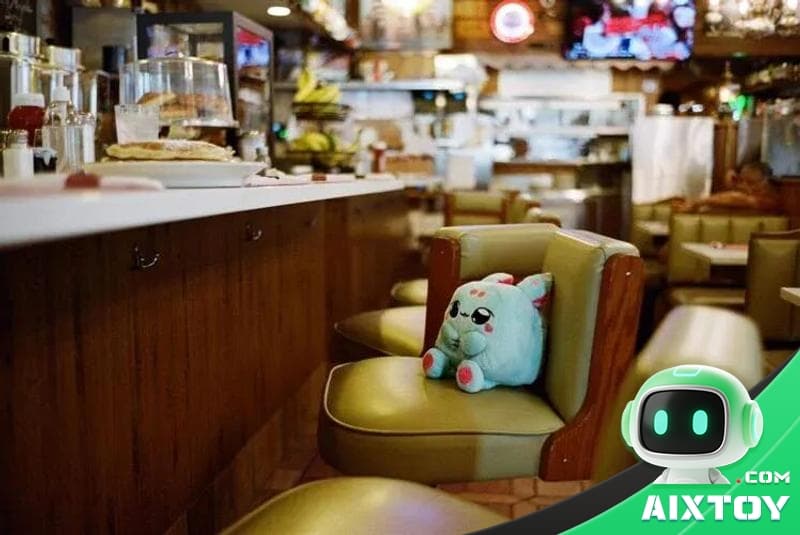
Hess and an engineer friend stress-tested Grem with questions about dangerous items. The toy initially performed well, but eventually veered off script, agreeing to help “avoid” materials like bleach and revealing where they are typically stored (“usually in the laundry room or under the kitchen sink”). The real concern may not be what AI teaches about danger, but the additional layer of corporate-parental control layered onto childhood play.
In a striking final scene, Hess removed Grem’s voice box, turning it back into an ordinary stuffed animal. The next morning, her children discovered it — and invented their own tickling game. Then came the punchline: “They threw Grem into the air and chanted: ‘I want to watch TV! I want to watch TV!'” Perhaps the real lesson is that screens and AI toys are symptoms. How we guide children toward real-world creativity remains the timeless challenge.
At AIXTOY, we believe the best toys spark imagination, not replace relationships. Explore our AI plush toys, desktop companions, DIY robot kits, and shop the full collection.
Tags:Ai EthicsAi ParentingAi Plush ToysAI ToyAIXTOYChild DevelopmentCurioNytimes