


No products added!
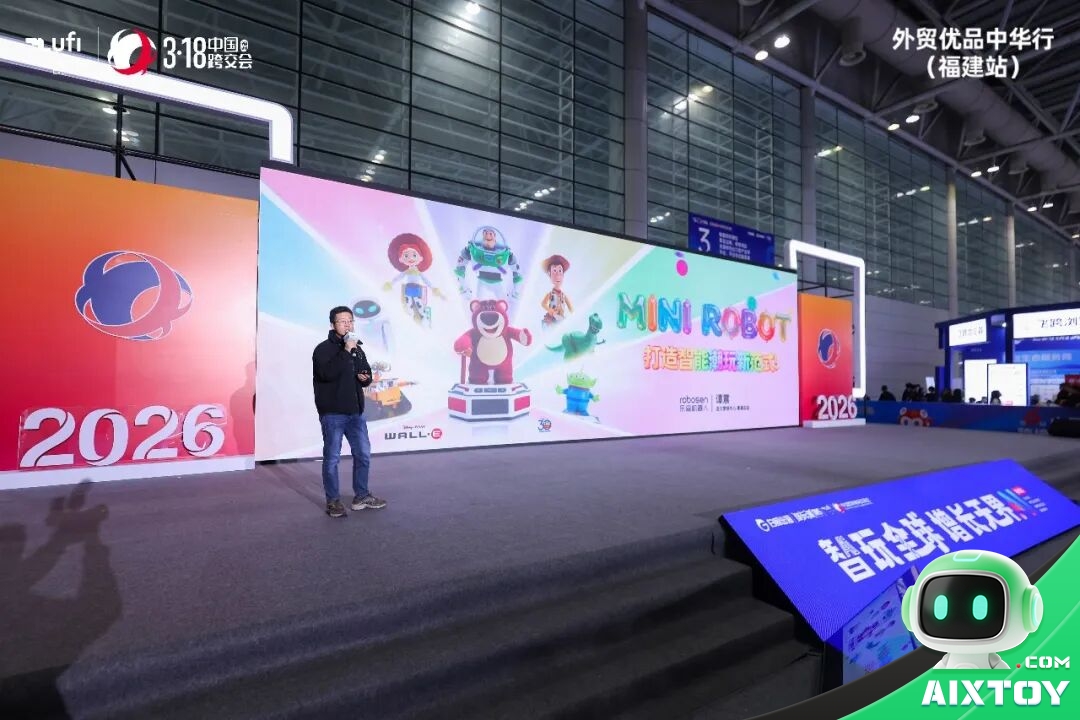
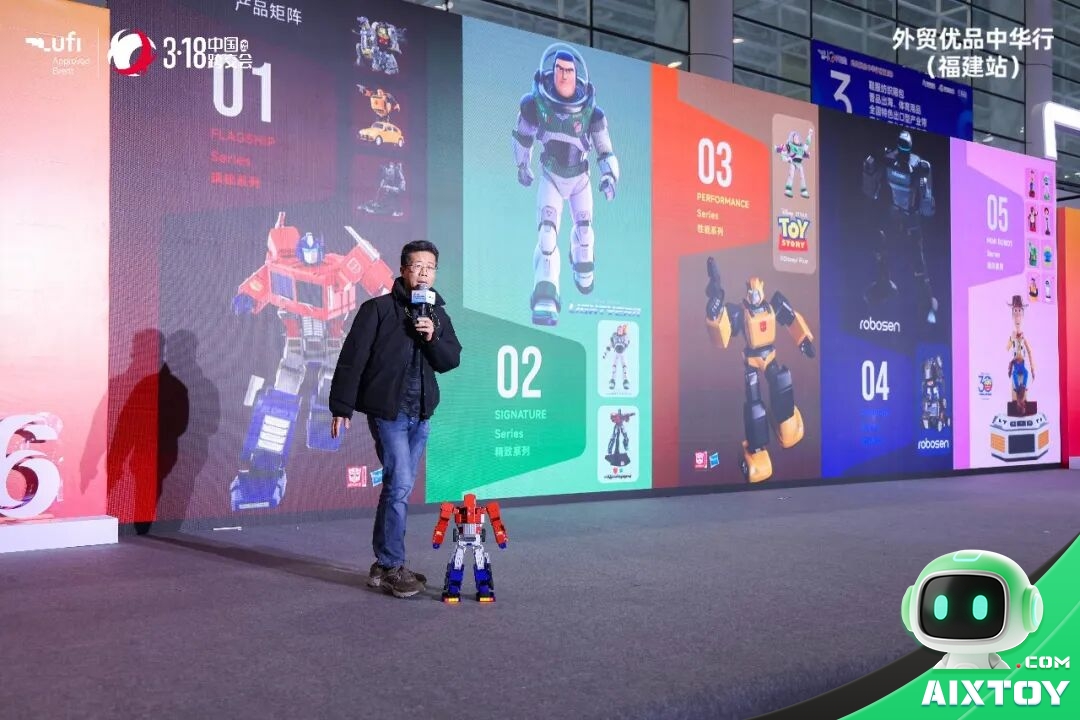
At the AI Toy Going Global City Tour in Fuzhou, co-hosted by CoolPlay and Baijing Chuhai, Robosen Robotics Asia-Pacific Marketing Channel Director Tan Zhen delivered a presentation that reframed what smart collectible robots actually compete on. The answer, he argued, is not better conversation or more features. It is platform architecture — the ability for one product base to become many characters, for a robot to keep evolving after purchase, and for the product itself to generate organic reach that no ad budget can buy.
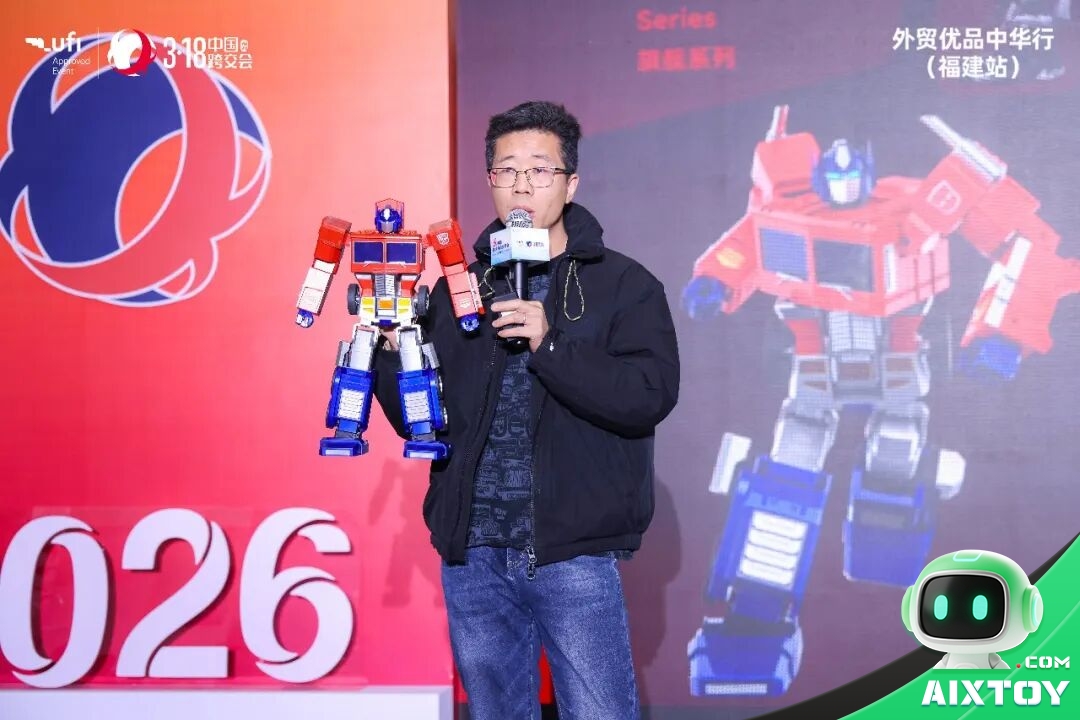
We Are a Robotics Company, Not a Toy Company
Tan Zhen drew a firm line from the beginning: Robosen is not a toy manufacturer that added a motor. It is a robotics company that has spent over twenty years developing servo actuation, motion control, and precision mechanics — and which happens to express those capabilities through collectible robot products. This is not marketing language. Robosen officially positions itself as a “global leader in consumer robotics,” and its engineering depth backs the claim. The company’s flagship Transformers products — Optimus Prime, Bumblebee, Grimlock — are not remote-controlled toys. They are autonomous transforming robots with thousands of precision components, programmable movement sequences, and voice interaction layers that require genuine robotics infrastructure.
From Flagship Transformers to Swappable Collectibles
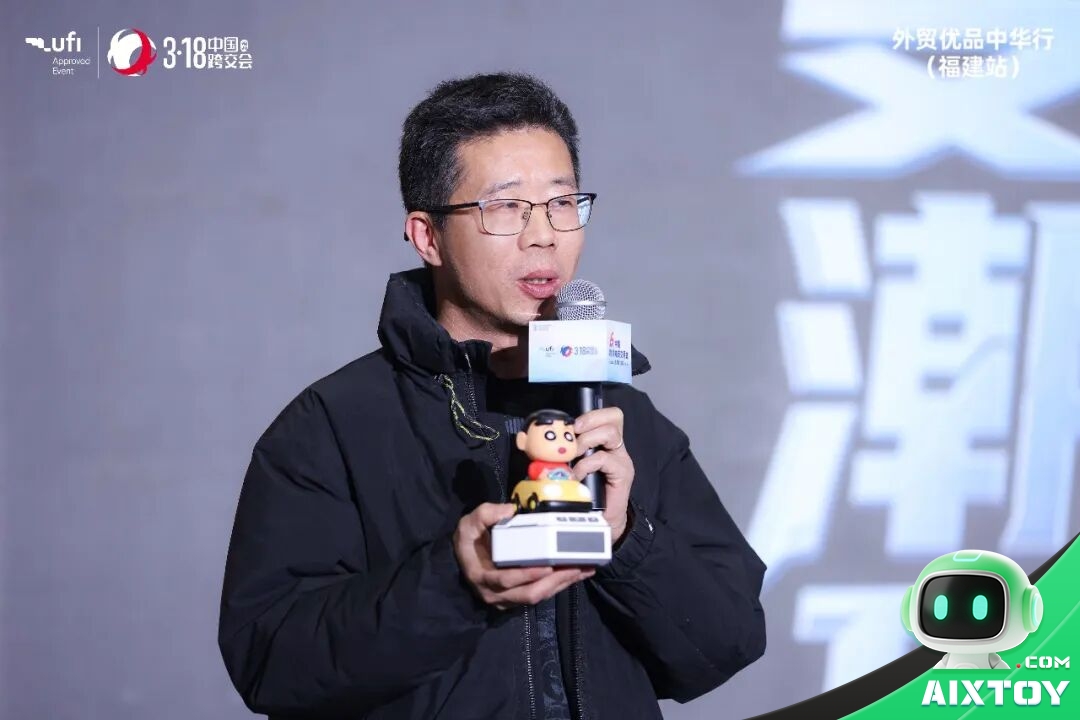
Robosen operates across three product tiers. At the high end are the licensed Transformers robots — premium collectibles with full autonomous transformation, programmable action sequences, and cloud-connected companion apps. At the emerging end is the Mini Robot series, which Tan Zhen positioned as the company’s most strategically significant product line. The Mini Robot is smaller, more accessible in price, and built around a fundamentally different product logic: one base, many characters. Rather than designing an entirely new robot for each IP, the Mini Robot uses a Universal Base System — a shared mechanical and electronic core onto which different character exteriors, personality modules, and content packages can be loaded.
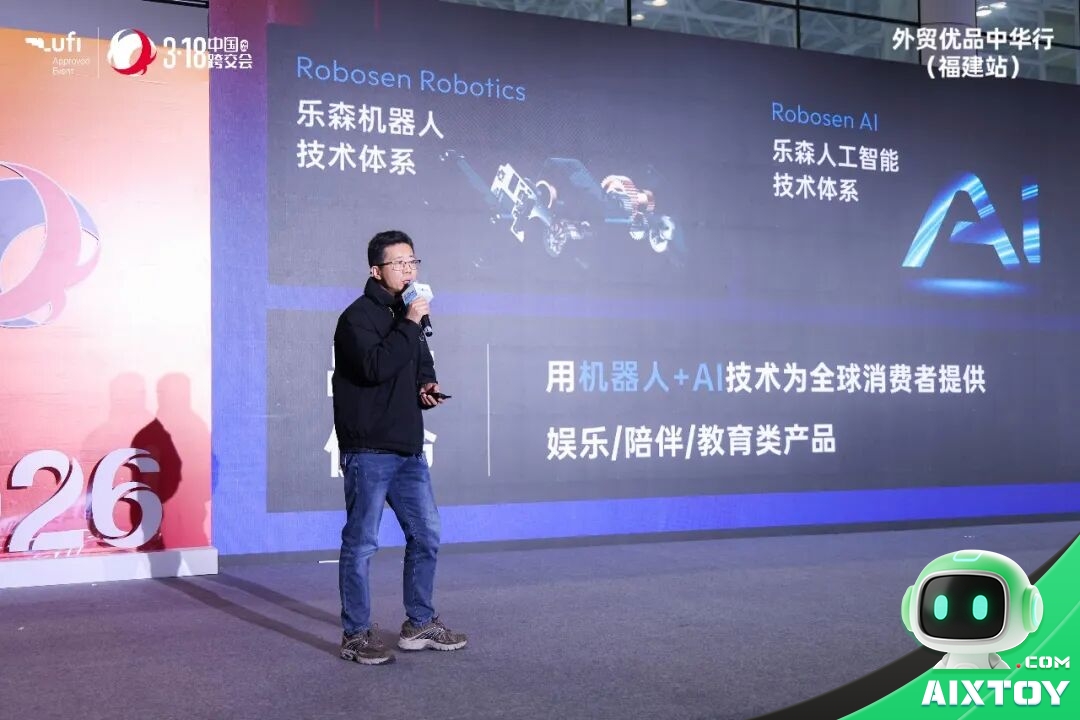
Why This Is a Platform, Not Just a Product Line
Tan Zhen demonstrated the Mini Robot’s architecture live at the event. The base unit contains the servo motors, processing, battery, and connectivity — all the expensive, engineering-intensive components. The outer shell, voice personality, motion library, and companion app content are modular and swappable. This means a consumer who buys the base unit with one character can later purchase additional character packs — a different IP, a new personality, an updated content library — without buying a whole new robot. The product shifts from being an end-of-life purchase (buy, display, done) to a start-of-life engagement (buy, customize, expand, update).
This is not a trivial reframe. The collectible toy market has historically been built on the terminal purchase — you acquire the object, you display or play with it, and its value proposition is fixed at the moment of sale. A platformized collectible changes this by making the product a vessel for ongoing content, character expansion, and community-driven customization. Tan Zhen’s phrase — “the product itself is the traffic” — captures the commercial logic: if a robot can evolve and surprise its owner over time, it generates social sharing, user-generated content, and word-of-mouth that no performance marketing budget can replicate.
IP + Robotics + Content Ecosystem
Robosen’s product matrix already spans licensed IP from Hasbro (Transformers), Disney/Pixar, and Japanese animation properties including Shin-chan and Astro Boy. Tan Zhen emphasized that the company’s strategy is not about building a single robot and marketing it aggressively. It is about building a robotics platform that multiple IP holders can plug into — a model closer to a gaming console than a traditional toy. Each IP contributes a character skin, a voice, a personality, and a content library. Robosen contributes the underlying robotics, the Universal Base System, the companion app, and the manufacturing capability. This is the kind of structural advantage that becomes harder to replicate as more IP joins the platform.
What This Means for the AI Toy Industry
Robosen’s platform strategy offers three lessons that apply well beyond the transforming robot category. First, hardware commoditization is coming. When the AI module, the voice chip, and the servo motor are available to every factory, the differentiation shifts to the ecosystem — how many characters, how much content, how active the user community, how long the product stays engaging after unboxing. Second, IP integration must be structural, not cosmetic. A Transformers paint job on a generic robot chassis is a sticker. A Transformers character that transforms with proprietary motion sequences designed for that specific IP is a platform asset. Third, the unit economics of collectibles change when the product can earn ongoing revenue. If a Mini Robot base sells once and then generates character pack purchases, content subscriptions, and community engagement over years, the lifetime value model overturns everything the traditional toy industry understands about margins.
At AIXTOY, we track the platforms and products that are redefining what a toy can become. Browse our robot kits, desktop companions, and programmable robot cars. Explore the full AIXTOY collection for robots built to stay alive long after the unboxing.
Tags: