


No products added!
There are rumors circulating that Xiaomi has greenlit an internal project to enter the AI toy space at scale. The conversation around this has been predictable — another consumer electronics giant expanding its ecosystem, another product category to capture. But it misses the bigger picture entirely.
It is not just Xiaomi that needs an AI toy strategy. Every automaker and smart device manufacturer should be building an intelligent companion accessory — right now. Not as a branded merchandise afterthought. Not as a marketing gimmick. As the missing emotional module in their product architecture.
Here is the core argument.
The Passenger Automakers Keep Ignoring
When automotive companies build user personas, they fixate on the driver: 25 to 35 years old, male, technology enthusiast, household income in a certain bracket. These models are methodologically sound but strategically incomplete. The moment a vehicle is positioned as a “family SUV” or a “dad car,” the actual decision-making weight and emotional weight shifts. A significant portion of it moves to the back seat — to a small person who cannot articulate a purchase rationale but who wields veto power over every family car decision for the next decade.
Ask a parent why they chose a particular brand and they might not give you a coherent answer. But their four-year-old will tell you with perfect clarity: “Because the bear in that car talks to me.”
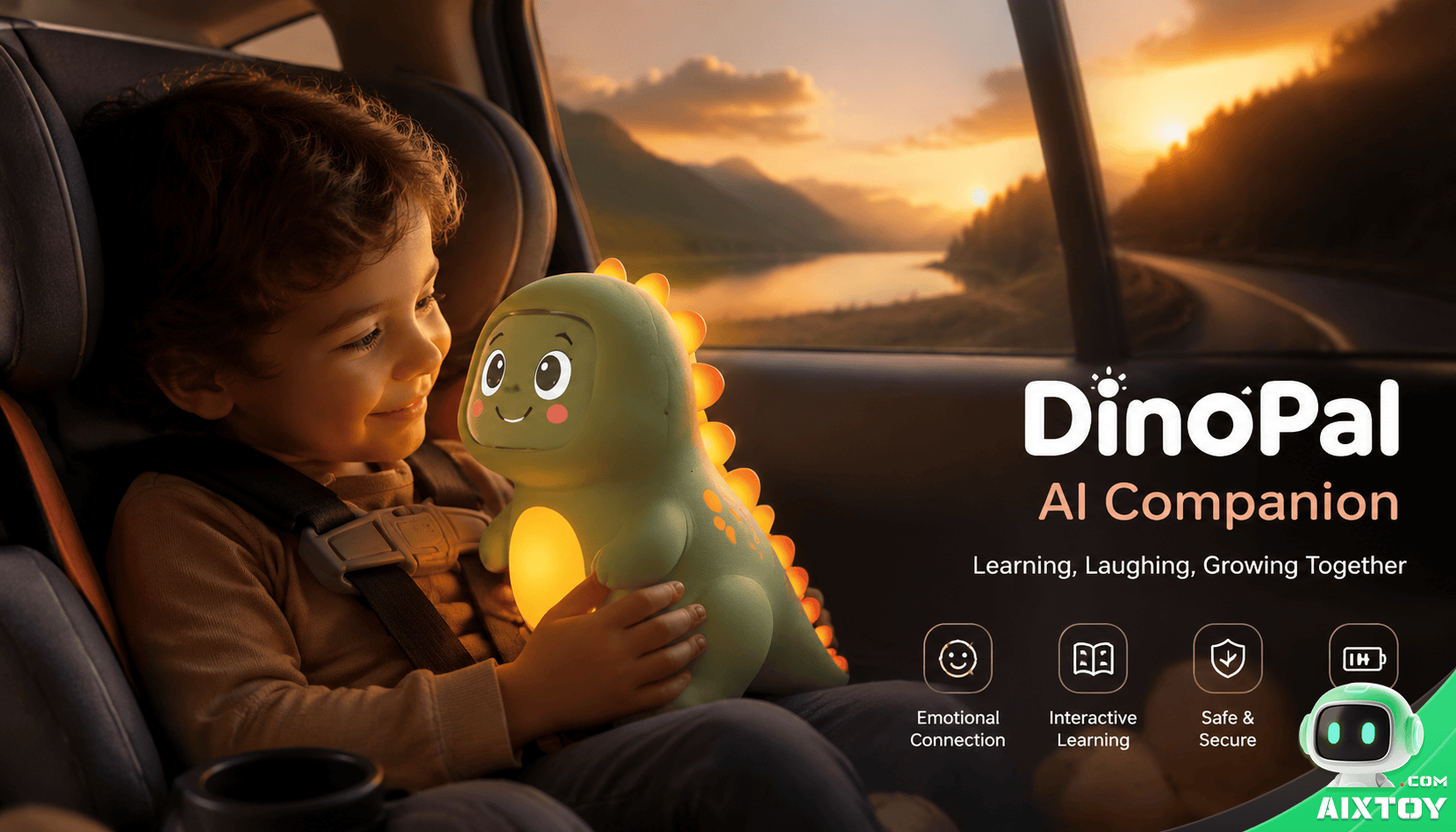
Whoever captures a child’s emotional loyalty captures that family’s brand preference for ten, fifteen, possibly twenty years. This is not achievable through a larger infotainment screen, a faster ADAS processor, or a marginal improvement in kWh efficiency. Technical specifications do not generate attachment in a five-year-old. But a companion that speaks their name, plays hide-and-seek through seat-back interactions, and whispers a bedtime story when the drive runs late — that does. That builds the kind of brand loyalty that no OTA update can match.
Automakers Already Have the Technology. They Just Have Not Packaged It.
This is the part that should frustrate any product strategist reading this. Car companies do not lack the technical capability to build intelligent toy companions. They have it, deployed and functioning, right now. Voice wake-up, natural language dialogue, emotion recognition, multimodal interaction — these are standard features in modern smart cockpits. The R&D investment behind them runs into the hundreds of millions.
And where is this investment being deployed? Reporting the weather to an adult who already checked their phone. Adjusting the air conditioning by two degrees. Reading a text message aloud while the driver stares at the road.
Meanwhile, the passenger most receptive to AI companionship — the one who would form a genuine emotional relationship with an interactive character — sits in the back holding a mute plastic dinosaur. This is not product discipline. This is misallocated innovation. It is the equivalent of owning a professional recording studio and using it exclusively as a kitchen timer.
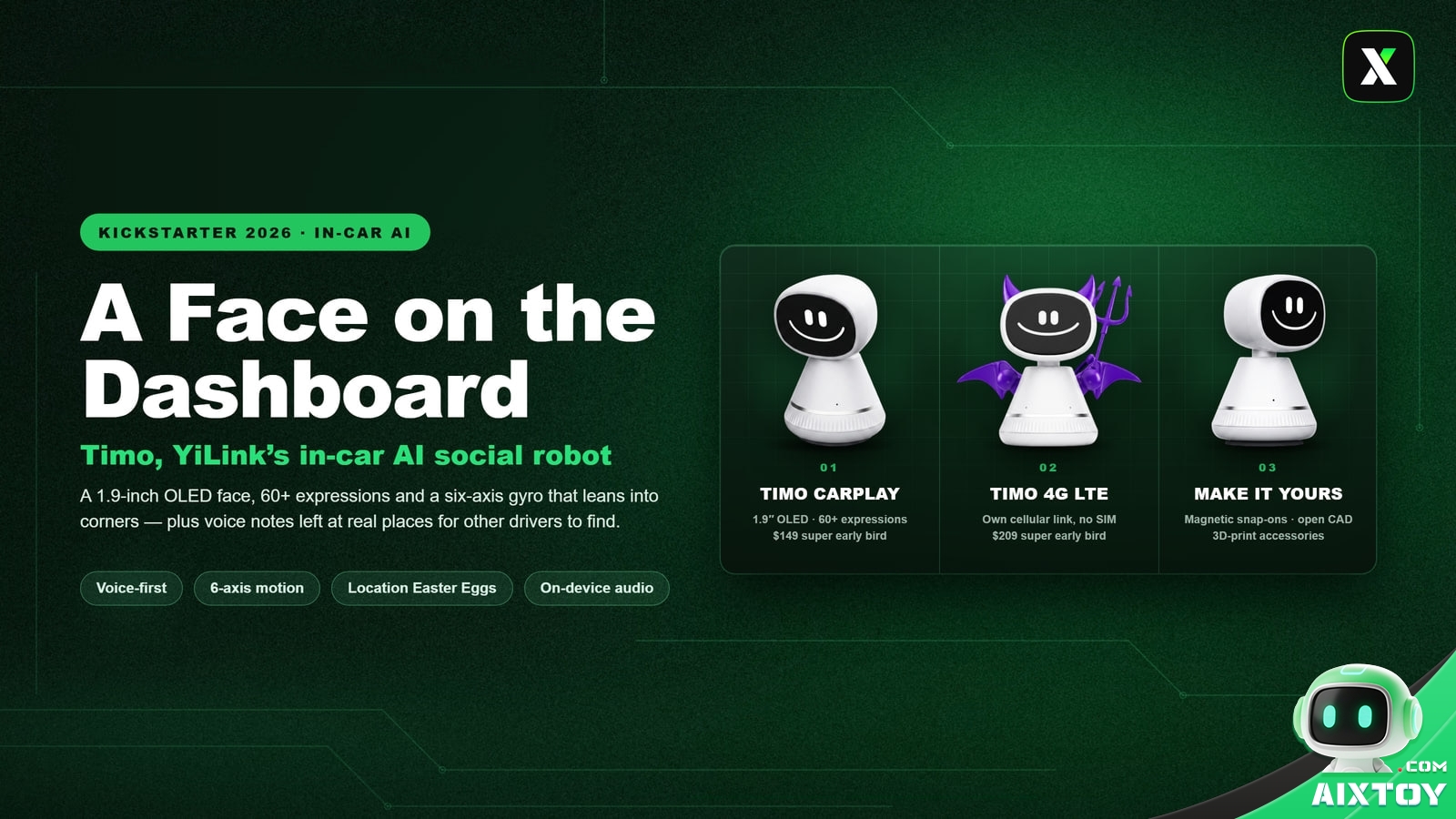
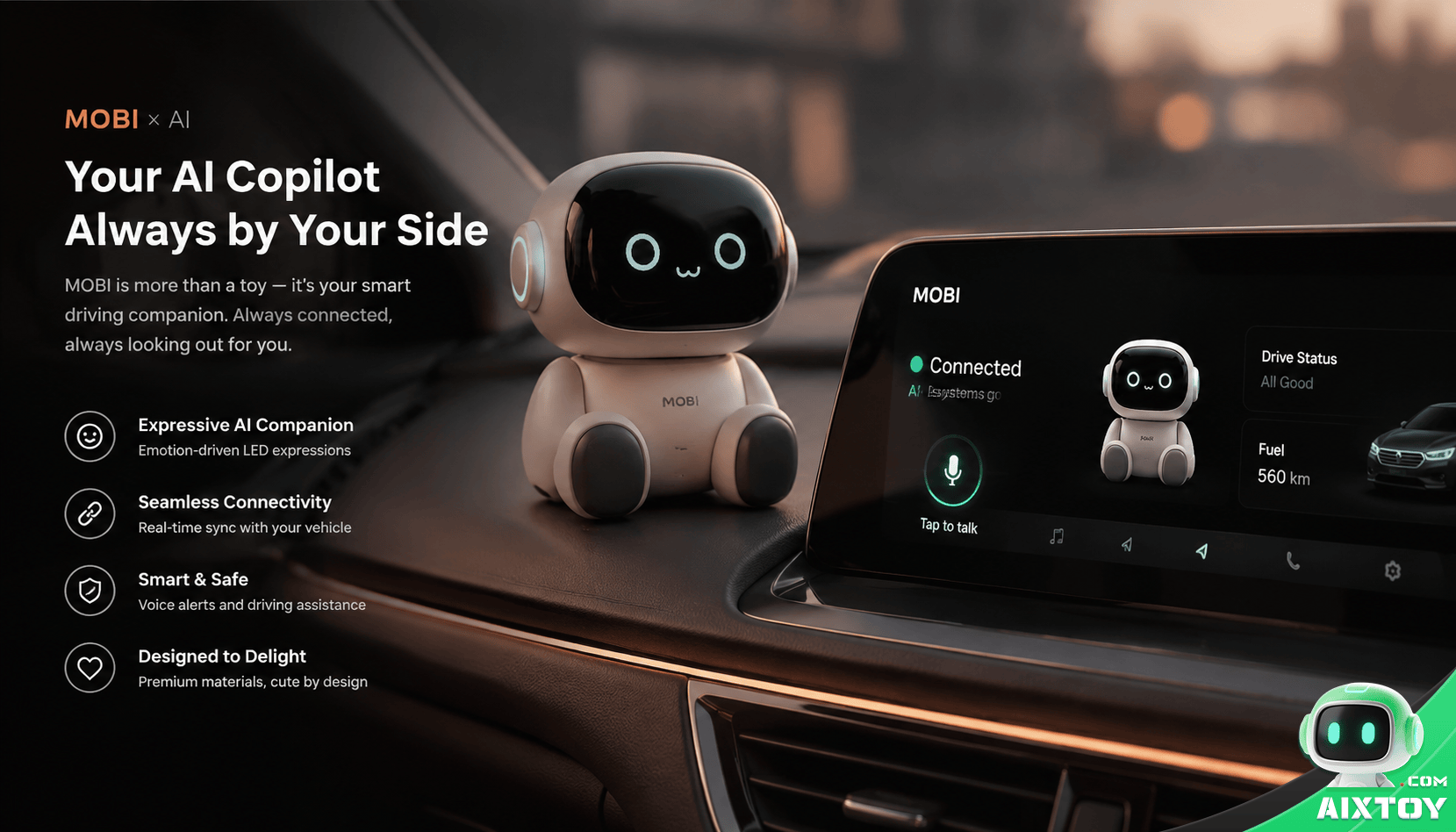
The cost to fix this is negligible in automotive terms. A compact companion device integrating a voice module, Bluetooth LE connectivity, and basic spatial interaction — perhaps with a soft-touch exterior designed for small hands — would carry a BOM cost under twenty dollars. The emotional return on that investment, measured in brand preference across an entire household lifecycle, is incalculable.
From Vehicle Manufacturer to Family IoT Hub
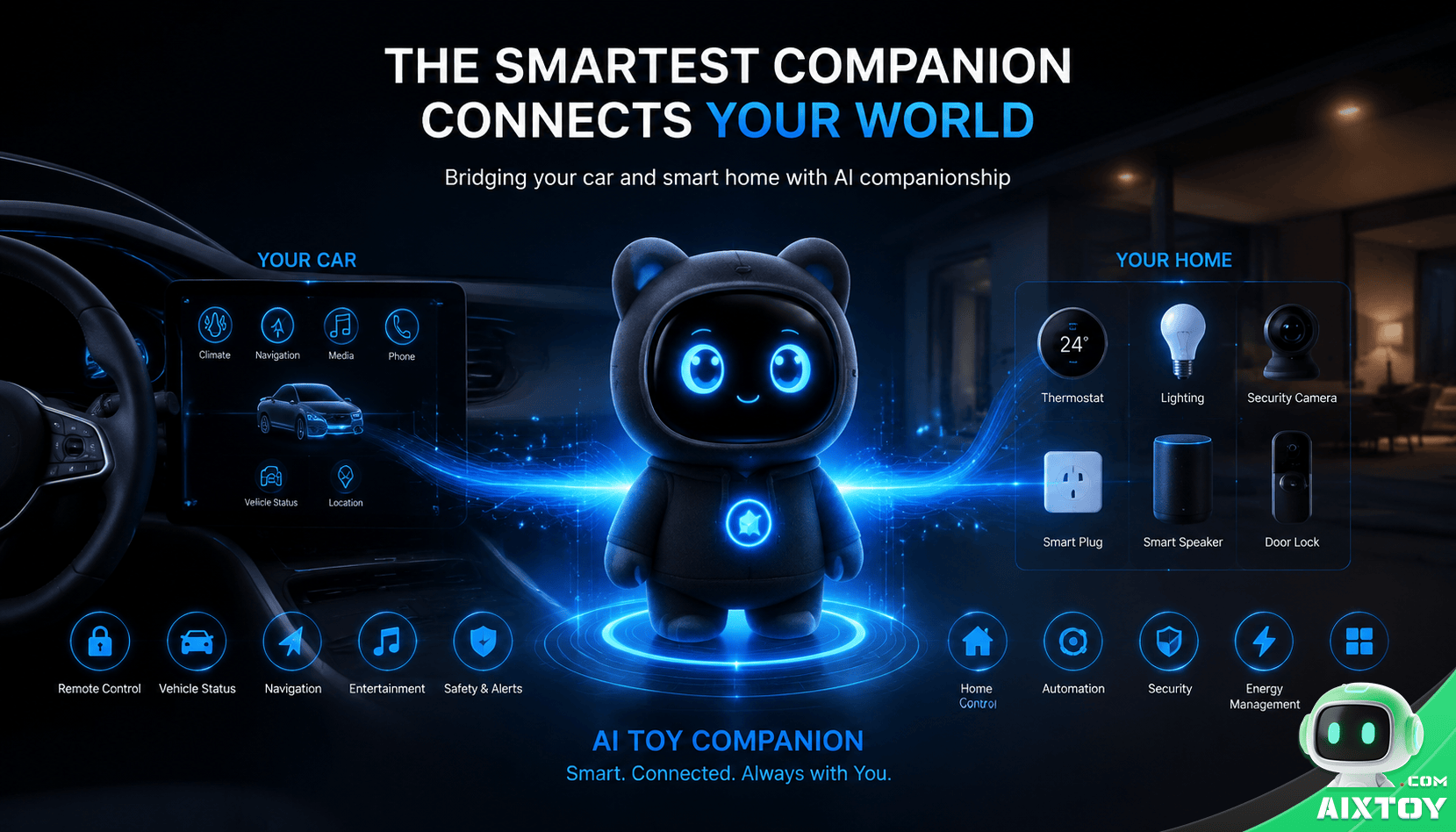
The people who dismiss this as “carmakers making toys” are missing the strategic architecture beneath the surface. An AI companion that integrates with the vehicle’s host system is not an isolated product. It is the key that unlocks the family IoT ecosystem — with the car as its central node.
Consider the data flow. The companion learns the child’s preferences through in-car interactions: favorite songs, storytelling patterns, emotional responses to different types of content, daily routines. It carries this context out of the vehicle — to kindergarten, to the living room, to the bedside. At home, it synchronizes with smart speakers and ambient systems to continue an unfinished story from the morning commute. The vehicle becomes the origin point of a continuous emotional experience that extends far beyond the driveway.
This transforms the automaker’s business definition from “transportation equipment manufacturer” to “family emotional continuity provider.” The product being sold is no longer steel, lithium, and software licenses. It is the uninterrupted thread of a child’s relationship with a character — a thread woven through car, home, school, and bedtime. Once established, the switching cost is not measured in dollars. It is measured in the impossible conversation of telling a child that their companion disappears because the family chose a different car brand.
No charging network, no autonomous driving stack, no battery chemistry breakthrough can replicate this moat. It is built on emotional attachment, and emotional attachment is the most durable competitive advantage in any consumer market.
Addressing the Obvious Objections
The objections write themselves: this is a distraction risk, it is not “on-brand” for a serious automaker, it belongs in a toy store — not a vehicle specification sheet.
Safety: The real danger in a family vehicle is not a child engaged with an interactive companion. It is a bored, restless child whose escalating distress diverts the driver’s attention from the road. An intelligent companion that captures and holds a child’s focus — adapting its content to the child’s emotional state, providing soothing interactions when agitation rises — is not a distraction. It is an active safety system operating on the vehicle’s most unpredictable variable: a small human in the back seat.
Brand fit: There is a specific kind of engineering culture that equates “serious” with “emotionally sterile.” This is not sophistication; it is a failure of imagination. The most powerful brand moment an automaker can engineer is the one that happens without any marketing spend: a child receiving a birthday greeting from their car-synced companion, complete with a personalized message and a memory of shared journeys. That is not a gimmick. That is the highest form of brand-building — the kind that happens inside a family’s private emotional life, unreachable by any advertising campaign.
The Coming Shift: From Horsepower to Heart-Share
The next decade of automotive competition will not be decided by zero-to-sixty times, NEDC range figures, or TOPS benchmarks. These metrics are entering the commodity zone — important but undifferentiated. The next frontier is what we might call emotional granularity: the ability to deliver precisely the right emotional experience in precisely the right micro-moment, across every passenger in the vehicle.
Children are the most sensitive detectors of this quality. An adult might tolerate a sterile cabin experience because the horsepower numbers are impressive. A child will simply decide — with absolute, unrecoverable certainty — that this car is boring, and the next family vehicle purchase will tilt accordingly. The automaker that recognizes children as primary stakeholders rather than incidental passengers wins the long game by default.
The First Mover Window Is Open
This is not a speculative, five-year-horizon prediction. The technical components are already in production vehicles. The manufacturing cost is trivial. The distribution channel exists — every new car delivery is a distribution event. The only missing piece is the product decision to package existing capabilities into a physical companion form factor and position it as a core element of the ownership experience, not an accessory.
An automaker could ship this as a standard inclusion with every family-oriented trim level tomorrow. They could make it a loyalty program benefit, a configurator option, a delivery-day reveal that transforms a transaction into a memory. The child opens the box. The companion lights up and says, “Welcome to our family.” At that moment, the brand has won something that no comparative review, no spec sheet, and no price promotion could ever achieve.
Someday — sooner than most product planners expect — consumers will not ask about acceleration or processing power. They will ask a simpler, more consequential question: “Does this car make my family happy?”
The AI companion that makes a child laugh in the back seat is the most honest, most powerful, and most commercially defensible answer to that question. The only remaining question is which automaker will answer it first.
Explore AI companions, smart toys, and connected play at AIXTOY Shop.
Tags:AI CompanionAI Toy Car CompanionAIXTOYAutomotive AI ToyConnected Car IoTEmotional AISmart Car ToySTEM Toy