


No products added!
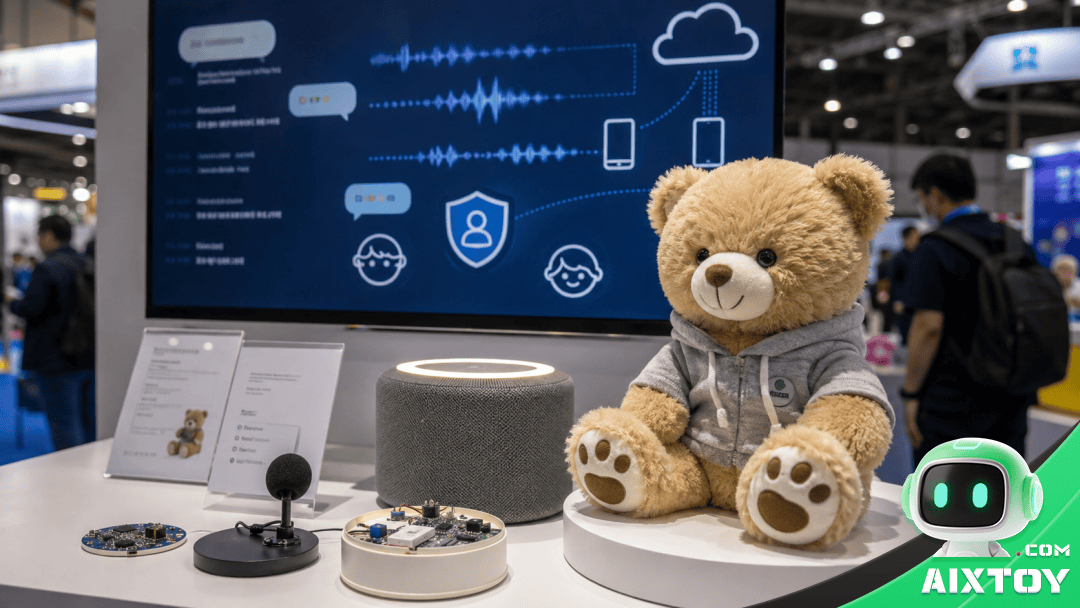
At Spielwarenmesse 2026 in Nuremberg, AI toys were no longer a curiosity tucked into a corner booth. The trade fair officially named “AI Loves (to) Play” as one of its 2026 ToyTrends, describing a category of products that do more than react — they recognize preferences, help children solve tasks, tell stories, and evolve with the user over time. For an industry that has spent decades optimizing plastic molding and supply chain logistics, this is a genuinely new kind of product. But the more significant signal at the show was not the toys themselves. It was the infrastructure arriving to build them.
Tuya Smart, the IoT platform giant, used Spielwarenmesse to launch a comprehensive AI toy solution — a packaged development pathway covering hardware design, AI model training, multilingual support, content safety, and cloud management. This is not a single-product announcement. It is a structural shift. AI toy development, which until recently required assembling a bespoke team of engineers, linguists, and compliance specialists, is being turned into a purchasable service. The implications for every player in the toy industry — brands, IP holders, factories, and retailers — are immediate and far-reaching.
The Question Every Toy Company Now Needs to Answer
Before Tuya and similar platform players arrived, the default question for a toy company exploring AI was straightforward: what product should we build? An AI plush? A desktop companion? A storytelling device? But when AI capabilities become as purchasable as plastic pellets, the question shifts. The right one is: which layer of the AI toy stack do we actually own?
There are two fundamentally different games being played. The product game is what most toy companies know: industrial design, supply chain management, pricing, channel placement, packaging, and point-of-sale appeal. The system game is what AI demands: voice interaction pipelines, character personality definition, model API integration, memory architecture, content safety moderation, cloud infrastructure, parental control dashboards, data compliance across jurisdictions, multilingual localization, and ongoing post-purchase content updates. Most toy companies are built for the first. Few are built for the second. Platform solutions do not eliminate the system game. They change who plays which position.
Who Benefits First — and Who Gets Commoditized
The immediate winners of platformization are clear. Toy brands with existing product lines but no AI team — plush manufacturers, early education brands, desktop toy companies, gift-category players — can now take a single existing SKU, integrate a platform-provided AI module or AI Box, and ship a voice-enabled, personality-driven version without rebuilding their entire R&D pipeline. The first step is not launching a flagship product. It is running a live market test: does anyone actually want this toy to talk?
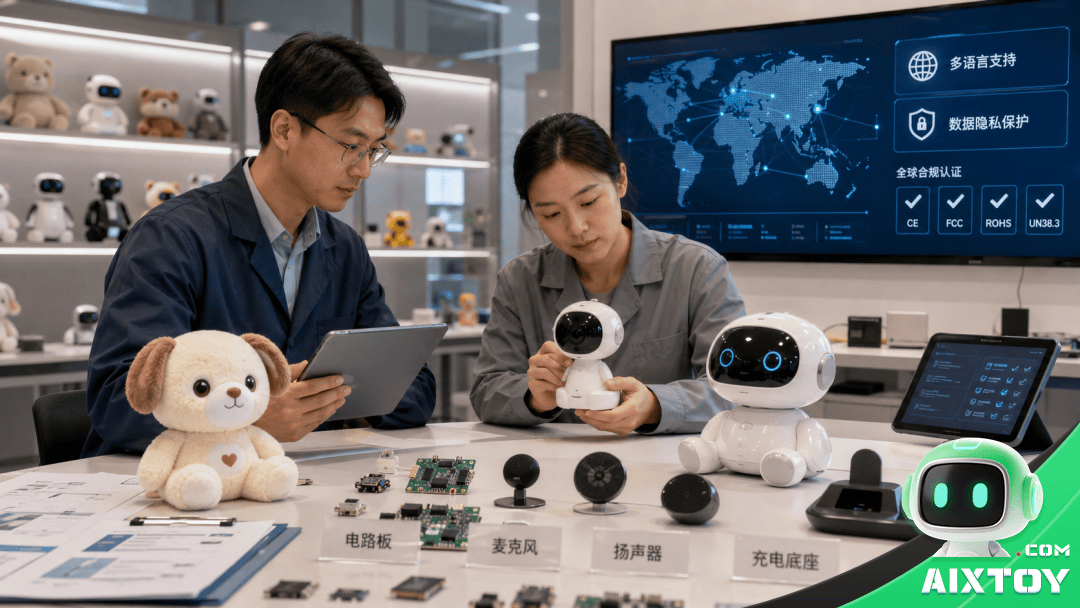
The second beneficiary is ODM factories. Historically, their value proposition was clear: fast quoting, reliable sampling, stable delivery, competitive cost. But AI toy buyers now show up with a new set of questions: can you integrate AI? Do you have an existing voice solution? Can you handle multilingual output? Is there a companion app? Does it include parental controls? Do you have overseas compliance experience? A factory that can only answer “we can do plush” or “we can do injection molding” will find itself relegated to the least valuable tier of the supply chain. A factory that can offer “appearance design + mechanical engineering + electronics + AI module + app + cloud services” as a packaged quote is no longer a factory. It is a category solution provider.
But platformization also creates a hard problem: if ten brands use the same platform, with the same modules, the same conversation style, the same parental dashboard, and the same content safety rules, what exactly differentiates their products? The AI base layer is purchasable. Brand identity is not. IP voice and personality are not. Scene-specific product design is not. Content operations capability is not. Retail channel trust is not. The platform handles the foundation. Whether anyone wants to live in the house is still the brand’s problem to solve.
The IP Trap: Do Not Outsource Your Character’s Voice
AI toys entering the IP licensing space introduce a problem that the industry has never faced at scale. Before AI, licensing an IP character for a toy meant approving visuals, colors, packaging, and marketing copy. After AI, the licensor must also approve: how the character greets users, how it comforts a distressed child, how it handles sensitive questions, whether it can make jokes, whether it can call itself a friend, whether it remembers previous conversations, how long those memories persist, whether the brand can modify the character’s tone post-launch, and what happens when the model output drifts outside character boundaries.
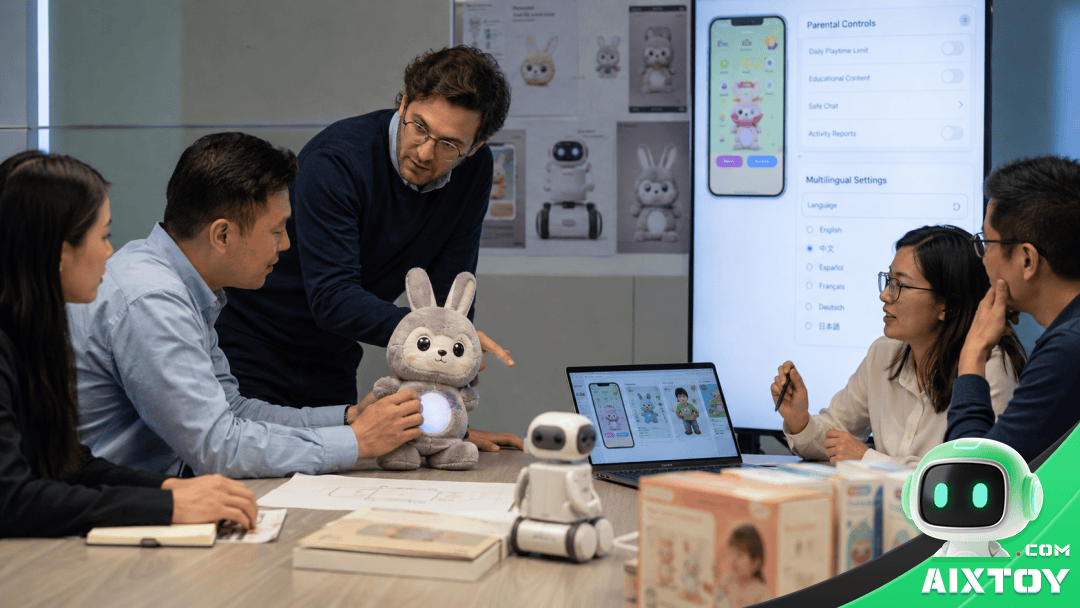
This is not an image license. It is a personality license. IP holders who hand over character voice definition to a platform provider without retaining final approval authority are not saving development time. They are giving away the single most valuable asset they own — the emotional connection between a character and its audience. The future IP contract for an AI toy will need a “character interaction specification” alongside the visual style guide. What the character can say, what it must never say, how its tone shifts when speaking to a child versus an adult versus a parent, and where the boundaries sit across education, emotion, commerce, and privacy scenarios.
Four Strategies for Four Types of Companies
If I were running a toy company evaluating platform solutions like Tuya’s, I would not start by asking about pricing. I would start by identifying which type of company I actually am:
Type 1: Product-rich, tech-poor. You have shelves full of successful SKUs but zero in-house AI capability. Your path is the platform adoption route. Pick one existing product line as a pilot — a plush, a desktop toy, an early-learning device. The goal is not to create a blockbuster. It is to answer one question: do your customers actually want this product to be interactive? Let the platform handle the AI heavy lifting while you focus on what you already know how to do — make a product people want to pick up.
Type 2: IP-rich, content-deep. You own characters, stories, and audience relationships. Your priority is not finding the cheapest platform. It is retaining absolute control over character voice, memory boundaries, story world consistency, and sensitive-topic handling. You can buy the AI infrastructure. You cannot buy back a character’s personality once it has been diluted by a generic conversation model.
Type 3: Factory-strong, delivery-proven. You know how to manufacture at scale. Your opportunity is to upgrade from contract manufacturer to AI toy ODM solution provider. Instead of selling production capacity alone, sell a bundled capability: industrial design + mechanical engineering + AI module integration + companion app + cloud services + packaging narrative + certification guidance. The factory that can offer this package is no longer competing on price-per-unit. It is competing on partnership value.
Type 4: Channel-heavy, user-connected. You own retail shelves, distribution networks, and customer relationships. Your priority is building a selection standard. Do not evaluate AI toys by whether they can talk. Evaluate them by whether the content is controllable, the parental dashboard is complete, the product can receive updates, the after-sales path is clear, and the localization and compliance are genuine rather than checkbox exercises. Your job is to be the gatekeeper that protects your customers from buying AI toys that stop being interesting after week one.
What Tuya’s Numbers Actually Mean
Tuya claims its platform can reduce development cycles by over 60%, with time-to-market as short as 15 days, and cut overall R&D costs by 30% to 50%. These are vendor-supplied figures and will vary significantly based on product complexity, mold requirements, certifications, content moderation needs, and channel demands. But the directional signal is unambiguous: AI toys are entering a fast-delivery competitive phase. What used to be a long-term R&D investment is becoming a rapid-prototype, rapid-validate, rapid-launch product cycle. The upside is that more small and mid-sized brands can experiment. The risk is a market flooded with AI toys that all feel approximately the same. When everyone can go fast, speed stops being a differentiator. What remains is product definition, character design, use-case depth, physical quality, content operations, safety boundaries, channel fit, and brand trust.
The Real Takeaway
Tuya’s AI toy solution looks like a vendor announcement. It is actually a signal that the AI toy industry is entering its platform era. Model capability, voice interaction, cloud services, content safety frameworks — all of these are becoming purchasable infrastructure. What cannot be purchased is user insight, character vitality, scene depth, brand trust, sustained content operations, channel understanding, and the intuitive sense of where an IP’s boundaries should sit.
The industry will likely split into two kinds of companies. One kind will use platforms to rapidly produce many similar products — competent, functional, interchangeable. The other kind will build on top of platforms to create products with genuine character, genuine scene fit, and genuine operational depth. The first group answers the question “can we make an AI toy?” The second answers “why would someone buy it, use it, and keep it?” Those are not the same question. The gap between them is the entire opportunity.
At AIXTOY, we watch this platformization closely because it changes the game for everyone in the value chain. From desktop companions to AI plush toys, the products that endure will be the ones where the platform enables the vision — not replaces it. Browse the AIXTOY collection to see what happens when product design and AI capability are built to serve each other, not just stacked together.
Tags:Tuya SmartAI Toy PlatformAIXTOYAI Robot ToySpielwarenmesse 2026Toy ManufacturingIP ToysDesktop RobotAI Plush ToysIoT