


No products added!

Two robot critters arrived within a week of each other. On August 27, Hugging Face opened pre-orders for Microduck, a $399 bipedal duck with roughly 15 motors. On September 2, Petoi launched Quaddle on Kickstarter — a quadruped robot dog that drives its legs with just four small servos, with a working version starting at $99.
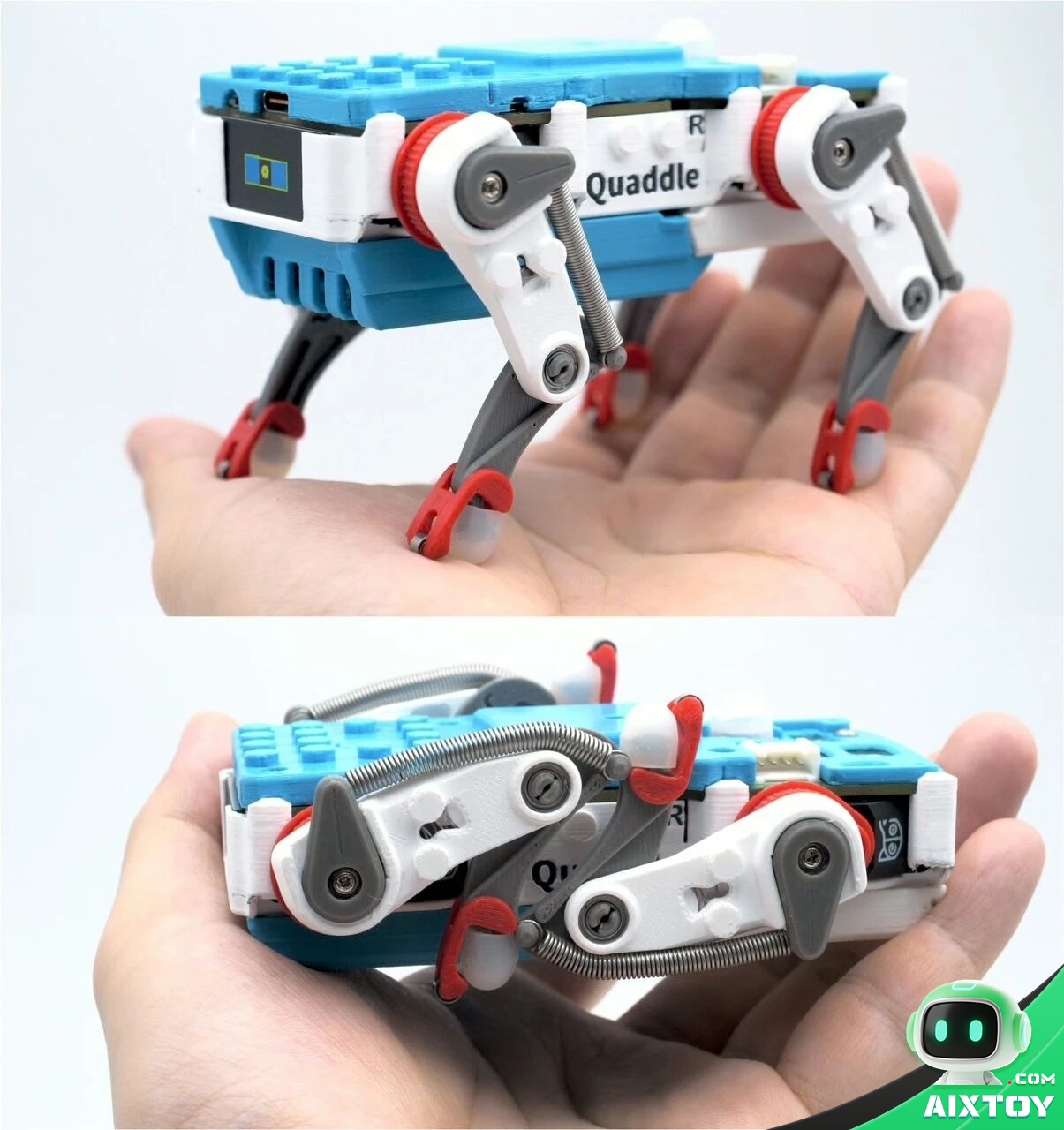
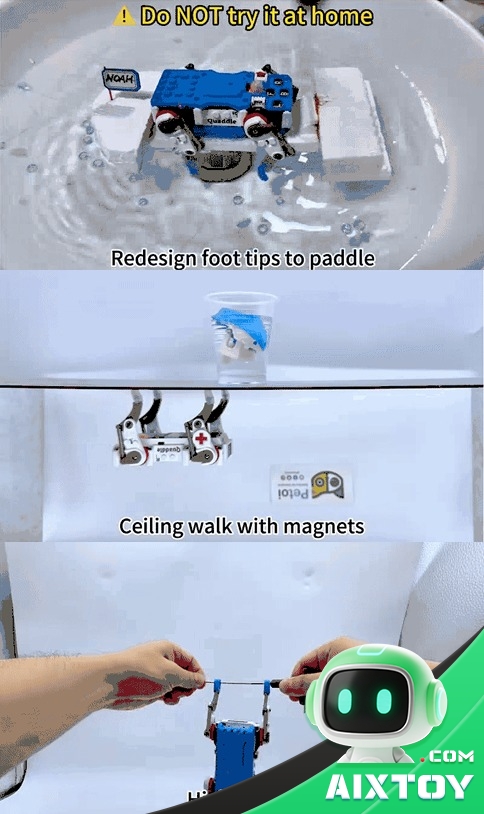
Quaddle is aimed squarely at people who have never built a robot. The entry kit walks and performs preset moves out of the box, and you arrange its behavior the way you would stack toy blocks. Petoi says the higher tiers can hold a conversation, learn movements you demonstrate by hand, and sense the room around them. Delivery is expected this December. As of early September the campaign had raised about $36,500 from roughly 175 backers.
Two Robots, Two Very Different Doors
The contrast with Microduck is instructive. Microduck hands deep modification power to developers — its SDK ships with a simulated training environment, reinforcement-learning scripts and a validated sim-to-real workflow. Quaddle goes the other way: a simpler body, a much lower entry price, and a deliberate effort to get beginners comfortable with assembling and operating a robot before they ever write code. You can swap the shell, add parts, and graduate from block-style choreography to real programming.
Both projects call themselves open source, and both are telling the truth — but they open different doors. Microduck gives you the full toolchain for changing how the robot moves. Quaddle, for now, keeps its own code private until close to delivery, and the joints themselves are not part of the open surface. One project asks how much you want to change; the other asks how hard your first step should be.
What $99 Actually Buys
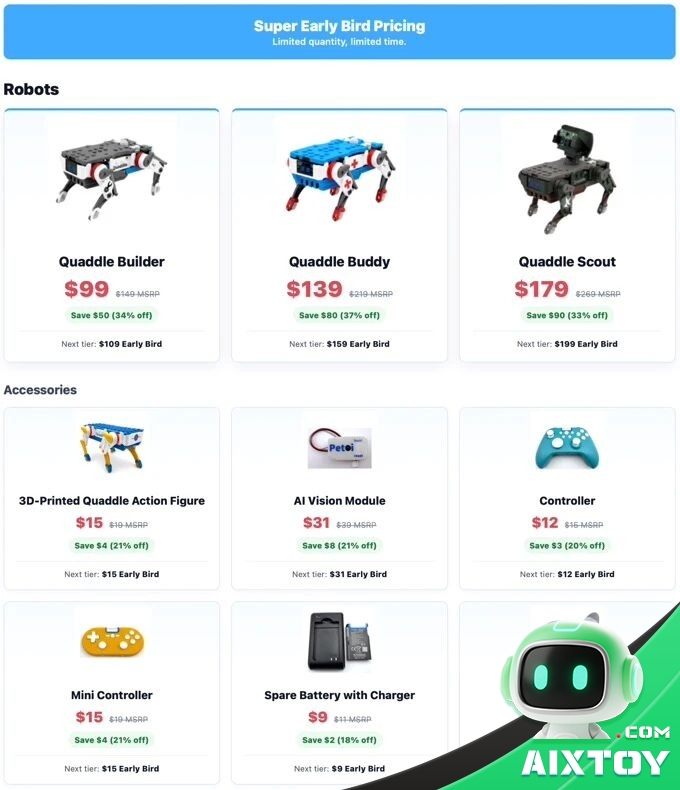
The Super Early Bird lineup explains the positioning better than any spec sheet. The Quaddle Builder is $99 — the bare working dog. The Buddy at $139 and the Scout at $179 add voice interaction and sensors step by step. Accessories include an AI vision module ($31), controllers from $12, a spare battery with charger ($9) and a smart RGB LED light ($7). A set of colorful 3D-printed legs shows where Petoi expects owners to go next: printing your own parts.
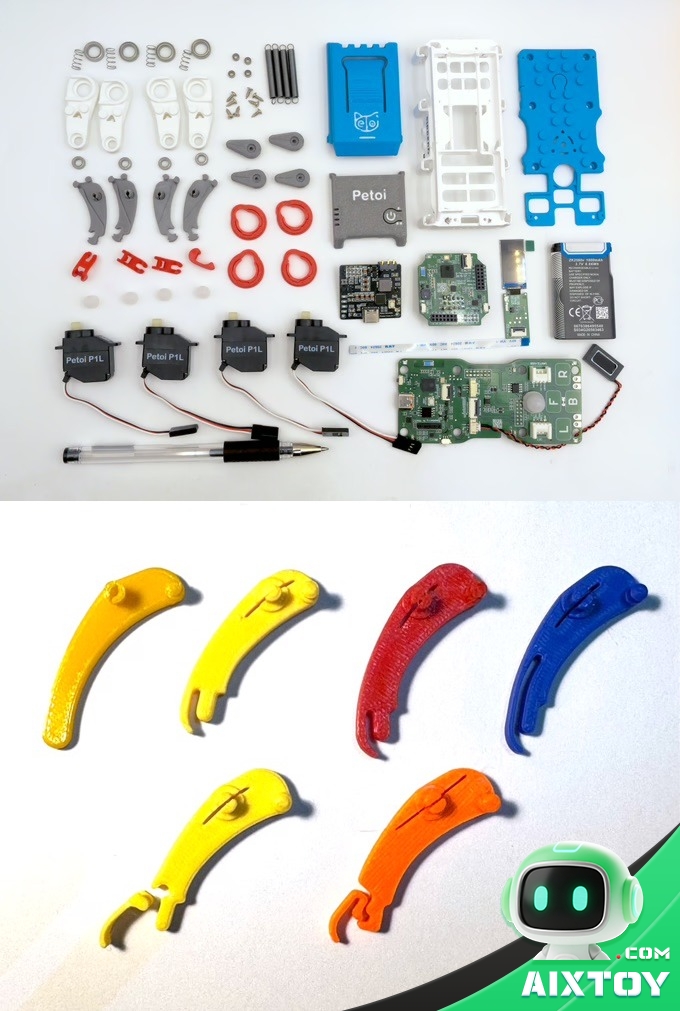
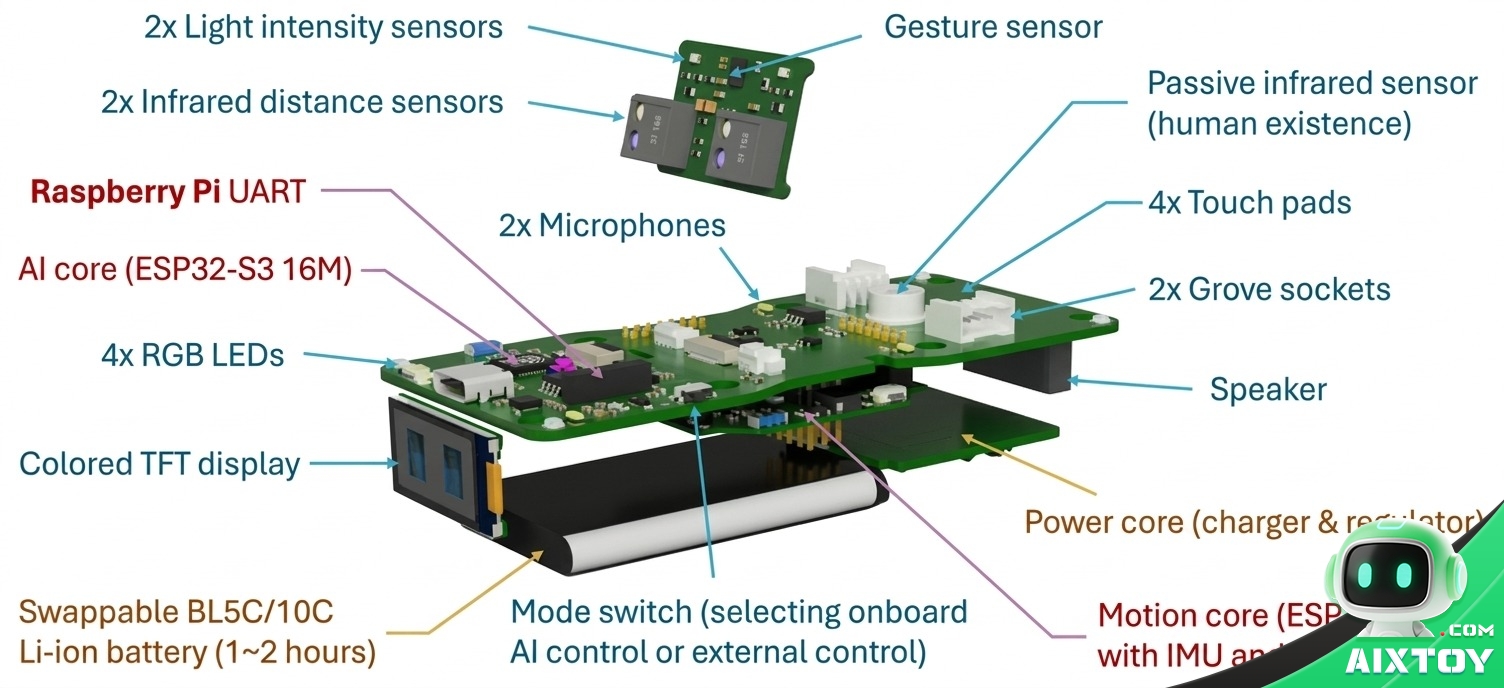
Inside, the board pairs two ESP32-S3 cores — one handling AI, one handling motion with an IMU and servo outputs — alongside microphones, touch pads, RGB LEDs, light and infrared distance sensors, and a swappable Li-ion battery. Four P1L servos do all the walking. It is an intentionally light platform: no heavy compute, no exotic actuators, just enough to teach a first robot to stand up and stay interesting.
What We Hand to the User
Spending time on companion hardware, I keep coming back to the same question: what do we actually hand to the user? A companion product does not have to make people write code. It does need to let them understand every movement — and control what the device sees and remembers. Quaddle looks like a sensible answer to that question at a price where curiosity is cheap.
Microduck and Quaddle are not really competitors. One serves the developer who wants to reshape a robot; the other serves the beginner who wants to watch a dog lift its leg and understand why. The duck and the dog are only the first step.
Quaddle is a cousin of Petoi Bittle V2, the desktop robot dog we stock — same maker, same modular philosophy, more grown-up. For more on Microduck, see our full Microduck report, and browse our desktop companion robots and AI toy buying guides. At AIXTOY we curate AI toys with genuine first-party sourcing and check every product before it ships.
Tags:QuaddlePetoiMicroduckRobot DogKickstarterOpen Source RobotBeginner RobotDesktop RobotRobot News