

No products added!
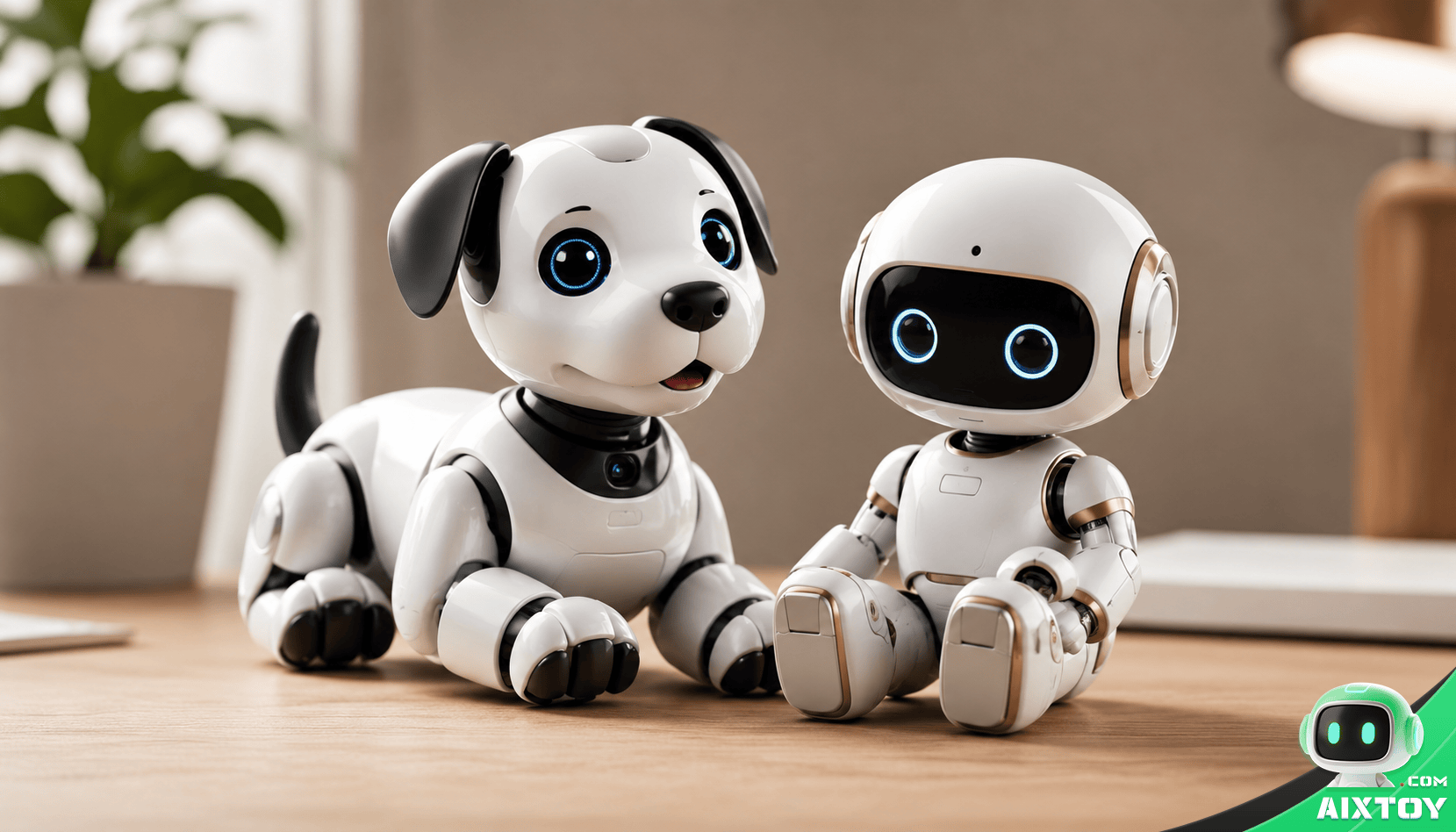
Walk into any toy store in 2026 and you will notice something different. Between the stuffed animals and building blocks, there is a new category stealing the spotlight: AI robot toys. These are not your childhood wind-up robots. They talk, they learn, they respond to voice commands, and they teach your kids to code — all while looking absolutely adorable.
At AIXTOY Shop, we have watched this revolution unfold firsthand. Parents are not just buying toys anymore; they are buying companions, teachers, and creative outlets for their children. But with so many options, how do you know which AI robot toy is right for your child? This guide will walk you through everything you need to know.
What Exactly Is an AI Robot Toy?
An AI robot toy combines traditional play patterns with artificial intelligence — voice recognition, facial expressions, adaptive learning, and sometimes even conversation. Unlike a remote-controlled car that simply follows commands, an AI robot toy responds, adapts, and grows with your child.
Some can recognize your child’s face and greet them by name. Others can teach coding through playful challenges. A few — like the Bittle X programmable robot dog — let kids build and program their own robotic pet from scratch. The common thread: these toys make technology feel magical, not intimidating.
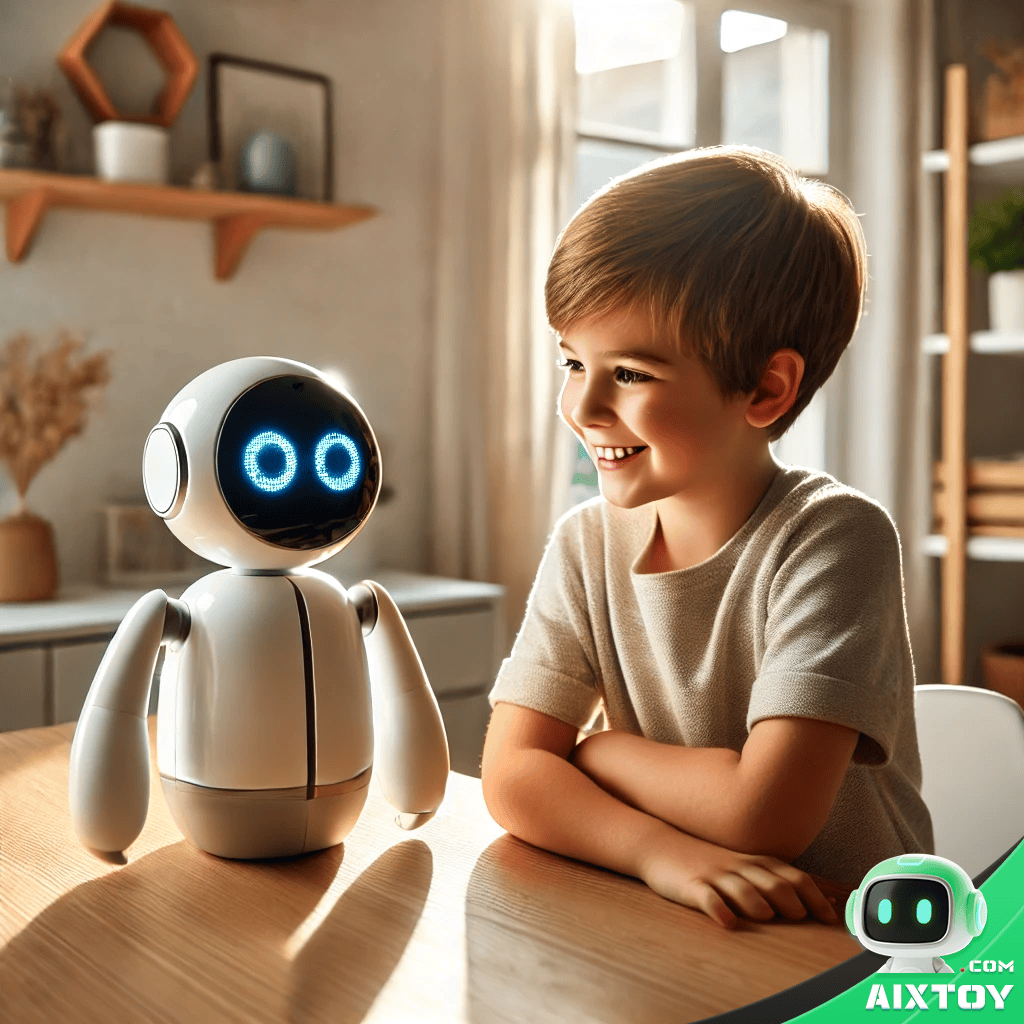
7 Reasons Parents Are Switching to AI Robot Toys
1. They teach real coding skills. Most AI robot toys come with companion apps that use block-based programming — the same logic real developers use. Products like the Rider-Pi Raspberry Pi robotics kit take it even further with Python programming.
2. They adapt to your child’s level. Unlike a puzzle that has one solution, AI toys adjust difficulty dynamically. A 5-year-old and a 12-year-old can play with the same robot and both feel challenged at the right level.
3. They encourage creative problem-solving. Open-ended play is where kids develop critical thinking. The Minions AI Robot lets children create dialogue, choreograph dances, and invent their own games — no two play sessions are the same.
4. They reduce screen guilt. Let’s be honest: most educational apps are just screens. AI robot toys bridge the physical and digital worlds — your child interacts with a real, tangible companion while learning tech skills.
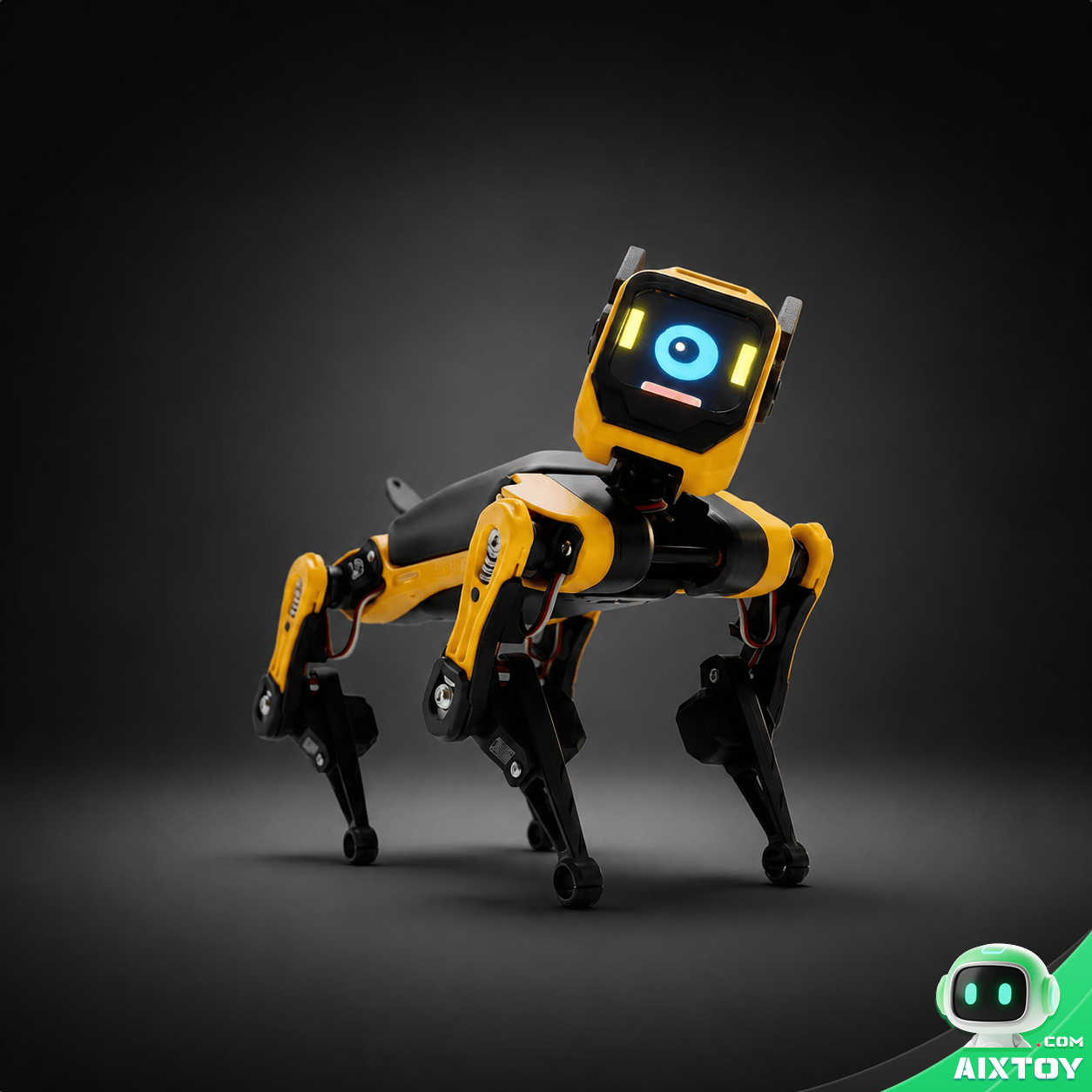
5. They build emotional intelligence. Companion-style robots like the Smart Mechanical Dog respond to touch and voice with emotional cues — wagging tails, happy sounds, curious head tilts. Kids learn empathy by caring for their robot friend.
6. They grow with your family. Many AI robot toys receive over-the-air updates with new games, features, and skills. The toy your child unwraps today will be even smarter six months from now.
7. They spark STEM curiosity early. Research shows that children who engage with STEM toys before age 10 are far more likely to pursue science and technology fields. AI robot toys make that first exposure joyful rather than academic.
How to Choose the Right AI Robot Toy for Your Child
Not every AI robot toy fits every child. Here is a simple framework to guide your decision:
Age 3–6: Look for companion-style robots with simple voice commands and emotional responses. Big buttons, colorful lights, and cute designs are priorities at this stage. The Smart Mechanical Dog and Minions AI Robot excel in this category.
Age 7–10: This is the sweet spot for programmable robots. Kids at this age can handle basic block coding and love seeing their code come to life. The Bittle X — a palm-sized programmable robot dog with Arduino compatibility — is a standout choice.
Age 11+: Teens are ready for advanced platforms like the Rider-Pi, which runs on Raspberry Pi and supports Python, sensors, and camera modules. These are not just toys — they are genuine engineering platforms.
Family play: Some robots, like the 檬友X5 Robot, are designed for multi-player interaction. Families can build obstacle courses, program coordinated routines, and compete in coding challenges together.
Browse our full AI Companions & Robots category to compare specs, prices, and features side by side. Every product listing includes detailed specifications, real customer photos, and honest reviews.
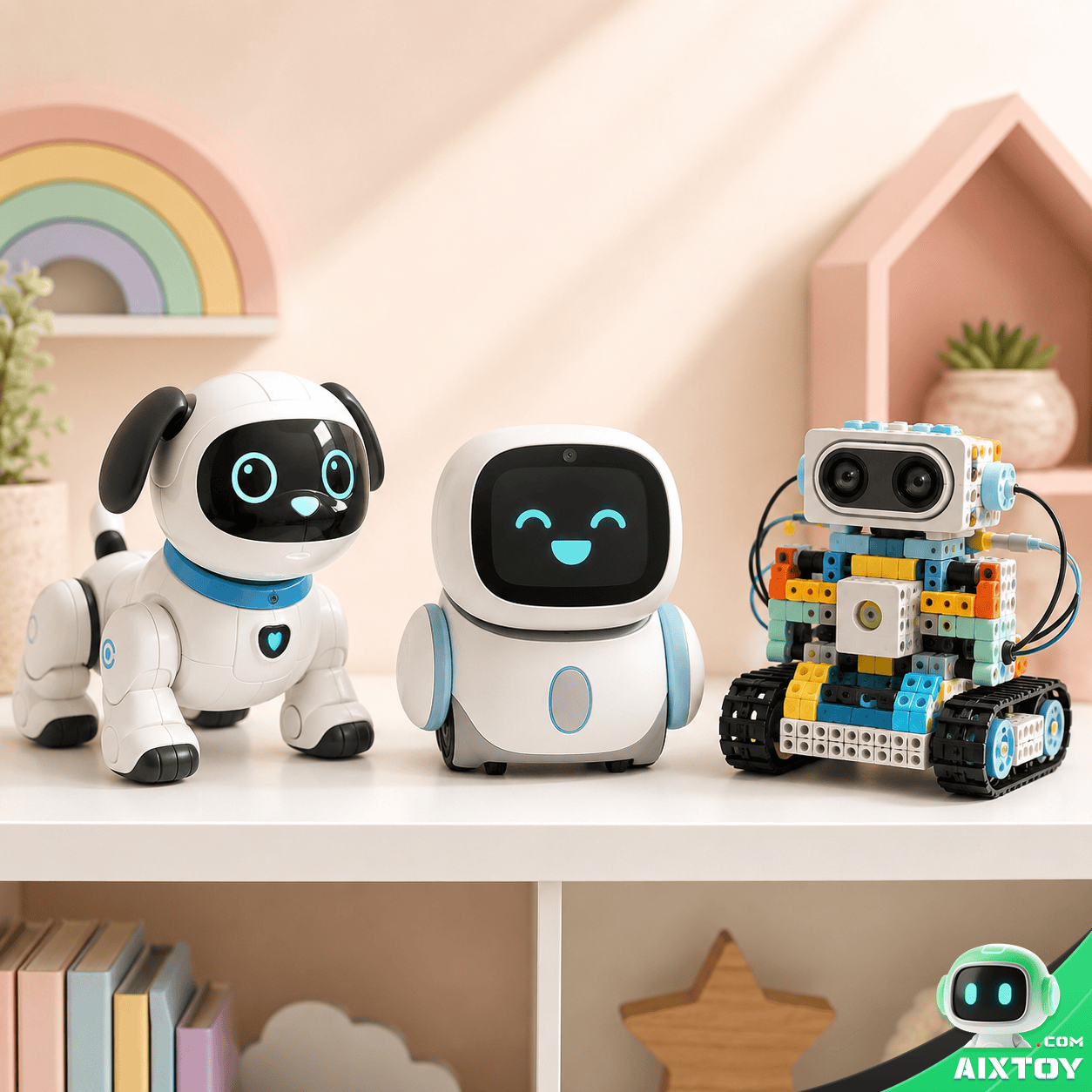
What to Look for in a Quality AI Robot Toy
Before clicking “buy,” check these five factors:
Build quality: AI robots have moving parts, sensors, and electronics. Look for durable materials that survive drops. Check customer reviews for long-term reliability.
Battery life: Nothing disappoints a child faster than a toy that dies after 30 minutes. Most quality AI robots offer 2+ hours of active play on a single charge.
App quality: The companion app is half the experience. Look for well-reviewed apps with regular updates, intuitive interfaces, and age-appropriate content.
Privacy features: AI toys with cameras and microphones should have clear privacy policies. Look for local processing (not cloud-dependent), physical privacy switches, and transparent data practices.
Expandability: Can the robot grow with new accessories, sensors, or software updates? The best AI toys get better over time, not obsolete.
AI Robot Toys vs. Traditional Toys: What the Research Says
A 2025 study from the MIT Media Lab found that children who played with programmable robots for just 30 minutes per week showed measurable improvements in logical reasoning and pattern recognition compared to peers using traditional building toys. The researchers noted that the “immediate feedback loop” — where code instantly produces physical movement — creates a uniquely powerful learning moment.
Another study published in the Journal of STEM Education tracked 500 elementary students over one school year. The group using AI robot toys in their curriculum scored 23% higher on computational thinking assessments than the control group. Teachers reported higher engagement, fewer behavioral issues, and more peer collaboration in the robot-assisted classrooms.
This is not marketing hype — it is peer-reviewed science. AI robot toys activate multiple learning pathways simultaneously: tactile (building and touching), visual (watching the robot respond), auditory (voice commands and sounds), and cognitive (planning and debugging code). Traditional toys rarely engage all four at once.
Setting Up Your First AI Robot Toy: A Quick-Start Guide
If you are new to AI robot toys, here is how to make the first experience magical rather than frustrating:
1. Unbox together. Let your child tear open the packaging. The excitement of discovery is part of the experience. Read the quick-start card together before plugging anything in.
2. Download the app first. Most AI robots need a companion app. Download it while the robot charges so there is no waiting. Create a parent account — most apps have parental controls for screen time and content.
3. Start with the tutorial mode. Every quality AI robot toy includes a guided first experience. Do not skip it — the tutorial teaches both you and your child the basic interactions in a frustration-free way.
4. Let your child lead. The urge to say “no, do it this way” is strong. Resist it. AI robot toys are designed for exploration. Mistakes are learning opportunities, not failures. Your job is to watch, encourage, and occasionally help with a stuck screw.
5. Connect with other families. Many AI robot toys have online communities where kids share projects, compete in challenges, and showcase creations. This social layer transforms a solo toy into a shared hobby. Check the AIXTOY Blog for community spotlights and project ideas.
Common Concerns Parents Have (And Honest Answers)
“Will my child spend even more time on screens?” Unlike tablets and video games, AI robot toys are physically interactive. Your child is building, touching, and moving — not staring passively. Screen time with an AI robot is active creation, not passive consumption. Many parents report that robot play actually reduces tablet time because it is more engaging.
“Are AI toys safe and private?” This is a valid concern. Reputable AI robot toys process voice commands and facial recognition locally on the device, not in the cloud. Look for toys with physical mute switches, no always-on microphones, and clear privacy policies. Every product at AIXTOY Shop includes privacy information in the product description.
“What if my child loses interest after a week?” This is where choosing the right type matters. Companion robots maintain interest through evolving personalities and new content updates. Programmable robots stay fresh because there are always new projects to build. The key is matching the toy type to your child’s interests.
“Are they worth the price?” Consider this: a quality AI robot toy costs roughly the same as 3–4 video games or one weekend coding camp. But unlike those, it provides years of learning and play. The AIXTOY Shop catalog includes options from under $100 to premium platforms — there is a great AI toy at every budget.
The Bottom Line: Are AI Robot Toys Worth It?
The short answer: yes, absolutely. A quality AI robot toy is more than a gadget — it is a coding tutor, a creative canvas, and a loyal companion wrapped into one adorable package. Compared to the cost of coding camps, STEM kits, and separate programmable toys, an AI robot often delivers more value per dollar.
For more guides and product spotlights, visit the AIXTOY Blog or explore AIXTOY Shop to see what is new this week.
Tags:AI Robot ToyAI Toy GuideAIXTOYEducational RobotInteractive ToyProgrammable RobotRobot Toy GuideSTEM LearningVoice Activated Toy